

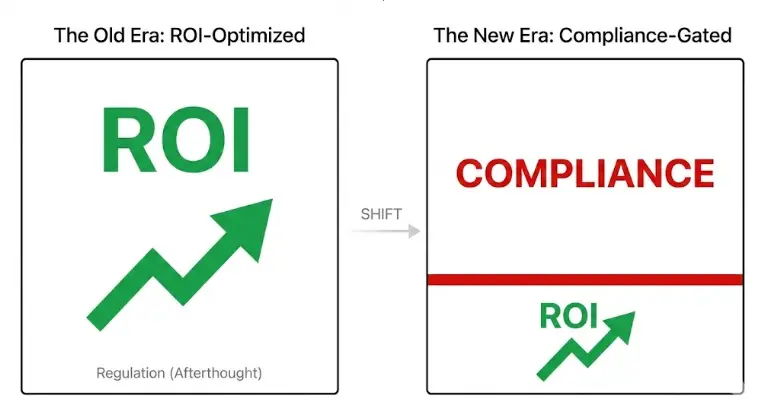
For nearly a decade, the short-term rental (STR) market operated with a certain laissez-faire dynamism, often characterized as a digital gold rush. Investors primarily focused on optimizing nightly rates, occupancy curves, and the intricate algorithms of booking platforms. If the financial projections were favorable, the investment was deemed viable, with regulatory considerations often relegated to a secondary, easily managed checklist item. However, this era of regulatory ambiguity has decisively concluded. Today, STR regulation has transcended its status as a minor legal hurdle, evolving into a paramount underwriting risk that can fundamentally alter investment viability overnight. A single municipal decision, such as a vote to eliminate non-owner-occupied rentals, can instantaneously freeze new supply through permit caps or trigger aggressive enforcement cycles that quietly collapse occupancy rates across entire zip codes. In this significantly altered landscape, profitability without explicit legal compliance has become an illusion. This seismic shift necessitates a re-evaluation of how PropTech platforms—including marketplaces, analytics dashboards, and lending engines—approach their core functionalities. Compliance can no longer be a static element confined to blog posts or manual research; it must be integrated as a dynamic, programmatic input into the underwriting process.
The API as a Policy Enforcement Engine
In the realm of real estate compliance, an Application Programming Interface (API) transcends its role as a mere data conduit. It becomes the foundational infrastructure for automated policy enforcement. The concept of "staying compliant by city" translates into the ability to systematically interpret thousands of disparate local municipal codes and translate them into a single, executable logic gate. This programmatic approach is crucial for navigating the complex and often fragmented regulatory environments that characterize the STR market.
Deterministic vs. Probabilistic Data: The Compliance Threshold
A critical distinction within real estate technology lies between probabilistic modeling and deterministic data. Historically, many PropTech platforms have relied heavily on probabilistic data, which involves estimations, inferred classifications, and Automated Valuation Models (AVMs). While such data can be sufficient for general return on investment (ROI) estimations, it presents a significant liability when applied to compliance. Probabilistic data operates on "likelihoods." For instance, it might infer a property is a single-family home based on its square footage or neighborhood profile. However, if a city ordinance explicitly bans STRs in multi-family units but permits them in single-family homes, a "likely" classification is insufficient and carries inherent risk.
Deterministic data, conversely, is grounded in authoritative records such as tax assessments, deed filings, and official land-use codes. For a PropTech platform to function as a robust underwriting tool, its API must provide these deterministic metadata points. Compliance, by its very nature, demands a binary "Yes" or "No" answer, derived from legal truth. When a platform utilizes inferred data for compliance, it exposes its users to potentially catastrophic capital risk. Consider an institutional investor deploying $50 million into a market based on "probable" eligibility; if this underlying metadata proves incorrect, the entire portfolio’s cash flow could be jeopardized by a single enforcement action.
The "Ghost Listing" Problem and Enforcement Signals
Standard real estate APIs also grapple with the "Ghost Listing" problem, particularly in markets undergoing stringent regulatory crackdowns. In such environments, thousands of listings may remain "active" on booking platforms even after their legal permits have been revoked. If a platform solely tracks active listings, it might present a misleading picture of a thriving market. In reality, that market could be experiencing a significant "supply contraction."
A compliance-aware API must offer more than a static snapshot; it needs to provide historical performance trends. By cross-referencing a sudden drop in supply with sustained demand, platforms can detect an "enforcement signal." For example, a 40% decrease in active rentals within a specific zip code in a single quarter, while nightly rates remain high, is rarely indicative of market failure. Instead, it typically signals a regulatory "clean sweep." Platforms capable of programmatically identifying these signals enable their users to avoid entering markets where the "door is closing," even if current ROI figures appear attractive.
Turning Ordinances Into Logic
To automate compliance, PropTech platforms must effectively translate complex legal language into structured, queryable data. Operationally, most STR regulations can be categorized into three primary "guardrails":
-
Zoning & Property-Type Restrictions: Many municipalities impose STR restrictions based on building classification. By leveraging property-level metadata, a platform can automatically flag ineligible property classes or exclude restricted asset types from search results, ensuring that users are presented only with legally viable inventory. This granular filtering is essential for preventing non-compliant investments at the outset.
-
Residency & Ownership Mandates: A growing number of cities now permit STRs only if the property is owner-occupied. By utilizing ownership indicators within the property dataset, a platform can transition its focus from simple "ROI modeling" to "operational viability modeling." This fundamental shift distinguishes a tool that merely suggests potential earnings from one that accurately informs users about what they are legally allowed to earn.
-
Market Saturation & Permit Caps: Some jurisdictions regulate STRs through strict permit caps. While ordinance databases define the official limits, performance trends can reveal real-world enforcement patterns. This is where platforms evolve from static data providers to predictive risk modeling engines, offering insights into the practical implications of regulatory frameworks.
Technical Architecture: Building the Compliance Layer with Mashvisor

For compliance to function as a genuine underwriting input, it must be deeply integrated into a platform’s technical architecture. By leveraging structured data from providers like Mashvisor, platforms can empower their own internal validation frameworks. A compliance-aware underwriting engine can be constructed by combining multiple API endpoints that expose deterministic property metadata and historical rental performance data.
Phase 1: The Eligibility Filter (Property Info)
The foundational data pull typically involves an API endpoint such as GET /v1.1/client/property. When a user selects a listing, the platform retrieves the comprehensive Property Object. This object contains crucial deterministic metadata, including:
- Property Type: (e.g., Single Family Home, Condominium, Townhouse, Multi-Family Unit). This is critical for zoning compliance, as many regulations differentiate based on property classification.
- Occupancy Status: (e.g., Primary Residence, Secondary Home, Investment Property). This metadata directly addresses owner-occupancy requirements, a significant regulatory trend.
- Building Permits & Certificates: (While not always available in a standardized format, presence or absence can be an indicator).
- Zoning Information: Directly linked to local land-use codes.
This initial phase allows platforms to immediately filter out properties that do not meet basic zoning or structural requirements for STR operation. For example, if a city ordinance prohibits STRs in multi-family buildings, any listing categorized as such would be automatically disqualified.
Phase 2: Ownership & Residency Screening (Property Ownership)
An endpoint like GET /v1.1/client/owner/contact is vital for verifying ownership and residency status. Many evolving regulations hinge on whether the host resides at the property. This endpoint allows platforms to:
- Retrieve Owner’s Mailing Address: This is a key deterministic data point.
- Cross-Reference with Property Address: By comparing the owner’s mailing address with the subject property’s address, platforms can infer whether the owner is likely a primary resident or an absentee owner.
- Identify Corporate Ownership: Distinguishing between individual and corporate ownership can be critical, as some regulations treat these differently.
This phase shifts the underwriting focus from purely financial metrics to operational feasibility, directly addressing the legality of the proposed STR operation based on residency rules.
Phase 3: Regulatory Pressure Detection (Rental Activity Data)
While static rules capture what is written, trend data captures what is actually happening in the market. An endpoint such as GET /v1.1/client/rento-calculator/historical-performance provides this crucial dynamic insight. This data allows platforms to:
- Track Active Listings Over Time: Monitor the number of available STR units in a specific market.
- Analyze Occupancy Rates and Daily Rates: Understand market demand and pricing dynamics.
- Detect Supply Contractions: A sudden, significant drop in active listings, especially when coupled with stable or increasing demand metrics, is a strong indicator of regulatory enforcement or impending policy changes. This allows for proactive risk assessment, enabling investors to exit or avoid markets experiencing significant regulatory pressure.
By integrating these three phases, PropTech platforms can build a robust compliance layer that moves beyond simple financial modeling to encompass legal and operational viability.
Case Study: Institutional Underwriting for a Multi-Market REIT
Consider the scenario of a Real Estate Investment Trust (REIT) targeting the dynamic Florida market, with a specific focus on Miami, where city-level ordinances are subject to frequent changes and carry significant fiduciary implications. For such an entity, compliance is not merely a legal objective but a fundamental capital markets requirement. Their investment committee (IC) mandates an audit-traceable risk framework before allocating any institutional capital.
Step 1: The Metadata "Gateway"
The underwriting process commences with a query to GET /v1.1/client/property. In a traditional workflow, an analyst might spend hours manually navigating a city’s Geographic Information System (GIS) website. Programmatically, however, the system can check critical fields like property_type and occupancy_status within milliseconds. If the property is flagged as a "Second Home" in a zone strictly requiring primary residency for STR operation, the potential investment is immediately disqualified, saving significant analyst time and preventing non-compliant acquisitions before they even reach the review stage.
Step 2: Ownership & Residency Verification
Next, the platform verifies ownership details using GET /v1.1/client/owner/contact. The engine extracts the owner’s mailing address and cross-references it with the subject property’s address. For a REIT evaluating a portfolio of 50 properties, manual verification is logistically impossible. The API provides the deterministic proof required for inclusion in the IC memo, ensuring that each investment meets the REIT’s stringent residency requirements at scale.
Step 3: Market Contraction & Enforcement Analysis
The system then queries GET /v1.1/client/rento-calculator/historical-performance. If the data reveals a sharp decline in the number of active listings within a target zip code, the REIT identifies a "Regulatory Pressure" signal. This proactive insight allows the REIT to pivot its capital deployment strategy to more stable micro-markets, thereby preserving capital in the face of municipal regulatory volatility. It acts as an early warning system, preventing investments in markets on the cusp of regulatory tightening.
Step 4: Output – The Unified Underwriting Score
Finally, the platform aggregates these critical data points from Mashvisor’s API into its internal decision engine, generating a comprehensive underwriting score. This score might look like this:
| Metric | Mashvisor API Source | Value |
|---|---|---|
| Projected ROI | Investment Analysis | 8.2% |
| Zoning Match | Property Info (property_type) |
Pass |
| Residency Match | Property Ownership (mailing_address) |
Fail |
| Market Pressure | Historical Performance Trends | High |
The Result: Based on this aggregated data, the system generates a "No-Buy" signal. This programmatic workflow ensures that every potential deal in the pipeline rigorously meets the REIT’s strict fiduciary standards for operational certainty and legal compliance, moving beyond simple financial return to a holistic assessment of investment viability.
Compliance as a Fiduciary Guardrail
As short-term rentals mature from opportunistic retail plays into a recognized institutional asset class, the demand for repeatable and reliable risk frameworks has shifted from a "nice-to-have" to a fundamental capital markets requirement. For institutional funds, compliance is the ultimate fiduciary guardrail, protecting both the fund’s assets and its reputation.
Lenders and capital partners are increasingly attuned to "regulatory drift"—the phenomenon where an asset is purchased under one legal framework but subsequently becomes "orphaned" by evolving regulations. In this high-stakes environment, a platform’s reliance on manual research or vague "best-effort" disclaimers is no longer acceptable. Institutional underwriting demands an audit-traceable data lineage. By leveraging deterministic property metadata, platforms provide a clear digital paper trail for every investment decision. When a lender inquires about the rationale behind approving a specific asset for a high-leverage loan, the platform can precisely reference the Mashvisor-backed occupancy_status and property_type indicators that aligned with the city’s ordinance at the time of underwriting. This transforms compliance from a perceived legal burden into a tangible liquidity feature, making assets demonstrably more attractive to risk-averse institutional buyers and lenders.
Conclusion: From ROI to Operational Viability
The short-term rental market has irrevocably moved beyond its initial "growth at all costs" phase. In this new, more regulated landscape, the most sophisticated calculation is no longer how much a property could generate in revenue, but whether it is legally allowed to operate. For PropTech platforms, this represents a fundamental evolution in their product category and value proposition.
By integrating deterministic property metadata and real-time performance signals directly into the underwriting workflow, platforms transcend their role as mere ROI calculators. They become essential risk infrastructure—tools that actively protect capital, ensure fiduciary compliance, and deliver the operational certainty that institutional investors increasingly demand. As regulatory scrutiny continues to intensify, the platforms that proactively encode legality into their technical architecture will not merely survive; they will define the next era of real estate investing by prioritizing sustainable, compliant growth over speculative gains.
Scaling Compliance in Your Real Estate Data Stack?
If your organization is evaluating how to integrate structured property metadata into its underwriting engine or transition from manual research processes to a programmatic compliance workflow, engaging with experienced data providers is a crucial step. Testing your current architecture against emerging regulatory challenges and exploring how to leverage comprehensive data APIs can provide a strategic advantage.
Booking an introductory call with a data solutions provider can facilitate a detailed discussion of specific use cases, technical requirements, and how to effectively utilize their API to build a robust, compliance-aware roadmap for your real estate technology stack. This proactive approach ensures that your platform remains ahead of regulatory curves and competitive pressures, securing its position in the evolving PropTech landscape.

