
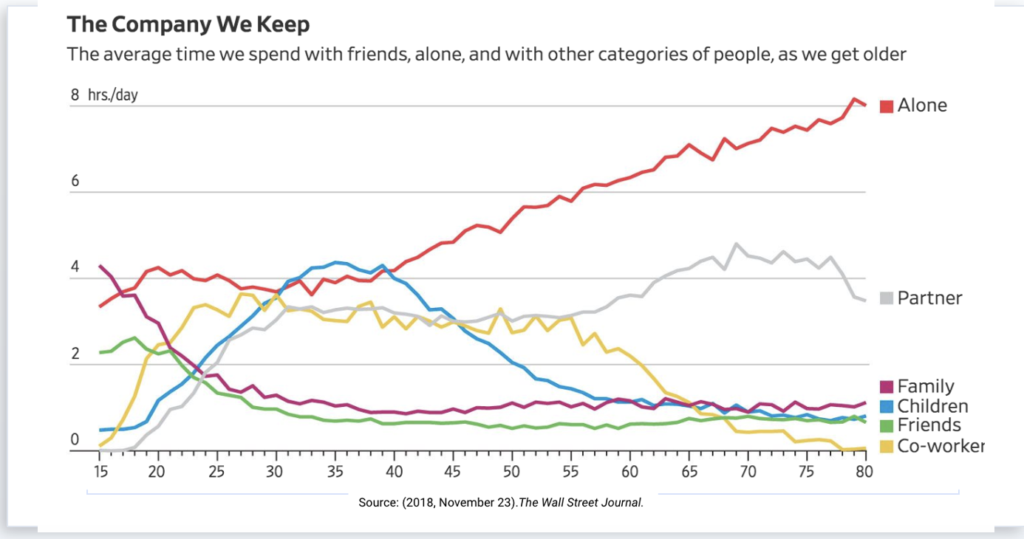
The transition into retirement, a period often heralded for its newfound freedom and expanded leisure, brings with it a profound and sometimes unexpected consequence: an amplified presence of one’s own inner dialogue. While the liberation from professional obligations is a celebrated aspect of this life stage, many individuals find themselves grappling with an increased amount of solitary time, during which the internal conversations that have always existed become significantly more pronounced. These are not merely idle thoughts; they represent some of the most critical exchanges one will have, dialogues that occur entirely within the confines of one’s own mind.
This internal discourse spans a vast spectrum of mental activity. It can encompass constructive planning, imaginative exploration, and reflective introspection. Conversely, it can also manifest as persistent worry, unproductive rumination, self-questioning, harsh criticism, or even self-blame. Experts in the field of self-talk and cognitive psychology suggest that the nature of these internal conversations can profoundly influence how individuals navigate this significant life change. As highlighted in discussions on platforms such as The Retirement Wisdom Podcast, the quality of this inner dialogue can either constrict one’s potential or, conversely, serve as a powerful catalyst for embracing the next chapter of life with enhanced intention and a greater sense of possibility.
Dr. Marilee Adams, a distinguished psychologist and the founder and CEO of The Inquiry Institute, has dedicated her research to understanding the impact of self-questioning. Her seminal work, Change Your Questions, Change Your Life, now in its updated fifth edition, offers a compelling framework for examining how the questions we pose to ourselves shape our mental frameworks and, consequently, our lives. Dr. Adams posits that individuals tend to operate from one of two primary mindsets: the "Judger" or the "Learner."
The "Judger" mindset is characterized by questions that tend to be backward-looking or self-critical, often infused with blame and doubt. Examples include queries like, "What’s wrong with me?", "Why did this happen to me?", or "Why even bother?". These questions often serve to reinforce negative patterns and limit perceived options. In contrast, "Learner" questions are forward-looking and constructive, fostering curiosity, a sense of agency, and an openness to possibilities. These questions might take the form of, "What do I truly want now?", "What unique contributions can I make?", or "How else might I approach this situation?". This distinction becomes particularly relevant as individuals enter retirement. The absence of the structured environment and defined roles of professional life can amplify the tendency towards Judger-type thinking. However, by consciously shifting towards Learner-based questioning, individuals can redirect their attention towards what holds genuine significance, such as pursuing greater meaning, cultivating joy, making meaningful contributions, nurturing relationships, and fostering personal growth.
Parallel research conducted by Dr. Ethan Kross, Director of the Emotion & Self Control Laboratory at the University of Michigan and author of Chatter: The Voice in Our Head, Why It Matters, and How to Harness It, further illuminates the complexities of our internal conversations. Dr. Kross’s work delves into the science of self-talk, distinguishing between ordinary negative thoughts and what he terms "chatter." Chatter is defined as a repetitive, often unproductive, loop of worry, rumination, and catastrophizing. His research emphasizes that negative emotions, in moderation, can serve a valuable purpose, offering lessons and insights. The challenge arises when individuals become ensnared in these negative emotional cycles, preventing them from moving forward.
A significant point of convergence between the work of Dr. Adams and Dr. Kross lies in their shared understanding that the objective is not to silence the inner voice, but rather to engage with it more skillfully. Both scholars underscore the universal presence of an inner critic and advocate for its acceptance as a fundamental aspect of the human psyche. Crucially, they both highlight that heightened awareness of one’s internal dialogue creates a space for choice. This awareness allows individuals to transition from automatic, reactive responses to more deliberate and intentional actions.
Dr. Adams’ contribution is particularly notable for the elegant simplicity of her "Choice Map," a conceptual framework that provides a practical pathway for navigating internal dialogues. This model encourages individuals to recognize when they are operating from a Judger mindset, to consciously pause, and then to deliberately shift into a Learner mindset. One of the most impactful switching questions she proposes is, "Who do I choose to be in this moment?" This question empowers individuals to assert their agency and define their present experience, regardless of external circumstances or internal inclinations.
Dr. Kross, on the other hand, offers a robust "toolbox" approach, recognizing that different situations call for varied strategies to manage internal chatter. Among his recommended techniques is "distance self-talk," which involves referring to oneself by one’s own name rather than using "I." This creates a psychological distance, allowing individuals to coach themselves as they might a trusted friend. Another potent strategy is "mental time travel," where one considers how a current problem will be perceived in the future, for instance, six months or a year from now. This reframing can significantly diminish the perceived magnitude of immediate stressors. Furthermore, Dr. Kross suggests integrating simple rituals, such as a walk in nature, to facilitate a more mindful and constructive engagement with one’s inner voice, effectively becoming a more adept "chatter advisor" with a personalized toolkit.
Practical Strategies for Navigating Inner Dialogue
In light of these expert insights, several actionable strategies can be employed to cultivate a more positive and productive inner dialogue, particularly during the transition to retirement.
Enhancing Self-Awareness
The foundational step is to increase one’s awareness of the ongoing internal conversation. This involves actively listening to the thoughts that arise throughout the day, without immediate judgment. This can be facilitated by simple mindfulness practices.
The Power of the Pause
Drawing from Dr. Adams’ work, a critical technique is to physically pause when one notices a negative thought pattern or an overwhelming emotion. This interruption can break the momentum of unproductive thinking. A practice recommended by Dr. Aditi Nerurkar, MD, and endorsed by Dr. Adams, involves a simple three-step process: Stop. Breathe. Be. This brief interlude allows for a recalibration and prevents immediate, reactive responses.
Identifying Question Types
Following the pause, the next step is to examine the questions being asked of oneself. Are these questions predominantly from the Judger mindset – critical, blaming, or limiting? Or are they from the Learner mindset – curious, open, and solution-oriented? This identification process is crucial for understanding the nature of the internal narrative.
Navigating the "Judger Pit"
When one finds themselves entrenched in what Dr. Adams terms the "Judger Pit" – a cycle of negative, self-defeating thoughts – the "Switching Lane" move becomes essential. This involves consciously posing a Learner question and actively shifting into that more constructive mindset. For example, if the internal dialogue is dominated by thoughts like, "I’m not good enough for this new phase," a Learner question could be, "What skills do I possess that are transferable and valuable in retirement?"
Re-framing Internal Discourse
Dr. Kross’s techniques offer powerful tools for re-framing. Changing the voice of the internal dialogue by using one’s own name can create beneficial distance. For instance, instead of thinking, "I’m so overwhelmed," one might ask, "What advice would [Your Name] give a good friend who is feeling overwhelmed right now?" This shift often elicits more compassionate and practical guidance.
Temporal Reframing
Similarly, altering the temporal perspective can be transformative. By asking, "How important will this issue feel six months from now?" or "What will be my perspective on this challenge in a year’s time?", individuals can gain valuable context and reduce the immediate intensity of current worries. This temporal shift can highlight that many current concerns are transient.
The Role of Social Connection
While solitude is a hallmark of retirement, the nature of social interaction also plays a role. The article emphasizes that while venting can feel cathartic, it often perpetuates negative loops. Seeking out individuals who offer genuine empathy and can help broaden one’s perspective is more beneficial. These are individuals who can listen supportively while also offering constructive insights and alternative viewpoints, thereby helping to break down entrenched patterns of thought.
Broader Implications for Well-being
The increased introspection that accompanies retirement presents a unique opportunity for personal growth. While the freedom of this life stage is a significant benefit, its optimal utilization is contingent upon developing a more refined approach to one’s thoughts and emotional landscape. Through consistent practice, the inner voice can evolve from being a relentless critic to becoming a valuable ally and an effective coach. This transformation is not instantaneous but is cultivated through deliberate effort and the application of evidence-based strategies.
The implications of mastering one’s inner dialogue extend beyond mere personal comfort. For individuals transitioning into retirement, a positive and self-aware inner voice can foster greater resilience in the face of challenges, enhance overall life satisfaction, and unlock new avenues for purpose and engagement. It contributes to a more proactive and fulfilling retirement experience, where the abundance of time is leveraged for personal enrichment and continued development, rather than being overshadowed by internal conflict.
The research by Dr. Adams and Dr. Kross, grounded in psychological science and practical application, offers a robust framework for understanding and improving the quality of our internal conversations. As more individuals navigate the complexities of later life, the ability to manage one’s self-talk effectively will undoubtedly emerge as a critical determinant of well-being and fulfillment. This introspective skill set, honed through conscious effort, can transform the potentially isolating experience of retirement into a period of profound self-discovery and empowered living.
For Further Exploration:
Individuals interested in delving deeper into these concepts can access a wealth of resources:
-
Podcast Interviews:
- A conversation with Dr. Marilee Adams on "Change Your Questions, Change Your Life in Retirement" is available on The Retirement Wisdom Podcast.
- Two distinct podcast discussions with Dr. Ethan Kross are available: one focusing on "Chatter & Your Inner Voice," and another titled "Shift."
-
Books:
- Change Your Questions, Change Your Life (5th Edition) by Marilee Adams, PhD.
- Chatter: The Voice in Our Head, Why It Matters, and How to Harness It by Ethan Kross, PhD.
- Shift: Managing Your Emotions—So They Don’t Manage You by Ethan Kross, PhD.
-
Tools and Resources:
- The Inquiry Institute offers "The Choice Map" and a related survey, accessible through their website, providing practical tools for self-assessment and transformation.

