
In a move that sent immediate ripples through the long-standing alliance between Washington and Seoul, President Trump, just hours before 18,000 South Korean troops were poised to commence this year’s Ulchi Freedom Shield exercise with their American counterparts, issued a directive to the Secretary of Defense to "substantially reduce the Joint Military Exercises" with South Korea. The sudden instruction effectively pulled the rug from under the carefully planned annual drills, which have long served as the bedrock of combined readiness against threats from North Korea. By Wednesday, both allies confirmed that the scope and duration of the crucial exercises had been slashed by nearly half, shrinking from an intended 11 days to a mere five, with all live field-training events either canceled outright or downgraded to less comprehensive computer simulations.
This dramatic reduction in military cooperation arrives amidst a rapidly deteriorating relationship between the United States and South Korea, marked by escalating disputes over economic policies, defense burden-sharing, and divergent geopolitical priorities. The decision has not only raised questions about the future trajectory of the alliance but also sent clear signals to regional actors, including North Korea and China, about a potential recalibration of Washington’s strategic commitments in Northeast Asia.
The Ulchi Freedom Shield: A Pillar of Deterrence Undermined
The Ulchi Freedom Shield (UFS) is one of the largest annual joint military exercises conducted by the United States and South Korea. Its origins trace back decades, evolving from exercises like Ulchi Focus Lens and Ulchi Guardian, designed to simulate a full-scale invasion from North Korea and test the allies’ ability to defend the peninsula, coordinate command and control, and execute swift counter-offensives. These drills are not merely symbolic; they are critical for maintaining interoperability between the two militaries, refining operational plans, and ensuring that personnel are adequately trained for any contingency. The participation of tens of thousands of troops, advanced weaponry, and complex logistical operations underscores their strategic importance in deterring aggression from Pyongyang.
The abrupt reduction of UFS 2026, including the cancellation of live-fire exercises, represents a significant departure from established defense posture. Live field training provides invaluable experience in real-world conditions, allowing forces to practice maneuvers, integrate new technologies, and build crucial team cohesion that cannot be fully replicated in simulated environments. Military analysts universally agree that while computer simulations offer a cost-effective alternative for certain aspects of training, they fall short of the comprehensive readiness achieved through large-scale, live exercises. The decision to cut these essential components has thus raised concerns among defense experts about the potential impact on the combat readiness and deterrence capabilities of the combined forces.
President Trump’s Rationale: Cost, Diplomacy, and Retribution
President Trump articulated several reasons for his unexpected order, framing the exercises as financially burdensome for the United States, which he argued bears the majority of the cost. He has consistently advocated for allies to contribute more significantly to their own defense, often criticizing the perceived imbalance in defense spending. Beyond the financial aspect, Trump suggested that the large-scale drills send a "hostile and inappropriate" signal to North Korea, which he characterized as "unthreatening and respectful" during his tenure. This perspective aligns with his long-held belief in direct, personal diplomacy with North Korean leader Kim Jong Un, often at the expense of traditional military posturing.
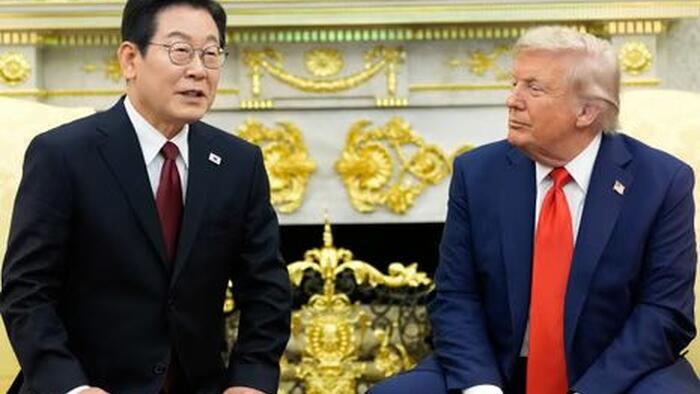
A third, more contentious, justification cited by the President was Seoul’s alleged refusal to assist the United States in a potential conflict with Iran. Trump recounted a direct conversation with South Korean President Lee Jae-myung, in which he reportedly asked if South Korea would join efforts for the "denuclearization of the Islamic Republic," characterizing Seoul’s answer as a dismissive "No thanks!" This accusation suggests a transactional approach to alliances, where military cooperation is linked to broader foreign policy alignment, even on issues far removed from the immediate security concerns of the Korean Peninsula. South Korea, a significant importer of Iranian oil and gas, has historically maintained a more cautious stance on Middle Eastern conflicts, balancing its alliance commitments with its economic interests and desire for regional stability.
Seoul Scrambles, Pyongyang Reacts, and Beijing Observes
The news sent South Korean officials into damage control. President Lee Jae-myung immediately convened a cabinet meeting, where he publicly reiterated that the US alliance remains "the bedrock of South Korean security," seeking to reassure both domestic and international audiences amidst the turmoil. The South Korean Ministry of National Defense worked furiously to adjust the exercise schedule and scope, attempting to salvage as much as possible while downplaying the implications of the drastic cuts. Publicly, officials framed the changes as an "adjustment for strategic flexibility," a phrase that masked the underlying tensions.
Meanwhile, North Korea, predictably, seized on the opportunity to denounce the drills. Pyongyang had spent the preceding week condemning the exercises as "a rehearsal for an aggressive war," punctuating its rhetoric with the launch of two ballistic missiles within six days earlier that month. While these missile tests are a recurring feature of North Korean provocations, their timing underscored Pyongyang’s persistent efforts to exploit any perceived weakness or division within the US-ROK alliance.
Adding another layer of geopolitical complexity, Chinese Foreign Minister Wang Yi arrived in Seoul mid-week for security talks. While the stated agenda likely included bilateral economic issues and regional stability, Wang’s visit undoubtedly provided an opportunity for Beijing to observe and potentially capitalize on the apparent strains in US-ROK relations. China has long advocated for a reduction in US military presence and exercises in the region, viewing them as destabilizing and a challenge to its own strategic interests.
The Shadow of USFK Drawdown and Strategic Repurposing
The dramatic reduction in military exercises is not an isolated incident but rather the latest manifestation of a longer-term, "long-telegraphed push" by the Trump administration to alter the US military footprint in South Korea. The Wall Street Journal reported in May 2025 that the Pentagon had already drafted options to withdraw approximately 4,500 of the 28,500 US troops stationed on the peninsula, with plans to reposition them to Guam and other locations across the Indo-Pacific. While the Pentagon officially denied these reports, the legislative branch responded with alarm. US lawmakers, particularly concerned about maintaining a robust deterrent against North Korea, directly codified a "28,500-troop floor" for US Forces Korea (USFK) into the FY2026 National Defense Authorization Act (NDAA), thereby attempting to constrain the executive branch’s ability to unilaterally reduce troop numbers.
Faced with this congressional mandate, the Trump administration appears to have adopted a more "creative" strategy. The reduction in exercises, framed as "strategic flexibility," allows for a de facto scaling back of US engagement without violating the troop floor. Simultaneously, there are clear indications that USFK is being gradually "repurposed" away from a singular focus on North Korean deterrence towards a broader "China-Taiwan contingency." This strategic shift implies that the US forces in Korea might increasingly be viewed as a ready-response asset for wider regional challenges, rather than solely dedicated to the defense of South Korea. This shift places Seoul under increased pressure to contribute more financially to host a force whose primary mission, in the eyes of some, is expanding beyond the immediate defense of the Korean Peninsula. President Lee Jae-myung himself has conceded that Washington’s demand for this "flexibility" is a concept Seoul finds "difficult to easily accept," highlighting the growing divergence in strategic priorities.

A Deepening Rift: Economic Grievances and Regulatory Battles
The deteriorating military cooperation is inextricably linked to a series of escalating economic and regulatory disputes that have plagued US-South Korean relations for well over a year. The underlying tension stems from what Washington perceives as discriminatory practices by South Korean regulators targeting American technology companies.
As detailed in previous reports, South Korea’s Fair Trade Commission (FTC) has been accused of acting less as an impartial antitrust regulator and more as a "toll booth" for US tech giants. Notable examples include an $854 million fine levied against Qualcomm in 2016, a $177 million penalty against Google in 2021 over its Android operating system, and a series of enforcement actions against Apple’s App Store policies. Critics argue that domestic firms like Naver and Kakao, which engage in similar business practices, have largely been allowed to operate without facing comparable scrutiny. One independent study estimated the combined ten-year economic damage resulting from Seoul’s tech crackdown at approximately $1 trillion, with an estimated $525 billion impact on the US economy alone.
Washington has not ignored these grievances. In December, the Office of the US Trade Representative (USTR) abruptly canceled a scheduled KORUS Joint Committee meeting, the primary forum for managing the crucial free-trade relationship between the two nations. This cancellation followed Seoul’s continued pursuit of digital regulations that the US administration deemed discriminatory, despite a previously signed framework promising to avoid such measures. The situation escalated further in February when the House Judiciary Committee launched a formal investigation into these practices and issued a subpoena to Coupang, the NYSE-listed, American-owned "Amazon of Korea," demanding documents related to its treatment by Korean regulators.
The Coupang case, in particular, became a flashpoint. After a former employee improperly accessed phonebook-grade customer data (names and addresses), with roughly 3,000 records briefly downloaded but later recovered without any documented consumer harm, Seoul’s response was deemed disproportionate. Taiwan, whose customers were affected by the same incident, handled it through a standard review and compliance plan. In stark contrast, South Korean authorities subjected Coupang to repeated police raids, launched a dozen wide-ranging investigations (many unrelated to data security), and saw politicians publicly vilify the company’s American founder. The firm’s acting CEO, a US citizen, was reportedly subjected to "kangaroo court" hearings where he was allegedly denied American counsel, accused of perjury over truthful testimony, and threatened with travel bans, criminal charges, and even jail. In June, Korea’s privacy regulator imposed a staggering $409 million fine on Coupang – the largest privacy penalty in the country’s history, more than four times the next-biggest fine, which had been levied on a Korean firm that exposed far more sensitive customer data.
On July 1, the same month South Korea celebrated America’s 250th birthday by lighting its landmarks in red, white, and blue, the House Judiciary Committee published its scathing report, "Closed for Competition." The report meticulously documented instances of Korean officials pressuring the national pension fund to divest from Coupang stock, lawmakers threatening to drive the company out of the country, and even the Prime Minister urging regulators to pursue the firm "with the same determination used to wipe out mafias."
Legislative Retaliation and "Fake News" Concerns
The economic tensions have now spilled over into legislative action. In late July, Representative Michael Baumgartner (R-WA), who had previously led a letter signed by 54 House colleagues demanding Seoul cease targeting American companies, introduced the "No Racketeers on Our Shores Act." This proposed legislation seeks to amend the Immigration and Nationality Act to deny US entry to, or deport, foreign officials "who weaponize the government to discriminate against American companies." The bill’s fact sheet explicitly cited the Coupang case as a prime example of the behavior it aims to penalize, sending a clear message that continued "shakedowns" of American firms could result in severe personal consequences for the responsible Korean regulators.

Adding to the list of grievances, Judiciary Republicans dispatched another letter two weeks prior, raising concerns about Seoul’s newly enacted "fake news" amendment. This law, enforced by the Korea Communications Commission (KMCC), allows for fines against publishers with over 100,000 subscribers and large online platforms for spreading "disfavored information." Critics argue that this regime disproportionately targets major American-owned platforms like Facebook, X (formerly Twitter), Instagram, and YouTube, which are the primary entities that meet the specified subscriber thresholds. The legislation has raised concerns about censorship, freedom of speech, and another potential instance of discriminatory regulation against US tech interests.
Trump-Kim Bromance 2.0: A Distraction or a New Diplomatic Path?
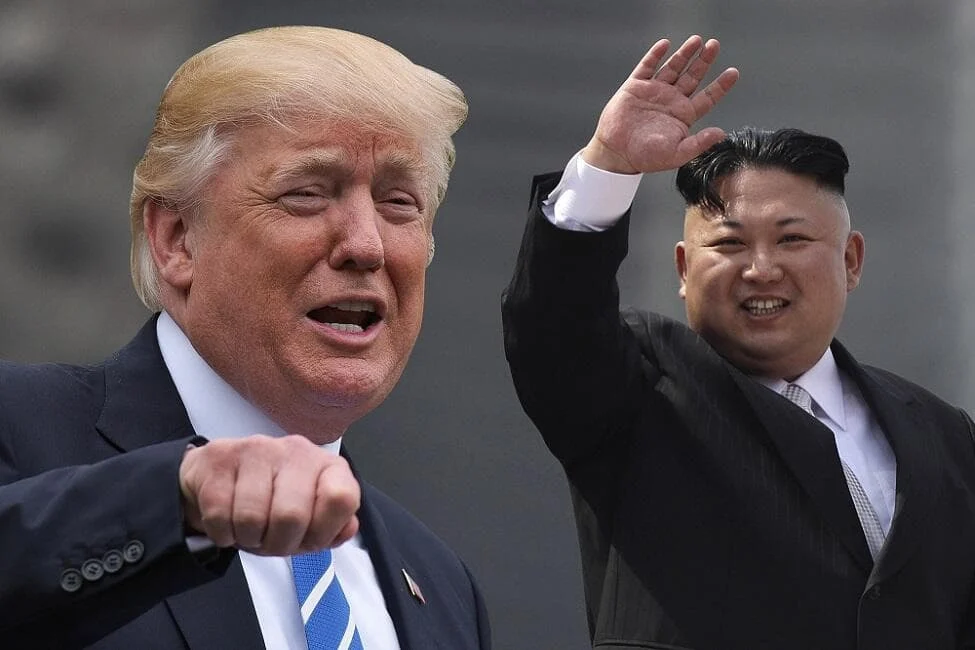
Amidst the growing chill in US-South Korean relations, a surprising development emerged: reports from the Wall Street Journal on Tuesday indicated that President Trump was actively pushing his aides to arrange a meeting with North Korean leader Kim Jong Un as early as this fall, potentially around the November APEC summit in Shenzhen, China. On Wednesday, Trump himself confirmed these intentions to reporters, stating he planned to meet Kim this year. He described the North Korean leader as "well behaved" and, in an uncharacteristic moment of candor or perhaps a deliberate provocation, casually confirmed Pyongyang’s nuclear arsenal at 57 "very powerful" nuclear weapons – a figure far exceeding most intelligence estimates. North Korean official Kim Yo Jong, sister of Kim Jong Un, subsequently claimed to be unaware of any recent correspondence or plans for such a meeting, adding an element of uncertainty to the report.
This push for a third Trump-Kim summit, following the largely unsuccessful encounters in Singapore (2018) and Hanoi (2019), signals a potential return to the highly personalized, top-down diplomacy that characterized Trump’s first term. While proponents might argue it offers a direct path to de-escalation, critics fear it could undermine alliance solidarity, grant legitimacy to the Kim regime, and potentially yield little substantive progress on denuclearization. The timing, coinciding with significant strains in the US-ROK alliance, raises questions about whether this initiative is a genuine effort to restart denuclearization talks or a strategic maneuver to distract from deepening bilateral frictions with a key ally.
Implications for Regional Security and Alliance Cohesion
The confluence of these events – the drastic cut to joint military exercises, the escalating economic disputes, the legislative threats, and the pursuit of a new summit with Kim Jong Un – paints a concerning picture for the future of the US-South Korea alliance. The immediate implications are multifaceted:
- Alliance Cohesion and Trust: The unilateral nature of Trump’s decision, coupled with the long-standing economic grievances, risks eroding trust and confidence between Washington and Seoul. Allies rely on predictable, consistent behavior, and sudden shifts can breed resentment and strategic uncertainty.
- Deterrence Against North Korea: The reduction in military readiness exercises could be perceived by North Korea as a weakening of the alliance’s resolve, potentially emboldening Pyongyang to further provocations. While Trump asserts North Korea is "unthreatening," missile launches continue to demonstrate its ongoing development of weapons capabilities.
- Regional Stability: A strained US-ROK alliance could destabilize the broader Northeast Asian security architecture. China may seek to expand its influence, and Japan, another key US ally in the region, will be closely watching the implications for its own security partnerships.
- Economic Impact: The ongoing trade and regulatory disputes, culminating in legislative action, threaten to sour economic relations and deter American investment in South Korea, potentially impacting a bilateral trade relationship worth hundreds of billions of dollars annually.
- US Foreign Policy Credibility: The transactional approach to alliances and the perceived abandonment of traditional diplomatic norms could undermine US credibility globally, raising questions about the reliability of Washington’s commitments to its partners.
As the US-South Korea alliance navigates these turbulent waters, the coming months will be crucial in determining whether these recent developments represent a temporary adjustment or a fundamental, long-term redefinition of a partnership that has underpinned regional security for over seven decades. The repercussions will extend far beyond the Korean Peninsula, shaping the geopolitical landscape of the Indo-Pacific.

