
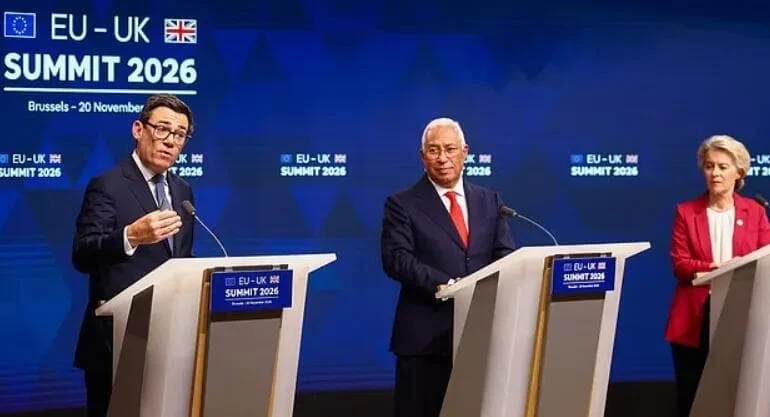
Prime Minister Andy Burnham’s administration has successfully concluded a significant "reset deal" with Brussels, the cornerstone of which is a comprehensive "Youth Experience Scheme" set to permit 100,000 young Europeans to reside, work, and study in Britain for up to three years annually. This landmark agreement, signed off at Friday’s EU-UK summit, holds the potential for up to 300,000 young individuals from the European Union to be present in the United Kingdom at any given time once the scheme reaches full operational capacity. The reciprocal nature of the deal means a similar number of young Britons will gain the opportunity to live and work across the EU.
A New Chapter in UK-EU Relations: The Youth Experience Scheme
The formalisation of the Youth Experience Scheme marks a tangible step in the UK’s efforts to forge a new relationship with its European neighbours post-Brexit. According to the joint statement released following the EU-UK summit in late November 2026, the initiative "will allow 100,000 young people from the EU and the UK respectively to reside for up to three years." This agreement goes beyond the initial aspirations of the British government, which, as reported by The Telegraph in March 2026, had initially sought a cap of 30,000 to 50,000 visas annually for young Europeans. The final figure represents a substantial increase, two to three times the original proposal, underscoring either a significant concession by London or a strategic pivot towards deeper engagement.
The government’s official explainer document provides further clarity on the terms and conditions governing participation. The scheme is open to EU citizens aged 18 to 31 on the day their visa commences. The visa itself will be granted for an initial two-year period, with the option for participants to extend their stay for a third year. The annual quota of 100,000 places will be judiciously shared among the EU member states, with allocation based on population size, ensuring an equitable distribution of opportunities.
Crucially, the scheme incorporates provisions designed to mitigate potential strain on public services and to align with existing immigration policies. Participants will not be granted access to public benefits, nor will they be permitted to bring dependants. Furthermore, while EU participants will be required to pay the Immigration Health Surcharge (IHS), a charge levied on most non-EEA nationals for access to the National Health Service, they will benefit from a discounted rate, set at 75% of the full charge. These stipulations aim to frame the scheme as a temporary cultural and professional exchange rather than a pathway to permanent settlement or welfare reliance.
Chronology of the Reset and Implementation Timeline
The journey towards this "reset deal" has been a protracted one, spanning two years since the initial efforts to re-establish a more constructive relationship between the UK and the EU. European Council President António Costa highlighted this trajectory in a social media post following the summit, stating, "Two years ago, we started a reset of our relationship which led to our first EU-UK summit last year in London. Since then, we have continued to deepen our cooperation and strengthen our ties. And today, with this summit, we are taking another step forward." This sentiment reflects a shared desire from both sides to move beyond the post-Brexit tensions and foster a more cooperative framework.
The timeline for the scheme’s implementation is clearly delineated. While the agreement was signed on November 20, 2026, the Youth Experience Scheme is slated to apply no later than 2028. The actual opening of places for young people to apply is anticipated no later than January 2030. Given the three-year maximum stay, the scheme is projected to reach its full capacity of 300,000 participants in the UK by 2032, assuming consistent uptake and the maximum duration of stay. This phased rollout allows for administrative preparations and ensures a smooth introduction of such a large-scale mobility programme.
Alongside the Youth Experience Scheme, the summit also saw the signing of a food and farm-safety deal and an agreement to link the UK and EU carbon markets. Both sides have expressed their intent for all three agreements to enter into force concurrently, signalling a package approach to the "reset deal." However, the path forward is not entirely clear, as a significant point of contention remains.
Lingering Hurdles: The Tuition Fee Dilemma
Despite the celebratory tone surrounding the summit’s agreements, a critical issue remains unresolved: tuition fees for EU students in the UK. The joint statement explicitly grants both sides a six-month window to negotiate a separate deal on this matter. Reports indicate that EU officials have warned that the broader package of agreements, including the Youth Experience Scheme, might not be fully implemented unless Prime Minister Burnham agrees to concessions on tuition fees. This leverage suggests that Brussels is still seeking further commitments from the UK, underscoring the ongoing complexities of post-Brexit negotiations and the EU’s continued strategic pursuit of its interests. The outcome of these tuition fee talks will serve as a litmus test for the durability and comprehensiveness of the current "reset."
The UK’s Domestic Landscape: A Challenging Youth Job Market
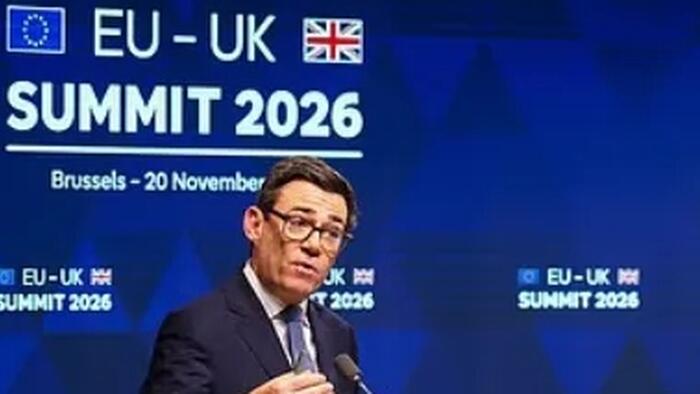
The introduction of the Youth Experience Scheme coincides with a particularly challenging period for the UK’s domestic youth employment landscape, a context that has inevitably drawn scrutiny and generated debate. Latest figures from the Office for National Statistics (ONS) paint a stark picture: between April and June 2026, an estimated 981,000 young people aged 16 to 24 were classified as Not in Education, Employment, or Training (NEET). This figure represents 13.0% of the age group, a slight decrease of 30,000 from the first three months of the year when the count surpassed a million, but notably an increase of 30,000 compared to a year prior. These fluctuating but consistently high numbers highlight a persistent struggle for a significant portion of Britain’s youth to enter the workforce or further their education.
Further compounding these concerns, a Bloomberg analysis of Adzuna and ONS data, published just days before the summit, revealed a worrying trend: Britain’s youth unemployment rate has now risen above the EU average for the first time. The analysis indicated that there are currently almost six young people out of work or education for every entry-level job vacancy, a figure approximately double that recorded in 2016. This imbalance suggests a severe crunch in the entry-level job market, placing immense pressure on young Britons seeking their first professional opportunities.
In light of these domestic challenges, Prime Minister Burnham has repeatedly articulated a commitment to addressing youth unemployment. Just two days before the EU-UK summit, he publicly stated that any deal with Europe would "prioritize British young people for jobs," an assurance seemingly designed to reassure a domestic audience wary of increased competition in the labour market. The implementation of a scheme that could see up to 300,000 young Europeans in the country at any one time will inevitably invite questions about how this promise aligns with the realities of the UK’s economic and social situation.
Reactions and Political Fallout: A "Surrender" or Pragmatic Progress?
The "reset deal" and, specifically, the Youth Experience Scheme, have not been met with universal acclaim within the UK. From certain political quarters, the agreement has been vehemently criticised, labelled a "surrender" even before Prime Minister Burnham arrived in Brussels. Nigel Farage, leader of Reform UK, has been a particularly vocal critic, accusing Burnham of incrementally leading Britain back into elements of the single market, thereby undermining the core principles of Brexit. These accusations resonate with a segment of the electorate that voted for Brexit specifically to regain control over borders and national sovereignty.
The significant increase in the number of visas offered, from an initial 30,000-50,000 to the final 100,000 annually, fuels these criticisms. Opponents argue that this concession signifies a weakening of the UK’s negotiating position and a willingness to compromise on fundamental immigration controls, contrary to the spirit of leaving the EU. For them, the prospect of 300,000 young Europeans residing in the UK at any one time represents a substantial and undesirable influx, particularly when juxtaposed against the backdrop of domestic youth unemployment.
Conversely, proponents of the scheme, likely within the government and pro-European circles, would frame it as a pragmatic and beneficial step towards normalising relations with Europe. They would argue that such an exchange fosters goodwill, facilitates cultural and professional exchange, and could help address specific labour shortages in certain sectors. The reciprocal nature of the scheme, offering similar opportunities for young Britons in the EU, would be highlighted as a benefit, allowing UK youth to gain valuable international experience and skills. Business organisations and educational institutions might also welcome the scheme, viewing it as a means to attract talent, boost economic activity, and enrich the UK’s academic landscape.
Broader Impact and Future Outlook
The Youth Experience Scheme, alongside the other agreements, carries significant implications for the UK across economic, social, and political dimensions. Economically, the influx of 100,000 young people annually could provide a boost to various sectors, particularly those reliant on flexible and younger workforces, such as hospitality, retail, and certain segments of the service industry. While critics point to the domestic youth unemployment figures, proponents might argue that these young Europeans could fill roles that British youth are less willing or able to take, or contribute to areas with specific skills gaps. Their spending and consumption would also contribute to the UK’s GDP. However, the potential for increased competition in entry-level roles, particularly in areas already saturated, remains a valid concern that the government will need to address.
Socially and culturally, the scheme is poised to facilitate a significant exchange. It offers opportunities for greater cross-cultural understanding and collaboration between the UK and EU, potentially mending some of the societal fractures that emerged post-Brexit. For participating individuals, it represents a chance for personal development, language acquisition, and career advancement in an international setting. The integration of such a large cohort of young people, albeit temporary, will require careful planning to ensure adequate housing, social services, and community engagement.
Politically, the Youth Experience Scheme represents a defining moment for Prime Minister Burnham’s administration. It positions him as a leader willing to pursue a more cooperative and pragmatic relationship with the EU, potentially distancing his government from the more hardline stances of previous post-Brexit administrations. However, this approach comes with considerable domestic political risk, particularly from those who view it as a dilution of Brexit’s promise of sovereignty and control. The success or failure of the scheme, and its perceived impact on the UK’s economy and society, will undoubtedly shape Burnham’s legacy and influence future debates on UK-EU relations.
Looking ahead, the resolution of the tuition fee negotiations will be crucial. Should an agreement be reached, it could signal a period of greater stability and deepening cooperation between the UK and the EU. Conversely, a failure to resolve this issue could jeopardise the entire "reset package," demonstrating that fundamental disagreements still linger beneath the surface of diplomatic agreements. The Youth Experience Scheme, therefore, is not merely a mobility programme; it is a barometer of the evolving and complex relationship between the United Kingdom and its European neighbours.

