

President Donald Trump announced on Sunday via a post on Truth Social that Jay Clayton, former Director of National Intelligence, will lead the newly established "Super Intelligence Force." This move signifies a significant governmental initiative aimed at bolstering the United States’ position in the rapidly evolving field of artificial intelligence. The announcement follows media reports from Friday that indicated such an appointment was imminent. Earlier, on September 20, Cointelegraph had reported on President Trump’s intention to form an "AI Force," drawing a parallel to the creation of the Space Force, and to appoint a dedicated "AI czar."
In his Truth Social post, President Trump articulated the mission of this new entity: "The Super Intelligence Force is tasked with coordinating the effort of the Federal Government to ensure that America continues to lead the World in Super Intelligence." This directive underscores a strategic objective to maintain and enhance American technological supremacy in a domain increasingly viewed as critical for national security and economic competitiveness.
Jay Clayton’s background brings a unique blend of regulatory oversight and prosecutorial experience to this new role. During President Trump’s first term, Clayton served as the Chairman of the Securities and Exchange Commission (SEC). In this capacity, he was known for his assertive stance on regulatory enforcement. Notably, on his final day in office, the SEC under his leadership initiated a significant legal action against Ripple, alleging the company’s sale of unregistered securities. Prior to his tenure at the SEC, as the U.S. Attorney for the Southern District of New York, Clayton led the criminal trial against Roman Storm, who was implicated in the activities surrounding the cryptocurrency mixer Tornado Cash.
The appointment and the renaming of "artificial intelligence" to "superintelligence" by President Trump have already garnered reactions. Roman Storm, in a statement, expressed a nuanced concern: "It doesn’t look like we’re headed toward a future that supports open-source AI." This sentiment highlights a potential tension between governmental control and the decentralized, open-source ethos that has characterized much of AI development. Furthermore, reports indicate that Elon Musk, a prominent figure in technology and a known associate of President Trump, is reportedly renaming his AI venture, SpaceXAI, to SpaceXSI, in a gesture that appears to align with the President’s directive. This rebranding reflects the growing significance and perceived strategic importance of artificial intelligence, or "superintelligence" as it is now termed, within the national agenda.

The creation of the Super Intelligence Force and the appointment of a leader with a background in both intelligence and financial regulation suggest a multifaceted approach to managing and directing AI development within the federal government. This includes not only technological advancement but also considerations of national security, economic stability, and regulatory frameworks. The emphasis on "leading the world" implies a competitive stance, likely in response to similar advancements and investments being made by other global powers.
Background and Context of the Super Intelligence Force Initiative
The establishment of a dedicated governmental force for artificial intelligence, or "superintelligence," can be viewed within a broader historical context of national investment in emerging technologies. Throughout history, the United States has recognized the strategic imperative of technological leadership, from the Manhattan Project to the Space Race. The current focus on AI is a reflection of its perceived transformative potential across all sectors of society, including defense, economy, and scientific research.
The term "superintelligence" itself, while not yet a widely adopted technical term, signals a potential shift in how the administration views the future trajectory of AI. It suggests an anticipation of artificial general intelligence (AGI) or even artificial superintelligence (ASI) – theoretical forms of AI that possess capabilities far exceeding those of human intelligence. The creation of a dedicated force indicates a proactive strategy to harness and, potentially, govern such advanced AI.
The choice of Jay Clayton as the leader of this initiative is noteworthy. His experience as SEC Chairman involved navigating complex regulatory landscapes and dealing with novel financial technologies, including aspects of cryptocurrency and blockchain. This expertise could be crucial in addressing the economic and financial implications of advanced AI, as well as ensuring that its development and deployment align with national economic interests and regulatory standards. His background as a U.S. Attorney also suggests an emphasis on enforcement and national security, aligning with the stated goal of maintaining U.S. leadership.
The comparison to the Space Force is also telling. The Space Force was established to address the growing importance of space as a domain for national security and economic activity. Similarly, the Super Intelligence Force suggests that AI is now considered an equally critical and potentially contested domain. This framing implies that national security concerns, including cyber warfare, intelligence gathering, and defense applications, will be a central focus of the new force.

NEAR Intents Hack Sees Resolution Amidst Debate on Decentralization
In a separate development within the cryptocurrency space, the NEAR protocol’s SHIELD AI system played a pivotal role in mitigating a significant hack. The system successfully blocked Bitget’s hacked funds from its INTENTS cross-chain swaps platform. This intervention occurred amidst a period of positive sentiment for NEAR, which had seen its price more than double in the preceding month. The SHIELD AI system’s action, while averting further loss, has also ignited a debate regarding the principles of decentralization versus intervention in the face of exploits.
The incident involved a $3.8 million exploit targeting NEAR Intents, reportedly due to a bug in the Omni deposit and withdrawal infrastructure’s interaction with the NEAR Intents smart contract. For a brief period, sentiment around NEAR turned bearish. However, Alex Shevchenko, General Manager of NEAR Intents, swiftly addressed the situation. He announced that the perpetrator had been identified and issued a 48-hour ultimatum for the return of the funds, warning of legal repercussions.
Shevchenko’s firm stance was articulated as: "You know better than most how responsible disclosure works – this is the last window to use it. After 48 hours, that window closes." This ultimatum proved effective, as the funds were subsequently returned. Following the resolution, Shevchenko urged potential exploiters to utilize bug bounty programs rather than disrupt services, advocating for more constructive engagement with security vulnerabilities.
The decision by SHIELD to block the stolen funds has drawn comparisons and contrasts with other decentralized protocols. THORChain, for instance, has maintained a policy of refusing to block swaps on its platform, citing its commitment to decentralization ideals. This divergence highlights a fundamental tension in the blockchain ecosystem: the extent to which decentralized platforms should intervene to prevent illicit activities, and the potential legal ramifications of such interventions. There is an ongoing discussion about whether SHIELD’s action could create legal liability for future events on the platform. Despite these developments, NEAR has experienced a 11% price decrease over the past week.
Arthur Hayes Predicts Inevitable Money Printing Amidst AI Boom and Global Stress
Arthur Hayes, Chief Investment Officer at Maelstrom fund and co-founder of BitMEX, has expressed a strong conviction that money printing is an inevitable outcome of the current global economic landscape, driven by the AI revolution, the United States’ debt crisis, and increasing financial strain in France. Speaking at a fireside chat during Korea Blockchain Week, Hayes elaborated on his perspective.

Hayes pointed to the immense capital requirements of the AI sector, noting that AI companies require trillions of dollars to finance data centers. This investment is occurring even as the prices of AI services are reportedly declining. "They’ve not really given themselves a lot of options other than print money and make it less bad," Hayes stated, underscoring his belief that quantitative easing and monetary expansion are likely necessary to sustain the AI industry’s growth.
Beyond the AI boom, Hayes also highlighted other factors contributing to his prediction of increased money printing. He mentioned the potential for China to implement monetary stimulus measures and pointed to growing financial stress within France. Evidence of this stress, he noted, includes the widening of credit-default swaps tied to major French banks like BNP Paribas and increased spreads on French government bonds.
Hayes described this impending money printing as a "slow motion train wreck happening underneath the surface," suggesting that while the immediate impact might be to alleviate financial pressures, the long-term consequences could be significant. His outlook suggests a challenging economic period ahead, characterized by increased monetary supply and potential instability in key global economies.
Blast to Cease Operations as Ethereum L2 Network Cites Unsustainable Costs
The Ethereum layer-2 network Blast has announced its decision to wind down operations, citing that its operating costs have surpassed the revenue generated by the chain. In a post on X on Friday, the Blast team stated that they see "no credible path" toward making the network economically sustainable and have urged users to withdraw their assets to the Ethereum mainnet.
The team behind Blast, founded by Tieshun "Pacman" Roquerre, the founder of the NFT marketplace Blur, launched the network in November 2023. The network’s strategy involved offering native yield on Ether (ETH) and stablecoins, coupled with a points program designed to incentivize early adoption and participation, anticipating a future token airdrop. This approach successfully attracted over $2 billion in deposits before its mainnet officially launched in February 2024.

However, the economic model has proven unsustainable. According to data from DeFiLlama, the total value locked (TVL) in Blast’s decentralized finance (DeFi) ecosystem has seen a dramatic decline, falling by more than 98% from its peak in June 2024. The team’s statement acknowledged this challenge: "We launched Blast with the goal of building a self-sustaining chain for users and developers. Unfortunately, the economics of operating the chain no longer make sense." This situation underscores the inherent difficulties in maintaining the economic viability of layer-2 scaling solutions, especially in a competitive and rapidly evolving blockchain landscape.
Ethereum Schedules ‘Glamsterdam’ Upgrade for Sepolia Testnet
Ethereum developers have set October 6th as the activation date for the network’s next significant upgrade, codenamed "Glamsterdam," on the Sepolia testnet. Node operators on the Sepolia network are required to update both their execution-layer and consensus-layer clients prior to the activation to ensure seamless integration.
The Glamsterdam upgrade introduces several key enhancements aimed at improving Ethereum’s performance and security. One of the most notable changes is the implementation of enshrined proposer-builder separation (PBS). This feature will move the handoff between specialized block builders and validators directly into the Ethereum protocol itself. By doing so, it aims to reduce the reliance on external middleware solutions, potentially increasing efficiency and decentralization within the block production process.
Furthermore, Glamsterdam will introduce block-level access lists. These lists will record the specific accounts and storage locations utilized during the processing of each block. This granular tracking is expected to enhance transparency and auditing capabilities. Additionally, the upgrade is designed to enable parallel processing by clients, a feature that should significantly accelerate transaction throughput and overall network performance. These advancements are part of Ethereum’s ongoing roadmap to scale its network and improve its utility as a foundational blockchain for decentralized applications.
Market Performance: Bitcoin Holds Steady, Altcoins Show Mixed Results
As the week concludes, the cryptocurrency market exhibits a mixed performance. Bitcoin (BTC) has demonstrated resilience, trading up 1.4% to $85,821. Ethereum (ETH) has seen a more modest gain of 0.6%, reaching $2,701. XRP (XRP), however, has experienced a slight decline, down 0.8% to $1.50. The total cryptocurrency market capitalization stands at approximately $2.92 trillion, according to CoinMarketCap data.

Among the top 100 cryptocurrencies, several altcoins have posted significant gains this week. Midnight (NIGHT) leads the pack with a remarkable 60.6% increase. StarkNet (SRK) has also performed well, with a 14.5% gain, and Pump.fun (PUMP) has seen a substantial surge of 26.3%.
Conversely, some altcoins have experienced notable downturns. Lighter (LIT) is among the biggest losers, down 22.2%. Zcash (SEC) has seen a decline of 16.4%, and Ethena (ENA) is down 14%. These movements highlight the inherent volatility within the altcoin market, where significant price swings can occur rapidly.
Prediction of the Week: Peter Brandt Forecasts Bitcoin to Reach $600K by 2029
Veteran trader Peter Brandt has signaled a shift towards a bullish outlook on Bitcoin, a departure from his earlier warnings of potential price declines. In a recent interview with Cointelegraph, Brandt expressed optimism, stating, "There’s a good possibility we have seen the low and now are entering a new bull market cycle in Bitcoin." This sentiment is a significant pivot from his July assessment, where he suggested prices could fall into the high $40,000 range.
Brandt has also revised his projections for Bitcoin’s next peak. He now anticipates a late-2029 high ranging between $300,000 and $600,000. This upward revision is a notable increase from his previous forecast of $250,000 to $300,000. "The bull market cycle this time has a very good chance of reaching half a million," he commented, indicating a strong conviction in Bitcoin’s potential for substantial growth in the coming years. This optimistic outlook suggests that Brandt believes the current market conditions are conducive to a prolonged and significant bull run for the flagship cryptocurrency.
Top FUD of the Week: Crypto Hacks Surpass $768M in September, Marking Worst Month of 2026
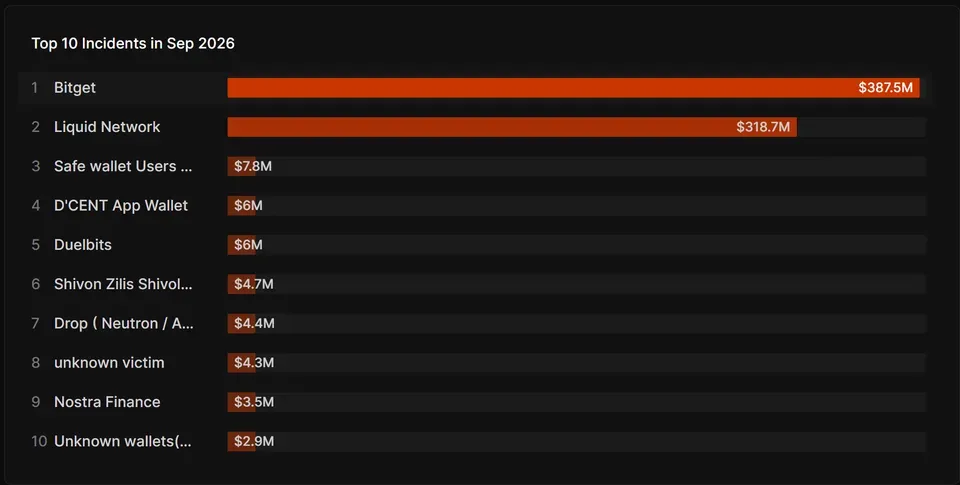
September has been a particularly grim month for the cryptocurrency industry, with security breaches and exploits resulting in losses exceeding $768 million. This figure represents the worst monthly total for hacks and exploits recorded in 2026. Data compiled by two prominent blockchain security firms, PeckShield and CertiK, underscores the severity of the situation.

PeckShield reported 55 major incidents in September, leading to an estimated $766.5 million in stolen funds. CertiK’s analysis identified 97 incidents, with estimated losses reaching $768.4 million. The month was marked by several large-scale breaches, including the $388 million hack of Bitget and a $320 million exploit on the Liquid Network. While reports indicate that over $270 million was later recovered from the Liquid Network incident, the overall financial impact remains substantial.
CertiK commented on the month’s events, stating, "September was a stark reminder of how quickly the threat landscape can shift." Other notable hacks in September included those affecting Safe Wallet ($7.8 million), DCENT ($6 million), and Duelbits ($5.9 million). These recurring security breaches highlight the persistent challenges in securing digital assets and the ongoing need for robust security measures within the cryptocurrency ecosystem.
Aave Founder Clarifies V3’s Immunity Amidst Third-Party Exploit
Stani Kulechov, the founder of the decentralized lending protocol Aave, has clarified that Aave v3 remains unaffected by a recent exploit that drained approximately $305,000 from two Safe multisig wallets. The exploit targeted a third-party adapter built on top of the Aave protocol, not the core Aave v3 smart contracts themselves.
Kulechov stated on X: "This is not Aave v3 contract, it’s third party external adapter built on top of Aave, zero effect on Aave v3." This distinction is crucial, as it underscores that the vulnerability was located in an ancillary component rather than the foundational lending protocol, thereby preserving the security of Aave v3’s main functionalities and user funds.
Tether Reports Assisting in Freezing $550M in Iran-Linked USDT
Stablecoin issuer Tether announced that it has collaborated with authorities to freeze nearly $550 million in Tether (USDT) linked to Iran throughout 2026. The company stated that it has maintained a consistent partnership with international law enforcement agencies for several years. This year alone, Tether has frozen over $130 million in USDT across four separate wallets. In April, a significant portion of these funds, more than $344 million, was frozen and identified as being linked to the Central Bank of Iran.
Tether’s statement comes in the wake of a report released by Democratic investigators on the Senate Permanent Subcommittee on Investigations. This report alleged that USDT has become a primary channel for Iran to circumvent international sanctions. The investigators found that a substantial majority, 84%, of 846 crypto wallets that have been sanctioned for their ties to Iran have exclusively or predominantly transacted in USDT. These findings prompted U.S. Senator Richard Blumenthal to call for investigations by the Treasury and Justice departments into potential sanctions violations. The collaboration between Tether and law enforcement in freezing these assets reflects an increasing focus on utilizing blockchain analytics and stablecoin issuer cooperation to enforce sanctions and combat illicit financial activities.
Top Magazine Features: Examining THORChain vs. NEAR, Stablecoin Risks, and Legal Ramifications
Cointelegraph’s magazine section this week features in-depth analysis on several critical topics within the cryptocurrency space. A prominent article, "Furious debate about THORChain vs NEAR shows idealism has limits," delves into the contentious discussion surrounding the Bitget hack. The debate centers on the philosophical divide between adhering to "permissionless and decentralized" technological ideals and the practical imperative of intervening to prevent illicit activities, even when such intervention is possible.
Complementing this, another feature, "Could THORChain face prosecution over stolen Bitget funds? Legal opinion," explores the complex legal landscape. It questions whether the developers of THORChain could face prosecution for money laundering, given their inability or refusal to block addresses associated with the significant Bitget hack. Crypto lawyer Yuriy Brisov weighs in, suggesting the situation is intricate.
A third significant piece, "Stablecoins can drain from banks and nations at lightning speed," examines the potential systemic risks posed by stablecoins. The article highlights their high liquidity and 24/7 settlement capabilities, which could enable rapid capital flight from banks and entire nations. The piece explores whether stablecoins represent more of a risk or an opportunity, depending on the perspective from which they are viewed. These articles collectively offer a deep dive into the evolving challenges and debates shaping the future of decentralized finance and digital assets.

