

The past several years have witnessed an extraordinary surge in the United States stock market, raising questions among investors about the sustainability of current valuations. The S&P 500 index, a benchmark for broad market performance and a cornerstone of many retirement portfolios, has appreciated by approximately 57 percent in just the last two years, and its value has more than doubled over the past five years. This significant growth has profoundly impacted individual wealth, propelling some investors, who perceived themselves as merely halfway to retirement during the COVID-19 era, well past their financial independence goals. Conversely, those already retired are experiencing substantial increases in their net worth, potentially leading to reconsiderations of spending habits or luxury acquisitions.
This rapid appreciation naturally prompts critical inquiry: Is this growth a reflection of genuine economic strength and innovation, or does it signal an impending financial bubble, potentially leading to a significant market correction? A common query among investors, as recently articulated in a direct inquiry, highlights this concern: "The market seems to be in a huge bubble right now due to all sorts of hype around Artificial Intelligence. Does this make it more vulnerable to a huge crash in the future, and will it affect my retirement?" Addressing this multifaceted question requires a detailed examination of current market dynamics, historical economic patterns, and the transformative potential, as well as the inherent uncertainties, of Artificial Intelligence.

Decoding Market Valuation: The Price-to-Earnings Conundrum
To properly assess the current market climate, it is essential to revisit the fundamental principles of stock valuation. A stock represents a fractional ownership in a company, entitling the holder to a share of its future earnings. Conceptually, this is akin to owning a rental property. When an individual owns a rental house, they are entitled to collect rent, and after covering operational expenses, the remainder constitutes their profit. The market price of this rental house is ideally correlated with the steady stream of income it generates. If the average sale price of similar rental properties increases significantly while the rental income remains static, the property’s paper value may rise, but the actual cash flow to the owner does not. True profitability only increases if the business—the rental property—becomes more efficient or generates higher income, perhaps through renovations, streamlined expenses, or increased rents. When such a property is sold to another investor, the purchase price should logically reflect the discounted value of that anticipated future income stream. For instance, a house generating $24,000 annually in net profit selling for $240,000 implies a price-to-earnings (P/E) ratio of 10 ($240,000 / $24,000). If that same property is sold for $480,000, the P/E ratio doubles to 20, indicating a less favorable return for the new buyer.
Applying this analogy to the stock market reveals a similar trend. An investment of $100,000 in a broad market index in 2019, with dividends reinvested, would have grown to approximately $256,960 by 2025—a 157% gain. However, during the same period, the underlying company earnings attributable to that $100,000 investment only increased from $5,290 to $7,540, a more modest 42% gain, according to financial analysis platforms like multpl.com. This disparity signifies a substantial increase in the market’s aggregate Price-to-Earnings (P/E) ratio, which has risen from approximately 20 in 2019 to around 30 today. This elevation suggests that investors are currently paying a higher premium for each dollar of corporate earnings compared to five years ago. Much like the rental property scenario, this implies that future returns, as a percentage of the current portfolio value, are likely to be lower than they would have been had stocks been acquired at more modest valuations. While owning stocks remains profitable in the long term, the entry point at a higher P/E ratio inherently moderates future percentage gains.
The Engine of Growth: The "Magnificent Seven" and AI’s Influence
The narrative surrounding rising earnings, however, introduces a crucial nuance. Just as a rental property’s perceived value might increase if a major economic development, such as a new corporate campus, is anticipated nearby, leading to future rent hikes, so too can a company’s stock price surge on the expectation of accelerated future profits. This phenomenon was observed during the COVID-19 pandemic with companies like Peloton, whose stock soared on the assumption of a permanent shift to home fitness, only to retreat as reality set in.

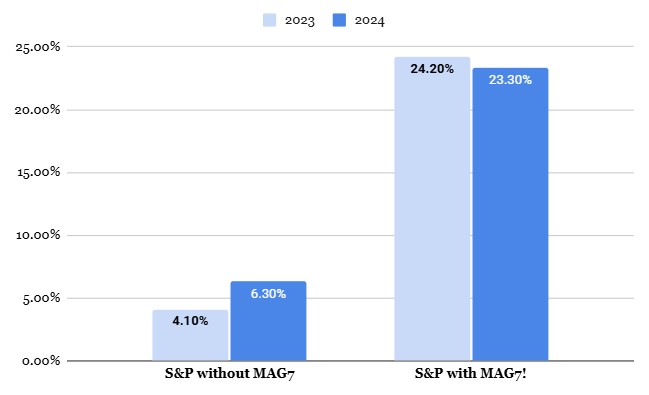
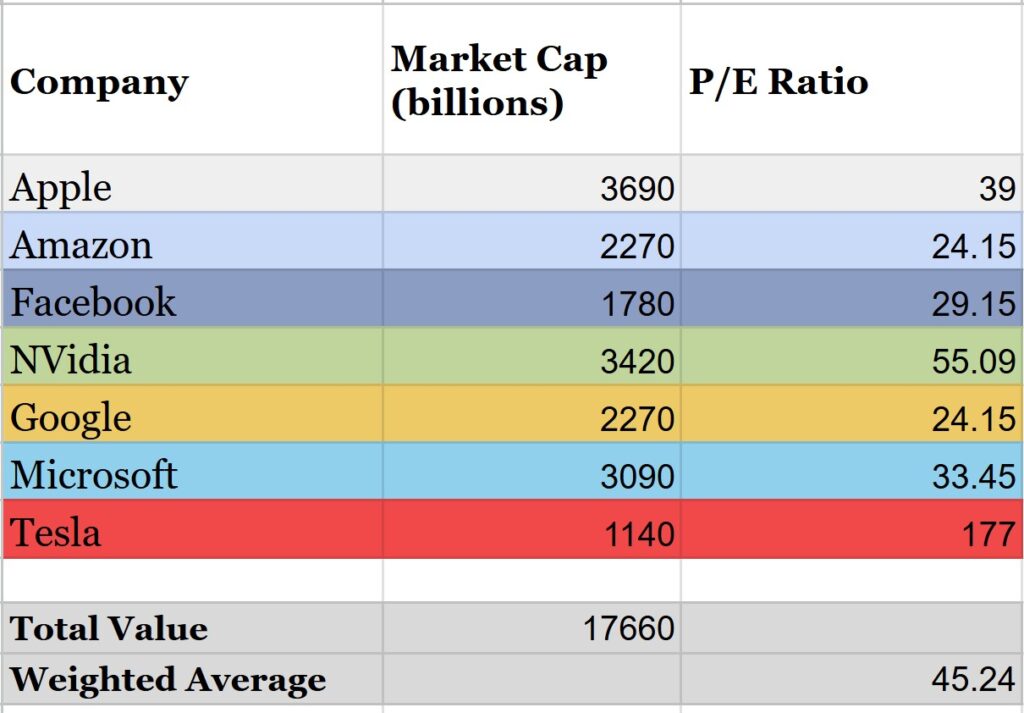
In the current market, the surge is not uniformly distributed across the S&P 500. A closer inspection reveals that approximately three-quarters of the recent market growth is attributable to just seven mega-cap technology companies: Apple, Nvidia, Microsoft, Amazon, Alphabet (Google), Meta Platforms (Facebook), and at times, Tesla. These entities, collectively dubbed the "Magnificent Seven," represent over 25% of the entire S&P 500’s market capitalization, totaling an estimated $17.66 trillion. Their individual P/E ratios are significantly higher than the broader market, with a weighted average P/E of around 45, starkly contrasting with the P/E of approximately 20 for the remaining 493 companies in the index. This concentration of value and high valuation within a select group suggests that while the overall U.S. economy is expected to maintain a healthy trajectory, investors are placing disproportionately high expectations on these tech giants for future growth.
The primary catalyst for this concentrated market euphoria is the rapid advancement and widespread hype surrounding Artificial Intelligence. Six of the Magnificent Seven are heavily investing hundreds of billions of dollars into building colossal data centers filled with supercomputers designed for AI development and deployment. Nvidia, the seventh, is a direct beneficiary of this spending, manufacturing the specialized chips and hardware essential for these AI infrastructures. This demand has allowed Nvidia to command premium prices and ship products by the trainload. This "AI Infrastructure" boom is the first wave of impact. Beyond this, a myriad of other industries anticipate a new era of unprecedented productivity gains driven by AI, projecting faster profit growth than ever before. AI’s capabilities are rapidly expanding, encompassing tasks from complex data analysis (e.g., identifying legal loopholes or debugging code) to autonomous driving, medical diagnostics, and even the development of humanoid robotics for mechanical labor. The prevailing sentiment is that humanity is on the cusp of accessing an almost infinite, highly intelligent workforce that operates at minimal cost, effectively removing historical constraints on intelligence and labor.
While this vision of transformative AI is compelling and widely anticipated by many experts, including those closely following the field, the exact timeline and the extent to which these projected profits will materialize remain uncertain. Potential challenges include unforeseen cost overruns, intensifying competition, regulatory hurdles, and even the complex societal implications of advanced AI, such as widespread unemployment and potential social upheaval if wealth becomes excessively concentrated. The hypothetical scenario of a single entity, like OpenAI’s Sam Altman, accumulating vast fortunes while the global workforce faces displacement, underscores the profound uncertainties embedded in this technological revolution.

Historical Context and Economic Realities
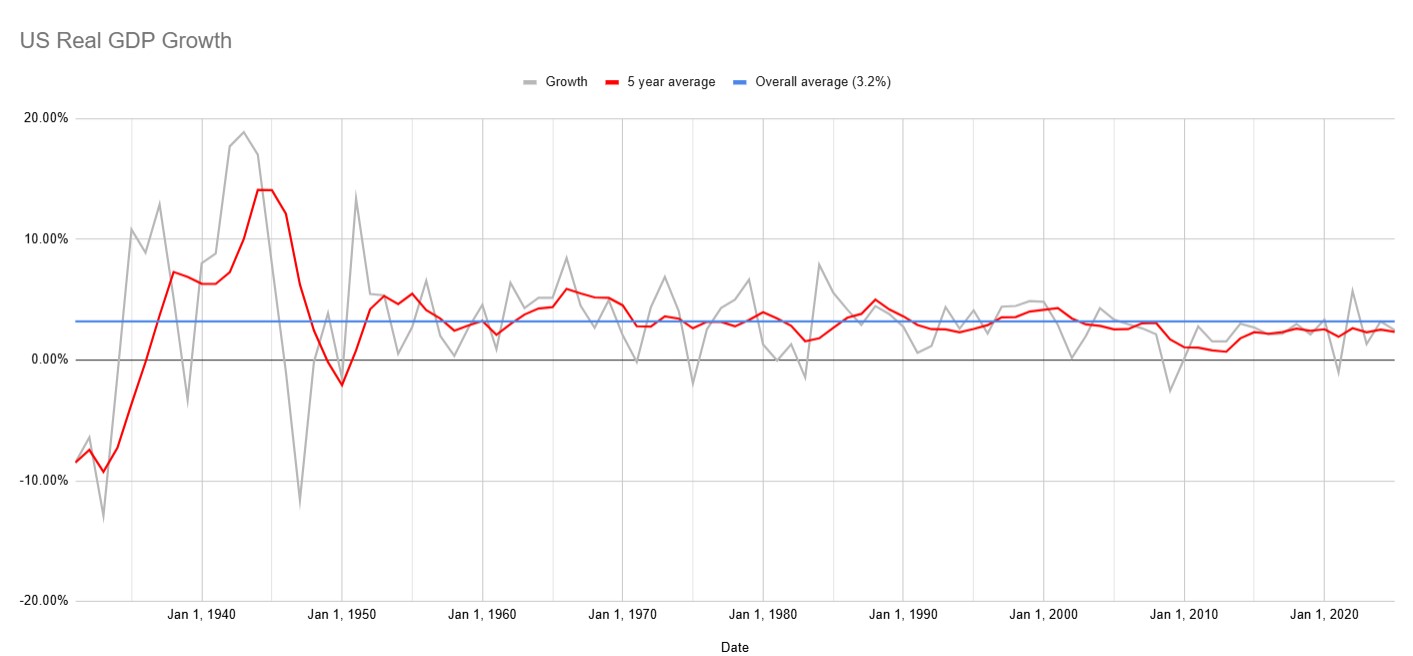
In navigating these uncertainties, historical economic data offers a valuable perspective. The long-term average real GDP growth rate for the U.S. economy has remained remarkably consistent, hovering around 3% annually after adjusting for inflation, across decades of drastic technological and societal change. Interestingly, recent decades have actually exhibited a slightly slower average growth rate, which, when juxtaposed with the current elevated stock market valuations, presents a noticeable divergence. This historical context suggests that while innovation is constant, the fundamental rate of economic expansion has a persistent long-term average, implying that current market enthusiasm might be discounting this historical stability.
Past market cycles provide further context. The dot-com bubble of the late 1990s, for instance, saw similar euphoria around nascent internet technologies, leading to inflated valuations for companies with little to no profit. While today’s tech giants are largely profitable, the rapid escalation in P/E ratios, particularly within the Magnificent Seven, evokes cautionary parallels. Understanding these historical patterns helps investors distinguish between genuine, sustainable growth driven by innovation and speculative frenzies that often precede market corrections.
Expert Perspectives on Future Returns
Given the current market conditions, leading financial institutions and veteran investors offer nuanced perspectives on future returns.
Vanguard’s 10-Year Outlook
Vanguard, a titan in the index fund industry, annually publishes its 10-year annualized return projections, providing a forward-looking guide for investors. Their latest forecasts suggest that international stocks and even bonds are expected to outperform U.S. stocks in the coming decade. This projection is largely underpinned by the significantly lower P/E ratios observed in international markets. For example, Vanguard’s VXUS fund, which tracks international stocks, currently has a P/E ratio of approximately 15.9, making European and other global equities appear "on sale" at nearly a 50% discount compared to their U.S. counterparts. However, it’s crucial to note that Vanguard’s predictions in recent years have been consistently proven incorrect, primarily because the concentrated AI boom has predominantly benefited U.S. companies. This highlights the challenge of forecasting in a rapidly evolving technological landscape where innovation can create unforeseen market dynamics.
Warren Buffett’s Prudent Stance
Warren Buffett, the esteemed "Oracle of Omaha" and CEO of Berkshire Hathaway, remains a beacon of prudent investing. His annual shareholder letters consistently offer invaluable insights into the economy and market. In the current environment, Buffett’s actions signal a cautious outlook: Berkshire Hathaway is holding an unprecedented $334 billion in uninvested cash. This substantial cash reserve suggests that Buffett and his team perceive few genuinely undervalued opportunities in the current market, even considering Berkshire’s own shares to be slightly overvalued at their recent P/E ratio of around 21. Buffett’s philosophy of value investing dictates buying excellent businesses at fair prices, and the current accumulation of cash indicates that such opportunities are scarce.
Navigating the Current Investment Landscape
In light of these dynamics, investors must carefully consider their strategies. While market timing remains an elusive and generally unprofitable endeavor, certain alternative approaches warrant attention.
Diversification Beyond U.S. Equities
The concentration of market gains in a few U.S. tech giants, coupled with Vanguard’s forecast, reinforces the importance of diversification. Allocating a portion of one’s portfolio to international stocks and bonds, as seen in diversified strategies like those offered by robo-advisors such as Betterment, can potentially offer a more balanced risk-return profile. A weighted average P/E ratio for a typical diversified core portfolio might be around 22, offering a more moderate valuation than the S&P 500’s current level. While a U.S.-only portfolio has historically outperformed over the past decade, future conditions may favor broader international exposure, particularly if valuations abroad catch up or if the AI boom’s benefits globalize more evenly.
Reconsidering Debt Reduction
The current financial environment, characterized by higher interest rates, also prompts a re-evaluation of personal debt management. Historically, maintaining a mortgage and investing surplus cash in index funds often yielded better long-term returns. However, with expected lower stock returns due to high valuations and mortgage interest rates potentially at 7% or higher, the equation shifts. Paying off a mortgage can now be viewed as securing a guaranteed 7% return on that capital, a return that is highly competitive and risk-free compared to the uncertain future returns of an elevated stock market. This strategy also provides the psychological benefit of being debt-free, a factor that many individuals prioritize.
The Enduring Wisdom of Long-Term Investing
Despite the prevailing market excitement and the inherent uncertainties, the fundamental tenets of long-term investing remain robust. Attempting to time market peaks and troughs has consistently proven to be a losing game for the vast majority of investors. The most reliable strategy continues to be consistent investment in broad market index funds, ignoring daily headlines and short-term market fluctuations. The U.S. economy, and by extension, global economies, will continue to grow, and corporate earnings will generally follow suit. While future investors might choose to pay a lower multiple for those earnings, the long-term upward trajectory of well-managed businesses persists.

Beyond the Numbers: The Broader Implications of AI
Beyond the immediate financial implications, the AI revolution carries profound societal implications. The vision of an "infinite workforce" of intelligent AI employees promises unprecedented productivity and problem-solving capabilities across all sectors. However, this same potential raises significant questions about the future of human labor, potential mass unemployment, and the ethical governance of increasingly autonomous and intelligent systems. The concentration of control and wealth generated by these technologies could reshape societal structures in ways that are currently difficult to fully comprehend. Acknowledging these broader implications is crucial for a holistic understanding of our future, irrespective of daily market movements.
Conclusion: Steadfast Principles in a Dynamic Market
In conclusion, while the current stock market presents a fascinating and somewhat unprecedented scenario driven by the transformative potential of Artificial Intelligence, the core principles of sound financial management remain unchanged. Investors are advised to maintain a calm and disciplined approach, continuing to invest consistently in diversified portfolios. Trying to predict the exact timing of future crashes or booms is largely futile. Instead, focus on long-term goals, asset allocation, and personal financial well-being.
Ultimately, the most guaranteed "market-beating returns" often lie outside the financial sphere. Reinvesting time and energy, which might otherwise be spent worrying about market fluctuations, into physical activity, enjoying the outdoors, and fostering personal growth offers invaluable, tangible returns that contribute directly to a fulfilling life. While staying informed through reputable sources like The Economist is beneficial for understanding broader economic trends, obsessing over daily news headlines is counterproductive to a healthy investment mindset.
The market will experience manias and panics, but steadfast adherence to a long-term strategy, coupled with a focus on personal well-being, remains the most reliable path to financial and personal prosperity. The future, while unknown, is best navigated with prudence, patience, and a balanced perspective.

