

Nearly two decades into a lifestyle typically associated with unbridled leisure, individuals who achieve early retirement are increasingly confronting a complex paradox: the very freedom they sought can become a double-edged sword, challenging intrinsic motivation and leading to unforeseen declines in productivity and personal fulfillment. While the initial years of early retirement often brim with self-directed projects and cherished family time, the sustained absence of external pressures can gradually erode the internal drive necessary for consistent, challenging engagement. This phenomenon, explored through observations and expert analysis, highlights a critical, often overlooked aspect of long-term personal autonomy.
The Allure and Reality of Financial Independence, Retire Early (FIRE)
The Financial Independence, Retire Early (FIRE) movement has captivated a growing demographic, promising liberation from the conventional nine-to-five grind. Proponents envision a life rich in family engagement, health pursuits, adventurous travel, creative endeavors, and community contributions—all unconstrained by professional obligations. For many, this vision materializes beautifully in the initial phase, allowing for dedicated time with children, extensive home improvement projects, international expeditions, and the pursuit of long-deferred hobbies. The early years often see a natural channeling of freed time into these highly valued areas, driven by a fresh sense of liberation and purpose.
However, as the novelty wears off and the immediate "to-do" list of deferred activities dwindles, a subtle shift can occur. The absence of mandatory deadlines, performance reviews, or external accountability structures—the very elements often resented in traditional employment—can paradoxically diminish the impetus to undertake more demanding, yet ultimately more rewarding, tasks. Psychologists refer to this as a potential aspect of hedonic adaptation, where the initial joy and motivation derived from a new state of freedom can normalize over time, requiring new stimuli or challenges to maintain engagement.

The Erosion of Self-Directed Drive: A Gradual Decline
For many who successfully navigate the financial aspects of early retirement, the psychological landscape presents a different kind of challenge. The complete absence of tasks one must do can morph into an environment where one never has to do anything one doesn’t feel like doing. While this sounds like an ideal state, it can, for some, lead to a gradual deceleration of ambitious pursuits. The spectrum of outcomes is broad, ranging from profound self-actualization through philanthropic ventures and innovative projects to a more passive existence marked by increased screen time and a diminishing appetite for strenuous activities.
Observations suggest that the initial decade of early retirement often maintains a robust level of activity, particularly if individuals transition from highly demanding careers or have young families requiring significant attention. Building or renovating homes, embarking on extensive travel, engaging in public speaking, or maintaining a popular blog represent significant commitments that fill the void left by formal employment. However, as family dynamics evolve—for instance, children reaching adulthood—and as the immediate drive to "build stuff" or "adventure" becomes less urgent, a deceleration can be observed. This manifests as a reduced frequency in undertaking complex projects, a decreased focus on demanding creative work, and a preference for easier, more passive forms of engagement.
The Pursuit of Wellness and the Challenge of Implementation
Recognizing this subtle drift towards complacency, many individuals in early retirement turn their attention to health and wellness, seeking to boost energy, focus, and overall motivation. This often involves intensive study of nutrition, exercise physiology, and psychological strategies for habit formation. The market for self-improvement literature, podcasts, and programs designed to enhance physical and mental acuity is robust, reflecting a widespread desire to optimize personal performance.
Indeed, the acquisition of knowledge regarding daily habits, the avoidance of excessive comfort, and the benefits of structured physical activity often yields initial positive results. New routines are adopted, and tangible improvements in well-being are reported. However, a recurring challenge is the consistent implementation of this knowledge. The absence of external pressure means that the internal discipline required to sustain demanding routines—especially when the initial enthusiasm wanes—can be difficult to maintain. Individuals may find themselves accumulating effective strategies but struggling to apply them consistently, leading to a gap between intention and accomplishment.

Overcoming Procrastination: The "Moment of Hesitation" Strategy
A critical insight emerging from these experiences is the identification of the "moment of hesitation" as a pivotal point in personal discipline. This refers to the instant when an individual contemplates a desired action (e.g., exercising, working on a challenging project) but is met with an internal resistance or a feeling of not wanting to do it. Traditionally, this hesitation often serves as a trigger for excuses, leading to postponement or abandonment of the task.
However, a refined strategy involves re-framing this moment of hesitation not as a barrier, but as a direct trigger for action. Instead of allowing the thought "I don’t feel like it" to derail the intent, it becomes an immediate cue to initiate the activity. For instance, instead of meticulously planning the "perfect" time and conditions for a workout, the simple thought "I want to work out today, but I don’t feel like it" immediately prompts the action of putting on shoes and heading to the gym. This counterintuitive approach bypasses the analytical and excuse-generating parts of the brain, directly linking internal resistance with immediate physical action.
This method, while initially challenging, proves effective in consistently engaging in activities that are known to be beneficial but are often avoided due to their demanding nature. It transforms internal friction into a catalyst for productive behavior, leading to more regular engagement in high-value activities such as intense physical training, focused creative work, or complex problem-solving.
The Influence of Extreme Exemplars: David Goggins and Redefining Limits
The concept of pushing past perceived limits finds profound resonance in the lives of extreme disciplinarians, notably figures like David Goggins. Goggins, a former Navy SEAL, ultra-endurance athlete, and motivational speaker, presents a stark contrast to the challenges of complacency. His life story, marked by overcoming severe childhood trauma and transforming himself through relentless physical and mental exertion, serves as a powerful testament to the plasticity of human potential.

Goggins’s achievements are extraordinary: completing multiple Hell Weeks as a Navy SEAL, enduring countless ultra-marathons (including running 240 miles in four days), and setting a world record for pull-ups (4,025 in 24 hours). These feats, often pushing the human body to its absolute breaking point, illustrate that many perceived physical and mental barriers are, in fact, self-imposed. While his lifestyle is not aspirational for most, his philosophy—that individuals are capable of far more than they believe—provides a powerful framework for reassessing personal limitations.
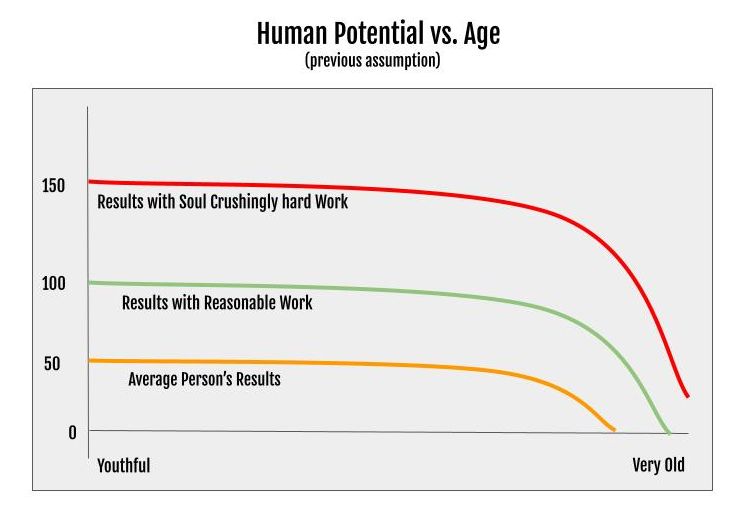
This perspective shifts the understanding of human capability from a fixed, genetically predetermined state to a highly malleable one, primarily governed by mental fortitude. Instead of viewing personal potential as a narrow range constrained by inherent abilities or external circumstances, the Goggins narrative suggests a vast, largely untapped reservoir of resilience and strength. This re-evaluation can be profoundly empowering, encouraging individuals to challenge their comfort zones and explore new frontiers of personal achievement.
Tangible Outcomes and Broader Applications of Discipline
The application of this "hesitation-as-trigger" strategy, bolstered by inspiration from extreme exemplars, has demonstrated tangible improvements across various domains. In physical fitness, individuals report breaking through long-standing plateaus, achieving significant gains in strength, flexibility, and overall physical conditioning. For instance, consistent daily gym attendance, even when initial motivation is low, has led to noticeable increases in lean muscle mass and a return to fitness levels reminiscent of younger years.
Beyond physical training, the same principle applies to intellectual and creative pursuits. The tendency to procrastinate on writing articles, engaging in complex problem-solving, or pursuing demanding social interactions can be circumvented by using the moment of internal resistance as a prompt for immediate action. This allows for a more consistent output of high-quality work and fosters greater engagement with community and collaborative endeavors. While excessive work, even self-directed, can be detrimental, finding the "right level" of challenging activity is crucial for maintaining a sense of purpose and fulfillment in retirement.
Sustaining Inspiration and Fostering Continuous Growth
Maintaining this elevated level of self-discipline and motivation is often an ongoing process that benefits from continuous engagement with inspiring content and challenging philosophies. Many individuals find value in regularly revisiting works by figures who champion discipline, resilience, and personal accountability. Audiobooks and literary works from authors like David Goggins ("Can’t Hurt Me," "Never Finished"), Peter Attia ("Outlive"), and Jocko Willink ("Extreme Ownership") provide a steady stream of insights and practical strategies for cultivating mental toughness and sustained effort.
While some critics may categorize elements of this self-improvement literature as "bro science" or "toxic masculinity," the pragmatic approach adopted by many is to extract and apply the messages that are personally effective, discarding what does not resonate. The core benefit lies in being exposed to narratives and methodologies that encourage individuals to "reach a little higher" and to tap into reserves of energy and focus that might otherwise remain dormant.
Conclusion: Finding Balance in the Pursuit of Purpose
The journey through early retirement underscores a fundamental truth about human motivation: absolute freedom, while desirable, necessitates a robust internal compass and a strong commitment to self-discipline. Without external structures, the responsibility for maintaining purpose, engagement, and growth falls entirely on the individual. The paradox is that to truly enjoy the benefits of freedom, one must often paradoxically impose self-discipline, willingly undertaking tasks that are challenging but ultimately enriching.
The lessons gleaned from those navigating this landscape, and from figures who exemplify extreme self-mastery, offer valuable insights for anyone seeking to maximize their potential, regardless of their career stage. By recognizing the "moment of hesitation" as an opportunity for action and by continuously seeking inspiration to push beyond perceived limitations, individuals can transform the boundless expanse of freedom into a fertile ground for sustained personal development and profound fulfillment. The ultimate goal is not to emulate extreme lifestyles, but to internalize the principle that human potential is vast, and that a disciplined approach to one’s chosen challenges is key to a vibrant, purposeful life.

