
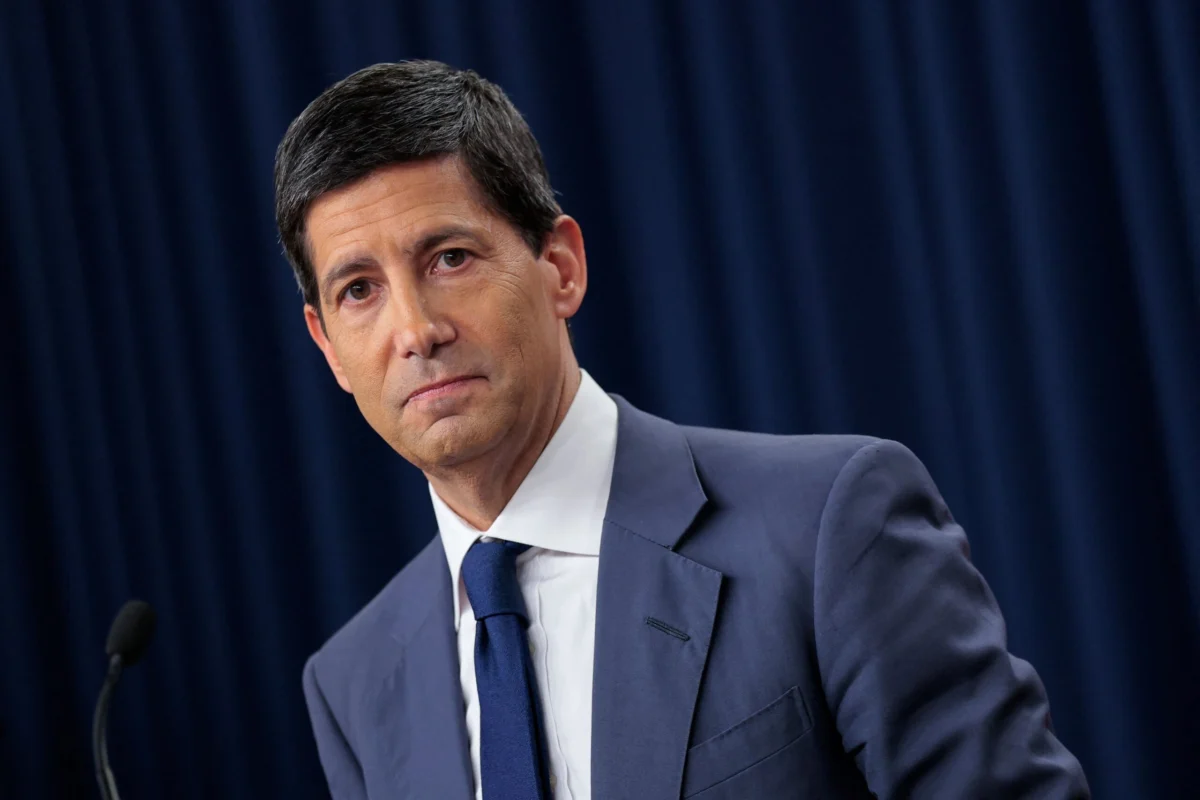
In the six months since assuming the helm of the U.S. Federal Reserve, Chairman Kevin Warsh has notably cultivated an aura of deliberate ambiguity regarding the future trajectory of monetary policy and interest rates. This measured silence, a stark departure from the forward guidance favored by his immediate predecessors, has inadvertently opened the floodgates for his Federal Open Market Committee (FOMC) colleagues, who have seized the opportunity to articulate a diverse, and at times discordant, range of opinions on the central bank’s strategy to combat a stubbornly entrenched "inflation bug." This burgeoning phenomenon, dubbed "Fedspeak," has intensified into a critical public debate, reshaping market expectations and challenging the traditional coherence of the Fed’s communication strategy at a juncture laden with significant economic and geopolitical uncertainties.
The New Chairman’s Stance and its Roots
Kevin Warsh’s ascension to the Federal Reserve chairmanship, a role he took up in April 2026, was marked by a clear philosophical inclination: a deep-seated skepticism towards explicit forward guidance. His view, articulated in various forums prior to his appointment and subtly reinforced through his actions, posits that policymakers risk "handcuffing" future decisions by committing to specific rate paths or economic forecasts too far in advance. This philosophy prioritizes flexibility, allowing the committee to react dynamically to evolving economic data rather than being constrained by prior declarations. This approach contrasts sharply with the communication strategies employed by previous chairs like Ben Bernanke, Janet Yellen, and Jerome Powell, who often utilized forward guidance—whether through qualitative statements, quantitative targets, or the "dot plot" of individual FOMC members’ rate projections—to manage market expectations and enhance the effectiveness of monetary policy. The underlying premise of traditional forward guidance is to reduce uncertainty, guide financial conditions, and ensure that market participants understand the Fed’s reaction function, thereby making policy actions more impactful. Warsh’s deliberate retreat from this practice marks a significant pivot, introducing a new, less prescriptive era of Fed communication.
A Timeline of Mounting Tensions and Divergent Voices
The initial months of Warsh’s tenure saw a gradual shift in the Fed’s public discourse. While the chairman maintained his reserved posture, the vacuum he created began to be filled by the increasingly vocal commentary from other FOMC participants. This dynamic came to a head following the October 2026 FOMC meeting. Despite widespread market expectations for a rate hike, the committee opted to maintain the federal funds rate at its current level. The minutes from this pivotal meeting, released in mid-November, revealed a palpable tension within the committee. Notably, some officials who had favored an October hike indicated they would have accepted a pause if it had been accompanied by clear forward guidance signaling a high probability of future tightening. This particular point underscored the growing divide between Warsh’s communication philosophy and the preferences of a significant segment of the committee, who believed such signals were crucial for managing market perceptions and policy efficacy.
In the wake of the October meeting and the release of its minutes, the volume of "Fedspeak" escalated dramatically. According to an analysis by Bank of America, the two-week period following the October meeting saw more public statements from Fed officials than any similar period since early 2025. This surge was not merely in quantity but also in the diversity, and often contradiction, of opinions expressed. Fed officials, from regional bank presidents to governors, began to articulate their individual views on the appropriate path for interest rates with unprecedented frequency and assertiveness.

Divergent Voices: Hawks, Doves, and the Nuanced Middle
The intensified public discourse has illuminated a deepening ideological divide within the FOMC, broadly categorizing members into "hawks" and those advocating a more "measured pace," though a strict "doves" camp seems less prominent amidst the current inflation concerns.
-
The Hawkish Charge: Leading the charge for more aggressive action are figures like Federal Reserve Governor Christopher Waller and St. Louis Fed President Alberto Musalem. Both have openly expressed concerns that the economy’s persistent inflation requires a more forceful response. Waller, in particular, has floated the possibility of a substantial 50-basis-point rate hike at the upcoming December meeting, a move that would signal a significant acceleration in the tightening cycle. Cleveland Fed President Beth Hammack, who cast a dissenting vote against the October pause in favor of a quarter-point hike, has also voiced a hawkish stance. While attempting to "tiptoe" around the sensitive issue of forward guidance, Hammack has made it clear that her conditional expectations point towards further tightening, reflecting a strong conviction that the current inflationary pressures demand prompt and decisive action. These officials underscore the risk of allowing inflation to become further entrenched, arguing that a proactive approach, even if more aggressive in the short term, would ultimately prevent a more painful and prolonged battle against price instability.
-
Navigating the Divide: The Nuanced Middle: Other FOMC members, while acknowledging the inflation challenge, have sought to thread a finer needle, emphasizing the importance of transparency without the rigidity of explicit forward guidance. Chicago Fed President Austan Goolsbee, for instance, has expressed sympathy for Chairman Warsh’s aversion to "falsely precise" forward guidance, which he believes can undermine credibility if economic conditions shift. However, Goolsbee also strongly advocates for transparency, arguing that "each person who sits around that table" should explain their view of the world and business conditions to avoid surprising the markets. This perspective highlights the tension between providing clarity and maintaining policy flexibility. Similarly, Philadelphia Fed President Anna Paulson, in a recent speech on policy communication, defended the variety of voices emanating from the Fed. She argued that markets are capable of discerning the direction of policy without specific guidance, provided they understand the underlying economic framework influencing decisions. Paulson emphasized that "volume is not the same as clarity" and that the mixture of voices "guards against any single communication becoming the only one that matters," suggesting a belief in the wisdom of collective, albeit diverse, intelligence. These nuanced positions reflect an effort to balance the need for public understanding with the imperative of adaptability in a volatile economic landscape.
The Persistent Inflation Challenge: Data and Context
The backdrop to this communication conundrum is a persistent inflationary environment that continues to defy the Federal Reserve’s 2% target. Current inflation indicators, such as the Consumer Price Index (CPI) and the Personal Consumption Expenditures (PCE) price index, remain stubbornly above 3% on an annual basis. While core inflation measures, which strip out volatile food and energy prices, have shown some signs of moderation, they too remain elevated, signaling broad-based price pressures across the economy. This "inflation bug" is a complex beast, stemming from a confluence of factors: lingering supply chain disruptions from the pandemic, robust consumer demand supported by a strong labor market, and, more recently, geopolitical events that have impacted commodity prices. Wage growth, while beneficial for workers, has also contributed to inflationary pressures, fueling concerns about a potential wage-price spiral if not adequately addressed.
The Fed’s dual mandate—to achieve maximum employment and stable prices—is currently heavily skewed towards battling inflation, given the robust labor market conditions. The unemployment rate remains historically low, and job growth, while moderating, continues to be solid. This economic strength, paradoxically, allows the Fed more room to raise rates without immediately imperiling employment, but it also means that demand-side inflation remains a significant concern.

Despite the current elevated inflation, market measures of longer-term inflation expectations have shown a notable decline. For instance, five-year forward expectations, derived from the Treasury market, have fallen to their lowest levels since April. This metric, which reflects investors’ beliefs about average inflation over a five-year period starting five years from now, suggests that financial markets might be less concerned about sustained high inflation over the very long term, even as policymakers warn about the immediate challenges. This divergence between current inflation readings and longer-term market expectations adds another layer of complexity to the Fed’s communication challenge, as it needs to address both immediate price stability and anchor long-term expectations.
Decoding ‘Fedspeak’: Volume, Clarity, and Market Reactions
The sheer volume of "Fedspeak" in recent weeks, as highlighted by Bank of America economist Aditya Bhave, is unprecedented in recent memory. Bhave notes that Warsh’s reluctance to provide explicit guidance might inadvertently be incentivizing other FOMC members to speak more frequently and forcefully, as both "hawks" and those advocating a more measured approach feel compelled to articulate their positions in the absence of a clear unifying signal from the Chair. This "family fight," as Warsh himself has reportedly referred to the internal deliberation process, is now playing out in the public arena.
Financial markets, the primary recipients of this deluge of information, have largely interpreted the chorus of voices in a hawkish manner. According to the CME Group’s FedWatch Tool, which tracks the probability of rate changes based on futures contracts, traders are currently pricing in a 100% chance of at least a quarter-percentage-point hike at the December FOMC meeting. There is also a non-negligible, though smaller, probability of a more aggressive half-point move. Furthermore, the market anticipates a high likelihood of a follow-up increase in January, with potentially one more before the end of 2027. This strong market conviction underscores the impact of the hawkish Fedspeak, even amidst the varied opinions.
However, this increased volume and conflicting nature of communication come with risks. As Bhave warns, "The result of this back-and-forth is undue rates volatility in already turbulent times." Market participants, accustomed to a more centralized and coordinated communication strategy, may find it challenging to distill a coherent message from the disparate voices. This uncertainty can lead to increased volatility across asset classes, including equities, bonds, and foreign exchange, as investors constantly re-evaluate their positions based on the latest pronouncements. For instance, bond yields might experience sharper swings, and equity markets could react erratically to individual Fed officials’ comments, rather than responding to a unified policy signal.
Implications for Fed Credibility and Policy Effectiveness
The evolving communication strategy under Chairman Warsh carries significant implications for the Federal Reserve’s credibility and the overall effectiveness of its monetary policy. Credibility, as highlighted by Chicago Fed President Austan Goolsbee, is paramount for a central bank. If markets and the public perceive a lack of cohesion or a confused message, it can erode trust in the Fed’s ability to achieve its objectives. While Warsh’s "family fight" concept aims to foster robust internal debate, its public manifestation could inadvertently undermine the perception of a unified and decisive institution.

Furthermore, the absence of clear forward guidance can complicate the Fed’s ability to manage market expectations, which is a powerful tool in modern monetary policy. When markets are uncertain about the Fed’s intentions, they may overreact or underreact to economic data, potentially leading to financial conditions that are misaligned with the central bank’s policy goals. This lack of precise signaling could make it harder for the Fed to steer the economy gently, potentially necessitating more abrupt policy shifts down the line. As market veteran Ed Yardeni observed, Warsh’s communication philosophy "may thus be limiting the Fed’s flexibility precisely when it needs it most," by making it harder to communicate subtle shifts in policy intent without actual rate changes.
The challenge lies in threading the needle between transparency and coherence. While diverse viewpoints are essential for robust policymaking, the public airing of every differing opinion without a clear overarching message from the leadership can create confusion rather than clarity. The question remains whether markets can truly "figure out where policymakers are going," as Paulson suggests, or if the current cacophony simply adds noise to an already complex economic landscape. Tom Graff, Chief Investment Officer at advisory firm Facet, encapsulates this dilemma, noting that while there are benefits to shaping market expectations through open discussion, "That family fight seems to be happening out in public," which has its own set of challenges.
Looking Ahead: The December Deliberation and Beyond
All eyes are now firmly fixed on the December FOMC meeting, where the committee will confront the persistent inflation challenge amidst its internal communication debate. The market’s strong expectation for a rate hike suggests that the hawkish chorus has effectively conveyed the urgency of the situation, even if the Chair remains reserved. The decision in December will not only dictate the immediate path of interest rates but will also serve as a crucial test of the Fed’s ability to project a unified stance despite its diverse internal views.
Beyond December, the evolution of the Fed’s communication strategy under Chairman Warsh will be closely scrutinized. Will the chairman eventually yield to pressure for more explicit guidance, or will he double down on his philosophy, forcing markets and policymakers to adapt to a new paradigm of communication? The current environment of volatile economic conditions, coupled with broader geopolitical uncertainties—such as ongoing conflicts and their impact on global supply chains and energy prices—demands a central bank that can communicate effectively and credibly.
The "Fedspeak" phenomenon, while offering an unprecedented glimpse into the internal deliberations of the world’s most powerful central bank, presents both opportunities for transparency and risks of confusion. For now, the Federal Reserve under Kevin Warsh is navigating uncharted communication waters, and the outcome will profoundly shape not only U.S. monetary policy but also global financial markets in the years to come. The critical question is whether the benefits of an open "family fight" outweigh the potential costs of perceived disunity in the face of an enduring inflation challenge.

