

In a detailed examination of modern middle-class financial pressures, Brian and Michael, a 34-year-old couple residing in central Connecticut, have presented a comprehensive overview of their fiscal health as they approach their tenth anniversary. Both employed within the state’s public sector—Brian as a quality assurance manager for a state hospital and Michael as a project coordinator for a behavioral health agency—the couple represents a growing demographic of high-earning professionals who find themselves "asset-poor" due to a combination of consumer debt and the rising costs of living in the Northeast. Despite a combined gross household income exceeding $167,000, the couple reports significant barriers to homeownership and a persistent cycle of debt that has generated feelings of professional and personal stagnation.

The couple’s situation serves as a microcosm for the economic challenges facing the Millennial generation, where traditional milestones of "adulting"—such as property ownership and debt-free living—remain elusive even for those with stable, well-paying government roles. Their journey from a 600-square-foot studio to a luxury apartment in a refurbished mill highlights the volatility of the contemporary rental market and the impact of unexpected life events on long-term financial planning.
A Chronology of Financial Volatility and Relocation
The couple’s current financial status is the result of a decade of shared history and a particularly turbulent 12-month period beginning in late 2022. Having lived in a modest studio apartment for eight years at a fixed rate of $945 per month, Brian and Michael were able to maintain low overhead, allowing Brian to successfully pay off $58,000 in student loan debt. This period of relative stability was intended to be a launching pad for homeownership in late 2023.

However, the timeline was disrupted by a series of unplanned events. The death of their cat, Rex, followed by the acquisition of two new kittens with chronic health issues, introduced significant veterinary expenses. Simultaneously, the couple was forced to navigate a volatile rental market when their previous living arrangement became untenable. The ensuing three-month search for housing concluded with a move to a two-bedroom, two-bathroom apartment in a refurbished industrial mill. While the new space offers 12-foot ceilings and modern amenities, the rent surged to $2,000 per month—more than double their previous housing cost. This transition, combined with moving expenses, depleted their liquid savings and forced a reliance on credit cards, resulting in a current consumer debt load of approximately $28,259.
Comprehensive Financial Profile and Debt Analysis
An audit of the couple’s finances reveals a robust earning potential contrasted with high discretionary spending. The household’s annual gross income is $167,544, yielding a net take-home pay of $109,455.42 after taxes and pre-tax retirement contributions. However, their annual expenditures currently total $96,414.36, leaving a surplus of approximately $13,041 per year.

The debt profile is divided across three primary high-interest vehicles:
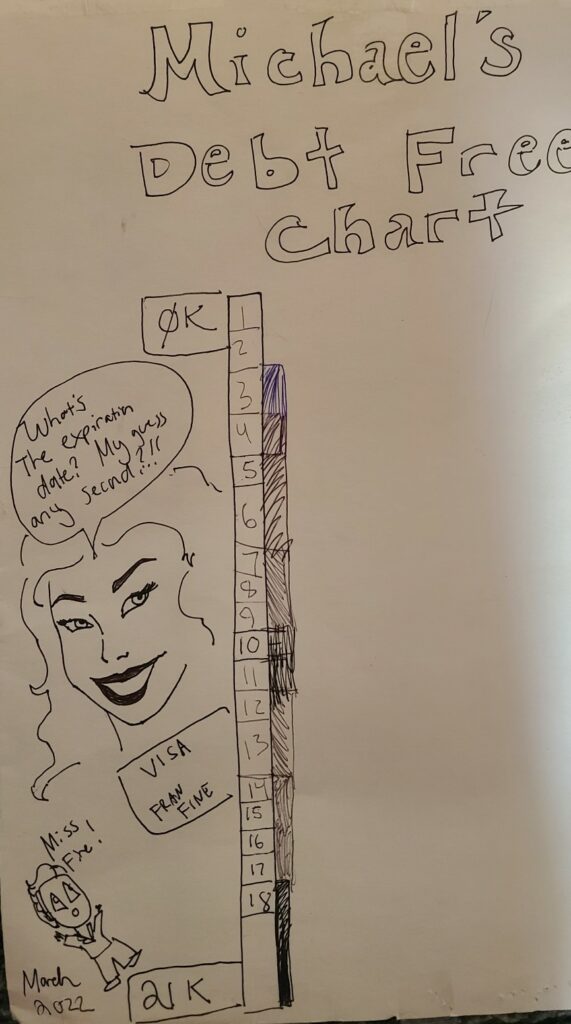
- Brian’s Visa (SCU): $16,057 with a 0% introductory rate expiring in November 2023, after which a 17.99% interest rate will apply.
- Michael’s Visa Platinum: $9,700 at a 10.99% interest rate.
- Brian’s Visa Platinum (Navy Federal): $2,503 at a 0.99% rate, also expiring in November 2023 to 17.74%.
While the total debt of $28,259 is not considered catastrophic relative to their income, the impending expiration of introductory interest rates creates a "fiscal cliff." Without aggressive intervention, the couple faces thousands of dollars in annual interest charges, which would further delay their primary goal of purchasing a home.

The Connecticut Economic Context: Utilities and Housing
The couple’s financial struggle is exacerbated by the specific economic climate of Connecticut. The state consistently ranks among the highest in the nation for utility costs. Michael and Brian report an average monthly electricity bill of $235, despite living in an apartment. This reflects broader regional trends where the dominant utility providers, such as Eversource and United Illuminating, have implemented significant rate hikes.
Furthermore, the transition from a $945 studio to a $2,000 apartment reflects the "missing middle" in Connecticut’s housing market. As of 2023, the state has seen a record low in housing inventory, driving up both purchase prices and rental rates. For Michael and Brian, the lack of "land to call their own" is a source of psychological distress, yet the financial prerequisite for a down payment remains out of reach until their consumer debt is liquidated and their emergency fund—currently at $9,000—is bolstered to cover at least six months of expenses.
Expert Strategic Recommendations for Debt Eradication
Financial analysis suggests that the couple’s path to stability requires a "spending detox" to identify the discrepancy between their reported surplus and their actual cash flow. The primary recommendation is the implementation of a rigorous expense-tracking system, utilizing tools such as Empower (formerly Personal Capital) or manual ledgers.
To achieve debt freedom within a projected 6.5-month window, a radical restructuring of monthly outgoings is proposed. This involves categorizing all spending into three tiers:

- Fixed Expenses: Rent ($2,000), car repairs ($1,064), and pet care ($517). These are non-negotiable.
- Reducible Expenses: Groceries and utilities. The couple currently spends $469 on groceries; a reduction to $400 is suggested.
- Discretionary Expenses: This category, totaling over $1,300 monthly, includes eating out ($200), home goods ($200), gifts ($260), and personal care ($180).
By temporarily eliminating discretionary spending, the couple could increase their monthly debt repayment capacity to $4,456. This aggressive "snowball" or "avalanche" method would allow them to clear the high-interest balances before the 17.99% rates take effect in November, saving them significant capital in the long term.
Retirement Planning and the "Triple Crown" of State Benefits
A significant asset in the couple’s portfolio is their access to state-sponsored retirement vehicles. Brian’s employment offers a rare "triple crown" of security: a 403(b), a 457(b), and a traditional pension. Michael contributes to a 401(k) with a 4% employer match.

The 457(b) plan is particularly noteworthy for the couple’s long-term goals. Unlike 401(k) or 403(b) plans, 457(b) accounts allow for penalty-free withdrawals upon separation from service, regardless of age. This provides a strategic advantage for Michael’s goal of starting a business or for an early retirement scenario. Currently, the couple has approximately $91,250 in total assets. However, to ensure a stable retirement given the uncertainty surrounding Social Security, analysts recommend that they work toward maxing out these tax-advantaged accounts—totaling an allowable $80,500 annually—once their high-interest debt is cleared.
Analysis of Academic and Professional Pursuits
Brian has expressed interest in pursuing a master’s degree to rectify past academic struggles and potentially increase his career trajectory. From a purely financial standpoint, however, the recommendation is one of caution. In the current economic environment, the Return on Investment (ROI) for graduate education must be calculated with precision. Unless a degree offers a guaranteed, iron-clad salary increase that offsets the cost of tuition and the opportunity cost of time, it is viewed as an "unhelpful detour" from their primary goal of homeownership.

For Michael, the focus remains on diversifying income through consulting and public speaking, leveraging his experience as a brain injury survivor and disability advocate. Increasing top-line income is a secondary but vital component of their recovery, provided that "lifestyle creep" does not cause expenses to rise in tandem with earnings.
Broader Impact: The Psychology of "Dream Deferred"
The case of Brian and Michael highlights the psychological toll of financial instability on high-achieving professionals. Both partners expressed a sense of "shame" and "disappointment" regarding their financial status compared to their peers. This "shame" is often a byproduct of the "feast and famine" cycle, where periods of austerity are followed by reactive spending.

The broader implication for policymakers and financial advisors is the need for more robust financial literacy and support for the "squeezed" middle class. For Brian and Michael, the transition from debt to wealth is not merely a matter of earning more, but of aligning their daily spending with their stated values of legacy, stability, and community. By prioritizing debt repayment, building a robust emergency fund, and maximizing their enviable state benefits, the couple can move from a state of financial defense to one of strategic offense, ultimately securing the home and the future they have envisioned for the past decade.

