

The financial trajectory of public sector employees in the United States often serves as a microcosm of the broader economic pressures facing the "squeezed" middle class—a demographic characterized by high earnings and professional stability, yet frequently encumbered by consumer debt and rising housing costs. In central Connecticut, Brian and Michael, both 34, represent this phenomenon as they navigate a transition from a decade of disciplined frugality to the complexities of modern household management. Brian, a quality assurance manager for a state-run hospital, and Michael, a project coordinator for a state behavioral health agency and a disability advocate, have achieved significant professional milestones. However, their personal balance sheet reveals a common contemporary struggle: the gap between high gross income and the accumulation of liquid assets necessary for homeownership.

The Socioeconomic Context of the Connecticut Rental Market
The couple’s current financial urgency is rooted in a significant lifestyle shift precipitated by the 2022–2023 rental market volatility. For eight years, the pair resided in a 600-square-foot studio apartment with a monthly rent of $945, an arrangement that allowed for high levels of discretionary freedom and helped Brian eliminate $58,000 in student loan debt. This period of relative stagnation in housing costs ended abruptly when they were forced to relocate, eventually securing a two-bedroom apartment in a refurbished industrial mill for $2,000 per month.
This 111% increase in housing costs reflects a broader trend in the Northeast. According to data from various housing authorities, Connecticut saw some of the most significant rental price hikes in the post-pandemic era, driven by low inventory and an influx of residents from higher-cost urban centers like New York City and Boston. For Brian and Michael, this transition coincided with the loss of a long-term pet and the medical expenses associated with two new kittens, creating a "perfect storm" of unplanned expenditures that pushed their consumer debt to over $28,000.

A Detailed Inventory of Liabilities and Assets
The household’s financial profile is characterized by a high gross annual income of approximately $167,544, yielding a net take-home pay of $109,455 after taxes, health insurance, and existing retirement contributions. Despite this robust income, the couple faces a significant debt hurdle. Their current liabilities are concentrated in three primary credit accounts:
- High-Balance Consumer Credit (SCU): $16,057 with a 0% introductory rate expiring in November 2023, after which the rate climbs to 17.99%.
- Secondary Credit Line (Navy Federal): $9,700 at a 10.99% interest rate.
- Tertiary Credit Line: $2,503 with a 0.99% rate expiring in November 2023, jumping to 17.74% thereafter.
The impending "interest rate cliff" in late 2023 presents a critical deadline for the couple’s fiscal strategy. Conversely, their asset portfolio is largely tied to retirement vehicles, with a total valuation of approximately $91,250. This includes Michael’s $36,992 in a 401(k) and Brian’s diverse holdings across a 403(b), 457(b), and a state pension fund. However, their liquid savings—comprising an emergency fund and general savings—stand at only $9,000, which covers less than 45 days of their current monthly expenditures of $8,035.

Chronology of Financial Evolution (2013–2023)
The decade leading up to their current situation illustrates a shift from debt elimination to lifestyle expansion:
- 2013–2018: The couple establishes their life in central Connecticut. Brian focuses on aggressive student loan repayment while working in the corporate and non-profit sectors.
- 2019–2021: Brian transitions to a state government role, securing a pension and superior healthcare benefits. Student loans are fully discharged. The couple maintains a low-overhead lifestyle in their studio apartment.
- 2022 (August – December): The unplanned need to move arises. Rental market conditions force a rapid search, resulting in the move to the $2,000/month mill apartment. Veterinary emergencies for their cat, Rex, and subsequent new kittens contribute to rising credit card balances.
- 2023 (January – September): The couple adjusts to a new baseline of $96,414 in annual spending. They identify the need for a "Reader Case Study" to address the psychological and mathematical barriers to their next goal: homeownership.
Strategic Analysis of Public Sector Benefits
One of the couple’s strongest financial advantages is their access to the "triple crown" of retirement planning available to state employees. Brian’s employment offers a 403(b), a 457(b), and a traditional pension. In the current economic climate, where private-sector pensions have largely vanished, these tools provide a level of long-term security that mitigates some of the risks of their current debt.

The 457(b) plan, in particular, is a powerful tool for early retirement or mid-career flexibility, as it allows for penalty-free withdrawals upon separation from the employer, regardless of age. Financial analysts often point out that public sector employees who maximize these tax-advantaged accounts can significantly lower their taxable income, effectively "subsidizing" their retirement savings through tax savings. For Brian and Michael, however, the immediate priority is not increasing these contributions, but rather securing their "financial floor" by eliminating high-interest liabilities.
The ROI of Graduate Education in a Shifting Economy
A point of internal debate for the couple is Brian’s desire to pursue a master’s degree. From a journalistic and analytical perspective, the return on investment (ROI) for graduate education has become increasingly scrutinized. In the public sector, salary increases are often tied to specific educational tiers; however, the cost of tuition must be weighed against the projected "break-even" point.
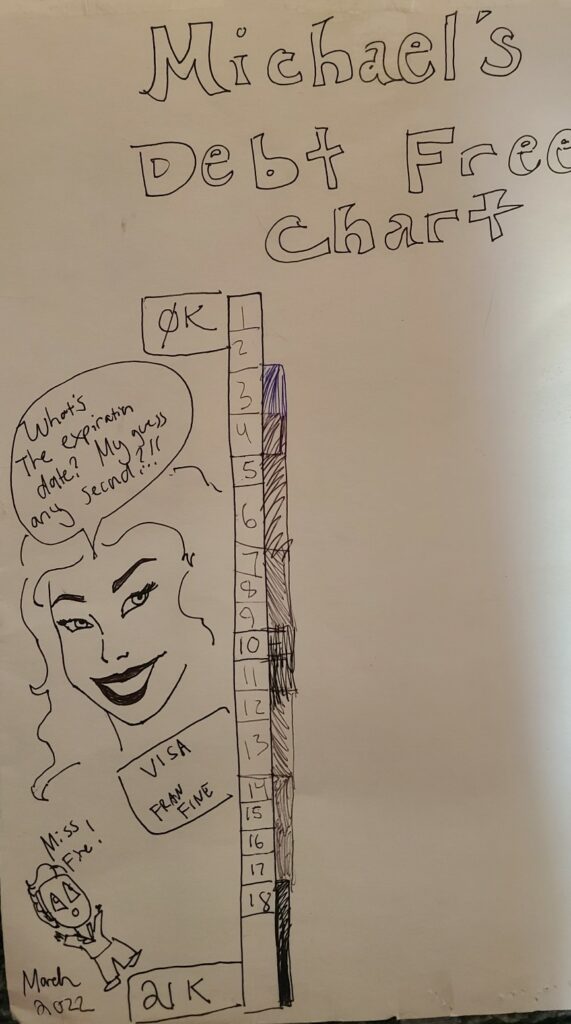
Given Brian’s current $18,560 in credit card debt reaching high-interest status in November, the addition of tuition costs or new student loans could jeopardize the couple’s ability to save for a home down payment. Economic data suggests that unless a degree is a prerequisite for a specific promotion with a guaranteed salary bump of 15-20%, the opportunity cost of the time and capital may be better spent on direct debt reduction and market-based investments.
Recommendations for Fiscal Stabilization
To achieve their goal of becoming debt-free within a six-month window, a rigorous "spending detox" has been proposed. By categorizing expenses into fixed, reducible, and discretionary buckets, the couple can identify a potential monthly surplus.

Currently, their discretionary spending—including dining out, gifts, home goods, and personal care—totals approximately $1,370 per month. If these items are suspended temporarily, and reducible costs like groceries are optimized, the couple could increase their monthly debt repayment from $2,000 to over $4,400. At this accelerated rate, the $28,259 debt could be liquidated in approximately 6.5 months, effectively neutralizing the threat of the 17.99% interest rates scheduled for November.
Broader Implications: The Psychological Burden of "Debt Shame"
The case of Brian and Michael also highlights the psychological aspect of personal finance. Despite earning more than 80% of American households, both partners expressed feelings of "shame" and a sense of being "behind" their peers. This sentiment is increasingly common among millennials who entered the workforce during or shortly after the 2008 financial crisis and now face a housing market with record-high prices and mortgage rates.

Sociological studies on financial behavior suggest that "debt shame" can often lead to a cycle of "feast or famine" spending. The transition from an austere studio apartment to a luxury mill apartment can be viewed as a "corrective" move to align their living situation with their professional status, yet it created a friction point with their savings goals. The path forward requires not just mathematical adjustments, but a reconciliation of their lifestyle expectations with the reality of Connecticut’s high cost of living.
Conclusion: The Road to Homeownership
For Brian and Michael, the dream of "some earth to call their own" is attainable, but it is contingent on a sequence of fiscal milestones. The first is the elimination of consumer debt before the end of the 2023 calendar year. The second is the establishment of a robust emergency fund—ideally $25,000 to $30,000—to provide a buffer against the maintenance costs inherent in homeownership.

In the current economic climate, characterized by 7% mortgage rates and high property taxes in the Northeast, the couple’s status as state employees provides a stable foundation. By leveraging their high income to aggressively clear their balance sheet in the short term, they can position themselves to enter the housing market not as high-risk borrowers, but as well-capitalized buyers capable of weathering future economic shifts. Their story serves as a blueprint for other professional couples: the road to "adulting" is rarely linear, but it is navigable through disciplined tracking and the strategic prioritization of high-interest liabilities.

