
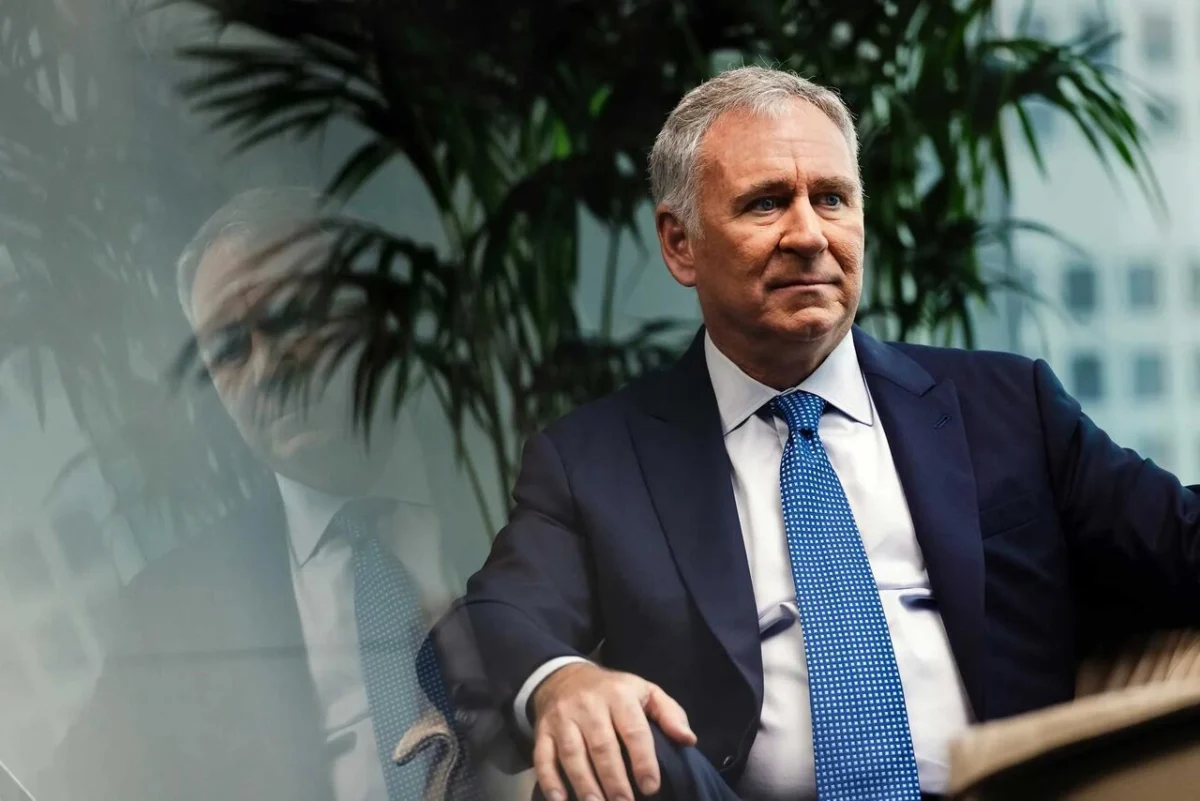
In a dramatic turn of events mirroring past market upheavals, Situational Awareness, the high-flying hedge fund spearheaded by former OpenAI researcher Leopold Aschenbrenner, has reportedly sold the entirety of its public stock portfolio to Ken Griffin’s investment powerhouse, Citadel. This unprecedented liquidation, described as "one enormous trade," comes on the heels of deep losses incurred from concentrated bets on artificial intelligence (AI) hardware stocks, forcing the fund’s assets under management (AUM) to plummet from an estimated $45 billion just weeks ago to below $10 billion. The episode serves as a stark reminder of the inherent risks of aggressive leverage, particularly through instruments like Total Return Swaps (TRS), echoing the infamous collapse of Archegos Capital Management.
The Rise and Rapid Fall of Situational Awareness

Leopold Aschenbrenner, a relatively young figure at 24 years old and an alumnus of OpenAI, burst onto the hedge fund scene with Situational Awareness, quickly establishing a reputation for exceptional returns. The fund’s strategy primarily focused on long positions in AI infrastructure stocks and short positions in software, often employing significant leverage, reportedly up to 4x. Through June of this year, Situational Awareness boasted an astounding 439% net return, propelling its AUM to an estimated $45 billion. This meteoric rise captured widespread attention, with Aschenbrenner hailed as a new wunderkind in the investment world.
However, the fund’s highly concentrated portfolio proved to be its Achilles’ heel when the tide turned against the AI sector. Key holdings, including AI hardware stocks like Nebius Group NV, Sandisk Corp., and SharonAI Holdings Inc., experienced precipitous declines. Nebius Group NV shares plunged 48% from their peak last month, wiping approximately $35 billion from the company’s market value. Similarly, Sandisk Corp. saw a dramatic 56% drop in just over a month, while SharonAI Holdings Inc. experienced a comparable decline since mid-June. These sharp corrections in the AI market, which began to unfold over the past few weeks, triggered a cascade of margin calls that Situational Awareness, despite its earlier successes, found itself unable to meet.
The Shadow of Archegos: Leverage and Total Return Swaps

The rapid unraveling of Situational Awareness bears striking resemblances to the Archegos Capital Management debacle of 2021, where Bill Hwang’s family office used Total Return Swaps (TRS) to amass a colossal, highly leveraged portfolio of over $100 billion with minimal actual capital. TRS are derivative contracts that allow investors to gain economic exposure to an underlying asset without owning it directly. The investor (the "buyer") receives the total return of the underlying asset (including capital appreciation and dividends) and in return pays a financing rate to the counterparty (typically a prime broker). The prime broker holds the physical shares, providing the client with synthetic exposure and significant leverage.
A critical aspect of TRS, and a factor that contributed to the Archegos collapse, is their "off-balance-sheet" nature. Unlike direct stock holdings, these synthetic positions are not subject to the same public disclosure requirements, allowing funds like Archegos and, seemingly, Situational Awareness, to build massive, opaque positions across multiple prime brokers. This lack of transparency means that no single prime broker had a complete picture of the fund’s total exposure, leading to systemic risk when the market moved adversely.
In the case of Archegos, everything was indeed "awesome" for a time. Prime brokers profited from interest payments, and Hwang’s portfolio swelled as a virtuous cycle of buying pushed stock prices higher. However, when ViacomCBS, one of Archegos’s significant holdings, announced a secondary offering in March 2021, its stock price plummeted. This triggered massive margin calls from prime brokers. Without sufficient capital to cover the losses, Archegos defaulted, forcing the prime brokers to liquidate their holdings rapidly. This "first one to sell wins" scenario resulted in an "elevator down" effect for several stocks, causing billions in losses for global banks like Credit Suisse, Nomura, and Morgan Stanley. Bill Hwang was later sentenced to 18 years in prison for his role in the scheme.

Despite the painful lessons learned and the subsequent improvements in risk management processes at many banks, the allure of high returns and intense competition in the prime brokerage space appears to have led some institutions back into similar practices. Indications of this trend emerged about six weeks ago, as "soaring funding costs" for S&P futures and TRS suggested that dealers were once again offering significant leverage to institutional clients. This early warning sign, highlighted by market observers, foreshadowed the current situation. The dramatic unwinds witnessed in high-flying AI-related names over the past few weeks, coupled with a collapse in momentum, strongly hinted at a "TRS-Tantrum" brewing in the market.
The Intervention of Wall Street Giants
As Situational Awareness faced mounting pressure, reports surfaced that several of its prime brokers, including Bank of America, Goldman Sachs, and JPMorgan Chase, were actively working with the fund. Their efforts aimed to either help Situational Awareness meet its margin requirements or orchestrate an orderly reduction of its highly leveraged positions. Prior to the market open on a recent trading day, these brokers were reportedly marketing a substantial block of the firm’s long and short holdings for sale. While initial reports of liquidation were denied by the fund, the unfolding events confirmed the dire situation.

Ultimately, the Wall Street Journal reported that Situational Awareness sold the bulk of its public stock portfolio to Ken Griffin’s Citadel. This acquisition was not without competition, as Citadel rivals Millennium and Situational Awareness investor Jane Street also submitted bids for the public equities book, which notably included large positions in AI hardware stocks such as Nebius and Sandisk. The involvement of such major players underscored the scale and urgency of the liquidation, with many observers noting that "Big Ken" effectively "saved the market again (and his own book)" by absorbing the distressed assets.
The complete exit from public investments was reportedly executed "through one enormous trade," as detailed by CNBC’s David Faber. This sudden and massive liquidation likely contributed to a "panic bid in Nasdaq" observed that morning, as investors perceived the overhang from the fund’s forced selling to be over. However, the question lingers: was Leopold Aschenbrenner the only "smartest man in the room" using TRS to leverage heavily into momentum plays?
Aschenbrenner’s Vision and Ken Griffin’s Prophecy

While Situational Awareness divested its public portfolio, it reportedly retained its private holdings in AI companies, including a significant stake in Anthropic. This detail adds another layer to the narrative, as Aschenbrenner’s fiancée also works for the leading AI company. The connection drew comparisons to the "Dario curse," a sardonic observation linking investors in Anthropic to subsequent financial woes, notably Sam Bankman-Fried (SBF), whose fund imploded despite his Anthropic stake, and now Aschenbrenner.
The collapse of Situational Awareness, particularly its rapid descent from $45 billion to below $10 billion AUM, led many to question the "wunderkind" label previously bestowed upon Aschenbrenner. The situation starkly brought to mind warnings issued by Ken Griffin himself just a couple of years prior. As noted by @GoshawkTrades on X, Griffin had described the exact "failure mode" that led to portfolio managers washing out at Citadel:
"You have a portfolio that is extraordinarily highly concentrated, you have large positions, you cannot demonstrate a clear and concise competitive advantage in why you own those positions… And there are some people that just, with full information, are unable to help themselves and get to a better portfolio construction."

Griffin’s insights continued, emphasizing the importance of "experience" and "the price paid in losses and pain that converts into wisdom." He highlighted that Citadel’s enduring success, since its inception in 1990, stemmed from its leadership team navigating numerous difficult market moments and learning "very bitter lessons." In contrast, Situational Awareness, launched in 2024, made highly concentrated bets on AI infrastructure (long) and software (short) with substantial leverage. When both legs of its strategy went against it within three weeks, the fund, lacking the deep experiential wisdom Griffin spoke of, succumbed. The analysis concluded that Aschenbrenner "wasn’t wrong about AI. He was wrong about the construction of his book."
Broader Market Implications and Future Scrutiny
The dramatic unwind of Situational Awareness is more than just the downfall of a single hedge fund; it signals potential broader vulnerabilities within the financial system, particularly in an era dominated by rapidly escalating technological trends like AI. The episode underscores the enduring challenge of managing risk when competitive pressures and the allure of outsized returns encourage excessive leverage and concentrated positions.

The market’s immediate "panic bid" in Nasdaq suggests a collective sigh of relief that a significant source of selling pressure has been removed. However, the underlying dynamics that allowed Situational Awareness to accumulate such vast, leveraged positions remain a concern. Regulators and prime brokers will undoubtedly face renewed questions about the transparency and oversight of over-the-counter derivatives like Total Return Swaps. Despite the Archegos precedent, the fact that similar conditions could re-emerge suggests that regulatory frameworks and internal risk controls may still have gaps.
The event also serves as a cautionary tale for investors drawn to the momentum of booming sectors like AI. While AI technology holds immense promise, the financial markets’ tendency to create speculative bubbles, amplified by easily accessible leverage, can lead to painful corrections. The experience of Situational Awareness illustrates that even seemingly brilliant insights into emerging technologies cannot override fundamental principles of prudent portfolio construction and risk management.
In approximately 15 days, the next round of 13F filings will be released, offering a clearer picture of which dealers held the most TRS exposure on their books related to these AI names. This data will provide further insights into the extent of the leverage employed and the institutions most directly impacted by the Situational Awareness collapse. As the market digests this latest saga, the financial community will be watching closely to see if the "bitter lessons" of this "TRS-Tantrum" are truly learned, or if the cycle of leverage, speculation, and inevitable unwinds will continue to define periods of intense market excitement.

