
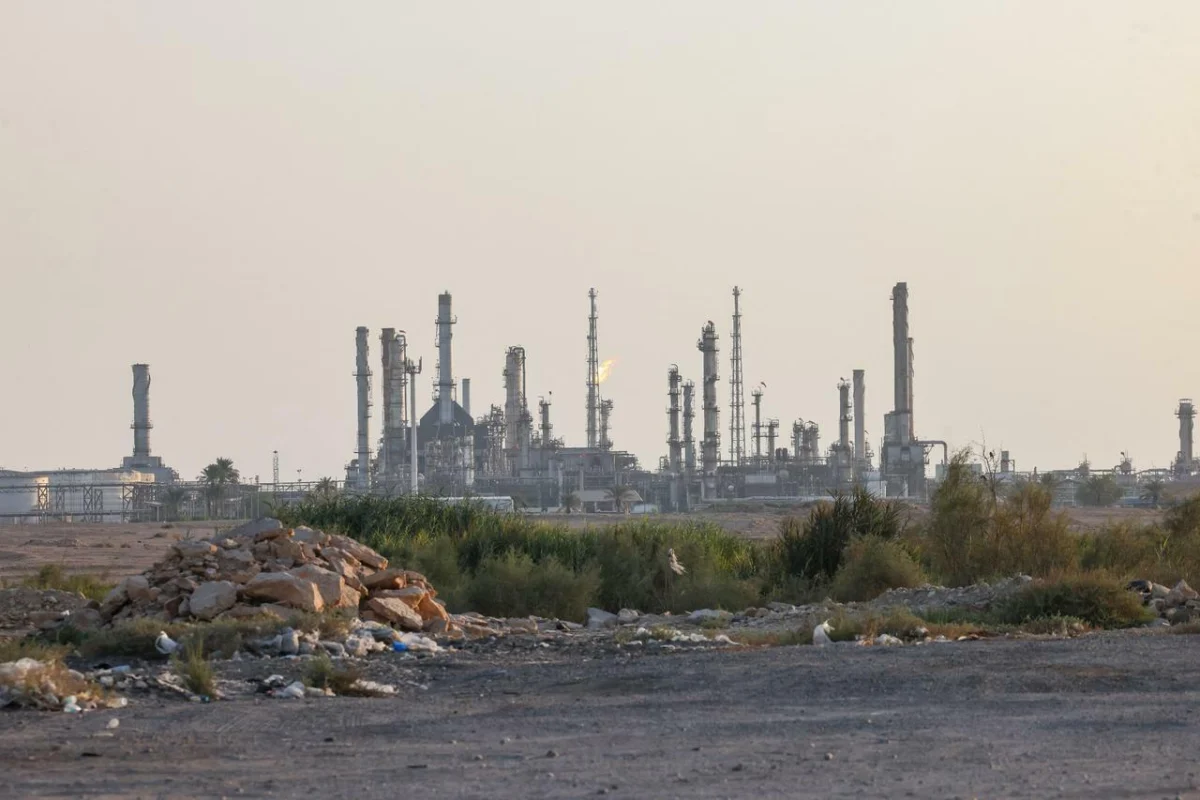
A pivotal pumping station along Saudi Arabia’s vital East-West oil pipeline, located east of the capital Riyadh in the Khurais region, was reportedly attacked yesterday, according to an energy sector source who spoke to Agence France-Presse (AFP) on Monday. The source indicated significant damage, stating, "A pumping station east of Riyadh in Khurais. It wasn’t targeted before. There was big damage and the pipeline stopped again." This incident immediately triggered concerns about the stability of global oil supplies, though follow-up reports swiftly confirmed that the crucial pipeline, a 745-mile artery connecting the Kingdom’s main eastern oil fields to the Yanbu terminal on the Red Sea, had already resumed normal operations, with flows continuing uninterrupted. The attack, while quickly mitigated, underscores the persistent threat posed by regional conflicts to critical energy infrastructure, a concern echoed by Saudi Aramco’s chief executive, Amin Nasser, who warned of an impending tightening in global crude and refined fuel supplies, a situation he believes will not normalize anytime soon.
The Khurais Incident: A Detailed Account and Rapid Response
The assault on the Khurais pumping station represents a significant development in the ongoing security challenges facing Saudi Arabia’s vast energy network. Khurais is not only a key pumping station but also home to one of the Kingdom’s largest oil fields, boasting a production capacity of approximately 1.5 million barrels per day. The specific targeting of a facility previously untouched suggests an evolution in the tactics or reach of hostile actors. Initial reports of the attack and the subsequent halt in pipeline operations sent ripples through the international energy community, given Saudi Arabia’s role as the world’s largest oil exporter and a cornerstone of global energy security.
However, the Kingdom’s operational resilience was swiftly demonstrated. Just hours after the initial reports of disruption, major news outlets and industry analysts confirmed that the East-West pipeline, also known as Petroline, was back online. Bloomberg reported on Monday, citing unnamed sources, that "Oil continues to flow through the East-West link, the people said, asking not to be identified discussing private information," while acknowledging the brief halt over the weekend due to the attack. Further corroboration came from Amena Bakr, a prominent energy correspondent, who tweeted, "Flows through the east west pipeline have not been interrupted, despite some reports suggesting otherwise #OOTT #Aramco," providing reassurance to a jittery market. This rapid restoration of service highlights the sophisticated contingency plans and robust infrastructure maintenance capabilities employed by Saudi Aramco, the state-owned oil giant, to safeguard its operations.
The East-West Pipeline: Saudi Arabia’s Strategic Lifeline
The East-West pipeline is far more than just a conduit for crude; it is a strategic asset of immense geopolitical and economic importance. Stretching approximately 1,200 kilometers (745 miles) across the Arabian Peninsula, it transports crude oil from Saudi Arabia’s prolific eastern oil fields, including Ghawar and Khurais, to the Red Sea port of Yanbu. Its primary strategic value lies in offering an alternative export route that bypasses the Strait of Hormuz. This narrow chokepoint, situated at the mouth of the Persian Gulf, is a critical maritime passage through which roughly one-fifth of the world’s total oil consumption, or about 21 million barrels per day, passes. The Strait of Hormuz has historically been a flashpoint for regional tensions, making the East-West pipeline a crucial redundancy for Saudi Arabia to ensure uninterrupted access to international markets, particularly for shipments destined for Europe and North America via the Suez Canal.
The pipeline, which has a capacity of around 5 million barrels per day, has been operational since the early 1980s. Its existence significantly mitigates the Kingdom’s vulnerability to potential disruptions in the Gulf, whether from geopolitical conflicts, acts of piracy, or environmental disasters. The fact that it has been targeted multiple times in recent years, as noted in the initial reports, underscores the intent of hostile actors to strike at the heart of Saudi Arabia’s economic power and its role in global energy supply. Previous incidents, while often causing temporary disruptions, have consistently been met with swift repair and restoration efforts, a testament to the Kingdom’s commitment to maintaining its reliability as an energy supplier.
Escalating Tensions in Yemen: The Houthi-Saudi Conflict
The repeated targeting of Saudi energy infrastructure, including the latest incident at Khurais, is inextricably linked to the protracted and increasingly volatile conflict in neighboring Yemen. Since 2014, Yemen has been embroiled in a civil war between the internationally recognized government, backed by a Saudi-led coalition, and the Houthi movement (Ansar Allah), which controls large swathes of the country, including the capital Sana’a. The Saudi-led intervention, launched in March 2015, aimed to restore the legitimate government and counter what it views as Iranian influence through the Houthis.
The conflict has devastated Yemen, leading to one of the world’s worst humanitarian crises. For Saudi Arabia, the war represents a direct security threat, particularly as the Houthis have demonstrated an increasing capability to launch drone and missile attacks deep into Saudi territory. These attacks have frequently targeted military installations, airports, and, crucially, oil infrastructure. The Houthis claim these strikes are in retaliation for the Saudi-led coalition’s military operations in Yemen and are part of their strategy to pressure Riyadh to end its involvement in the conflict. The Khurais attack marks a continuation of this pattern, signaling the Houthis’ intent to maintain pressure on Saudi Arabia’s economic nerve centers despite ongoing military efforts by the Saudi-backed forces.
Conflicting Narratives from the Battlefield

Amidst the pipeline attack, the narrative surrounding the Yemen conflict itself saw conflicting reports and pronouncements from both sides. Over the weekend, the Saudi-backed government in Yemen announced what it termed a "new phase in the battle to restore the state." Information Minister Moammar al-Eryani, in a statement on X, elaborated on this, stating that the military operation aims to "extend authority… over every inch of Yemen’s land." He specifically highlighted the "recovery of land, islands, and strategic positions in the Bab al-Mandeb Strait," emphasizing its direct contribution to "safeguarding one of the world’s most vital maritime passages and securing international trade and navigation, after the Houthi militia turned it into a tool for extortion and threats." The Bab al-Mandeb Strait, located at the southern entrance to the Red Sea, is another critical chokepoint for global shipping, particularly for oil destined for the Suez Canal and Europe.
However, these optimistic pro-Riyadh headlines were quickly contested by the Houthi movement. Houthi official Hizam al-Assad was quoted in Nour News on Monday, asserting that the Saudi coalition’s mercenaries were fleeing and that reports of "victory" did not accurately capture the reality on the ground. According to the regional report, al-Assad dismissed these claims as mere propaganda floated for "inaccurate media reports," suggesting a deliberate attempt to manipulate public perception rather than reflect genuine battlefield gains. This divergence in reporting underscores the deep propaganda war accompanying the kinetic conflict, where information control is as crucial as territorial control.
Aramco’s Stark Warning: Global Oil Market Under Strain
The backdrop of the pipeline attack and the escalating regional conflict lends significant weight to the pronouncements made by Saudi Aramco’s chief executive, Amin Nasser, at the Energy Intelligence Forum in London. Nasser offered a grim assessment of global crude supplies, stating that he does not foresee the current situation "normalizing" anytime soon. His remarks, delivered in what was importantly marked as his first in-person speech "since the launch of the Iran war," indicated that the squeeze on crude oil and refined fuels is set to intensify.
Nasser’s analysis pointed to multiple stressors on the global energy system. He warned that "Until Hormuz fully re-opens and confidence returns, the crude reality is that pressure at both ends of the barrel will intensify. Even then, replenishing inventories while meeting demand could take up to two years." This statement implies that beyond immediate supply disruptions, the systemic issues, potentially including underinvestment in production capacity and geopolitical risks affecting key shipping lanes like the Strait of Hormuz, are creating a persistent deficit. The reference to the "Iran war" suggests a broader regional destabilization impacting energy security, potentially encompassing proxy conflicts and heightened tensions that could disrupt critical supply routes and production facilities.
Furthermore, Nasser highlighted the critical role of Saudi Arabia’s East-West pipeline in mitigating price volatility. He emphatically stated, "Brent crude prices would have reached up to $200 per barrel if Saudi Arabia’s East-West pipeline did not exist." This assertion underscores the immense value of this strategic infrastructure not just for Saudi Arabia’s exports but for global energy market stability. Without the bypass capacity offered by Petroline, any disruption in the Persian Gulf or Strait of Hormuz would have a far more catastrophic impact on international oil prices, potentially triggering an unprecedented global economic crisis. His comments serve as a stark reminder of the delicate balance governing global energy supply and the inherent fragility of the system in the face of persistent geopolitical risks.
Implications for Global Energy Security and Markets
The recent attack on the East-West pipeline, despite its rapid resolution, carries profound implications for global energy security and international oil markets. The incident reaffirms the vulnerability of critical energy infrastructure to asymmetric warfare tactics employed by non-state actors. While Saudi Arabia has demonstrated remarkable resilience in restoring operations, each attack adds a layer of risk premium to oil prices, contributing to market volatility. Traders and investors closely monitor such events, factoring in the potential for future, more damaging assaults that could lead to prolonged supply disruptions.
The persistent threat landscape, coupled with Amin Nasser’s warnings, suggests that the world might be entering a prolonged period of elevated oil prices and tighter supply. The challenge of replenishing global strategic petroleum reserves, which have been tapped in recent years to stabilize markets, while simultaneously meeting growing demand, will be formidable. This situation could exacerbate inflationary pressures worldwide, impacting consumer costs for fuel, transportation, and a vast array of goods and services. Moreover, the increasing frequency and sophistication of attacks could deter long-term investment in oil and gas infrastructure in the region, further constraining future supply growth.
The Geopolitical Chessboard: Regional Stability and International Response
Beyond immediate market impacts, the attack on the East-West pipeline is a stark reminder of the broader geopolitical risks simmering in the Middle East. The ongoing conflict in Yemen, with its regional ramifications, continues to be a primary driver of instability. The Houthi movement’s ability to project power deep into Saudi territory challenges the Kingdom’s security posture and its role as a regional hegemon. The conflicting narratives surrounding battlefield successes also highlight the difficulty of achieving a clear resolution to the Yemen war, suggesting that these attacks on Saudi infrastructure may continue as a tactic of attrition.
The international community watches these developments with growing concern. Global powers rely on the stable flow of oil from the Middle East to fuel their economies. Disruptions, even temporary ones, can have far-reaching consequences. Calls for de-escalation in Yemen and diplomatic solutions to regional rivalries are likely to intensify. However, given the deep-seated ideological and strategic divergences among regional actors, a quick resolution remains elusive. The incident underscores the urgent need for robust security measures, international cooperation to counter cross-border attacks, and sustained diplomatic efforts to address the root causes of conflict in the region, thereby safeguarding the arteries of global commerce and energy supply. The resilience of Saudi Arabia’s infrastructure is tested with each incident, but the cumulative effect of these threats demands a broader, more sustainable strategy for peace and security in the region.

