
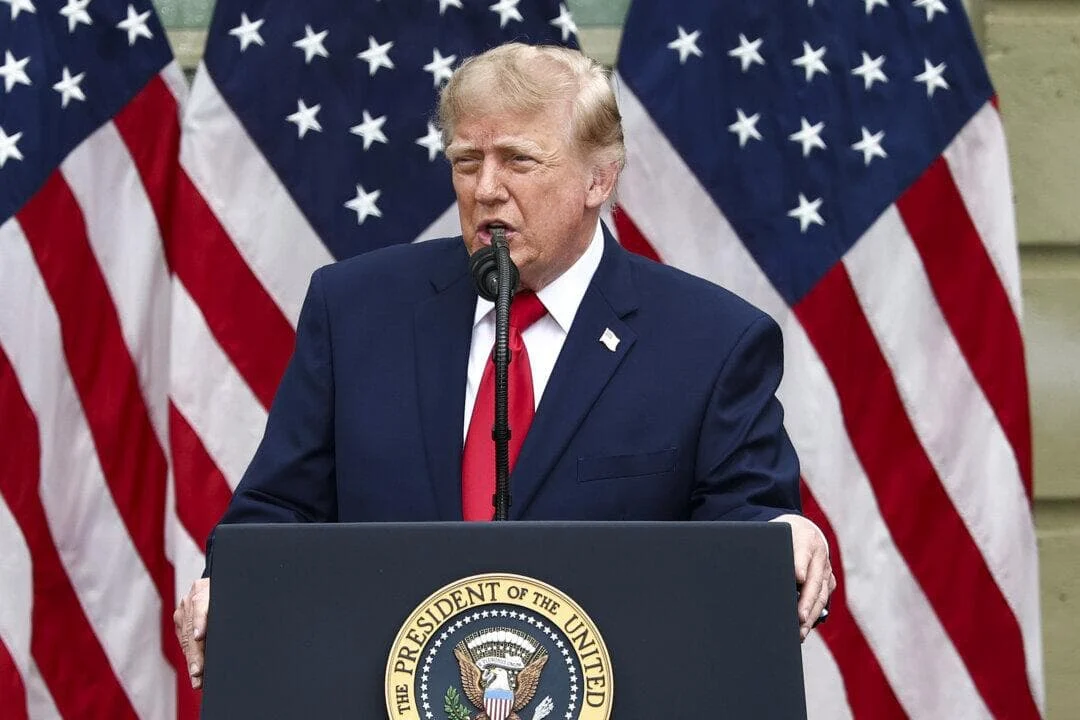
President Donald Trump has indicated a significant shift in his administration’s consideration of potential U.S. troop reductions in Europe, attributing this reassessment to the recently concluded security agreement concerning Greenland. The strategic pact, which expands the U.S. military presence on the vast Arctic island, appears to have altered the President’s calculus regarding the burden-sharing responsibilities of European allies within NATO.
Speaking to reporters on November 26, following Thanksgiving holiday calls to U.S. service members, President Trump elaborated on his evolving perspective. When questioned about encouraging allies to assume greater responsibility for their own defense, he acknowledged that many allies were indeed increasing defense spending and acquiring American military equipment, including advanced F-35 fighter jets. However, his remarks took a notable turn when discussing European NATO allies’ initial responses to the Iran conflict, which he characterized as unhelpful. "They weren’t very helpful," Trump stated. "But we got Greenland, and we got Greenland. That’s three times the size of Texas, and that made me feel a little bit differently, to be honest." This candid assessment underscores the geopolitical weight the administration places on the Greenland deal, intertwining it directly with the broader dialogue on transatlantic security commitments and the distribution of defense burdens. While the President did not issue a definitive decision on U.S. force levels, his comments strongly suggested a potential halt or modification to previously contemplated troop reductions.
The Strategic Pivot: The Greenland Security Agreement
The Greenland security agreement, which received parliamentary approval in Denmark earlier this month, represents a critical development in U.S. Arctic strategy. This deal amends the existing 1951 Defense Agreement between the United States and Denmark, which had already granted the U.S. extensive military rights in Greenland. The new accord, however, significantly strengthens specific access rights and facilitates the expansion of the U.S. military footprint on the self-governing Danish territory. Crucially, the agreement explicitly maintains Danish sovereignty over Greenland, a point emphasized by both Danish and Greenlandic officials throughout the negotiation process.
President Trump confirmed that discussions regarding Greenland were a key component of his meeting with Mark Rutte, the Prime Minister of the Netherlands, on November 25. "We made that deal, which everyone said was not makeable," Trump remarked, expressing gratitude to Denmark for its cooperation. This sentiment reflects the administration’s persistent focus on securing enhanced access and influence in the Arctic, a region of escalating geopolitical importance.
A Chronology of the Greenland Initiative
The pursuit of enhanced U.S. presence in Greenland has been a consistent theme for the Trump administration since its return to the White House in January 2025.
- Early 2025: President Trump repeatedly articulated his conviction that the United States should acquire or annex Greenland "for the purpose of national security." This proposition was framed as a preventative measure to counter potential Russian or Chinese encroachment and entrenchment in the strategically vital Arctic region.
- August 2025: Initial reports surfaced about the U.S. exploring the possibility of purchasing Greenland from Denmark, a concept that was met with firm rejection and even derision by Danish and Greenlandic leaders, leading to a diplomatic spat and the cancellation of a planned state visit by Trump to Denmark.
- September 18, 2025: Following a period of intense diplomatic engagement involving U.S., Danish, and Greenlandic officials, President Trump announced a new security deal, pivoting from the controversial purchase idea to a more palatable security-focused partnership.
- September 22, 2025: The security agreement was formally signed by U.S., Greenlandic, and Danish leaders during a ceremony held at the United Nations General Assembly in New York City, signifying a significant diplomatic breakthrough.
- November 3, 2025: Greenland’s lawmakers gave their crucial approval to the security deal, underscoring the autonomous territory’s consent and collaboration in the arrangement.
- November 19, 2025: The Danish parliament officially backed the agreement, solidifying the legal and political framework for expanded U.S. military operations in Greenland.
This timeline illustrates a strategic shift from a direct acquisition attempt to a robust security partnership, reflecting an adaptive U.S. foreign policy approach to securing its interests in the Arctic.
NATO Burden-Sharing and U.S. Troop Presence in Europe
President Trump has consistently championed the idea that NATO member states must assume greater practical and financial responsibility for collective security. This core tenet of his foreign policy has been a recurring point of contention and negotiation within the transatlantic alliance. The U.S. military presence in Europe dates back to the end of World War II and expanded significantly during the Cold War, serving as a cornerstone of deterrence against the Soviet Union. Even after the Cold War, U.S. forces remained a vital component of European security, participating in various missions and maintaining readiness.
During his presidency, Trump has frequently criticized what he perceives as insufficient defense spending by European allies, arguing that American taxpayers unfairly shoulder the burden of protecting prosperous European nations. His demands for increased contributions have led to heightened pressure on NATO members to meet the alliance’s agreed-upon target of spending at least 2 percent of their Gross Domestic Product (GDP) on defense.
In June 2025, NATO members reached a landmark agreement to further raise defense and security-related spending to 5 percent of GDP by 2035, a proposal strongly advocated and backed by President Trump. This ambitious target, if met, would represent an unprecedented increase in defense investment across the alliance. Recent figures from NATO confirm that European allies and Canada collectively increased their defense spending by nearly 20 percent in real terms in 2025 compared to the previous year, demonstrating a tangible response to U.S. pressure.
"I was able to get NATO to go from 2 percent, which they weren’t paying, to 5 percent, which they will soon be paying, and everyone thought that was a miracle," President Trump asserted, highlighting what he views as a major diplomatic achievement. He further stated that "Because of me, they’re becoming more self-sufficient… We want them to because you know… we have the greatest military in the world, and we’re protecting a lot of countries that haven’t been paying their share, and now they are." He reiterated his stance that the United States cannot indefinitely continue to protect every nation globally, labeling it an unfair burden on American taxpayers. This perspective forms the backdrop against which any potential U.S. troop reductions in Europe would be considered, with the Greenland deal now serving as a new variable in this complex equation.
The Arctic: A New Geopolitical Frontier
The strategic significance of Greenland is intrinsically linked to the burgeoning geopolitical importance of the Arctic region. As climate change leads to the melting of Arctic ice, new shipping routes (such as the Northern Sea Route and the Northwest Passage) are becoming increasingly viable, offering faster transit times between Asia and Europe. This has spurred intense competition among global powers for influence, access to vast untapped natural resources (oil, gas, minerals), and strategic positioning.
Both Russia and China have significantly ramped up their activities and investments in the Arctic. Russia has reopened Soviet-era military bases, deployed advanced weaponry, and increased its naval presence, asserting its claim over vast swathes of the Arctic coastline. China, though not an Arctic nation, has declared itself a "near-Arctic state" and is actively pursuing economic and scientific interests through its "Polar Silk Road" initiative.
The U.S. considers a robust presence in the Arctic essential to safeguard its national security interests, protect freedom of navigation, and counter the growing influence of rival powers. Greenland, with its vast size and pivotal geographic location between the North Atlantic and the Arctic Ocean, offers critical strategic advantages. Thule Air Base, a key U.S. military installation in northern Greenland, serves as an early warning radar and space surveillance facility, vital for missile defense and Arctic monitoring. The new security agreement likely allows for enhanced operations, infrastructure upgrades, and potentially the deployment of additional assets, strengthening the U.S. defense posture in the High North. This expanded footprint provides a counterbalance to Russian and Chinese activities and reinforces U.S. and NATO capabilities in a region increasingly viewed as a potential flashpoint.
European Allies and the Iran Conflict
President Trump’s comments regarding the initial unhelpfulness of European allies in the Iran conflict add another layer of complexity to transatlantic relations. Following the U.S. withdrawal from the Joint Comprehensive Plan of Action (JCPOA), or Iran nuclear deal, in 2018, European powers (France, Germany, and the UK) largely sought to preserve the agreement, advocating for diplomatic solutions and maintaining economic ties with Tehran within the bounds of sanctions. This divergence in approach created friction with the Trump administration’s "maximum pressure" campaign.
While the President later acknowledged that European allies were "now involved and they’ve been great," his earlier criticism reflects the administration’s frustration with what it perceived as a lack of unified resolve against Iranian aggression or nuclear proliferation efforts. The shifting sentiment regarding European cooperation on Iran, combined with the strategic gains in Greenland, appears to have collectively influenced the President’s assessment of the overall value proposition of the European alliance.
Diplomatic Engagements and Alliance Dynamics
The meeting between President Trump and Mark Rutte, the Prime Minister of the Netherlands, underscores the ongoing high-level diplomatic engagement within NATO. While the original article mistakenly identified Rutte as NATO’s Secretary-General (Jens Stoltenberg holds that position), Trump’s praise for Rutte as "a great leader" and "a fantastic leader" reflects the importance of strong bilateral relationships with key European allies. These interactions are crucial for navigating the complex dynamics of alliance burden-sharing, regional security challenges, and evolving geopolitical priorities.
The intertwining of issues like the Greenland deal, NATO spending, and responses to the Iran conflict demonstrates the interconnected nature of U.S. foreign policy. Decisions regarding troop deployments are not made in isolation but are influenced by a mosaic of strategic interests, diplomatic outcomes, and perceived levels of allied cooperation. The Greenland agreement, achieved through persistent diplomatic effort, appears to have provided the Trump administration with a tangible strategic asset that it believes justifies a reconsideration of its European troop reduction plans.
Uncertainty Over Future U.S. Force Posture
Despite President Trump’s suggestive remarks, no formal announcement has been made regarding a change in the status of U.S. troop reductions in Europe. His comments indicate a "rethink" rather than a definitive reversal. The U.S. maintains a substantial military presence across Europe, including tens of thousands of personnel primarily stationed in Germany, Italy, and the United Kingdom. These forces play critical roles in deterrence, collective defense, training exercises, and rapid deployment capabilities.
Any decision to significantly alter troop levels would have profound implications for NATO’s operational capabilities, logistics, and political cohesion. While the administration has consistently pushed allies to do more, the actual reduction of U.S. forces could be viewed by some as undermining the alliance’s strength or signaling a diminishing U.S. commitment to European security. Conversely, a decision to maintain or even bolster troop levels, especially if linked to strategic gains like the Greenland deal and increased allied spending, could be presented as a successful recalibration of U.S. global defense strategy.
The coming months will likely see continued discussions within NATO and bilateral consultations between the U.S. and its European partners as the administration solidifies its stance on troop deployments. The Greenland security agreement has undoubtedly injected a new, significant factor into this ongoing debate, highlighting the multifaceted considerations that shape U.S. foreign and defense policy in an increasingly complex global environment. The strategic value derived from enhanced Arctic access appears to be a powerful counterweight to previous motivations for reducing U.S. military commitments in other parts of Europe, underscoring a dynamic and evolving approach to global security.

