

The quest for enhanced organization and productivity is a pervasive challenge in modern life, impacting individuals across professional and personal spheres. For many, the solution lies in the strategic utilization of a bullet journal, a customizable planning system that, when equipped with the right pages, can transform chaos into clarity. This comprehensive guide explores seven essential bullet journal pages that form the bedrock of an effective planning and productivity system, empowering users to better manage their schedules, track tasks, and achieve their overarching goals.
The effectiveness of any planning system hinges on its ability to provide structure and facilitate easy recall of information. The bullet journal, with its inherent flexibility, offers a unique advantage by allowing individuals to tailor its components to their specific needs. By understanding and implementing key page layouts, users can unlock a more streamlined approach to daily life, boost their output, and cultivate a sense of control over their commitments.

The Foundation of Organization: The Bullet Journal Key
At the heart of any functional bullet journal lies the Key page, serving as the system’s legend or lexicon. This page is dedicated to defining the symbols and notations that will be used throughout the journal to categorize different types of entries. These symbols are the visual shorthand that allows for rapid identification and processing of information, forming the core of the bullet journaling methodology developed by Ryder Carroll.
Typical entries on a Key page include:
- • (Bullet): Represents a task or an action item.
- ◦ (Circle): Denotes an event or a scheduled appointment.
- — (Dash): Signifies a note or a piece of information.
- X (Cross): Indicates a completed task.
- > (Arrow): Marks a task that has been migrated to another day or list.
- < (Arrow): Denotes a task that has been scheduled for the future.
- * (Asterisk): Highlights important tasks or priorities.
- ! (Exclamation Mark): Used for inspiration or significant ideas.
The creation of a simple, intuitive, and memorable system is paramount. Users are encouraged to develop symbols that resonate personally, ensuring ease of use and quick comprehension. Strategically placing the Key page immediately after the journal’s cover page ensures it remains readily accessible for constant reference, preventing any ambiguity in the interpretation of entries. The development of this standardized notation system is a critical early step, providing the necessary framework for all subsequent planning and tracking activities.

Navigating Your Journal: The Index Page
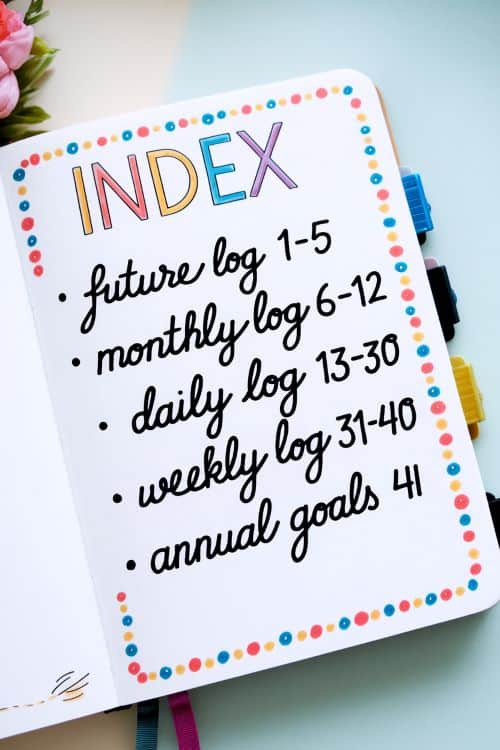
The Index page functions as a dynamic table of contents for the entire bullet journal. Its primary purpose is to provide a clear and organized method for locating specific entries, collections, or modules within the journal. This is achieved by dedicating the initial pages of the journal to the Index, where users meticulously record the page number and a brief title or description of each new section or spread as it is created.
This practice allows for the efficient use of subsequent blank pages without the need for pre-planning their content. As new spreads are added, their corresponding page numbers and titles are simply logged in the Index. For instance, if a user creates a collection of notes related to a significant work project spanning pages 34 through 36, 38, and 42, these details would be noted in the Index as "Team Project: 34-36, 38, 42."
The Index is not static; it is a living document that grows with the journal. This method ensures that regardless of where a particular piece of information resides, it can be quickly retrieved. This is particularly valuable for academic research, project management, or any situation requiring the consolidation of scattered information. The ability to swiftly access past notes, ideas, or task logs is fundamental to building upon previous work and maintaining momentum. The concept of the Index is derived from traditional library cataloging systems, adapted for personal organization.

Long-Term Planning: The Future Log
The Future Log is a critical component for individuals seeking to manage their commitments and anticipate future events beyond the immediate scope of the current month. This section is designed to capture significant dates, appointments, deadlines, and milestones that lie in the months ahead. Typically, several pages are allocated to the Future Log, with many users opting for a six-month or even a full-year outlook to gain a comprehensive perspective.
This spread serves as a high-level overview, allowing users to proactively plan for upcoming events such as birthdays, holidays, vacations, conferences, or important project due dates. By recording these items in advance, individuals can better allocate their time and resources, avoiding last-minute rushes and potential conflicts. The Future Log acts as a proactive planning tool, enabling users to visualize their commitments over an extended period and make informed decisions about scheduling and prioritization. Its inclusion acknowledges the need for strategic foresight in both personal and professional endeavors.
Monthly Overview and Action Plan: The Monthly Log
The Monthly Log is a dedicated spread designed to provide a clear overview of the current month’s activities and serve as a roadmap for immediate tasks and goals. This section typically comprises two pages. One page is dedicated to listing all the dates and corresponding days of the month, acting as a calendar. The philosophy behind the bullet journal’s monthly log often encourages users to record events and observations after they have occurred, fostering a more accurate and reflective record of daily life.
The opposing page is reserved for outlining the month’s key objectives, tasks, and events. This dual-page format allows for a balanced approach, capturing both the chronological flow of the month and a structured plan of action. It’s a central hub for organizing what needs to be accomplished within the given month, bridging the gap between the long-term vision of the Future Log and the day-to-day details of the Daily Log. This monthly overview is crucial for setting monthly priorities and ensuring that progress is made towards larger, long-term objectives. The structured nature of the Monthly Log facilitates a focused approach to the immediate future, enabling effective time management and task prioritization.
Daily Execution and Capture: The Daily Log
The Daily Log is the most dynamic and frequently used section of a bullet journal, serving as the primary space for tracking tasks, events, and notes on a day-to-day basis. This spread is highly adaptable, catering to minimalists who prefer simple bulleted lists and those who enjoy adding personal touches like doodles, quotes, or elaborate layouts.
Its core function is to act as a flexible repository for capturing all the immediate information that arises throughout the day. This includes jotting down new tasks as they are assigned or conceived, recording impromptu appointments, and noting down any fleeting thoughts or ideas before they are forgotten. The Daily Log functions as a comprehensive catch-all, ensuring that no detail, however small, is lost. Its unstructured nature allows for spontaneous documentation, making it an invaluable tool for maintaining a clear and organized mind. Research in cognitive psychology consistently highlights the benefits of externalizing thoughts and tasks to reduce cognitive load and improve memory recall. The daily log directly addresses this by providing a dedicated space for such capture.

Weekly Planning and Reflection: The Weekly Log
The Weekly Log provides a crucial mid-level planning perspective, bridging the gap between the monthly overview and the daily execution. This spread is designed to offer a comprehensive view of the upcoming week, enabling users to organize tasks, manage appointments, and set daily priorities with greater efficiency. A well-structured weekly log fosters focus, preparedness, and a proactive approach to the week’s challenges.
This layout is particularly effective for time management, allowing individuals to allocate specific days for particular tasks or to visualize their weekly commitments at a glance. Beyond scheduling, many users incorporate space for habit tracking or for jotting down important notes and reflections pertinent to the week. The typical format often involves a two-page spread. One page might be dedicated to daily planning, detailing tasks and appointments for each day, while the other page could be reserved for weekly reflections, goal review, or brainstorming. Alternatively, a single-page spread can be utilized, with reflections integrated into the daily logs or a separate section. The weekly log is instrumental in breaking down larger monthly goals into manageable weekly steps, reinforcing consistent progress.
Tracking Progress and Aspirations: The Annual Goals Tracker
The Annual Goals Tracker is a dedicated spread designed to map out and monitor an individual’s aspirations for the entire year. This page is instrumental in providing a clear vision of long-term objectives and ensuring sustained focus on what truly matters. By breaking down overarching goals into specific, actionable categories such as career development, health and wellness, personal growth, or financial targets, individuals can create a tangible roadmap for achievement.

Progress can be tracked visually by marking milestones or completing specific objectives related to each goal. This page also serves as a potent source of motivation, often enhanced by the inclusion of inspirational quotes or affirmations. Regularly referring to the Annual Goals Tracker reinforces commitment and keeps the user aligned with their most significant ambitions. Studies consistently demonstrate a correlation between the act of writing down goals and their successful attainment. For instance, a study published in the Journal of Personality and Social Psychology found that individuals who regularly reviewed their goals were significantly more likely to achieve them. The Annual Goals Tracker, therefore, is not merely a record but an active tool for driving ambition and fostering a sense of purpose.
Optimizing Planning with Essential Bullet Journal Pages: A Concluding Perspective
The bullet journal transcends its definition as a mere notebook; it evolves into a powerful instrument for achieving a heightened state of organization, enhanced productivity, and profound mental peace. The inherent flexibility of the bullet journaling system allows it to adapt and grow alongside the user’s evolving needs, placing them firmly in control of their personal and professional lives.
The strategic selection and consistent utilization of the aforementioned pages—the Key, Index, Future Log, Monthly Log, Daily Log, Weekly Log, and Annual Goals Tracker—represent a transformative approach to planning and organization. Beginning with a few core pages and gradually experimenting with layouts and tracking methods allows individuals to discover what best suits their unique workflow.

By embracing this systematic approach, users can effectively reduce mental clutter, streamline their planning processes, and make organization and productivity feel less like a chore and more like an intuitive aspect of their daily routines. The bullet journal, when thoughtfully implemented, becomes a personalized command center for navigating the complexities of modern life with greater intention and efficiency.

