
In a significant shift reverberating through the global technology supply chain, a prominent trio of the world’s leading personal computer manufacturers—HP, Asus, and Acer—have commenced the integration of memory chips from China’s ChangXin Memory Technologies (CXMT) into a selection of their notebook computers. This strategic pivot, first reported by Nikkei Asia, underscores the severe and "unprecedented memory shortage" currently gripping the industry, exacerbated by surging demand for artificial intelligence infrastructure and ongoing geopolitical complexities. The move by these PC giants signals a crucial moment for CXMT, a relatively nascent player in the DRAM market, as it carves out a niche against the long-standing dominance of industry stalwarts Samsung, SK Hynix, and Micron Technology.
The Genesis of a Crisis: An Unprecedented Memory Shortage
The global semiconductor industry, particularly the DRAM sector, has historically been characterized by cycles of boom and bust. However, the current shortage, which began intensifying in late 2023 and has continued throughout 2024, presents a unique confluence of factors that have pushed the market into an acute "seller’s market." At its core, the scarcity is primarily driven by an explosive demand for advanced memory solutions, largely fueled by the rapid expansion of artificial intelligence capabilities. AI models, particularly large language models and advanced neural networks, require vast amounts of high-bandwidth memory (HBM) to process immense datasets and perform complex computations at speed. This specialized memory, predominantly supplied by the established "cartel" of Samsung, SK Hynix, and Micron, has seen its production capacity increasingly diverted to meet the insatiable appetites of data centers, cloud providers, and GPU manufacturers.
Simultaneously, the broader electronics industry, still recovering from the supply chain disruptions of the pandemic era, has experienced a resurgence in demand for PCs, smartphones, and other connected devices. While the PC market itself is projected to face an overall decline of more than 11% this year, according to market research firm IDC, due to the very memory crunch it is grappling with, the underlying demand for components remains robust, particularly for premium models. This dual pressure—high-end AI requirements siphoning off advanced memory, and sustained demand from consumer electronics—has left many manufacturers scrambling for any available DRAM supply. Companies like Xiaomi, Oppo, and Vivo, major players in the smartphone market, have already had to revise down their shipment forecasts multiple times for 2026, directly attributing these adjustments to the persistent memory shortages. The ripple effect has been seen across the board, with PC makers forced to prioritize chips for premium models and implement price hikes of several hundred dollars to absorb rising component costs, further straining consumer affordability.
CXMT’s Strategic Rise: A Chinese Challenger Emerges
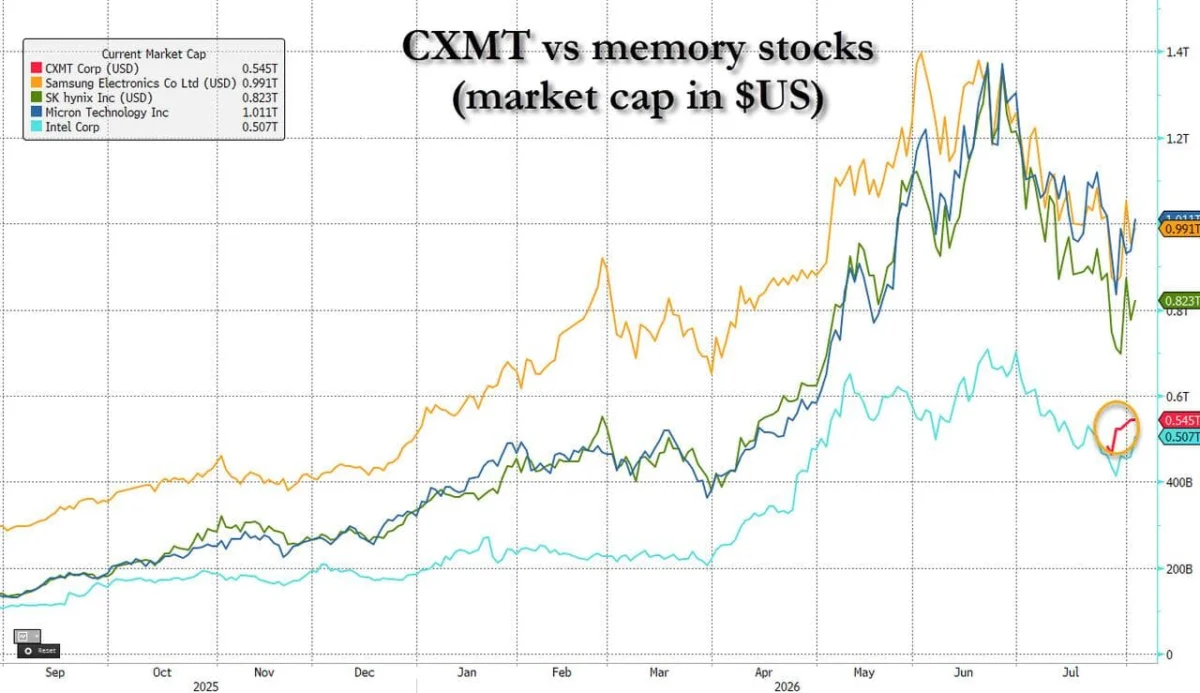
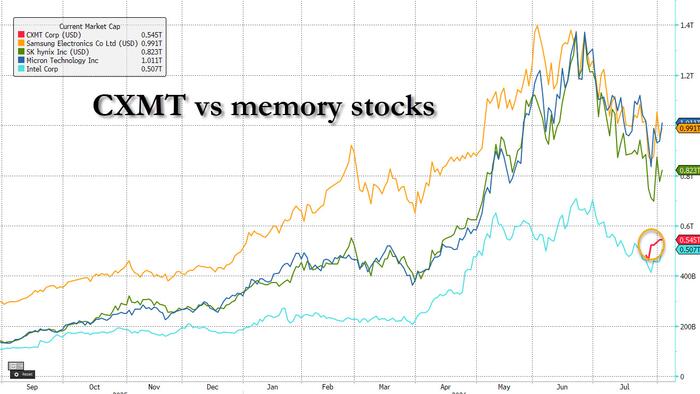
Against this backdrop of scarcity and market power consolidation, ChangXin Memory Technologies (CXMT) has strategically emerged as a viable, albeit limited, alternative. Based in Hefei, China, CXMT represents a cornerstone of Beijing’s ambitious drive for semiconductor self-sufficiency, a national imperative intensified by escalating technological tensions with the United States. The company’s recent initial public offering (IPO) on the Shanghai Stock Exchange’s tech-focused STAR Market on July 27, 2024, proved to be a spectacular success, with its share price soaring nearly eight-fold since its debut. This meteoric rise propelled CXMT’s market valuation to over 3.5 trillion yuan (approximately $545 billion) as of recent estimates, remarkably surpassing that of Intel, America’s long-standing microprocessor giant, and positioning it to approach the valuations of established memory leaders like Micron and SK Hynix.
This financial triumph underscores the immense investor confidence in CXMT’s potential, driven both by its strategic national importance and the immediate market opportunity presented by the global memory shortage. The company’s filing to the Shanghai Stock Exchange projected an astounding net profit for the first half of 2026, estimated to reach between 52 billion yuan and 58 billion yuan, a staggering increase of up to 2,530% from the previous year. This optimistic forecast is attributed to favorable market conditions and an improved pricing environment, signaling CXMT’s increasing leverage. Domestically, CXMT has already cemented its position as a key supplier, catering to nearly all of China’s top tech companies, including Huawei, Tencent, Alibaba Cloud, and ByteDance, effectively insulating a significant portion of the Chinese tech ecosystem from external supply vulnerabilities.
PC Makers’ Cautious Embrace: Balancing Need and Risk
For global PC manufacturers like HP, Asus, and Acer, the decision to incorporate CXMT chips is a calculated risk born out of necessity. Multiple sources familiar with the matter indicate that these leading PC makers completed the rigorous qualification process for CXMT’s DRAM chips around the middle of this year, subsequently integrating limited quantities into their notebook computers. While the precise volume of CXMT chips used and the number of notebook models featuring them remain restricted, this adoption marks a significant milestone for the Chinese chipmaker, signaling its entry into the mainstream global supply chain.
However, this integration is far from a full-scale endorsement. The PC companies are exercising a "restrained approach" due to a complex interplay of commercial and geopolitical considerations. A primary concern, as articulated by executives within the PC industry, is the potential for alienating the "top three memory chipmakers"—Micron, Samsung Electronics, and SK Hynix—who collectively command more than 90% of the global market share. "PC companies have to be very careful and stay low-key about [the use of CXMT chips]," one PC company executive told Nikkei Asia, emphasizing the current "seller’s market" dynamics. "We dare not source too much from CXMT at this moment." This caution highlights the delicate balance manufacturers must strike between securing much-needed components and maintaining strategic relationships with their primary, powerful suppliers.
Furthermore, a significant geopolitical layer complicates the sourcing decision. CXMT is included on a Pentagon list of companies alleged to have ties to the Chinese military. While the Chinese company has vehemently denied these allegations and is not subject to an outright trade blacklist, its presence on such a list makes sourcing from it a potentially sensitive issue, particularly for U.S.-based companies like HP. This adds a layer of scrutiny and potential future regulatory risk that PC makers must weigh carefully, especially for products intended for U.S. markets. Currently, the notebook models utilizing CXMT chips are explicitly for sale in non-U.S. markets, a clear indication of this geopolitical sensitivity.
Despite these apprehensions, the sheer urgency of the memory shortage is compelling some manufacturers to cast a wider net. Another industry executive noted that with additional supplies of central processing units (CPUs) secured, some PC makers are now aggressively seeking to lock in more memory to match, making them "much more open to sourcing from any available supplier, including CXMT." This pragmatic approach underscores the overriding imperative of maintaining production volumes in a severely constrained market. Acer, in a formal response to requests for comment, affirmed its commitment to supply chain resilience without directly naming CXMT: "We do not disclose our suppliers, but that we keep in close contact with multiple global manufacturers and suppliers to dynamically adjust operations to manage component prices changes. We work with multiple manufacturers and suppliers to enhance our supply chain resilience." This statement, while guarded, implicitly acknowledges the need to diversify and engage with a broad spectrum of suppliers.
The Broader Implications: Diversification, Geopolitics, and Market Shift

The adoption of CXMT chips by major global PC makers, however limited, represents a pivotal moment with far-reaching implications for the global semiconductor industry and the ongoing US-China technological rivalry.
Diversification of Supply Chains: For years, the DRAM market has been characterized by a tight oligopoly, leaving manufacturers vulnerable to supply shocks and price fluctuations dictated by a few powerful players. CXMT’s emergence offers a nascent, yet significant, opportunity for diversification. Even if CXMT’s chips are not currently cheaper than those from the top three—a point noted by industry insiders, who state, "Their DRAM is definitely no cheaper than the likes of Samsung"—their sheer availability in a constrained market makes them invaluable. This desire for alternative sources, particularly when the market is "so constrained," as one supply chain manager for HP and Asus noted, is a powerful driver for change. It allows PC makers to reduce their reliance on a concentrated supplier base, potentially mitigating future risks of supply disruption and fostering greater resilience.
Geopolitical Chessboard: The increasing integration of Chinese memory chips into global products highlights the complex interplay between commercial necessity and geopolitical tensions. The US government’s efforts to restrict China’s access to advanced semiconductor technology aim to curb its military and technological ambitions. CXMT’s growth, despite being on a Pentagon list, demonstrates the challenges of a full technological "decoupling." While U.S. companies must navigate these political currents carefully, the global nature of supply chains means that completely isolating a significant player like CXMT, especially when it addresses a critical market need, proves difficult. This scenario could lead to further policy debates and potential adjustments in export controls or import restrictions in the future, as Washington monitors the extent of CXMT’s global penetration.
Market Dynamics and Future Competition: CXMT’s aggressive expansion plans signal its long-term ambition to challenge the established order. The company is actively undertaking massive capacity expansion, including new plants in Shanghai that aim to boast a capacity two to three times larger than its home base in Hefei. Crucially, these plans include capacity for building high-bandwidth memory (HBM), a critical component for AI applications, indicating CXMT’s strategic focus on the most lucrative and technologically demanding segments of the memory market. This expansion, alongside similar efforts by domestic peer Yangtze Memory Technologies (YMTC) in the NAND flash sector, signifies China’s determined push to not only achieve self-sufficiency but also to become a major global competitor in memory production.
While CXMT still has a considerable journey to match the technological prowess and scale of Samsung, SK Hynix, and Micron, its current trajectory suggests a gradual but persistent shift in the global DRAM landscape. The difficulty in booking long-term supplies from CXMT—"We also couldn’t book supplies from CXMT beyond the current quarter, as so many companies are racing to secure DRAM from it"—attests to the immediate demand for its products and its growing influence. The long-term impact could involve a more fragmented and competitive memory market, potentially leading to greater price stability and innovation as more players vie for market share. However, the path ahead remains fraught with technological hurdles, significant capital expenditure requirements, and the ever-present shadow of geopolitical complexities.
In conclusion, the entry of CXMT chips into the supply chains of HP, Asus, and Acer is more than just a procurement decision; it is a testament to the acute pressures facing the global tech industry, a symbol of China’s growing semiconductor prowess, and a delicate balancing act for global manufacturers caught between commercial imperatives and geopolitical realities. As the demand for AI continues its relentless ascent, the role of alternative memory suppliers like CXMT will only grow in strategic importance, potentially reshaping the contours of the global semiconductor market for years to come.

