
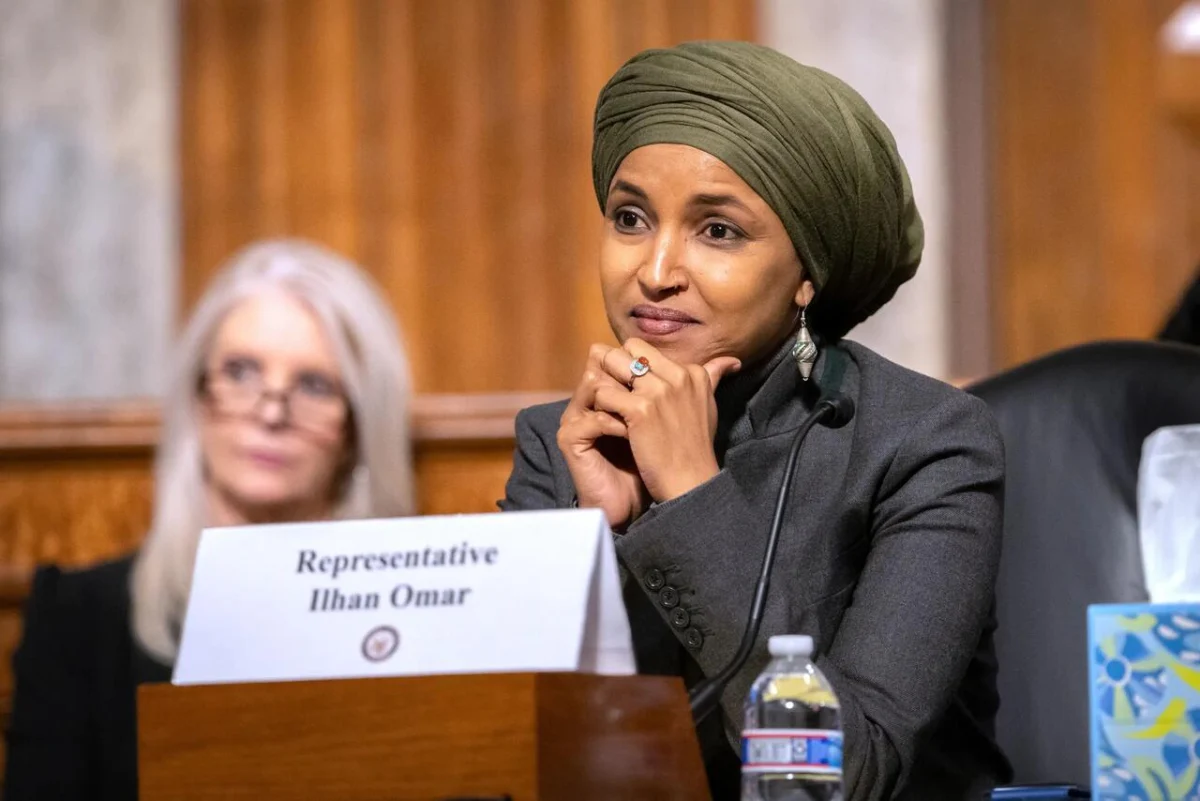
In a development that underscores the intricate interplay of judicial independence, political scrutiny, and federal investigations, U.S. District Chief Judge James Boasberg, an appointee of former President Barack Obama, is now at the center of a pivotal legal battle. Judge Boasberg, famously branded a "Radical Left Lunatic" by former President Donald Trump, whom Trump once demanded be impeached, is tasked with deciding whether the public can access the search warrant used in the federal raid on Representative Ilhan Omar’s Washington, D.C. residence. This decision carries significant implications for government transparency, the integrity of ongoing federal probes, and the political landscape surrounding the Minnesota Democrat.
The controversy stems from an October 12 federal raid on Rep. Omar’s home, the precise reasons for which remain under seal. A coalition of prominent news organizations, including The New York Times and conservative watchdog Judicial Watch, alongside 13 other media entities, has formally petitioned the court to unseal the warrant. Their argument hinges on the public’s right to know, asserting that scrutiny of a federal investigation into a high-profile elected official is paramount to democratic accountability. Conversely, the U.S. Attorney representing the government’s position in court filings, identified as Jeanine Pirro, is vigorously opposing the unsealing request, cautioning that its release could severely compromise an ongoing federal investigation. "This request sounds rash because it is rash," Pirro argued in a court filing, emphasizing the potential for jeopardizing the sensitive nature of the probe.
The Federal Investigation: Unraveling the Allegations
The federal investigation into Representative Omar is reportedly examining a series of serious allegations, primarily focusing on her family’s immigration paperwork and discrepancies found in her financial disclosures. A key aspect of the inquiry revolves around whether Omar’s father allegedly misstated her age in immigration documents filed in 2000. This particular allegation suggests that such a misrepresentation could have facilitated her obtaining U.S. citizenship through him while she was still considered a minor, a process that, if improperly executed, could have legal ramifications.
Beyond the age discrepancy, the investigation also reportedly delves into long-standing allegations concerning Omar’s 2009 marriage to Ahmed Nur Said Elmi. The New York Times reported on Thursday, October 29, citing current and former officials, that both the FBI and the Department of Homeland Security had previously investigated this marriage during the Obama administration in the summer of 2016. At that time, investigators reportedly found "some evidence that it was fraudulent," suspecting it might have been arranged to secure immigration status for Elmi. However, according to the Times report, prosecutors then concluded that any potential felony charges related to this alleged marriage fraud fell outside the five-year statute of limitations, and consequently, no case was brought.
Omar has consistently and vehemently denied these allegations, dismissing the claim that Elmi is her brother as a "baseless conspiracy theory." When questioned more recently by MSNBC host Chris Hayes about whether there was "some weird kernel of truth" to the claim, Omar responded, "Not to my knowledge," a response that some observers found less definitive than previous outright denials. The current federal investigation, initiated by the Trump Justice Department, appears to be broader in scope, reportedly scrutinizing her comprehensive immigration and naturalization records rather than solely focusing on the 2009 marriage. Unnamed sources previously indicated that investigators were employing advanced techniques, including DNA analysis, and were weighing the possibility of a conspiracy charge. A conspiracy charge is legally significant because it is not typically bound by the same five-year statute of limitations as certain other felonies, potentially allowing prosecutors to pursue older allegations.
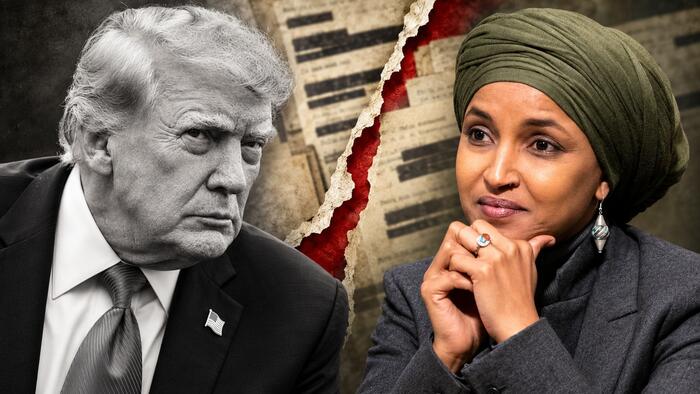
Judge Boasberg: A History of Standing Against Executive Pressure
Chief Judge James Boasberg’s current role in this high-profile case is particularly notable given his past confrontations with the Trump administration. Appointed to the U.S. District Court for the District of Columbia by President Obama in 2011, Boasberg has a distinguished judicial career marked by a reputation for meticulous legal reasoning and a commitment to the rule of law. His tenure has seen him preside over numerous complex cases, often involving significant national implications.
One of the most publicized clashes occurred in March 2025, when Judge Boasberg temporarily blocked deportation flights carrying individuals alleged to be members of Venezuelan gangs. This ruling, perceived by the Trump administration as an impediment to its immigration policies, drew an immediate and furious rebuke from the then-President. Trump publicly denounced Boasberg, calling him a "Radical Left Lunatic of a Judge, a troublemaker and agitator," and vociferously demanded his removal from the bench.
In a Truth Social post, Trump articulated his frustration, stating, "HE DIDN’T WIN ANYTHING! I WON FOR MANY REASONS, IN AN OVERWHELMING MANDATE, BUT FIGHTING ILLEGAL IMMIGRATION MAY HAVE BEEN THE NUMBER ONE REASON FOR THIS HISTORIC VICTORY. I’m just doing what the VOTERS wanted me to do. This judge, like many of the Crooked Judges’ I am forced to appear before, should be IMPEACHED!!!" This highly unusual attack on a sitting federal judge from the head of the executive branch prompted a rare and significant public response from the highest judicial authority in the land.
Supreme Court Chief Justice John Roberts, known for his cautious approach to public commentary, issued a sharp rebuke to Trump’s calls for impeachment. Roberts emphasized the foundational principles of judicial independence, stating, "For more than two centuries, it has been established that impeachment is not an appropriate response to disagreement concerning a judicial decision. The normal appellate review process exists for that purpose." Roberts’ statement served as a powerful defense of the separation of powers and a clear message that judicial rulings, even those unpopular with the executive, are to be challenged through established legal channels, not through political intimidation or calls for removal. This historical context illuminates Judge Boasberg’s fortitude and his experience in navigating intense political pressure, making his decision in the Omar warrant case all the more anticipated.
The Legal Framework: Sealing and Unsealing Warrants
The sealing of search warrants is a standard practice in federal investigations, particularly in their early stages. The primary purpose is to protect the integrity of the ongoing investigation, prevent the destruction of evidence, safeguard the identities of informants, and avoid alerting potential co-conspirators. Federal Rule of Criminal Procedure 41(e) allows for such sealing, typically for a specified period, after which the warrant usually becomes public unless a court determines there is an overriding reason to keep it sealed.

When a request is made to unseal a warrant, a court must balance competing interests. On one side is the public’s and media’s First Amendment right of access to judicial records, which promotes transparency and accountability in government actions. This right is often particularly strong when the investigation involves a public figure like a U.S. Representative. On the other side is the government’s compelling interest in protecting an ongoing investigation. This includes concerns about witness intimidation, the potential for suspects to flee, or the compromise of investigative techniques. Judge Boasberg’s decision will involve a careful weighing of these factors, likely considering the stage of the investigation, the specific nature of the allegations, and the potential harm that disclosure could cause versus the public benefit of transparency. Precedents suggest that courts often lean towards keeping warrants sealed if law enforcement can demonstrate a clear and present danger to the investigation. However, the involvement of an elected official often tips the scales more towards public disclosure once the immediate investigative needs have subsided.
Political Fallout and Reactions
The federal investigation into Representative Omar has ignited a political firestorm, drawing sharp reactions from across the political spectrum. Omar and her Democratic allies have largely framed the investigation as politically motivated, particularly given its timing ahead of the mid-term elections. They argue that such probes, especially those initiated by a Justice Department under an opposing administration, can be used for political intimidation and to undermine public confidence in elected officials without substantive grounds.
On October 28, a significant contingent of 175 House Democrats collectively demanded a halt to the investigation. This united front underscores the perception within Omar’s party that the probe is an undue political attack. Such collective action from within Congress is a powerful statement, signaling deep concerns about the potential for abuse of power or selective prosecution.
Conversely, conservative groups and Republican voices have largely called for transparency and accountability. Judicial Watch’s involvement in the unsealing request highlights a broader conservative push for full disclosure, arguing that if there are legitimate allegations against a Member of Congress, the public has a right to know the details. They often emphasize the seriousness of allegations like immigration fraud, particularly when they involve public officials entrusted with upholding the law. The previous inaction by the Obama-era Justice Department on the marriage fraud allegations has also fueled conservative narratives about political protection or delayed justice.
The ongoing nature of the probe and the lack of announced criminal charges contribute to the charged political atmosphere. Any outcome, whether the unsealing of the warrant or a decision to keep it sealed, will undoubtedly be met with intense political analysis and could shape narratives leading into future elections.
Broader Implications: Judicial Independence, Transparency, and Public Trust

Judge Boasberg’s decision on the unsealing of the warrant transcends the immediate facts of the Ilhan Omar investigation. It is a critical moment for several fundamental principles of American governance. Firstly, it reaffirms the vital role of judicial independence. Despite direct and personal attacks from a former President, Judge Boasberg continues to adjudicate cases without apparent bias, demonstrating the judiciary’s constitutional role as a check on executive power and a guardian of due process. His handling of this case, in light of his past history with Trump, serves as a testament to the resilience of the federal judiciary.
Secondly, the case highlights the perpetual tension between government transparency and the practical necessities of law enforcement. The public’s right to know is a cornerstone of a free society, ensuring that government actions, especially those involving the exercise of coercive power like a search warrant, are subject to scrutiny. However, legitimate law enforcement needs, such as preventing obstruction of justice, are also critical for maintaining public order and safety. Judge Boasberg’s ruling will provide clarity on where that balance is struck in this particular high-stakes scenario.
Finally, the entire episode has significant implications for public trust in governmental institutions. For some, the investigation into Rep. Omar may be seen as a necessary pursuit of justice and accountability, demonstrating that no one is above the law. For others, particularly those who align with Omar’s political stance, it may be perceived as evidence of a politicized justice system targeting ideological opponents. The manner in which this case is handled, from the court’s decisions to the eventual outcome of the investigation, will inevitably influence public perception of the fairness and impartiality of federal law enforcement and the judiciary.
As Judge Boasberg weighs the arguments from media organizations and the U.S. Attorney, the nation awaits a decision that will not only impact Representative Omar’s future but also send a powerful message about the state of justice, transparency, and political discourse in the United States. The intricate web of legal precedent, political pressure, and public interest converges in his courtroom, making his impending ruling one of the most closely watched judicial decisions in recent memory.

