
BEIJING — China’s ambitious pivot towards a consumption-driven economic model faces significant headwinds, primarily from the soaring cost of healthcare, which compels households to prioritize savings over spending. This critical assessment comes from the International Monetary Fund (IMF) in its recently published book, "Toward a New Economic Growth Model for China," which underscores the deep-seated challenges in rebalancing the world’s second-largest economy. The findings highlight a profound societal dilemma where the pursuit of health security directly constrains the very consumer spending needed to sustain robust economic expansion.
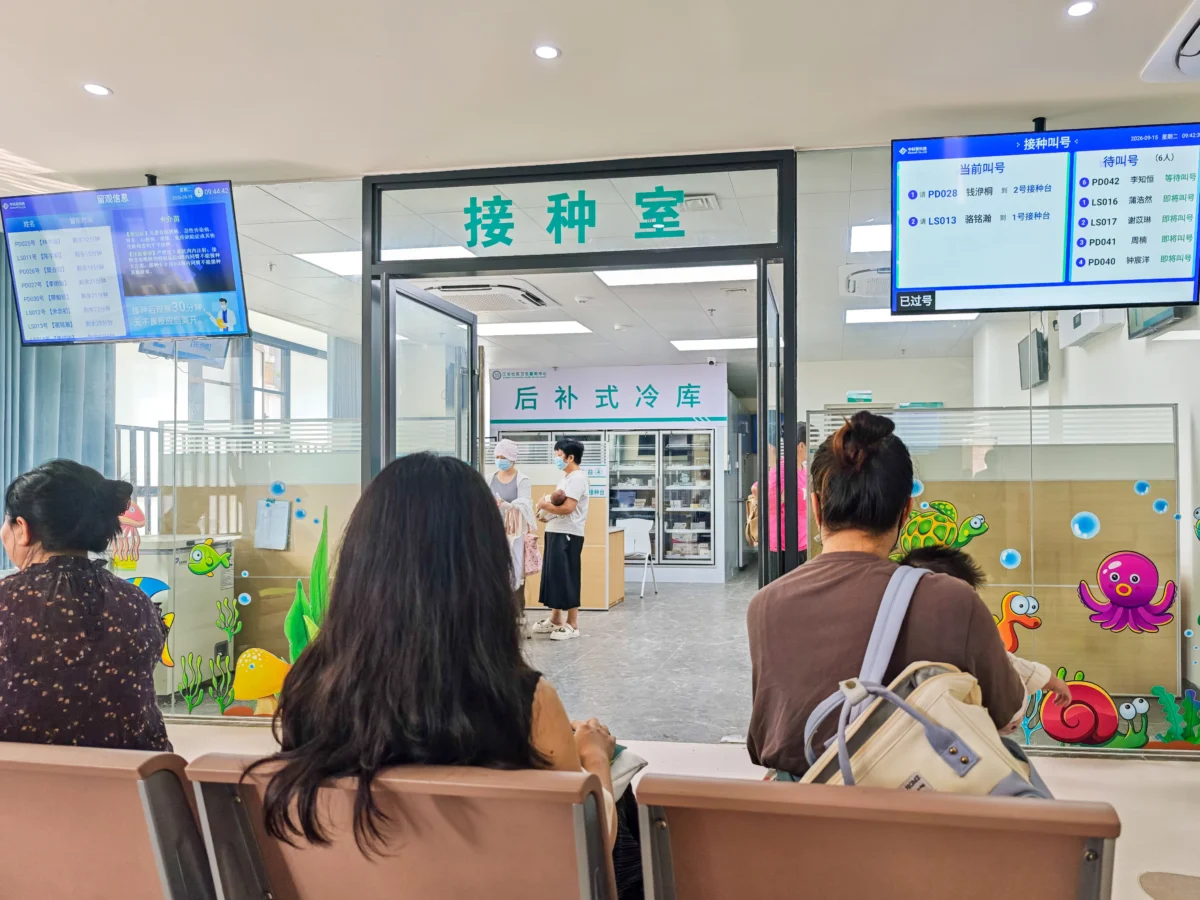
The IMF’s comprehensive analysis reveals that the burden of healthcare costs is disproportionately felt across different segments of Chinese society, with rural populations bearing the brunt. In rural China, an alarming 8.7% of disposable income is allocated to healthcare expenses, positioning it second only to the United States among 20 major global economies. The U.S. currently leads worldwide, with nearly 9.9% of disposable income dedicated to healthcare. Urban China, while faring better, still ranks third globally, with 5.4% of disposable income spent on healthcare, slightly surpassing Canada. This stark reality was symbolically captured on September 15, 2026, at the Jiangbei Community Health Service Center in Huizhou, Guangdong province, where children and adults received vaccinations, a visual reminder of the ongoing demand for health services and the associated financial implications for families.
The Economic Imperative: Shifting from Investment to Consumption
For decades, China’s economic miracle was fueled by a potent combination of exports and massive infrastructure investment. However, as global demand fluctuates and the domestic economy matures, Chinese policymakers have increasingly recognized the necessity of transitioning towards a growth model anchored by domestic consumption. This strategic rebalancing aims to create a more sustainable and resilient economy less vulnerable to external shocks. The IMF’s book delves into the structural reforms required for this shift, and prominently features the imperative to bolster household consumption. The current high savings rate, largely driven by precautionary motives, directly counteracts this economic objective.
Yizhi Xu, an economist in the north Asia division of the IMF’s Asia and Pacific Department, and Fan Zhang, the IMF’s deputy resident representative in Beijing, explicitly stated in their section of the book that "China’s social spending is low compared with international peers, and increasing that spending would lift consumption." Their research indicates a savings rate of approximately 14% for rural migrants working in Chinese cities, significantly higher than the roughly 6% for individuals holding urban "hukou" residency rights, who benefit from more extensive social welfare provisions. This disparity underscores the deep inequalities embedded within China’s social safety net and its profound impact on household financial decisions.
Income Disparity: A Magnifying Glass on Healthcare Costs
The true magnitude of China’s healthcare burden becomes strikingly evident when juxtaposed with the nation’s per capita disposable income. As of the end of last year, the United States boasted a per capita disposable income of $68,289. In stark contrast, China’s figure stood at 43,377 yuan, which translates to approximately $6,400 – more than ten times less than the U.S. average. This vast income chasm means that even a smaller percentage of disposable income spent on healthcare in China represents a far greater financial strain on households in absolute terms.
The gap widens further when examining China’s countryside. Despite the official declaration in 2020 that China had eradicated extreme poverty, rural areas continue to lag significantly behind their urban counterparts in terms of economic prosperity. Official data, accessible via Wind Information, reveals that urban China recorded a disposable income of 56,502 yuan, more than double the 24,456 yuan reported for rural areas. For rural families, where incomes are substantially lower, the 8.7% allocation to healthcare represents a critical drain on already meager resources, often forcing difficult choices between immediate needs and future health security. This persistent rural-urban divide, a legacy of China’s rapid industrialization and urbanization policies, continues to shape access to and affordability of essential services like healthcare.
China’s Evolving Healthcare Landscape: A Chronology of Reforms and Challenges
China’s healthcare system has undergone a dramatic transformation over the past seven decades. In the Mao era, a highly centralized system, characterized by the "barefoot doctors" initiative in rural areas and state-run hospitals in cities, provided basic, low-cost care. However, with the economic reforms initiated in the late 1970s, the healthcare system gradually shifted towards market-oriented approaches. State funding dwindled, and medical institutions were encouraged to generate their own revenue, leading to a significant increase in out-of-pocket expenses for patients. This marketization, while boosting efficiency in some areas, eroded the social safety net and pushed millions into medical poverty, particularly in rural regions.
Recognizing the social and economic instability caused by this shift, the Chinese government embarked on a series of ambitious reforms in the mid-2000s, aiming to rebuild a universal healthcare coverage system. Key initiatives included the launch of the New Rural Cooperative Medical Scheme (NRCMC) in 2003 and the Urban Resident Basic Medical Insurance (URBMI) in 2007, which later merged into the Urban and Rural Resident Basic Medical Insurance (URRBMI). These schemes, alongside the Urban Employee Basic Medical Insurance (UEBMI) for urban workers, have achieved near-universal basic health insurance coverage, covering over 95% of the population.
Despite these achievements in expanding coverage, significant challenges persist. The current system remains fragmented, with varying benefit packages and reimbursement rates across different regions and insurance schemes. Out-of-pocket expenses, even for insured individuals, remain high, especially for specialist care, advanced treatments, and expensive medications. Catastrophic illnesses, in particular, can quickly deplete family savings, pushing households into debt. This persistent financial risk fuels the precautionary savings motive, as families squirrel away money to prepare for potential medical emergencies, thereby diverting funds that could otherwise contribute to consumption.
The Hukou System: A Barrier to Equitable Welfare
The household registration, or "hukou," system stands as a fundamental institutional barrier exacerbating healthcare disparities and influencing savings behaviors. Established in the 1950s, the hukou system initially served to control internal migration and allocate resources. Today, it continues to tie individuals to their place of birth, determining their access to public services, including education, housing, and crucially, healthcare and social security benefits.
Migrant workers from rural areas, who form the backbone of China’s urban workforce, often retain their rural hukou. This status frequently restricts their access to urban social welfare programs, forcing them to either pay out-of-pocket for urban medical services or return to their rural hometowns for cheaper, but often lower-quality, care. The IMF’s observation that rural migrants save approximately 14% of their income, compared to 6% for urban hukou holders, powerfully illustrates this disparity. Lacking the robust social safety net available to urban residents, migrant workers are compelled to build their own financial reserves to cover potential health crises, old-age support, and their children’s education. While some cities have initiated reforms to ease hukou restrictions and integrate migrant populations into urban welfare systems, progress has been slow and uneven, perpetuating a two-tiered society with stark differences in social security and healthcare access.
The Savings Paradox: More Than Just Healthcare
While healthcare costs are a primary driver, the high household savings rate in China is a complex phenomenon with multiple contributing factors. Beyond medical emergencies, Chinese families save extensively for education, particularly for their children’s schooling, which can be highly competitive and expensive. Eldercare is another significant concern, as the traditional family support system faces increasing pressure from urbanization and the "one-child policy" generation now caring for aging parents. The absence of a fully comprehensive, reliable state pension system for all citizens further incentivizes individuals to save for their retirement.
Furthermore, the real estate market has played a dual role. For many years, rising property values fueled a sense of wealth and encouraged some consumption, but also necessitated substantial savings for down payments. More recently, however, declining house prices, particularly in the wake of developers’ financial troubles, have had a dampening effect on consumption. As Xu and Zhang note, "Declining house prices in recent years continue to weigh on consumption and contribute to elevated household savings." A fall in property values can erode household wealth, reduce borrowing capacity, and foster economic uncertainty, prompting households to cut back on discretionary spending and increase precautionary savings. This cyclical effect can create a challenging environment for stimulating domestic demand.
Policy Pathways: Boosting Social Spending and Reforming Healthcare
The IMF’s recommendations are clear: targeted measures to significantly increase government spending on health and social security, especially in rural areas, are crucial. The prefecture-level analysis cited by the IMF demonstrates that such interventions can substantially reduce the savings rate in rural households, thereby unlocking their consumption potential. This involves not only increasing the absolute amount of government health expenditure but also improving the efficiency and equity of its allocation.
Chinese policymakers have acknowledged these challenges and have initiated various reforms. Efforts include centralizing medical insurance management to improve portability and reduce fragmentation, implementing bulk drug procurement programs to lower pharmaceutical costs, and strengthening primary healthcare services to provide more affordable and accessible care at the community level. The "Healthy China 2030" initiative outlines a long-term vision to improve public health, strengthen disease prevention, and enhance the overall quality and accessibility of healthcare services. However, accelerating the pace of these reforms and ensuring sufficient funding will be paramount.
Addressing the hukou system’s implications for social welfare also remains a key policy priority. Gradual reforms aimed at granting migrant workers greater access to urban public services, including healthcare, are essential for fostering social equity and reducing their precautionary savings. Furthermore, increasing government contributions to social security funds and expanding the coverage and generosity of pension schemes would alleviate some of the financial anxieties driving high savings rates.
Broader Implications: Towards a More Balanced and Equitable Future
The implications of China’s healthcare cost burden extend far beyond economic growth metrics. They touch upon issues of social equity, stability, and the long-term sustainability of the nation’s development model. A population constantly worried about medical expenses is less likely to be confident consumers and more likely to experience stress and dissatisfaction. Addressing these concerns is not merely an economic imperative but also a social one, crucial for maintaining social harmony and building a more inclusive society.
Moreover, as China grapples with an aging population, the demands on its healthcare and social security systems will only intensify. A robust, well-funded, and equitable system is essential to support an increasingly elderly populace and ensure intergenerational solidarity. By prioritizing investments in social safety nets, particularly healthcare, China can not only unlock its domestic consumption potential but also build a more resilient, equitable, and sustainable future for all its citizens. The IMF’s warning serves as a timely reminder that economic transformation must be accompanied by comprehensive social reforms to truly achieve a new, balanced growth model.

