
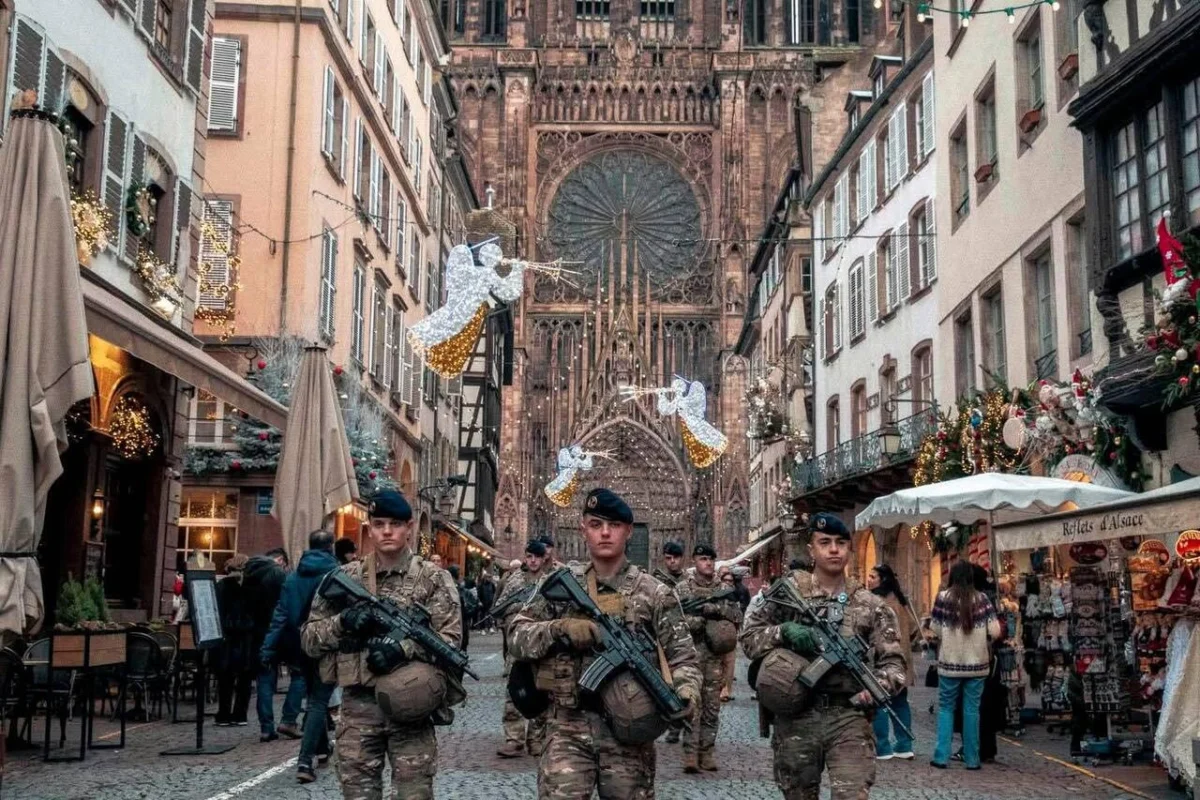
In a significant move reflecting the escalating social tension across France, Interior Minister Laurent Nuñez announced to parliament on Tuesday that French soldiers from the Operation Sentinelle anti-terror deployment would take over static guard duties. This strategic redeployment aims to free up police and gendarmes, enabling their full mobilization onto the streets for the nationwide protests anticipated this coming Saturday, October 24, 2026. The decision comes on the heels of the government’s candid admission of its failure to control widespread riots and looting that marred protests just last Saturday, October 17.
Escalating Unrest: The Aftermath of October 17th
The catalyst for this unprecedented measure was the violent turn taken by demonstrations held on October 17th. What began as a large-scale protest against the soaring cost of living quickly devolved into widespread urban chaos. Initial estimates by authorities placed the number of participants at around 500,000 nationwide, though organizers claimed a significantly higher turnout, exceeding 800,000. Despite the deployment of approximately 60,000 police and gendarmes across the country, Nuñez conceded that this force was "too few" to manage the sheer volume of demonstrators and the opportunistic elements that emerged.
In a frank assessment, Nuñez admitted that police had "lost control" in several cities, citing a "lack of anticipation." Major urban centers including Paris, Marseille, and Lyon bore the brunt of the violence, witnessing extensive looting and vandalism. Perhaps one of the most shocking incidents occurred in Limoges, where an arson attack tragically brought down the entire roof and tower of the historic town hall, a piece of European architectural heritage now likely beyond restoration. Images and videos circulating online depicted scenes of utter devastation, with shops ransacked, public infrastructure damaged, and a pervasive sense of lawlessness gripping city centers. The toll of this single day of unrest was staggering: more than 2,500 arrests reported by Euronews, over 2,400 by Remix News, and Justice Minister Gérald Darmanin confirming more than 2,330 individuals taken into custody, 70% of whom were adults. Nearly 1,000 members of the security forces sustained injuries. Economically, the damage was equally severe, with Alain Di Crescenzo, president of the national chamber of commerce, estimating that over 2,000 shops were impacted, incurring "hundreds of millions of euros" in losses.
Government’s Admission and Search for Accountability
Prime Minister Sébastien Lecornu and Interior Minister Laurent Nuñez both expressed deep regret over the events of October 17th, acknowledging significant lapses in the government’s strategy. Lecornu specifically pointed to intelligence gathering failures, a rigid positioning of police forces that hindered rapid response, and the controversial decision not to cancel planned police leave ahead of the demonstrations. He attributed the instigation of violence to "far-left groups," framing the crisis as a stark choice "between violence and the Republic." This narrative, however, faces counter-arguments from protest organizers and critics who contend that the government fundamentally underestimated the profound anger stemming from rising living costs and the perceived decline in public services.
Nuñez, taking personal responsibility, declared to parliament, "I deeply regret what happened. I accept my share of responsibility," and offered his resignation. However, President Emmanuel Macron swiftly rejected the offer, signaling a desire for continuity in leadership amidst the crisis and perhaps a vote of confidence in his minister’s ability to navigate the turbulent period ahead. The rejection of a resignation offer during such a critical juncture underscores the government’s resolve to present a united front, even as it grapples with widespread criticism regarding its handling of domestic security.
Operation Sentinelle: Military in a Domestic Role
The decision to deploy Operation Sentinelle troops for domestic security duties is a significant one, though not without precedent. Launched in January 2015 in the wake of the Charlie Hebdo attacks, Operation Sentinelle is primarily an anti-terrorism deployment. It typically involves approximately 10,000 soldiers stationed across France, tasked with guarding sensitive sites such as places of worship, schools, tourist attractions, railway stations, and airports. Its mandate also included ensuring security during major events like the Paris 2024 Olympics and Paralympics.
Crucially, Nuñez emphasized that the troops’ role in this context would be limited to "post-holding" or static guarding duties, explicitly stating it would not involve direct crowd control. This distinction is vital, as the French military is not trained or equipped for riot suppression, and direct confrontation between armed soldiers and civilian protesters could carry severe political and social ramifications. The legal framework governing Sentinelle’s deployment allows for such support to internal security forces, primarily in areas of counter-terrorism and surveillance, thereby relieving police and gendarmes for more dynamic roles. This careful demarcation aims to alleviate concerns about the militarization of domestic law enforcement, a sensitive topic in French public discourse.
Precedent and Public Debate
The current deployment draws parallels to March 2019, during the 19th consecutive Saturday of the "Yellow Vest" (Gilets Jaunes) protests. On that occasion, Sentinelle troops were also utilized to guard sensitive locations, allowing police to concentrate on maintaining order amidst the often-violent demonstrations. During that period, demonstrations were banned in central districts of major cities including the Champs-Élysées in Paris, Bordeaux, Toulouse, Marseille, Nice, and Rouen. Police made 31 arrests and issued 15 fines for entering banned areas in Paris, out of 2,322 street checks, as reported by NBC News at the time.
Then-Armed Forces Minister Florence Parly had categorically stated it was "hors de question" (out of the question) for soldiers to engage in face-to-face confrontations with protesters, echoing Nuñez’s current stance. President Macron had brushed off opposition criticism of the army’s involvement, stating, "Those trying to scare people, or to scare themselves, are wrong." This historical context indicates a tested, albeit controversial, playbook for deploying military assets to manage severe domestic unrest, highlighting the government’s preference for leveraging existing military capabilities rather than escalating police tactics beyond their defined roles. However, the precise locations where Sentinelle troops will be posted this Saturday remain undisclosed, adding a layer of tactical ambiguity to the government’s preparations.
Proactive Measures and Future Security Strategy
Beyond the immediate troop deployment, the government is implementing a series of proactive measures to prevent a repeat of last Saturday’s chaos. Nuñez revealed that his ministry is actively considering banning undeclared demonstrations that pose a high risk of public disorder. Even for declared marches, stricter regulations might be imposed, including mandates for routes to steer clear of sensitive public buildings and major commercial high streets. Intelligence services are also being instructed to significantly enhance their estimates of anticipated turnout, with a particular focus on identifying and tracking potentially radical participants who might seek to incite violence.
The Interior Minister emphasized the need for security forces to develop greater "responsiveness and mobility" to counter "scattered" and "extremely mobile" groups of agitators, underscoring a shift in tactical approach from static containment to dynamic intervention. On the legislative front, Parliament is establishing a commission of inquiry into the causes and handling of the recent unrest, a move designed to provide transparency and accountability. Administratively, Prime Minister Lecornu has urged regional authorities to implement "localised and partial curfews" where necessary, a measure already adopted in several northern cities with 8 p.m. curfews. Furthermore, nearly 200 Paris police investigators have been assigned to meticulously comb through extensive footage to identify and apprehend looters and rioters, signaling a determined effort to bring perpetrators to justice.
The Socio-Political Undercurrents and Broader Context
The current wave of protests and the government’s response must be understood within the broader context of persistent social unrest in France. The "cost of living" crisis is a recurring grievance, exacerbated by global inflation, energy price hikes, and a perceived stagnation of wages. This discontent echoes the sentiments that fueled the "Yellow Vest" movement years ago, which similarly began as protests against economic policies (fuel taxes) and evolved into a broader expression of frustration with the government’s perceived detachment from the concerns of ordinary citizens. More recently, widespread protests against President Macron’s pension reforms earlier this year further highlighted the deep polarization within French society and the public’s willingness to mobilize against government policies.
The government’s accusation of "far-left groups" as orchestrators of violence, while potentially accurate for certain elements, is often viewed by critics as an attempt to deflect attention from deeper socio-economic issues. Opposition parties are likely to seize upon the government’s admission of failure, criticizing its initial preparedness and the perceived heavy-handedness of deploying military personnel for domestic order. Police unions, while generally supportive of increased resources, might also voice concerns about chronic understaffing and inadequate training for managing large-scale, volatile demonstrations. The situation underscores a deepening chasm between the Macron administration and a significant segment of the populace, raising questions about the government’s ability to unite the country and address fundamental grievances.
Economic Repercussions and International Scrutiny
Beyond the immediate social and political ramifications, the escalating unrest is also casting a long shadow over France’s economic stability. The bond market has reacted sharply, with French 10-year yields recently hitting a 24-year high near 5%. The spread over benchmark German Bunds has widened to close to 160 basis points, signaling increased investor apprehension about France’s fiscal health and political stability. Such movements translate directly into higher borrowing costs for the French state, potentially straining the national budget at a time when economic growth is already under pressure.
Compounding these concerns, Moody’s credit rating agency is due to review France’s Aa3 rating, which currently carries a negative outlook. A downgrade could further exacerbate borrowing costs and diminish international investor confidence, impacting foreign direct investment and overall economic prospects. The persistent civil unrest, coupled with the admitted failures in maintaining order, presents a challenging narrative for France on the global stage. International observers are closely watching how the Macron government navigates this multifaceted crisis, as it could have broader implications for the Eurozone’s stability and the perception of political risk within major European economies. The previous characterization of France as entering a "point of no return" by some analysts reflects the gravity of the intertwined social, political, and economic challenges now confronting the nation.
As France braces for another weekend of anticipated protests, the stakes are undeniably high. The government’s reliance on military support, its public admission of past failures, and its determination to prevent further escalation reflect a critical juncture for the nation. The outcome of the upcoming demonstrations will not only test the effectiveness of these new security measures but also provide a crucial barometer of the Macron administration’s ability to restore order, address underlying grievances, and safeguard both democratic freedoms and national stability.

