
Reflecting a profound geopolitical shift across the Western Hemisphere, the dramatic capture of Venezuelan leader Nicolás Maduro in a pre-dawn January raid by Delta Force soldiers has underscored a significant rightward pivot in Latin American politics. Maduro, wanted on U.S. narco-terrorism charges, epitomized the left-wing governments that once dominated much of the region. His removal, a scenario that played out in the implied early months of 2026, serves as a powerful symbol of a broader conservative realignment that has reshaped the political landscape of America’s southern neighbors.
This shift marks a decisive turning point from the "pink tide" of socialism that characterized the region for decades, first emerging in the late 1990s and resurfacing in the early 2020s. The perceived re-engagement of the United States under a specific presidential administration, coupled with burgeoning domestic economic and security concerns, appears to have catalyzed this profound ideological transformation.
The Shifting Political Landscape: A Rightward Swing
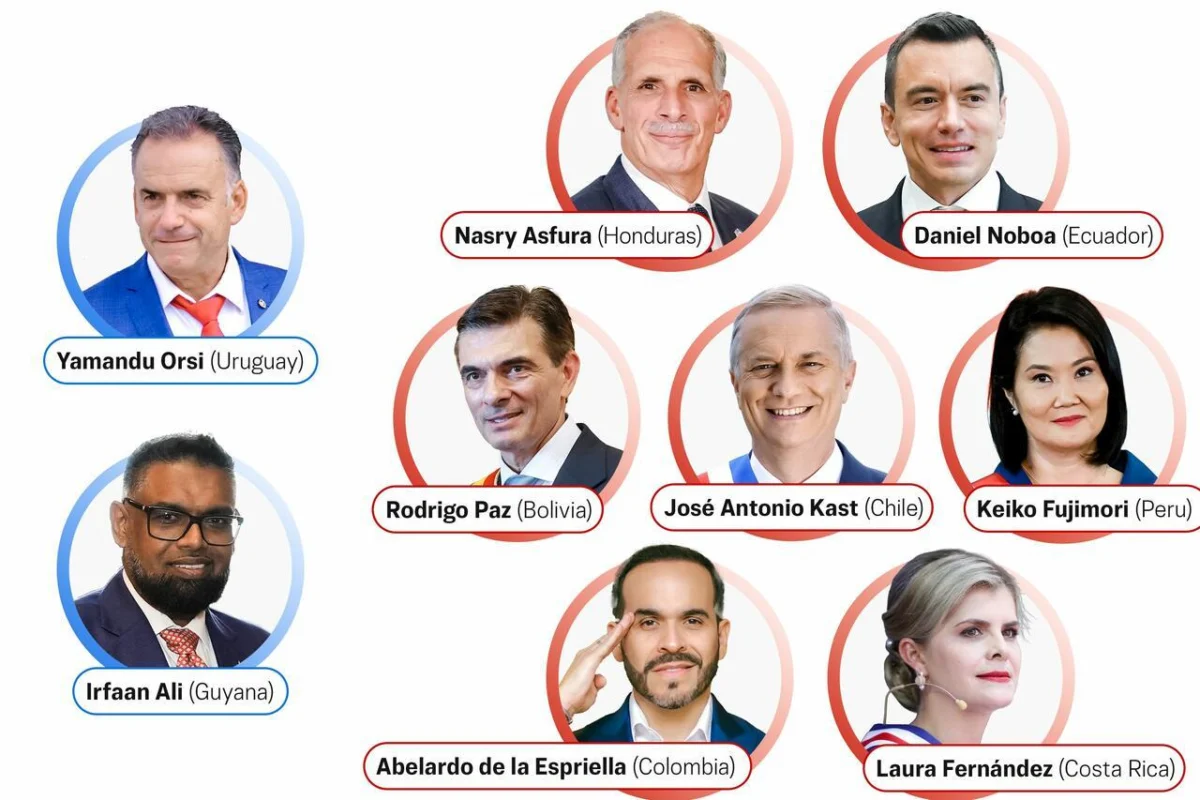
Since late 2025, a rapid succession of electoral outcomes has seen the leadership in five key Latin American nations—Bolivia, Chile, Honduras, Peru, and Colombia—transition from left to right. This trend, while sweeping, is not entirely monolithic, with Uruguay moving from right to left in November 2024, notably the same month that former U.S. President Donald Trump was reelected. However, the prevailing current points overwhelmingly towards a conservative resurgence.
In Chile, the December 2025 landslide victory of José Antonio Kast against communist candidate Jeannette Jara represented a decisive rejection of leftist policies. Kast, a prominent figure on the conservative spectrum, campaigned on platforms emphasizing order, economic freedom, and traditional values, resonating deeply with a populace reportedly weary of social unrest and economic instability. His win not only secured the presidency but also propelled a conservative coalition to control the lower chamber of the Chilean legislature, while the upper chamber achieved an even split, diminishing the left’s influence considerably.
Honduras witnessed a similar shift in December 2025, where conservative Nasry Asfura snatched victory from the socialist government. Asfura’s campaign focused on tackling corruption, improving public safety, and fostering economic growth, issues that had become central concerns for Honduran voters. His success was mirrored in the legislative branch, where his party gained significant seats, bolstering conservative representation in the country’s single legislative chamber.
Colombia, a nation with a complex history of political conflict, also saw a conservative victory this year (implying 2026). Abelardo de la Espriella edged out Iván Cepeda, a left-wing opponent closely aligned with outgoing leader Gustavo Petro, a former Marxist guerrilla. This outcome signaled a potential pivot away from the more progressive policies of the Petro administration. Uniquely among the countries undergoing a rightward shift, Colombia’s left managed to gain legislative seats, though neither side secured an outright majority in its two chambers, suggesting a more fragmented political landscape despite the presidential outcome.
Bolivia experienced a significant conservative surge. While no single party achieved an outright majority, conservative forces emerged as the largest bloc in both chambers of its legislature, collectively forming a supermajority. This dramatic shift saw the former leftist government, which had previously dominated, reduced to a mere two seats, a stark illustration of public disillusionment with its policies, particularly concerning economic management and resource nationalization, such as the takeover of oil and gas production under former leader Evo Morales.
In Peru, the conservative bloc secured a plurality in the lower chamber of its legislature, although falling short of a majority. The upper chamber, like Chile’s, remains evenly divided. This outcome reflects a growing preference for conservative governance in a nation grappling with political instability and economic challenges.
These electoral outcomes, occurring within a relatively compressed timeframe, paint a clear picture of a region in flux, moving away from the leftist ideologies that had characterized much of the early 21st century.
The "Donroe Doctrine" and U.S. Re-engagement
This conservative realignment has occurred amidst a perceived refocusing of U.S. foreign policy towards Latin America, dubbed the "Donroe Doctrine." This moniker, a deliberate play on the historic Monroe Doctrine, suggests a reassertion of U.S. influence and strategic interest in the Western Hemisphere. The original Monroe Doctrine, enunciated in 1823, asserted U.S. dominance over the region, warning European powers against further colonization or intervention. While its application has varied over two centuries, often leading to controversial U.S. interventions, the "Donroe Doctrine" appears to signal a contemporary iteration, prioritizing regional stability and alignment with U.S. interests, particularly through the active support of like-minded political forces.
Under the implied U.S. administration, this policy has reportedly involved more than just rhetoric. Washington has explicitly announced its intent to actively support politically aligned forces, expand trade relations, and work towards stabilizing Latin American countries in line with its own strategic objectives. This approach contrasts sharply with periods where U.S. engagement with the region was perceived as less consistent or more focused on other global priorities, allowing space for the previous "pink tide" to flourish. The strategic decision to re-prioritize the region reflects a recognition of Latin America’s growing geopolitical importance, its vast natural resources, and its critical role in U.S. security and economic interests.
Factors Driving the Conservative Wave: Crime and Economics
The primary catalysts for this conservative trend, according to Konrad-Adenauer-Stiftung, a Germany-based international political analysis group, are widespread disappointment with leftist governments, leading to increased organized crime and persistent inflation. This analysis, based on a survey of 16 democracies with populations exceeding 1 million, highlights a significant shift: 10 of these nations have changed political direction since 2022, predominantly from left to right.

Economic Disillusionment: Many leftist governments in Latin America, while often coming to power on promises of social equality and poverty reduction, have struggled with economic management. Policies such as extensive nationalization, price controls, and high social spending, often financed through debt or commodity booms, proved unsustainable in the long run. When global commodity prices softened or economic downturns hit, these economies often faltered, leading to rampant inflation, currency devaluation, and a decline in living standards. Citizens, particularly the burgeoning middle classes and the working poor, grew increasingly frustrated with the erosion of their purchasing power and the lack of tangible economic opportunities. The promise of a more equitable society often gave way to economic stagnation and hardship, fueling a desire for alternative approaches that emphasize fiscal discipline, private sector growth, and market-oriented reforms.
Escalating Security Crises: Organized crime, drug trafficking, and generalized violence have plagued many Latin American nations for years, but under several leftist administrations, these issues often appeared to worsen or were perceived as inadequately addressed. Weakened state institutions, corruption, and a lack of effective law enforcement strategies allowed criminal enterprises to expand their influence, terrorizing communities and destabilizing governance. Conservative candidates, often campaigning on "law and order" platforms, strong security measures, and a no-tolerance approach to crime, offered a stark contrast. Their promises to restore public safety, strengthen police forces, and combat criminal organizations resonated deeply with a populace living under the constant threat of violence and insecurity. This focus on immediate, tangible solutions to pressing security concerns became a powerful electoral advantage for the right.
The combination of these two factors—economic malaise and pervasive insecurity—created a fertile ground for conservative narratives that promised stability, prosperity, and a return to order. Voters, disillusioned with the performance of their leftist leaders, were increasingly open to political alternatives that offered different solutions to their daily struggles.
The "Trump Effect" and U.S. Endorsements
A significant element in this conservative resurgence has been the perceived "Trump effect." Joshua Trevino, senior director for the Western Hemisphere Initiative at the Texas Public Policy Foundation, posits that the presence of a conservative in the White House has directly driven change in Latin America. According to Trevino, the influence and policies of the implied U.S. administration have contributed to a regional pivot away from socialism and communism. "So what we see is a Trump administration effect to a lot of it," Trevino told The Epoch Times, adding, "We can have a lot more open optimism in Latin America than we previously did."
This influence was not merely ideological but also manifested through direct political support. The implied U.S. administration reportedly endorsed a number of right-wing candidates across the region. For instance, the endorsement of Chile’s José Antonio Kast in December 2025 and Honduras’s Nasry Asfura in the same month were highlighted as crucial factors in their respective victories. Similarly, the support for Colombia’s Abelardo de la Espriella against his leftist opponent underscored a clear U.S. preference for conservative leadership. These endorsements, whether through public statements, diplomatic channels, or other forms of strategic alignment, provided a significant boost to conservative campaigns, lending them international credibility and perhaps encouraging voters to align with a U.S.-backed vision for the region. The U.S. policy, as articulated in the Konrad-Adenauer-Stiftung report, aims to "actively support like-minded political forces," which seems to have been implemented effectively.
Legislative Realignment: Beyond the Presidency
The conservative shift was not confined to presidential palaces; it also significantly altered the legislative landscape in many countries. In four of the five nations experiencing a left-to-right presidential flip, conservatives made substantial gains in their respective legislatures.

- In Bolivia, the conservative government, despite not winning an outright majority, became the largest political force, achieving a supermajority when various conservative factions coalesced in both chambers. This legislative dominance provides a strong mandate for implementing conservative policies.
- Honduras saw its single legislative chamber gain conservative seats, riding on the coattails of Asfura’s presidential victory, strengthening the executive’s ability to govern.
- Chile’s legislature now features a conservative coalition controlling the lower chamber, while the upper chamber is evenly split, indicating a significant swing from previous leftist dominance.
- Peru’s conservative bloc holds a plurality, though not a majority, in the lower chamber, with the upper chamber also evenly divided. This suggests a more fragmented but still right-leaning legislative body.
Only Colombia presented an anomaly, where the left actually gained legislative seats, though neither side secured a majority. This outcome indicates a more balanced and potentially contentious legislative environment, where political alliances and negotiations will be crucial for policy implementation.
The Rise of New Conservative Populism
Beyond traditional conservative parties, the region has also witnessed the ascendance of new conservative populist leaders, emblematic of a broader anti-establishment sentiment. Figures such as Argentina’s "golden chainsaw-wielding" leader Javier Milei and El Salvador’s Nayib Bukele symbolize this new political mood.
Javier Milei, who took office in Argentina, gained international notoriety for his radical libertarian proposals, including dollarization, drastic cuts to public spending, and a confrontational style. His use of a chainsaw as a metaphor for cutting government expenditures resonated with voters tired of endemic inflation and economic stagnation. Milei’s appeal lies in his outsider status, his fierce critique of the political establishment ("the caste"), and his bold promises to dismantle what he perceives as a corrupt and inefficient state. His populist strategy, combining anti-establishment rhetoric with market-liberal ideas, demonstrates a significant departure from traditional political approaches in Argentina.
Nayib Bukele of El Salvador, while not mentioned in the original text as a recent shift, embodies a similar populist appeal with his strongman image and aggressive stance against gang violence. His policies, including mass incarcerations and the suspension of certain civil liberties to combat crime, have garnered immense popularity domestically, despite international criticism regarding human rights. Bukele’s success highlights how deeply security concerns can drive voter behavior and how leaders who project an image of decisive action can capture public imagination.
These leaders, with their direct communication styles, strong social media presence, and promises of radical change, tap into a deep well of public frustration with traditional politics, corruption, and economic hardship. They stand in contrast to "moderate conservatives" like Luis Abinader in the Dominican Republic, who prioritize stability and pragmatism, illustrating the diverse manifestations of the conservative wave.
Persistent Leftist Enclaves and Exceptions
Despite the overarching rightward trend, some countries continue to operate under left-wing governments or authoritarian regimes. Of the 16 democracies examined by Konrad-Adenauer-Stiftung, only Brazil, Guatemala, Mexico, and Uruguay (post-November 2024 shift) currently maintain left-wing governments.

Brazil, under its current leftist leadership, represents a significant counterweight to the regional trend, given its size and economic influence. Similarly, Mexico continues to be led by a left-leaning populist president, whose policies often emphasize social programs and national sovereignty. Guatemala and Uruguay, despite the latter’s recent shift from right to left, remain within the group of democracies with leftist leadership.
Beyond these democracies, several nations remain under entrenched leftist or communist control. Venezuela, following Maduro’s removal, has been left in political limbo, with Vice President Delcy Rodríguez assuming interim control. The future trajectory of Venezuela, a nation rich in oil but devastated by economic crisis and political repression, remains uncertain. Cuba continues under communist control, a system rooted in the 1950s, representing a historical bastion of socialism in the hemisphere. Nicaragua, under former left-wing guerrilla leader Daniel Ortega, has increasingly consolidated power since 2007, with Ortega recently announcing the cessation of future elections, effectively cementing an authoritarian socialist state. Guyana, a small nation of about 1 million residents, holds democratic elections but remains firmly under the grasp of socialists, largely due to its burgeoning oil wealth and complex ethnic politics. These countries highlight the enduring presence of leftist ideologies in certain pockets, often sustained by historical legacies, specific geopolitical alignments, or the suppression of democratic processes.
Expert Analysis and Outlook
The analysis from Konrad-Adenauer-Stiftung and insights from experts like Joshua Trevino collectively suggest a profound transformation underway in Latin America. The blend of a proactive U.S. foreign policy, economic disillusionment, and pressing security concerns has created a potent environment for conservative ideologies to thrive. The "Donroe Doctrine," whether formalized or merely an observed pattern of engagement, appears to have fostered an environment conducive to the electoral success of right-leaning parties and leaders.
As Latin America navigates this new political era, the long-term implications will be significant. A region largely aligned with conservative principles could foster greater economic integration with the United States, potentially leading to increased trade and investment. However, it also raises questions about democratic stability, human rights, and the potential for social unrest if the promises of economic prosperity and security are not met. The dramatic events, such as the hypothetical capture of a leader like Maduro, signal a willingness to take decisive action against regimes deemed hostile, further shaping the geopolitical dynamics of the hemisphere. This period of conservative ascendancy represents a complex and evolving chapter in Latin American history, one that demands careful observation and analysis as its consequences unfold.

