
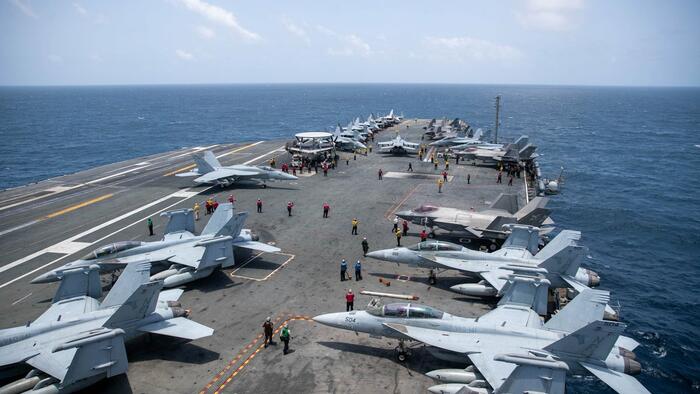
The US Central Command (CENTCOM) confirmed on Thursday the deployment of the USS George Washington Carrier Strike Group to the Middle East, a strategic move that places the formidable naval asset at the forefront of regional operations. This arrival comes in the wake of significant challenges faced by its predecessor, the USS Abraham Lincoln, which endured an unusually prolonged deployment, sparking widespread concerns and media attention regarding deteriorating conditions, inadequate supplies, and plummeting morale among its personnel. The official statement, posted by CENTCOM on X, noted, "The George Washington Carrier Strike Group is operating in Middle East during a scheduled deployment after arriving in the CENTCOM theater yesterday." This rotation underscores a critical phase in US military posture in the volatile region, particularly as Washington intensifies its economic pressure campaign against Iran.
The Shifting Sands of Naval Presence: From Lincoln’s Strain to Washington’s Arrival
The deployment of a Nimitz-class aircraft carrier and its accompanying strike group is a significant assertion of US power projection. The USS George Washington, a nuclear-powered supercarrier, typically carries approximately 5,000 personnel and a complement of around 90 aircraft, including F/A-18 Super Hornets, E-2C Hawkeyes, and various helicopters. Its presence signifies a robust capability for air superiority, intelligence gathering, surveillance, reconnaissance, and strike operations across a vast operational area.
However, the context of this deployment is shadowed by the recent ordeal of the USS Lincoln. The Lincoln’s tour in the Middle East stretched for over 10 months, far exceeding the typical six-to-seven-month deployment cycle. Such extended periods at sea are known to exact a heavy toll on sailors, impacting mental and physical health, exacerbating family separation issues, and straining logistical support. Reports of shortages in crucial supplies, coupled with the psychological burden of prolonged isolation and high-stress environments, led to a discernible decline in morale. This situation garnered considerable media scrutiny and internal military reviews, highlighting the human cost of maintaining a continuous forward presence in contested zones. The arrival of the USS George Washington is therefore not merely a routine rotation but a much-needed replenishment of both material and human capital, aimed at re-energizing the US naval presence in the strategically vital CENTCOM area of responsibility.
The USS Washington’s primary mission will be to lead the military’s frontline operations in regional waters, a role that includes the ongoing enforcement of what the US describes as a blockade of Iranian ports. This maritime interdiction effort is designed to restrict Iran’s ability to conduct trade, particularly in oil, which remains the lifeblood of its economy.
Trump Declares "ECONOMIC D-DAY" Against Iran
The naval maneuver coincides with a dramatic escalation in rhetoric from former President Donald Trump, who issued a stark warning to Tehran. The evening prior to the USS Washington’s deployment confirmation, Trump took to Truth Social to announce an "ECONOMIC D-DAY" against Iran. He declared his intention to launch the "MOST CRUSHING ECONOMIC OPERATION EVER TAKEN AGAINST ANY COUNTRY," signaling a profound intensification of the already stringent sanctions regime.
Trump’s pronouncement went further, asserting that Iran’s military and military-industrial base had been "reduced to now rubble" and its "currency worthless." These claims, while lacking immediate independent verification, underscore the aggressive posture Washington intends to maintain. Crucially, Trump threatened severe economic consequences against "ANY country that allows its financial institutions, businesses, airports, or government entities to provide any type of lifeline to Iran." This threat implies a widening of secondary sanctions, aimed at isolating Iran from the global financial system and international trade networks by penalizing third-party actors who engage with the Islamic Republic. Such measures are designed to deter even indirect support for the Iranian economy, effectively seeking to choke off all avenues of revenue for the Iranian government.
Historical Context: The Arc of US-Iran Tensions and Sanctions
The current heightening of tensions is deeply rooted in decades of strained relations between the United States and Iran, exacerbated significantly since the 1979 Iranian Revolution. Following the US withdrawal from the Joint Comprehensive Plan of Action (JCPOA), commonly known as the Iran nuclear deal, in May 2018, the Trump administration initiated a "maximum pressure" campaign. This strategy aimed to force Iran back to the negotiating table for a new, more comprehensive agreement by crippling its economy through a vast array of sanctions.
Initially, sanctions targeted Iran’s oil exports, banking sector, and shipping industry. These measures led to a dramatic reduction in Iran’s crude oil sales, which historically accounted for a significant portion of its state revenue. For instance, Iran’s oil exports plummeted from over 2.5 million barrels per day before the US withdrawal from the JCPOA to well under 500,000 bpd at the peak of the sanctions, significantly impacting its foreign currency reserves. The Iranian rial, indeed, has suffered severe depreciation, losing a substantial portion of its value against major international currencies. Inflation rates have soared, and the cost of living for ordinary Iranians has risen sharply, leading to periodic domestic protests.
The "economic D-Day" declaration signals a potential expansion beyond these already severe measures, possibly targeting additional sectors or applying even more stringent enforcement mechanisms for secondary sanctions. The stated objectives of this campaign typically include curbing Iran’s nuclear program, ballistic missile development, and its support for regional proxy groups. However, critics argue that such broad-based sanctions disproportionately affect the civilian population and may paradoxically strengthen hardline elements within the Iranian regime, while doing little to alter its strategic behavior.
Tehran’s Vehement Rebuttal and Regional Assertions
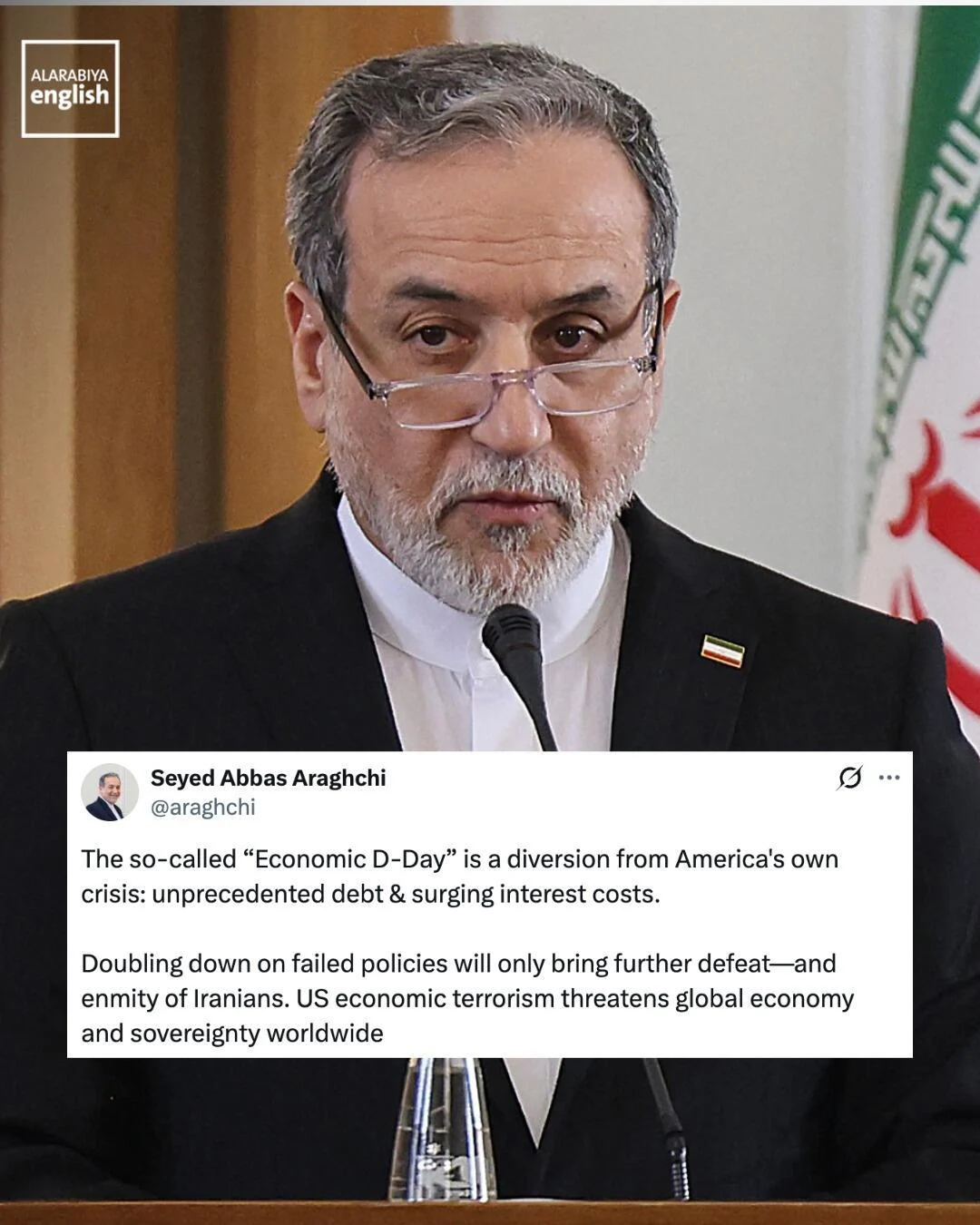
Iranian leaders were swift and unequivocal in their condemnation of Trump’s latest threats. On Thursday, Iranian Foreign Minister Abbas Araghchi responded via X, characterizing Trump’s announcement as a deliberate attempt to "distract from Washington’s unprecedented debt & surging interest costs." Araghchi argued that the proposed economic measures would only "bring further defeat" to the United States and asserted that "US economic terrorism threatens [the] global economy and sovereignty worldwide."
Araghchi’s reference to US national debt taps into a persistent critique from geopolitical rivals, who often highlight the burgeoning American debt, which has surpassed $34 trillion, and its associated interest costs, as a sign of underlying economic vulnerability. From Tehran’s perspective, this narrative serves to undermine Washington’s moral authority and economic strength, portraying its aggressive stance as a diversion from domestic economic woes rather than a genuine foreign policy imperative.
Further adding to the Iranian counter-narrative, Iranian Parliament Speaker Mohammad Bagher Ghalibaf, during a visit to Iraq on Wednesday, explicitly stated that the "US was seeking to exit the region." These comments gain particular traction following a report from The Washington Post which suggested the Pentagon was considering a reduction in its Persian Gulf military presence after several US bases in the area reportedly sustained heavy damage from Iranian strikes. While specifics of these strikes remain largely undisclosed, the mention of "nearly 6-month long conflict" in the original article hints at a period of sustained, low-intensity engagement, potentially involving drone or missile attacks on US facilities. This narrative from Iranian officials aims to project an image of US strategic retreat and a diminishing American influence in the Middle East.
Echoing these sentiments, Iran’s Deputy Foreign Minister Kazem Gharibabadi posted another message on X, stating that Washington is "headed towards its next defeat." He added a sardonic note, observing, "They claim Iran is on the verge of defeat, hanging by a thread, yet they are begging all their allies to help them." This statement seeks to portray the US as desperate and its claims of Iranian weakness as disingenuous, highlighting the perceived hypocrisy of simultaneously asserting dominance while soliciting international support.
The Strategic Chokepoint: Strait of Hormuz and the "Stealth Corridor" Controversy
Central to the ongoing confrontation is the Strait of Hormuz, a narrow waterway connecting the Persian Gulf to the open ocean. It is one of the world’s most critical maritime chokepoints, through which roughly 20% of the world’s total petroleum consumption, and a third of the world’s liquefied natural gas, passes daily. Iran has repeatedly threatened to close the Strait in response to sanctions or military aggression, a move that would have catastrophic implications for global energy markets and the world economy.
The USS Washington’s mission includes reinforcing the "ongoing blockade of Iranian ports," a measure that involves patrolling the waters and monitoring maritime traffic to prevent the flow of goods to and from Iran, particularly oil. This de facto blockade aims to enforce sanctions by making it extremely difficult for any vessel to conduct trade with Iranian ports without risking interdiction or severe penalties.
Adding another layer of complexity and potential flashpoint, a controversial Axios report issued Wednesday claimed that the Pentagon had successfully established a "stealth corridor" in and out of the Strait. This unverified claim suggests that the US military has developed or deployed advanced capabilities to ensure unhindered passage for its own vessels, and potentially allied commercial shipping, even under contested conditions. The specifics of such a corridor – whether it involves advanced electronic warfare, submarine operations, or other classified technologies – remain speculative.
Skepticism surrounding the Axios report is notable, with many analysts pointing out the outlet’s history of publishing sensitive, often unverified, reports on oil and Iran-related issues at moments designed for maximum market impact. If such a "stealth corridor" were indeed operational and effectively bypassed Iran’s ability to control or disrupt traffic in its territorial waters, it would represent a significant strategic advantage for the US. However, as analyst Hamidreza Azizi observed, agreeing with a broader sentiment, "Iran is unlikely to accept a situation in which it cannot export oil while other Gulf producers continue to do so. Paradoxically, therefore, America’s relative operational success could become a driver of further Iranian escalation." This implies that such a development, rather than de-escalating tensions, could provoke Iran into more direct and potentially military responses to assert its sovereignty and control over the vital waterway.
Regional Diplomacy and Calls for De-escalation

Amidst the escalating rhetoric and military posturing, Qatar remains a crucial voice for mediation and de-escalation. Qatar’s Foreign Minister, Sheikh Mohammed bin Abdulrahman bin Jassim Al Thani, on Thursday reiterated calls for a return to normal traffic in the Strait of Hormuz, urging all parties to refrain from "blackmailing" each other. Speaking at a press briefing following high-level discussions in El Alamein, Egypt, Sheikh Mohammed emphasized the severe consequences of the ongoing conflict, stating, "The consequences of this war were grave, not only on the Gulf region but elsewhere in the world." He added, "We need the situation to go back to what it used to be before. We condemn any threats in this regard in any obstacles."
Qatar, a small but wealthy Gulf state, has often played a mediating role in regional disputes, maintaining channels of communication with both Washington and Tehran. Its advocacy for restoring stability in the Strait reflects not only a concern for regional security but also its own economic interests, as its vast natural gas exports also transit through the vital waterway. The call for an end to "blackmailing" implicitly acknowledges the coercive tactics employed by both sides and highlights the economic damage inflicted upon the broader region.
Expert Analysis: The Perilous Path of Economic Coercion
Regional experts and think tanks have consistently warned about the inherent risks in Washington’s strategy towards Iran. Danny Citrinowicz, a regional watcher and author for the Atlantic Council, articulated a "fundamental paradox at the heart of the current U.S. approach to Iran." He writes, "Washington wants to avoid another major military campaign, yet the very strategy it is pursuing to achieve that goal may make renewed military escalation increasingly difficult to avoid."
Citrinowicz elaborates on this paradox, suggesting, "The administration appears to believe that it can dramatically intensify economic pressure, including through aggressive enforcement of secondary sanctions, while keeping the confrontation largely within the economic domain." However, he critically states, "But that assumption misunderstands both Iran’s position and the incentives facing its current leadership." This analysis posits that Tehran views the economic pressure as an existential threat, rather than merely a negotiable tactic, and thus is more likely to respond with asymmetric or even military means when pushed to the brink.
Indeed, many analysts contend that Washington has repeatedly miscalculated and underestimated Tehran’s resolve and capacity for resilience throughout the nearly six-month-long conflict. The Iranian regime, despite severe economic hardship, has demonstrated a consistent pattern of resisting external pressure and responding with counter-measures, whether through military actions, proxy engagements, or diplomatic maneuvers. The belief that economic strangulation alone can force a capitulation without triggering a broader military confrontation is increasingly seen as a dangerous miscalculation, raising the specter of a wider conflict in an already volatile region.
A Chronology of Escalation: Six Months of Heightened Tensions
The past six months have been marked by a discernible escalation in the US-Iran standoff. While specific dates of all incidents remain classified or unconfirmed, the general trajectory includes:
- Intensified Sanctions Enforcement: Following initial rounds of sanctions, the past half-year has seen renewed efforts to identify and penalize entities violating US sanctions, leading to further economic strain on Iran.
- Military Build-up and Rotations: The consistent presence of US carrier strike groups, and the recent troubled deployment of the USS Lincoln, underscore a continuous military readiness in the region, perceived by Iran as an aggressive posture.
- Iranian Retaliatory Actions: Reports of Iranian strikes on US bases (as referenced by Ghalibaf) suggest a period of active, albeit perhaps limited, military engagement by Tehran in response to perceived US aggression or sanctions enforcement.
- Naval Maneuvers and Confrontations: Increased naval patrols and potential encounters in critical waterways like the Strait of Hormuz, even if not leading to open conflict, contribute to a high-tension environment.
- Heightened Rhetoric: Public statements from both sides have grown increasingly bellicose, culminating in Trump’s "ECONOMIC D-DAY" declaration and Iran’s equally strong condemnations.
Broader Implications and Outlook
The deployment of the USS George Washington and the declaration of "ECONOMIC D-DAY" signal a perilous new chapter in the US-Iran confrontation. The immediate implications are multifaceted. For global energy markets, sustained tensions in the Strait of Hormuz could lead to increased volatility in oil prices, impacting economies worldwide. For regional stability, the risk of miscalculation or an accidental escalation into a broader military conflict remains dangerously high, potentially drawing in other regional and international actors.
Humanitarian concerns within Iran are also paramount. The intensified economic pressure, while aimed at the regime, disproportionately affects ordinary citizens, exacerbating an already dire economic situation and potentially leading to a humanitarian crisis. The international community, including key allies of the US, faces increasing pressure to choose sides, with the threat of secondary sanctions casting a wide net over global trade and finance.
The coming weeks and months will test the resolve of both Washington and Tehran, as well as the capacity of international diplomacy to de-escalate a situation teetering on the brink. The core challenge lies in the fundamental disagreement on how to manage Iran’s regional ambitions and nuclear program, compounded by a deep-seated distrust and a lack of effective communication channels. The arrival of a new US carrier strike group reinforces America’s military commitment to the region, but whether this display of force, coupled with unprecedented economic pressure, will lead to a desired outcome or merely fuel further escalation remains the most critical unanswered question.

