
In an era where public figures in the financial independence movement often face scrutiny regarding their continued adherence to the principles they advocate, Mr. Money Mustache (MMM), the widely recognized proponent of "Mustachianism," has directly addressed recent criticisms. The popular blogger, who achieved financial independence and retired early over a decade ago, has been accused by some of becoming "rich and fancy," thereby losing touch with the challenges faced by the common person and abandoning his own money-saving tenets. However, MMM staunchly refutes these claims, asserting that his core lifestyle practices remain largely unchanged, driven by an enduring enjoyment of efficiency and self-sufficiency rather than a need for austerity.
The Evolution of a Financial Philosophy
Mr. Money Mustache, whose real name is Pete Adeney, launched his influential blog in 2011, quickly becoming a cornerstone of the Financial Independence, Retire Early (FIRE) movement. His philosophy, dubbed "Mustachianism," diverges significantly from conventional financial advice. While standard guidance often focuses on income maximization and a savings percentage achieved through "sacrifices" before indulging, Mustachianism promotes a deeper cultivation of efficiency, creativity, self-awareness, and continuous self-improvement. This approach aims to enhance overall quality of life while simultaneously reducing monthly expenses, fostering a sustainable and enjoyable path to financial freedom.
Over the past twelve years, Mr. Money Mustache’s personal wealth has, predictably, grown substantially, mirroring the success observed by many of his dedicated readers, often referred to as "Mustachians." This financial accumulation has, paradoxically, fueled some of the criticism. Detractors suggest that his affluence would naturally lead to a departure from the frugal habits he once championed. Yet, MMM contends that his spending habits have remained largely consistent because his initial lifestyle was already optimized for enjoyment and efficiency. He argues that misunderstanding is an inherent part of sharing personal details publicly, but a glimpse into his actual daily life, and that of his community, would reveal the sustained efficacy of his principles.
Debunking the Disconnect: Sustained Frugal Practices
To illustrate his point, Mr. Money Mustache outlined several present-day practices that not only save significant amounts of money but are also genuinely enjoyed. These examples underscore the core Mustachian tenet that frugality, when approached with a mindset of optimization and skill-building, can enhance life rather than diminish it. He calculates the long-term financial impact of these habits by estimating their savings over a decade, using a "rule of 172" (monthly expense multiplied by 172, representing compounded savings over ten years if invested).
Mastering Self-Sufficiency and Home Management
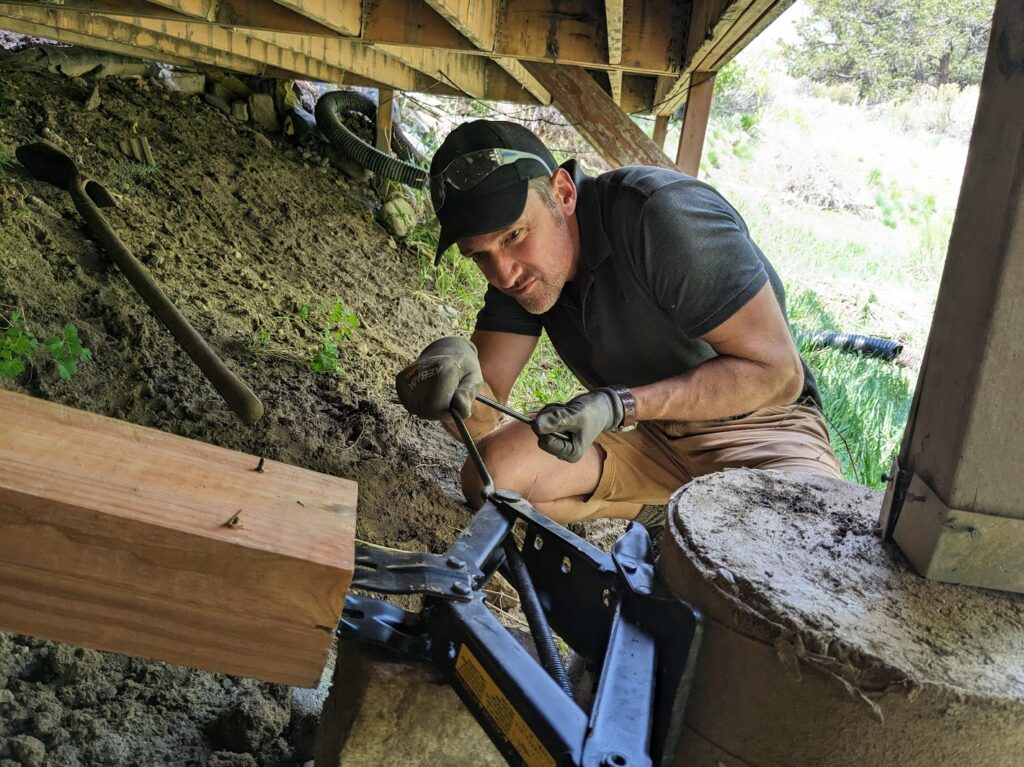
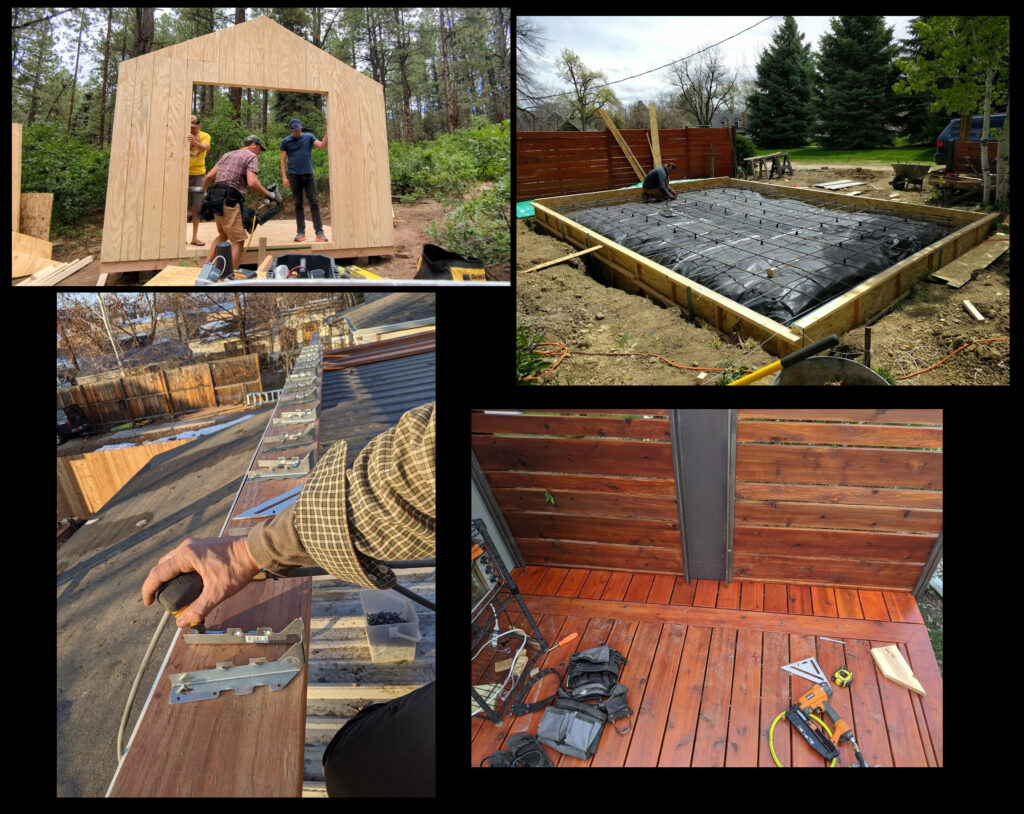
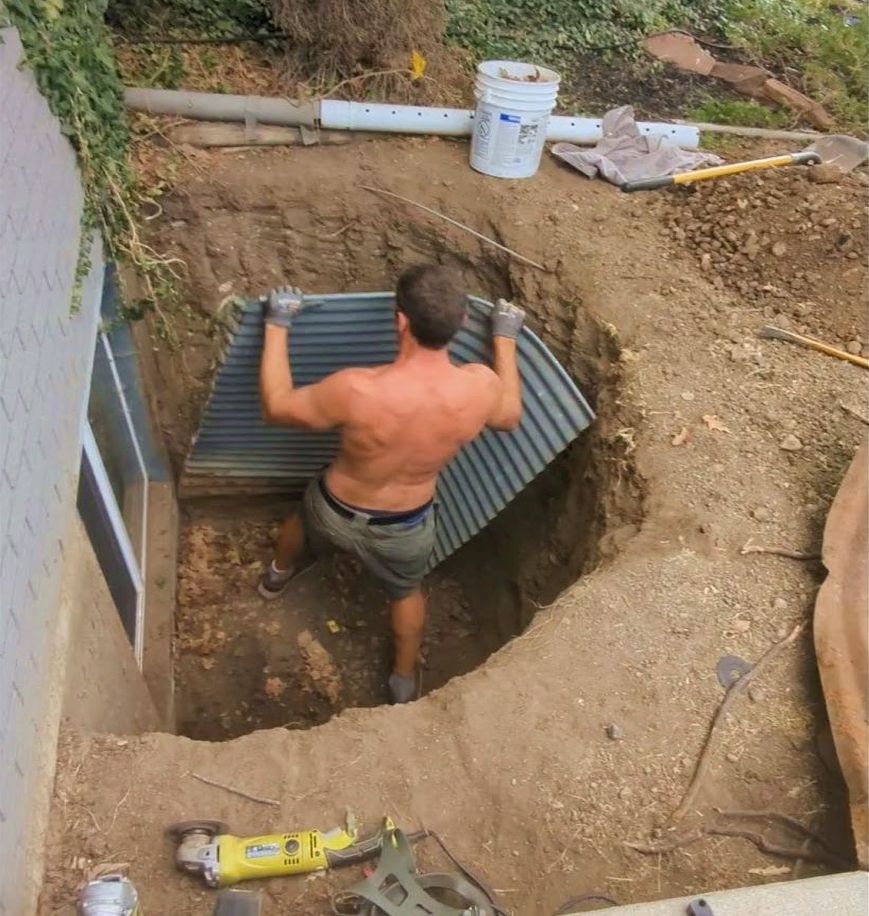
A cornerstone of Mr. Money Mustache’s philosophy is self-sufficiency, particularly in home maintenance and improvement. He advocates for individuals to acquire the skills necessary to manage the essential aspects of their lives without over-reliance on external services. This aligns with his belief in "Becoming a Producer of the Things You Most Enjoy Consuming." For MMM, this translates into a passion for home renovation and problem-solving within living spaces. He frequently undertakes extensive construction projects on his own properties and those of friends, transforming and redesigning old buildings. This active engagement not only provides personal satisfaction but also serves as a practical demonstration of empowerment, teaching others to overcome their dependence on contractors.
The financial implications of this approach are substantial. According to industry data, the average homeowner can spend thousands annually on repairs and maintenance. For instance, a single plumbing repair can cost anywhere from $150 to $500, while a major renovation project can easily run into tens of thousands. By performing these tasks himself, Mr. Money Mustache estimates an average saving of $20,000 per year. Over a decade, this compounded saving, if invested, amounts to an impressive $287,000. This figure highlights the long-term wealth accumulation potential inherent in developing practical skills and reducing outsourcing.
Leveraging Community and the Circular Economy
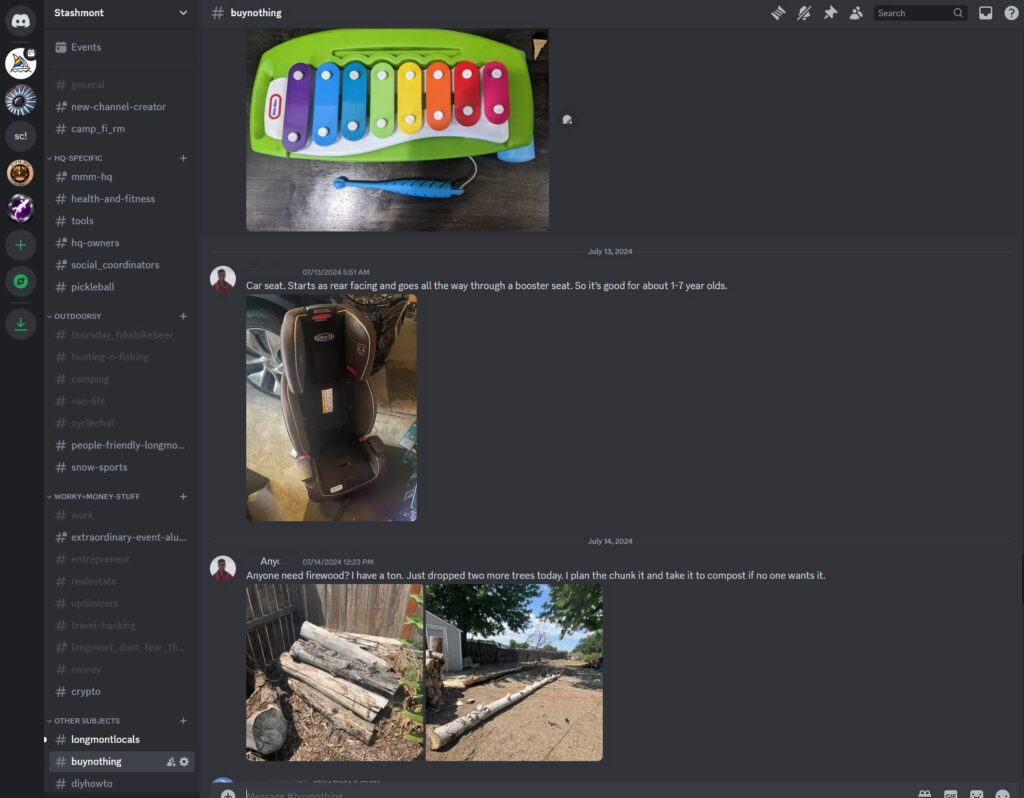
While the convenience of modern consumerism allows for instant gratification and doorstep delivery of new goods, Mr. Money Mustache champions an alternative: engaging with the circular economy through community sharing and repurposing. Platforms like Craigslist, Facebook Marketplace, and local "Buy Nothing" groups are central to this practice. These platforms facilitate the exchange of high-quality used items, reducing the need for new purchases and fostering community bonds.
Within the MMM-HQ community, a private Discord server with approximately 200 local members exemplifies this principle. Members actively collaborate on DIY projects and facilitate the giving away or selling of unwanted items. This network not only provides practical assistance but also cultivates new friendships and strengthens local ties. Beyond his private group, MMM regularly utilizes public platforms like Craigslist, estimating annual savings and earnings in the thousands. This practice is projected to save approximately $42,000 over a decade. The broader societal impact includes a reduction in waste, lower demand for new manufacturing, and the strengthening of local economies through resource sharing.
Embracing Active Transportation and Holistic Health
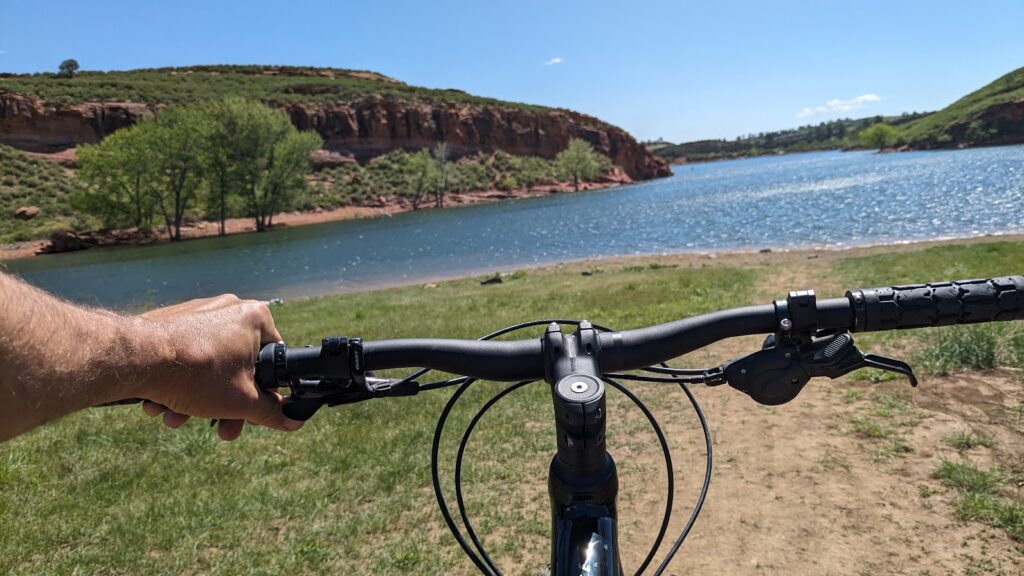
Mr. Money Mustache is renowned for his steadfast advocacy of cycling as a primary mode of transportation. He continues to rely on bikes or walking for at least 95% of his local trips, benefiting from his central location in a small city. This preference is rooted in the significant cost disparity between cars and bicycles. As outlined in his seminal post, "The True Cost of Commuting," automobiles typically incur operating costs of at least 50 cents per mile, encompassing depreciation, insurance, fuel, and maintenance. Bicycles, in contrast, are dramatically more economical.
Although his localized lifestyle means his active transportation mileage totals around 2,000 miles annually, resulting in "only" $14,000 in savings over a decade from direct car expense reduction, the benefits extend far beyond monetary figures. Choosing active transportation fundamentally enhances physical and mental well-being. This philosophy extends to a broader "Muscle over Motor" approach in daily life. MMM consciously opts for stairs over elevators, runs golf courses instead of using carts, moves his own furniture, and manually shovels snow and rakes leaves. This consistent engagement in physical activity, framed as a choice for "more health and fitness," contributes significantly to overall vitality and productivity.
The financial savings from this holistic approach to health are more difficult to quantify precisely but are undeniably substantial. The average American spends approximately $13,000 per year on healthcare. By maintaining excellent health through consistent physical activity, MMM reports near-zero lifetime costs due to illness or medication. Conservatively estimating the combined savings from avoided healthcare expenses and increased productivity at $10,000 per year, this translates to an estimated $140,000 in wealth preservation and enhancement over a decade.
Optimizing Energy Use: The "Glamping Retreat" Home
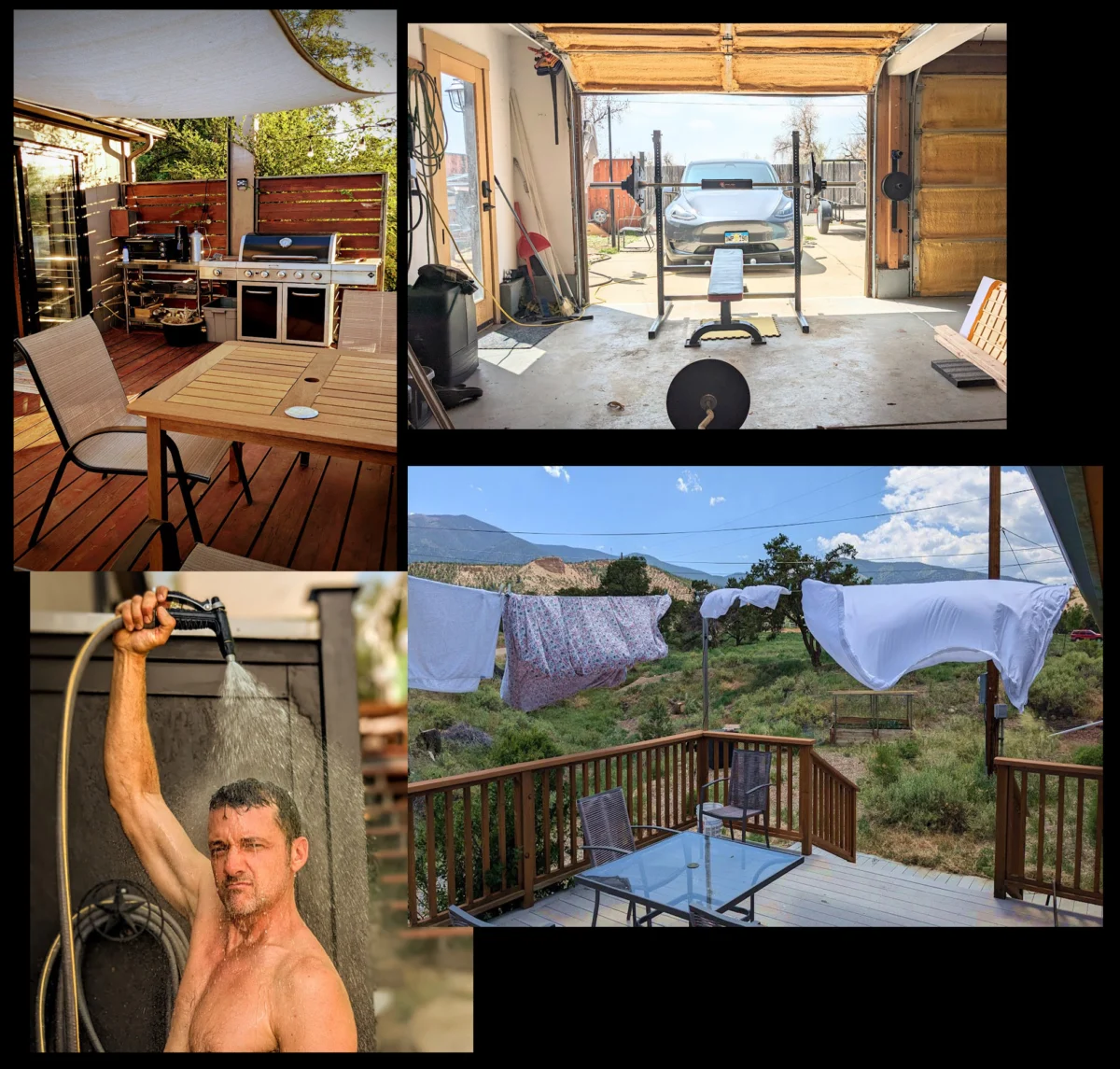
Perhaps the most idiosyncratic, yet deeply satisfying, aspect of Mr. Money Mustache’s sustained frugality is his approach to home energy management, which he likens to "running his home like a glamping retreat." Driven by a unique blend of engineering, carpentry, artistic, and scientific inclinations, he views his home as a continuous laboratory for efficiency improvements. These efforts range from significant structural modifications, such as installing large south-facing sliding doors and windows for passive solar heating in winter, to smaller, daily habits that align with seasonal living.
Examples include:
- Outdoor Activities: Showering outdoors in warm weather, cooking on an outdoor kitchen, and drying laundry on a clothesline.
- Temperature Regulation: Setting thermostats to moderate temperatures (e.g., 60-65°F in winter, 75-80°F in summer), relying on natural ventilation and insulation.
- Mindful Consumption: Unplugging electronics, using power strips, and minimizing water usage.
- Resourcefulness: Constructing a homemade gym and repurposing materials.
While these practices might seem arduous to some, MMM finds immense joy in this "Energy Efficiency Playground." The financial savings, though not as dramatic as some other areas, are still notable. Compared to an average combined gas and electric bill of $250 per month in his area, his usage totals approximately $75. This difference results in savings of around $30,000 over a decade. More importantly, it exemplifies the Mustachian principle of finding pleasure in efficiency and living harmoniously with one’s environment.
Prioritizing Local Living and Intentional Travel
In an increasingly mobile society, Mr. Money Mustache advocates for prioritizing local living and adopting a more discerning approach to travel. He observes that many individuals, despite expressing a desire for more home time, often find themselves constantly on trips, missing local community events. His "secret" lies in more frequently declining invitations that necessitate being away and embracing opportunities to stay home.
The benefits of this choice are multi-faceted:
- Financial Savings: Reduced expenditure on flights, accommodation, dining out, and tourist activities.
- Community Engagement: Fostering stronger local friendships and participation in neighborhood events.
- Reduced Environmental Impact: Lower carbon footprint from less air and car travel.
- Enhanced Well-being: Less stress from travel planning and more time for personal projects, rest, and local recreation.
- Appreciation of Home: Cultivating a deeper enjoyment and appreciation for one’s immediate surroundings.
For a family of four, replacing just two weeks of typical travel with equivalent time spent at home could yield annual savings of $5,000 in direct costs. Furthermore, incidental benefits such as improved health, stronger local friendships, and reduced stress could contribute another $5,000 annually. Over a decade, this intentional shift towards local living could result in a staggering $143,000 increase in wealth. While acknowledging the inherent value of travel for broadening life experiences, MMM emphasizes the importance of balance, selecting the most enriching trips and cherishing the equally valuable time spent at home.
The Cumulative Impact and Broader Implications
Collectively, these six core practices—self-sufficiency in home management, community-based resource sharing, active transportation, holistic health through physical activity, energy-efficient living, and intentional local living—demonstrate a compounded wealth increase of $656,000 every decade. This figure, achieved through habits that Mr. Money Mustache genuinely enjoys, significantly surpasses the median wealth accumulated by many American seniors after a full career of work. This reinforces his assertion that his recent wealth increases are directly attributable to these consistent, fundamental practices.
Mr. Money Mustache’s sustained lifestyle serves as a powerful testament to the efficacy of Mustachianism. It underscores that financial independence is not merely about accumulating a sum of money, but about cultivating a lifestyle rich in purpose, efficiency, and enjoyment. His approach suggests that substantial financial gains and an elevated quality of life can be achieved not through arduous sacrifice, but through thoughtful optimization and a deliberate shift in values. This philosophy encourages individuals to view expenses not as inevitable, but as opportunities for creative problem-solving and personal growth. The implication for a broader audience is that even minor adjustments towards a more conscious, efficient, and community-oriented lifestyle can lead to profound, long-term financial security and enhanced personal well-being. The ongoing dialogue around Mr. Money Mustache’s wealth and practices ultimately reinforces the central tenet of his philosophy: that a "badass" life, rich in experiences and free from financial anxiety, is attainable through intentional living, regardless of one’s net worth.

