
The cryptocurrency market, particularly Bitcoin (BTC), is currently navigating a complex bear market, a phenomenon that prominent figures in the financial world are attributing to a confluence of factors. Anthony Scaramucci, managing partner of SkyBridge investment firm, posits that the traditional four-year market cycle, historically a key driver of Bitcoin’s price movements, is being significantly influenced by the influx of institutional investors and the growing accessibility of Bitcoin through exchange-traded funds (ETFs). While these developments have undoubtedly introduced a degree of stability and cushioned volatility, Scaramucci argues they have not entirely overwritten the inherent cyclical nature of the digital asset.
Scaramucci articulated his perspective during an interview with Scott Melker on "The Wolf of All Streets" podcast, suggesting that the very belief in the four-year cycle by long-term holders, or "OGs," can inadvertently create a self-fulfilling prophecy. He anticipates that Bitcoin will experience continued price volatility throughout much of the current year, with a potential resurgence and the commencement of a new bull market cycle anticipated in the fourth quarter of 2026.
Historical Context of Bitcoin’s Four-Year Cycle
The concept of a four-year cycle in Bitcoin’s price action is rooted in the cryptocurrency’s halving events. These are pre-programmed reductions in the rate at which new bitcoins are created, occurring approximately every four years. Historically, these halving events have been followed by periods of significant price appreciation, leading to bull markets. The first halving occurred in 2012, followed by those in 2016 and 2020. Each halving reduced the block reward for miners, decreasing the supply of new bitcoins entering circulation, which, in theory, should drive up the price if demand remains constant or increases.
Prior to the recent market shifts, the pattern was fairly consistent: a period of accumulation after the halving, followed by a sharp rise in price leading to a new all-time high, and then a subsequent correction or bear market. This cyclical behavior has been a cornerstone of Bitcoin investment strategies for many.
The Shifting Sands of Market Dynamics

However, the landscape of Bitcoin investing has evolved dramatically in recent years. The approval of Bitcoin spot ETFs in the United States in early 2024 marked a watershed moment, opening the doors for a wider array of investors, including institutional players, to gain exposure to the cryptocurrency without directly holding the asset. This influx of capital and the increased accessibility have been credited with moderating the sharp price swings that were once characteristic of Bitcoin.
Scaramucci’s analysis suggests that while these institutional inflows and ETF products have "muted" the traditional four-year cycle’s impact, they haven’t eradicated it. The "traditional whales" and "OGs" he mentioned, who have been active participants in Bitcoin’s market since its inception, continue to operate within their established belief systems regarding the four-year cycle. This adherence to historical patterns, combined with their significant holdings, can indeed influence market behavior, as their selling decisions often coincide with perceived cycle peaks.
The $100,000 Psychological Barrier and the October Market Crash
A significant factor contributing to the current bear market, according to Scaramucci, was the failure of Bitcoin to sustain its upward momentum towards a widely anticipated $150,000 target in 2025. This optimism was fueled by several factors, including the perceived pro-crypto stance of former US President Donald Trump and a general warming of regulatory sentiment towards digital assets in the United States.
However, a dramatic market downturn in October of the previous year, which Scaramucci refers to as the "October market crash," shattered this consensus. During this period, Bitcoin plummeted from an all-time high of approximately $126,000 to a low of around $60,000. This sharp correction serves as a potent reminder that market sentiment can shift rapidly and that even widely held expectations can be overturned by unforeseen events.
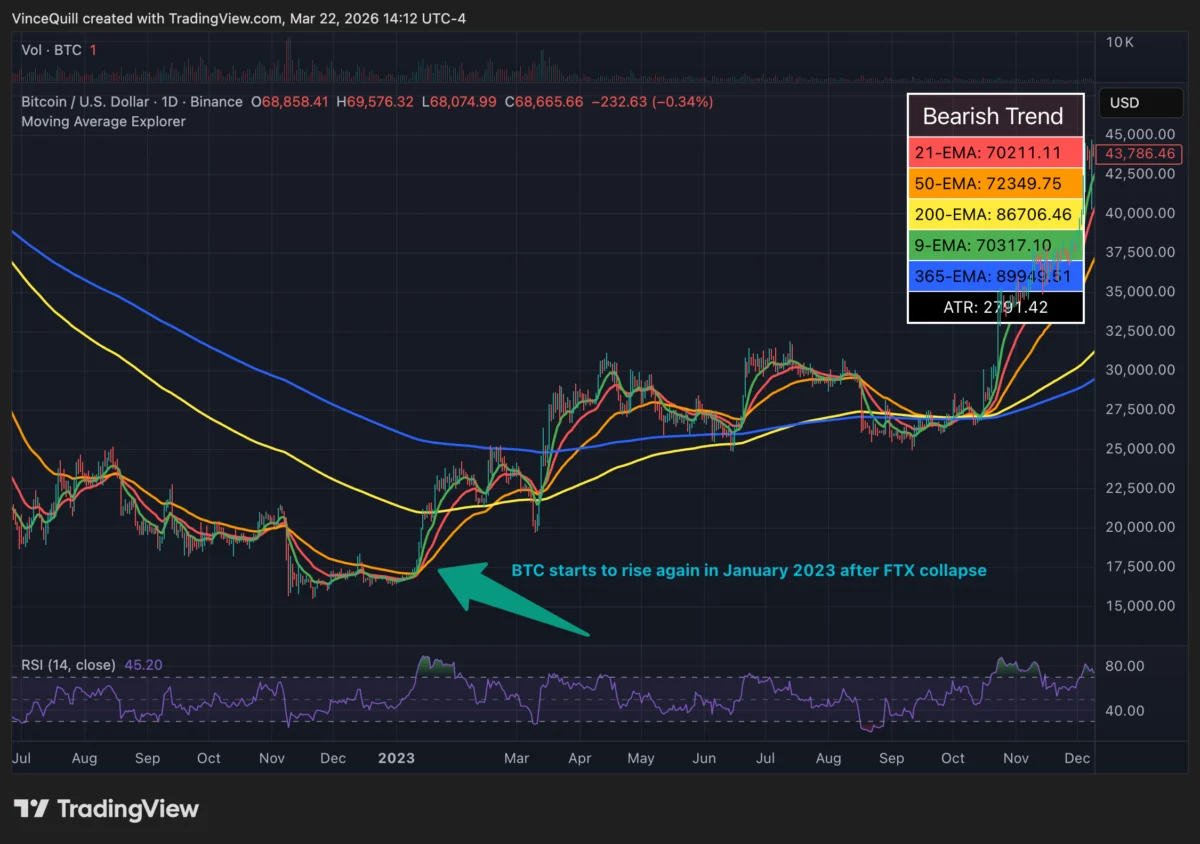
Scaramucci highlighted that markets often exhibit behavior contrary to prevailing investor sentiment. He drew a parallel to the early months of 2023, following the collapse of the FTX exchange in November 2022. At a time of "great disinterest and great apathy," when many had written off Bitcoin’s prospects, the market began to recover, signaling the start of a new bull run. This suggests that periods of extreme pessimism can sometimes precede significant market rallies, while periods of widespread optimism can precede corrections. He characterized the current Bitcoin bear market as a "garden variety" correction, implying it aligns with historical downturns rather than signaling a fundamental breakdown of the market’s structure.
The Debate on the Four-Year Cycle’s Validity

The persistent question among industry executives, analysts, and market participants is whether Bitcoin’s four-year cycle theory remains valid. The fact that BTC ended the year 2025 in negative territory, contrary to many predictions, has fueled this debate. Changing market dynamics, driven by increased institutional participation and the integration of Bitcoin into more traditional financial instruments, are seen as potential disruptors of these historical patterns.
Some analysts argue that the introduction of ETFs has fundamentally altered Bitcoin’s price discovery mechanism. Instead of being driven solely by retail interest and the supply shock of halvings, the market now reacts to institutional capital flows, macroeconomic news, and broader market sentiment in a way that may not perfectly align with the established four-year cycle. This has led to a scenario where the cycle may be "broken" or at least significantly "altered."
Geopolitical Tensions and their Impact on Risk Assets
Adding another layer of complexity to Bitcoin’s price trajectory are escalating geopolitical tensions. The recent intensification of the conflict in Iran, which entered its third week, has sent shockwaves through global financial markets, impacting risk assets across the board. Bitcoin, often considered a risk-on asset, saw its price fall below $69,000 on Saturday as a direct consequence of this increased global uncertainty.
The ripple effect of geopolitical turmoil extends to traditional markets as well. The S&P 500 index, a key benchmark for the US stock market, experienced a decline of approximately 1.3% on Friday. A day prior, the index closed below its 200-day moving average, a significant technical indicator that signals a potential shift in market trends, for the first time in ten months. This correlation between Bitcoin and traditional equity markets is a growing concern for investors.
Implications for Future Price Action
The increasing positive correlation between Bitcoin and the S&P 500 index has led some analysts to forecast a potential 50% drop in BTC’s price in 2026 if this trend persists. This suggests that in times of broad market fear and uncertainty, driven by factors such as geopolitical conflicts or economic instability, investors may be inclined to reduce their exposure to all risk assets, including Bitcoin.

The narrative of Bitcoin as a "digital gold" or an uncorrelated safe haven asset is being tested by these broader market movements. While some proponents still believe in its long-term store-of-value properties, the short-to-medium term price action appears increasingly susceptible to global economic and political factors.
Looking Ahead: A Divergence of Forecasts
The outlook for Bitcoin remains a subject of intense debate. While Scaramucci’s forecast points towards a recovery and a new bull cycle in late 2026, driven by the enduring cyclical nature of the market, other perspectives suggest that the interplay of institutional finance, regulatory shifts, and geopolitical instability may lead to a more unpredictable future.
The ongoing discussion about the validity of the four-year cycle highlights the maturity and evolving nature of the cryptocurrency market. As more sophisticated financial instruments and a greater diversity of market participants enter the space, the simple historical patterns that once guided price discovery may no longer be sufficient to predict future movements. The ability of Bitcoin to decouple from traditional risk assets during periods of global stress will be a critical factor in determining its long-term viability as an independent asset class.
The coming months and years will undoubtedly be crucial in shaping the narrative around Bitcoin’s price cycles. Investors and analysts will be closely watching for further data points that confirm or refute the theories surrounding institutional influence, geopolitical impacts, and the enduring relevance of the four-year cycle. The path forward for Bitcoin appears to be one of continued adaptation and a complex interplay between its foundational principles and the ever-changing global financial landscape.

