
The discovery of fiber-optic guided one-way attack drones in the arsenals of Mexican cartels represents a critical escalation in the ongoing struggle against organized crime, signaling a profound and troubling security threat positioned just south of the United States border. This development points to a sophisticated tactical shift by narco-terrorist groups, adopting advanced weaponry and methodologies previously associated with geopolitical conflict zones, now manifesting in the Western Hemisphere. The implications extend far beyond traditional drug trafficking, challenging national security frameworks, border defense strategies, and regional stability.
The Alarming Seizure in Sinaloa
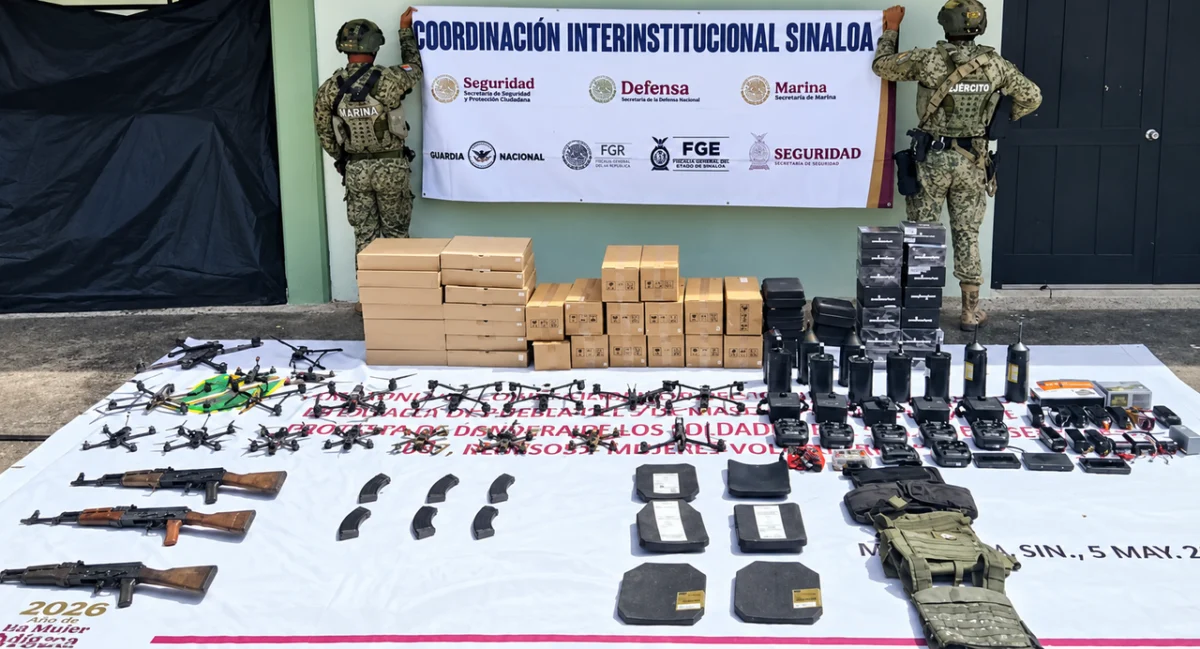
On a recent Monday, during routine security patrols, the Mexican Army achieved a significant breakthrough in the municipality of El Rosario, located in southern Sinaloa – a region historically synonymous with powerful and violent drug cartels. Troops discovered and seized an alarming cache of weaponry, underscoring the evolving capabilities of these criminal organizations. Local outlet Luz Noticias published images and details of the operation, revealing the confiscation of 15 Category 1 suicide drones, accompanied by critical components such as fiber-optic cable reels and an array of improvised explosive devices (IEDs). This particular type of drone, designed for a single, destructive mission, paired with sophisticated guidance systems, represents a qualitative leap in cartel operational capacity.
Beyond the drones and explosives, the comprehensive raid uncovered a broader array of illicit items indicative of a well-equipped and highly organized criminal enterprise. Mexican Army personnel secured drone controllers, various batteries and chargers for the unmanned aerial systems, numerous cartridges, and three formidable long guns identified as AK-47 rifles, colloquially known as "Goat Horns." These assault rifles are notorious for their effectiveness in close-quarters combat and sustained engagements, frequently employed in clashes between rival organized crime factions. The discovery also included tactical vests and ballistic plates, suggesting that the cartel operatives were not only armed with offensive capabilities but also equipped for personal protection during violent confrontations. The sheer volume and diversity of the seized materials paint a stark picture of a group preparing for sophisticated, potentially devastating attacks.
The Evolution of Cartel Warfare and Drone Proliferation
The emergence of fiber-optic guided attack drones among Mexican cartels is not an isolated incident but rather the latest, and most alarming, step in a gradual but persistent militarization of these criminal groups. Historically, cartels have evolved from simple smuggling operations to complex paramilitary organizations, engaging in direct confrontations with state forces and rival factions, utilizing everything from improvised armored vehicles to advanced small arms. The integration of drone technology began with rudimentary surveillance capabilities, providing an inexpensive means to monitor law enforcement, rival movements, and border crossing points. However, the current development signifies a pivot towards offensive drone applications, mirroring tactics observed in international conflicts.
This escalation builds upon earlier warnings and discoveries. As noted in mid-July, "Ukrainian-style drones" were previously found during a raid deep within north-central Mexico. These earlier findings indicated an initial adoption of drone warfare concepts, likely inspired by the tactical innovations seen in conflicts such as the Ukraine-Russia war and the US-Iran proxy conflicts. In these distant theaters, low-cost, commercially available drones have been repurposed and weaponized, proving remarkably effective for surveillance, reconnaissance, and even direct attack missions. The concept of a "suicide drone" or "loitering munition," where the drone itself becomes the weapon, delivering an explosive payload directly to its target, has reshaped modern combat. The transfer of this operational knowledge and technological capability to narco-terrorist groups in Mexico marks a dangerous precedent, demonstrating their ability to rapidly absorb and adapt cutting-edge, asymmetric warfare tactics.

Technical Sophistication: The Fiber-Optic Advantage
The specific detail of "fiber-optic cable reels" attached to the seized drones is particularly significant. Most commercial drones rely on radio frequency (RF) signals for control and data transmission. These RF links are vulnerable to electronic warfare (EW) countermeasures, such as jamming, which can disrupt communication and render a drone inoperable or cause it to crash. Fiber-optic guidance, however, bypasses this vulnerability entirely. By maintaining a physical tether, even if only for a certain range, these drones become impervious to RF jamming, ensuring a secure and uninterrupted control link.
This technological feature allows for several critical advantages:
- Enhanced Precision: A stable, unjammable control link enables operators to guide the drone with greater accuracy, especially in complex environments or against moving targets.
- Stealth and Evasion: Without RF emissions, the drone’s detectability by electronic surveillance systems is significantly reduced, making it harder to track and counter before it reaches its target.
- Resistance to Countermeasures: The primary method of neutralizing drones via electronic jamming becomes ineffective, forcing security forces to rely on more costly and often less scalable kinetic interception methods.
- Information Security: The fiber-optic cable provides a secure channel for real-time video feeds and telemetry, preventing interception by adversaries.
While the range of fiber-optic guided drones is typically limited by the length of the cable, this limitation is often acceptable for specific, high-value targets or operations where precision and stealth are paramount. The cartels’ investment in such technology underscores their strategic thinking and their commitment to overcoming conventional security measures.
A Growing Border Threat: Data and Incursions
The implications of this escalation are not confined to Mexico but extend directly to the United States border. Brigadier General Brian Filler, deputy commander for operations at Joint Task Force Southern Border, recently underscored the gravity of the situation, revealing alarming statistics regarding drone incursions. Speaking to reporters, General Filler stated that the US military had detected an astounding 378 drone incursions along the southern border within a mere 30-day period. He emphasized that this trend was unequivocally increasing.
General Filler further elaborated that "we are seeing largely commercial off-the-shelf available drones," highlighting the accessibility of the technology. While most of these detected drones are primarily equipped with surveillance cameras and are often observed in conjunction with cross-border movements of illicit goods or individuals, their sheer volume and the recent discovery of weaponized variants present a dual threat. Surveillance drones provide cartels with invaluable intelligence on border patrol movements, tactical deployments, and vulnerable crossing points, facilitating their smuggling operations. The advent of offensive drones, however, transforms this surveillance capability into a direct attack potential, raising concerns about potential strikes on border infrastructure, personnel, or even civilian targets within US territory. The distinction between a surveillance drone and a weaponized drone can be difficult to ascertain in real-time, complicating defensive responses.
Official Responses and Strategic Challenges
The escalating threat necessitates a multifaceted and robust response from both Mexican and US authorities.

Mexican Authorities: The Mexican Army’s successful raid in El Rosario demonstrates a proactive stance against cartel militarization. However, the widespread nature of cartel influence and their adaptive tactics mean that such seizures, while critical, are often reactive. Mexican officials are likely to emphasize their commitment to dismantling criminal organizations and securing national territory, but also underscore the immense challenges posed by well-funded and technologically savvy adversaries. They may call for enhanced intelligence sharing and technological assistance from international partners, particularly the United States, to combat this evolving threat.
United States Officials: US border security agencies, including Customs and Border Protection (CBP) and the military units supporting them, face an unprecedented challenge. The sheer volume of drone incursions, combined with the potential for weaponized variants, demands rapid adaptation of counter-drone technologies and tactics. Officials are likely to express grave concern over the direct national security implications. Discussions will undoubtedly focus on:
- Enhanced Surveillance: Deploying more advanced radar, acoustic sensors, and optical systems to detect and track drones.
- Counter-UAS (C-UAS) Technologies: Investing in and deploying a range of C-UAS solutions, including electronic jamming systems (though less effective against fiber-optic variants), kinetic interceptors, and directed energy weapons.
- Intelligence Sharing: Strengthening collaboration with Mexican counterparts to gather intelligence on cartel drone capabilities, supply chains, and operational plans.
- Policy Review: Re-evaluating existing rules of engagement and legal frameworks for neutralizing drones, especially those originating from foreign territory.
Broader Impact and Implications
The deployment of fiber-optic guided suicide drones by Mexican cartels carries profound implications across several domains:
1. National Security and Public Safety:
The potential for precision attacks on critical infrastructure within the United States or Mexico is a grave concern. This includes military bases, government buildings, international airports, energy grids, water treatment facilities, telecommunications hubs, and data centers. Such attacks could cause significant disruption, economic damage, and potentially mass casualties, generating widespread panic and eroding public trust in security institutions. The use of drones for targeted assassinations or attacks on law enforcement personnel also presents an elevated threat to public safety and order.
2. Redefining "Narco-Terrorism":
The sophisticated weaponry and tactics employed by these cartels increasingly blur the lines between traditional organized crime and terrorism. The deliberate use of weaponized drones with the intent to inflict widespread damage, sow fear, and exert political or social influence aligns with definitions of terrorism. This reclassification could trigger different legal and military responses, potentially allowing for broader counter-terrorism operations and international cooperation frameworks.
3. Economic and Geopolitical Stability:
An escalation of drone warfare along the border could severely impact cross-border trade, tourism, and investment. Increased security risks could lead to disruptions in supply chains, heightened travel advisories, and a general chilling effect on economic activities vital to both nations. Regionally, it could destabilize areas already struggling with cartel violence, potentially creating ungoverned spaces or exacerbating humanitarian crises.

4. Technological Arms Race:
The cartels’ adoption of advanced drone technology initiates an arms race where law enforcement and military forces must constantly innovate to stay ahead. The "low-cost" and "commercial off-the-shelf" nature of these drones means that the barrier to entry for criminal organizations is relatively low, while developing effective counter-measures can be complex, expensive, and require continuous adaptation. This places a significant burden on national defense budgets and technological development.
5. International Cooperation and Intelligence Sharing:
The transnational nature of this threat demands unparalleled cooperation between the United States and Mexico. This includes not only intelligence sharing on drone procurement, modification, and operational plans but also collaborative efforts to disrupt supply chains for drone components and explosives. Joint training exercises, technology transfer, and coordinated law enforcement operations will be essential to effectively counter this evolving menace.
The recent seizure of fiber-optic guided suicide drones in Sinaloa is a stark wake-up call, underscoring the urgent need for a comprehensive, adaptive, and collaborative strategy to confront the rapidly evolving threat posed by increasingly militarized Mexican cartels. The proliferation of such advanced weaponry marks a dangerous new chapter in the ongoing fight against organized crime, demanding immediate attention and decisive action to safeguard border security and regional stability. The list of potential targets for these drones—military installations, government buildings, stadiums, critical infrastructure, data centers, and civilian population centers—is indeed endless, highlighting the pervasive and unpredictable danger they represent.

