
As the United States enters another election year, the economy inevitably takes center stage in political discourse, with candidates from both sides frequently employing narratives that often diverge from established economic realities. While advanced financial literacy advocates, sometimes referred to as ‘Mustachians,’ prioritize individual financial autonomy and focus on factors within their "circle of control," the broader public is increasingly exposed to politically charged economic claims. This year, the debate surrounding the U.S. economy, particularly between the incumbent administration (Biden/Harris) and the opposing party (Trump), has seen a notable increase in emotionally driven arguments that frequently obscure sound economic principles.
A striking example of this divergence is the consistent attack on the current administration for a "bad economy," despite numerous indicators suggesting a robust economic environment. Official data from the Bureau of Economic Analysis (BEA) and the Bureau of Labor Statistics (BLS) frequently demonstrate a picture of economic strength, characterized by sustained GDP growth, historically low unemployment rates, and significant job creation. For instance, as of recent reports, the unemployment rate has hovered near five-decade lows, and the U.S. economy has continued to add hundreds of thousands of jobs monthly. This situation, often described by economists as near full employment, typically signals a healthy and expanding economy.
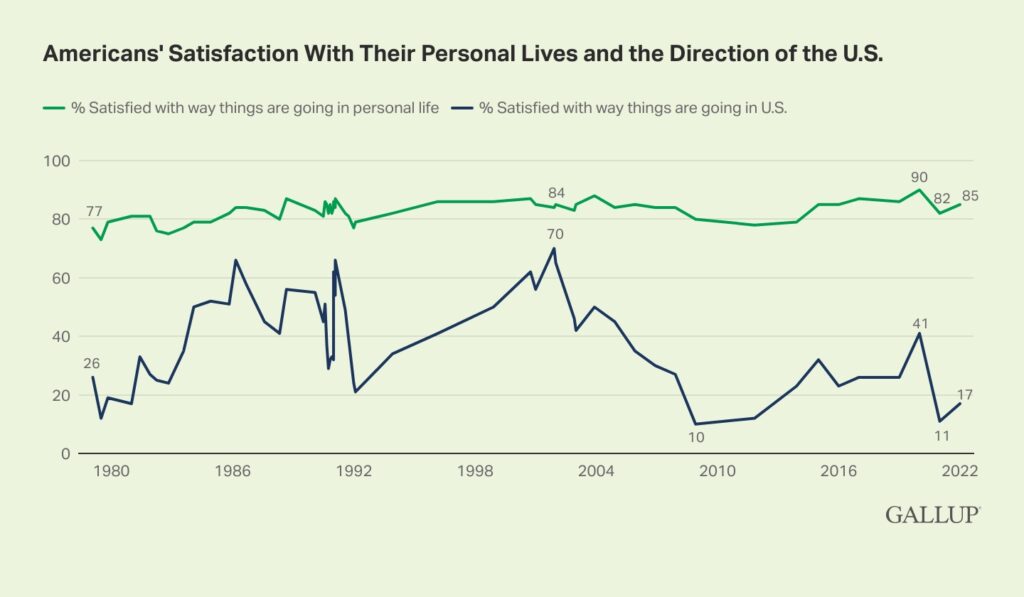
Paradoxically, public perception often contradicts these statistics. A recent Gallup poll illustrated this disconnect, revealing that while a significant majority of Americans (around 85%) reported their personal financial situations as "good" or "excellent," only a small fraction (approximately 17%) believed the national economy was performing well. This mathematical inconsistency – where most individuals are doing well, yet few believe the collective economy is strong – points to a significant influence of external narratives, particularly those amplified by political campaigns and social media misinformation. The persistence of such beliefs underscores a critical challenge in public economic literacy, where objective data often struggles against emotionally resonant, yet factually questionable, political rhetoric.
Understanding the true mechanics of the economy is paramount, as economic knowledge translates directly into financial empowerment for individuals and a more informed electorate. When political narratives overshadow factual data, it risks misguiding public opinion and potentially leading to suboptimal policy choices. To clarify the current economic landscape and challenge prevailing misconceptions, it is essential to critically examine several common economic claims propagated during election cycles.
The Myth of Presidential Omnipotence Over the Economy
One of the most enduring political myths is the idea that the President singularly controls the nation’s economic performance. Whether it’s taking credit for booms or assigning blame for busts, candidates frequently overstate their direct influence. In reality, the U.S. economy is a colossal and complex system, the largest in the world, representing approximately 26% of global economic activity according to the World Bank. Its sheer scale and the intricate interplay of millions of businesses, consumers, investors, and global markets mean that no single individual, including the President, can steer it like a personal enterprise.
The economy operates under the influence of numerous factors: technological innovation, demographic shifts, global trade dynamics, geopolitical events, and the independent actions of the Federal Reserve. While a president’s fiscal policies (taxation, government spending, regulatory changes, and trade agreements, often enacted with Congressional approval) can have an impact, their effects are usually long-term, diffuse, and subject to significant lag times. Short-term economic fluctuations, such as boom and bust cycles, are more often driven by inherent market dynamics, investor sentiment (e.g., "irrational exuberance" or periods of extreme pessimism), and external shocks like global pandemics or energy crises. The government’s role is more akin to adjusting the rudder of a massive ship navigating a vast and often turbulent ocean, rather than dictating its every movement. Attributing all economic outcomes solely to the occupant of the Oval Office simplifies a multifaceted reality to a degree that becomes misleading.

Debunking the Presidential Control Over Interest Rates
Another prevalent misconception is the belief that the President can directly manipulate interest rates. During campaigns, it’s common for candidates to express sympathy for borrowers facing higher costs on mortgages, car loans, and credit cards, promising to "fight" to bring rates down. Some, like former President Trump, have even suggested directly intervening with or replacing Federal Reserve leadership to achieve this.
This narrative fundamentally misunderstands the role and independence of the Federal Reserve. The Fed is the U.S. central bank, operating with a dual mandate from Congress: to achieve maximum employment and maintain price stability (typically defined as low and stable inflation). It sets monetary policy, primarily by adjusting the federal funds rate target, which influences other interest rates throughout the economy. This critical function is deliberately insulated from direct political pressure to ensure that decisions are based on economic data and long-term stability rather than short-term political expediency. History provides ample cautionary tales, such as Argentina’s experience with political interference in its central bank, which often leads to hyperinflation and economic instability.
The recent period of higher interest rates, initiated by the Federal Reserve, was a direct response to elevated inflation following the COVID-19 pandemic. By raising rates, the Fed aimed to cool down an overheating economy, dampen demand, and bring inflation back to its target of 2%. While these higher borrowing costs can be challenging for consumers and businesses, they are a necessary tool for managing the economy and preventing runaway price increases, a far greater threat to long-term financial well-being.
Unpacking Inflation’s Impact and Misguided Political Promises
The narrative surrounding inflation has been particularly susceptible to political distortion. Following the COVID-19 pandemic, the U.S. experienced a period of elevated inflation, primarily driven by a unique confluence of factors: severe supply chain disruptions due to factory closures and remote work, robust consumer demand fueled by substantial government stimulus spending, and historically low interest rates. These factors contributed to a rapid increase in the Consumer Price Index (CPI).
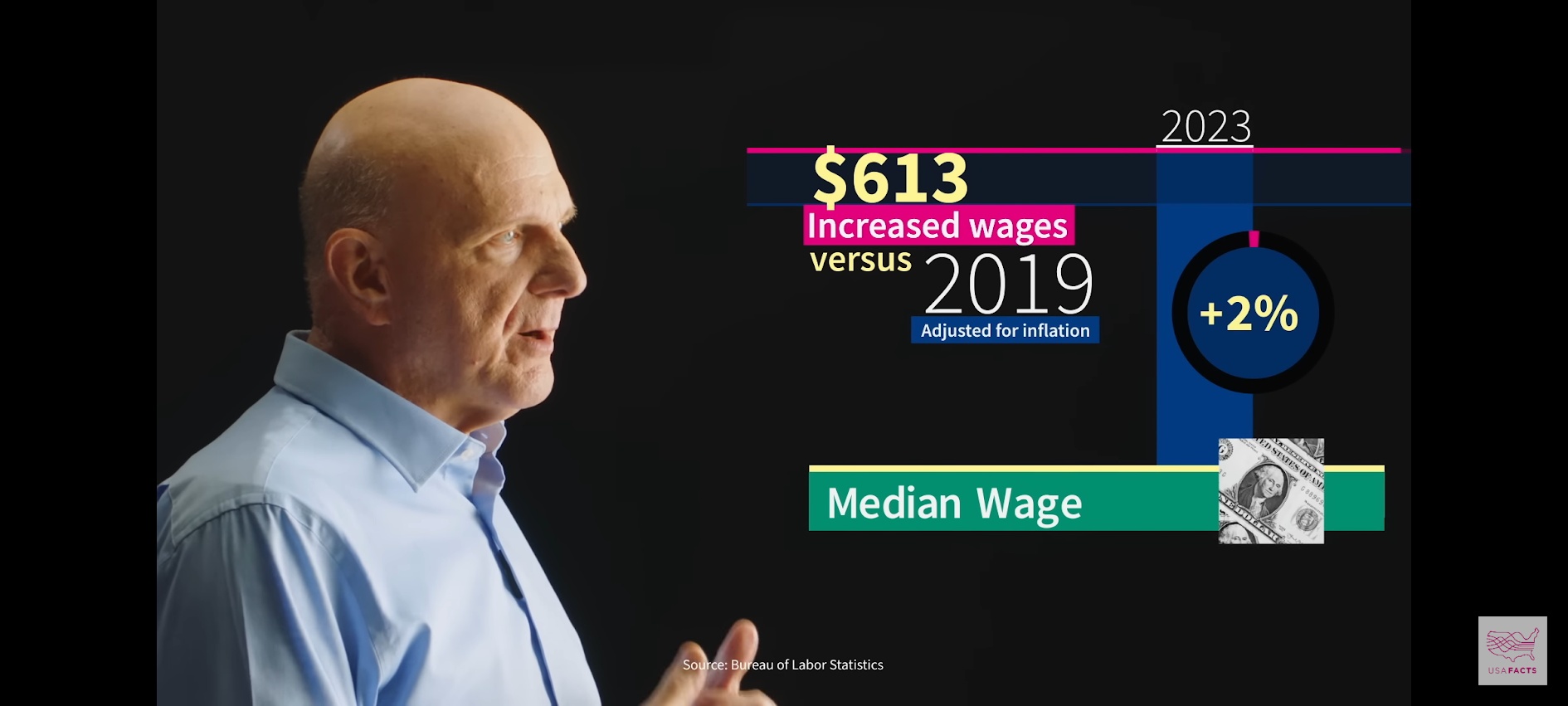
However, as these pandemic-era distortions have largely resolved, inflation has steadily decelerated. According to the Bureau of Labor Statistics, the annual inflation rate (CPI) has come down significantly from its peak, settling closer to the Federal Reserve’s target of 2.4% as of recent reports. More importantly, the impact of this inflationary period on the average American’s purchasing power is often mischaracterized. Data compiled by organizations like USA Facts, a non-partisan data initiative, demonstrate that since 2019, aggregate wages have actually risen faster than overall prices. For example, if overall prices climbed by approximately 19% over a specified period, wages for many Americans increased by 21% or more. This means that, in real terms (adjusted for inflation), many workers are actually better off than before the inflationary surge.
Despite this evidence, politicians often continue to lament inflation as an ongoing crisis and promise to "bring prices back down." This promise is problematic for two reasons: firstly, bringing prices down across the board (deflation) is generally detrimental to an economy, leading to delayed purchases, reduced investment, and potential recession. The goal of central banks is price stability, meaning a low, predictable rate of inflation, not outright deflation. Secondly, the rhetoric often fails to acknowledge the accompanying wage growth, creating a false impression of universal economic decline.
A related "bonus dumbness" often heard is blaming "greedy corporations" for price increases and excessive profits. While businesses naturally seek to maximize profits, extensive analyses, such as one conducted by NPR on grocery prices, have shown that competitive markets generally prevent widespread "greedflation." Most industries, including grocery retail, operate with relatively thin margins, and sharp price increases are typically passed through costs rather than accumulated as windfall profits.
The President and Housing Market Dynamics
Housing affordability has emerged as a critical concern, with both house prices and rents rising significantly faster than general inflation and wages over the past decade. This trend has been exacerbated by rising interest rates, leading to a "double whammy" for prospective homebuyers: higher prices and higher borrowing costs.
Political rhetoric often frames this issue as something a president can easily fix, proposing solutions like subsidies for first-time homebuyers or schemes to artificially lower interest rates. However, these proposed solutions are often counterproductive. Increasing demand through subsidies without addressing the fundamental supply shortage would likely push prices even higher.
The true solution to the housing crisis lies in increasing the supply of housing. This involves tackling systemic issues at local and state levels that hinder construction. Key policy changes could include:
- Streamlining Permitting Processes: Reducing bureaucratic hurdles and accelerating approval times for new developments.
- Reforming Building Codes: Updating and rationalizing codes to reduce construction costs without compromising safety.
- Overhauling Zoning Regulations: Eliminating exclusionary zoning practices (e.g., single-family-only zoning), minimum lot sizes, setback requirements, and excessive parking mandates that restrict density and drive up land costs.
- Limiting NIMBY (Not In My Backyard) Influence: Reforming laws that give disproportionate power to small groups of residents to block new housing projects that benefit the broader community.
Implementing such changes could significantly reduce the cost of building new homes, making housing more accessible and affordable in the long term, a process largely outside direct presidential control.
Gas Prices: An Outdated Political Barometer
Few economic topics generate as much immediate political traction as gasoline prices. Candidates frequently promise to lower them, despite the limited influence any president has over global oil markets. This focus is particularly anachronistic given several key realities:
Firstly, when adjusted for inflation, gasoline prices today ($3-4 per gallon range) are remarkably similar to what they were in the 1950s, according to data from the U.S. Department of Energy’s Alternative Fuels Data Center. This historical perspective often gets lost in the immediate sticker shock.
Secondly, even with large, less fuel-efficient American vehicles, the average household typically spends only about 2.5% of their disposable income on gasoline. This figure is often dwarfed by other vehicle-related expenses like insurance, maintenance, depreciation, and loan payments, which collectively constitute a much larger financial burden, yet receive far less political attention.
Thirdly, and most significantly, gasoline as a primary fuel source for personal transportation is rapidly becoming obsolete. The market for electric vehicles (EVs) has matured to a point where used EVs are often competitively priced or even cheaper than comparable used internal combustion engine (ICE) vehicles. New EVs, benefiting from technological advancements and tax incentives, are also increasingly competitive on price. Beyond the environmental benefits, EVs offer significant financial advantages: lower "fuel" costs (electricity is cheaper per mile than gasoline), drastically reduced maintenance requirements, and superior driving performance.
The continued political fixation on gasoline prices, therefore, increasingly resembles arguing over the price of Kodak film in the age of digital cameras or typewriters in the era of computers. It ignores fundamental shifts in technology and consumer options, diverting attention from more impactful economic issues and solutions.
Beyond Metrics: Redefining "Enough" and True Prosperity
Perhaps the most profound "dumbness" in the political economic discourse is the underlying assumption that economic growth and ever-increasing wealth accumulation are the sole, or even primary, drivers of national well-being. While hard work, innovation, and economic progress are valuable, the United States, as a highly developed nation, surpassed the point of providing "enough" for its middle class decades ago. The incessant focus on marginal economic gains often feels like "overfed people at a buffet wishing they could just have one more flavor of donuts," as one commentator aptly put it.
Certainly, issues of income and wealth inequality persist, with the affluent often accumulating wealth at a faster rate. A moderately progressive tax system is indeed beneficial for fostering a more equitable and stable society, which in turn tends to be more peaceful and happier. However, research consistently shows that beyond a certain income threshold, additional money has a diminishing return on individual happiness. True contentment and well-being are more closely tied to factors like strong social connections, good health, purpose, personal freedom, and a balanced lifestyle—qualities often associated with a mindset of "enough" rather than an endless pursuit of more.
If political leaders genuinely aimed to enhance the happiness and overall well-being of their constituents, their platforms might emphasize principles that promote financial independence, sustainable living, community engagement, and skill development, rather than exclusively pandering to specific economic grievances of various voter blocs.
Ultimately, winning an election often involves appealing to immediate anxieties and popular misconceptions, rather than proposing policies that are truly optimal for the nation’s long-term prosperity and citizen welfare. For the informed citizen, this necessitates a critical approach to political rhetoric, a commitment to seeking out factual information, and a focus on personal financial resilience regardless of who occupies the highest office.
The Imperative of Data-Driven Understanding
In an age rife with information and misinformation, the ability to discern economic facts from political fiction is more crucial than ever. Resources like Steve Ballmer’s "USA Facts" initiative stand out as valuable tools, offering data-driven insights without the political spin. By presenting factual information on various economic and social indicators, such initiatives empower citizens to form their own conclusions based on evidence.
The election season serves as a powerful reminder of the importance of economic literacy. While casting an informed vote for candidates whose policies align best with one’s values is a civic duty, it is equally important to avoid getting consumed by politically manufactured anxieties. A clear understanding of economic realities allows individuals to make better personal financial decisions and contribute to a more rational public discourse. The future health of both individual finances and the national economy depends on a populace that prioritizes facts over political narratives.

