
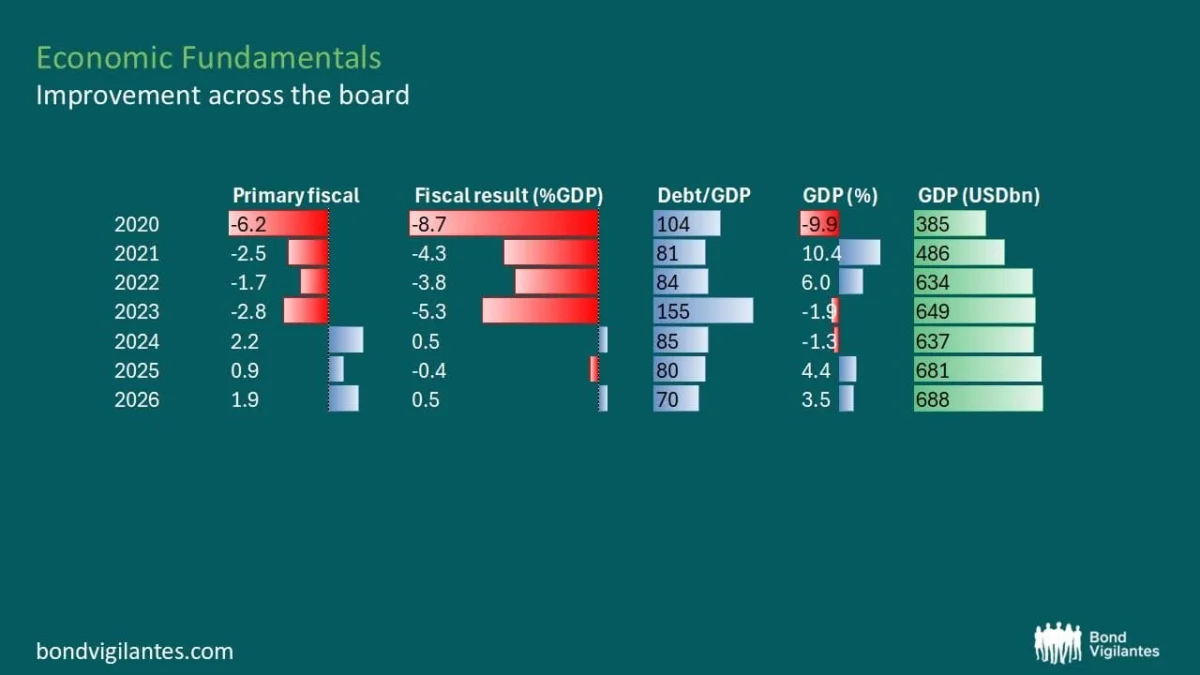
As Argentina approaches the significant milestone of 1,000 days under the leadership of President Javier Milei, the nation finds itself at a pivotal juncture, grappling with the profound implications of an unprecedented economic overhaul. The libertarian economist, who swept to power in December 2023 on a wave of anti-establishment sentiment, inherited an economy in severe distress. His radical "shock therapy" approach, designed to dismantle decades of fiscal excess and monetary profligacy, has yielded tangible macroeconomic stabilization, albeit at considerable social cost and amidst persistent political turbulence.
A Nation at the Brink: The Pre-Milei Economic Landscape
For generations, Argentina has been caught in a debilitating cycle of fiscal deficits, currency depreciation, capital controls, and recurrent debt crises. This pattern, deeply entrenched in the nation’s political and economic fabric, had become painfully familiar to its citizens and international observers alike. By the time Javier Milei assumed office on December 10, 2023, the economy was on the brink of hyperinflation, teetering on the edge of its sixth sovereign debt default in less than a century.
The statistics painted a grim picture. Annual inflation had soared to 211% by the end of 2023, accelerating rapidly to a peak of nearly 290% in January 2024, with monthly rates exceeding 25%. This inflationary spiral was largely a consequence of years of unbridled government spending financed by the central bank’s printing press, leading to a chronic depreciation of the peso and a profound loss of public confidence in the national currency. Capital controls, implemented in various forms over the years, had distorted markets and stifled investment, while official reserves were critically low. Poverty rates were escalating, and real wages had been eroded by relentless price increases, pushing a significant portion of the population into economic precarity. The prevailing sentiment was one of exasperation with traditional political solutions and a desperate yearning for fundamental change. Milei, an outsider with a flamboyant style and radical proposals, resonated with this frustration, promising to take a chainsaw to state spending and dollarize the economy, thus breaking the cycle of decline.
The "Shock Therapy" Unveiled: Initial Policy Decisions and Implementation

Upon taking office, President Milei wasted no time in implementing his promised "shock therapy." His initial actions were swift and decisive, designed to immediately address the most acute macroeconomic imbalances. Within days, his administration announced a staggering 54% devaluation of the official peso exchange rate, a measure aimed at correcting a severely overvalued currency and narrowing the gap with parallel market rates. This was accompanied by a dramatic reduction in government subsidies for energy and transport, a freeze on public works projects, and a significant streamlining of government ministries, slashing their number from eighteen to nine.
These initial measures were part of a broader legislative push embodied by the "Decree of Necessity and Urgency" (DNU) and the ambitious "Omnibus Bill." The DNU, a sweeping executive order, sought to deregulate vast swathes of the economy, including labor laws, rental agreements, and healthcare. The Omnibus Bill, presented to Congress shortly after, proposed a comprehensive package of fiscal adjustments, state reforms, and economic liberalization measures, including privatizations of state-owned companies and significant tax reforms. Both initiatives faced immediate and fierce opposition from political adversaries, labor unions, and social organizations, leading to legislative battles and legal challenges that underscored the deeply polarized political landscape. Despite significant resistance and modifications, the core tenets of Milei’s economic program — achieving a fiscal surplus, eliminating monetary financing of government spending, and restoring market mechanisms — remained unwavering. He framed these objectives as non-negotiable, essential for the nation’s long-term stability.
Taming the Hyperinflationary Beast: A Rapid Disinflationary Journey
One of the most immediate and striking outcomes of Milei’s policies has been the dramatic deceleration of inflation. Following the initial peak of nearly 290% year-on-year in January 2024, driven by the devaluation and subsidy cuts, the monthly inflation rate began a steep descent. By mid-2024, monthly inflation had dropped to single-digit figures, a phenomenon not seen in Argentina for over a year. As of June 2026, annual inflation has reportedly fallen to approximately 33.5%, a monumental achievement given the starting point.
This disinflationary trend has been primarily attributed to the aggressive fiscal adjustment and the complete elimination of monetary financing of the government deficit. The Central Bank, under new leadership aligned with Milei’s vision, ceased printing money to fund state expenditures, effectively cutting off the primary source of inflationary pressure. Coupled with a more market-oriented exchange rate policy and a broader restoration of policy discipline, these measures began to rebuild confidence in the peso’s future value. While favorable external factors, such as stronger agricultural exports benefiting from improved global commodity prices and rising domestic energy production from the Vaca Muerta shale formation, also played a supportive role, the sheer scale of the disinflation suggests that the bulk of the improvement stems from the government’s economic program. This rapid cooling of prices, though initially accompanied by a sharp contraction in economic activity, has offered a powerful real-world example of how politically painful structural reforms can sometimes prove more effective than gradual adjustments in addressing deeply embedded fiscal and monetary imbalances.
Rebuilding Trust: Market Confidence and Sovereign Upgrades

Perhaps the clearest barometer of the perceived success of Milei’s economic agenda lies in the reaction of financial markets. When Milei took office, Argentine sovereign spreads – the extra yield investors demand to hold Argentine debt over safer U.S. Treasuries – were firmly in distressed territory, reflecting deep skepticism about the country’s ability to service its debts. Investors, while initially optimistic about the potential for change, demanded concrete evidence of the government’s capacity to deliver on its reform promises.
Over the course of the first 1,000 days, that evidence has increasingly materialized. All three major international credit rating agencies have upgraded Argentina’s sovereign credit profile. In May 2026, Fitch Ratings upgraded Argentina to B-, citing significant improvements in fiscal and external balances, tangible progress on structural reforms, and a strengthening outlook for international reserve accumulation. This was followed by S&P Global Ratings, which also moved the country to B-, highlighting enhanced access to financing and a notable reduction in macroeconomic imbalances. Moody’s Investors Service similarly lifted Argentina out of its highly distressed category, pointing to a decreased risk of default and improving economic fundamentals.
While a B- rating still places Argentina firmly below investment grade, these upgrades are crucial. They expand the universe of potential investors able to allocate capital to Argentine assets, gradually lowering the country’s financing costs and improving its market access. Sovereign spreads, which measure the perceived risk of default, have narrowed considerably. From being several thousand basis points wider than the broader single-B emerging market universe, they now hover around 100 basis points wider. This significant reduction in the risk premium indicates that markets are assigning a substantially higher probability to continued economic normalization and debt sustainability than was the case just a few years ago. This shift represents a remarkable transformation in international investor perception, moving Argentina from a pariah state in capital markets to a credible, albeit still risky, investment destination.
A New Chapter with the IMF: From Rescuer to Partner
The relationship between Argentina and the International Monetary Fund (IMF) has historically been fraught with tension, often characterized by cycles of support packages, missed targets, and renewed crises. Under Milei’s presidency, this dynamic has notably evolved. The current multi-billion dollar program with the IMF, which Argentina entered into following a record $57 billion standby arrangement in 2018, has shifted from merely financing an unreformed economic model to becoming a partnership in a broader stabilization program.
Milei’s government has consistently met, and in some instances exceeded, the stringent fiscal and monetary targets set by the IMF. The commitment to achieving a fiscal surplus, accumulating international reserves, and liberalizing the exchange rate has been praised by IMF officials, including Managing Director Kristalina Georgieva, who has publicly acknowledged Argentina’s "impressive progress." This consistent adherence to the program’s conditions has allowed for the successful disbursement of tranches of the loan, providing crucial liquidity and validating the government’s reform efforts in the eyes of the international financial community. This new cooperative stance signifies a fundamental departure from past interactions, suggesting a shared commitment to structural reform rather than merely short-term financial assistance.

Unlocking Potential: Investment Flows and Economic Diversification
For sustainable long-term growth, countries require consistent access to capital and a predictable policy environment. For many years, Argentina offered neither, despite possessing immense natural wealth. One of Milei’s most significant, if less immediate, achievements may be the restoration of this predictability, which is crucial for attracting investment.
The combination of fiscal surpluses, declining inflation, and exchange-rate liberalization has started to create conditions conducive to both domestic and foreign direct investment (FDI). Argentina boasts world-class agricultural exports, which benefit from its fertile lands and experienced farmers. More recently, the focus has shifted to its vast untapped potential in energy and mining. The Vaca Muerta shale formation in Patagonia is one of the largest unconventional energy reserves globally, holding immense quantities of shale gas and oil. Under Milei’s administration, regulatory reforms and increased macroeconomic stability have spurred growing international interest in developing these resources. Major energy companies have announced new investments, signaling confidence in the long-term prospects of the sector.
Similarly, Argentina is a key player in the "lithium triangle," possessing substantial reserves of the critical battery metal, alongside Chile and Bolivia. Copper mining also holds significant promise. Rating agencies, in their recent upgrades, have specifically highlighted improving investment pipelines and stronger prospects for FDI inflows as part of their rationale. This demonstrates a crucial insight: fiscal discipline alone does not generate growth, but it creates the stable environment in which private capital becomes willing to invest, converting latent potential into tangible economic activity.
The Human Cost and Political Headwinds
Despite the undeniable macroeconomic achievements, the path to stabilization has not been without significant hardship for many Argentinians. The initial phase of "shock therapy" involved sharp contractions in real incomes as prices surged following the devaluation and subsidy cuts, while wages struggled to keep pace. Poverty rates, which were already high, increased during this adjustment period, pushing more families below the poverty line. Unemployment also saw an uptick in certain sectors, and social tensions have remained elevated, manifesting in numerous protests and strikes by labor unions and social organizations against the government’s austerity measures. Even staunch supporters of the administration acknowledge that the economic benefits have not been distributed evenly, with the initial burden disproportionately falling on the most vulnerable segments of society.

Politically, President Milei has faced an uphill battle. His party, La Libertad Avanza, holds only a minority of seats in both houses of Congress, forcing him to negotiate and build fragile alliances to pass legislation. The "Omnibus Bill," for instance, was significantly watered down and took months to pass, reflecting the challenges of governing without a strong legislative mandate. His confrontational style, while appealing to his base, has often exacerbated political polarization.
Moreover, the presidency has not been without controversies. More recently, accusations surrounding President Milei’s association with the LIBRA cryptocurrency project have created an unwelcome distraction. These allegations, questioning judgment and governance standards, although separate from the core economic reform program, have raised concerns about institutional credibility. While investors can often overlook political noise, sustained improvements in governance and institutional trust require adherence to high standards of political conduct and transparency. Argentina’s history is replete with instances where hard-won credibility was lost far more quickly than it was earned, a constant reminder of the fragility of progress.
Beyond the 1,000 Days: Sustainability and Future Prospects
The significance of Javier Milei’s first 1,000 days in office extends beyond the impressive figures of falling inflation, tighter fiscal policy, or improved sovereign credit ratings. Argentina has, in the past, experienced periods of economic improvement, only for policy discipline to wane and old vulnerabilities to resurface, leading to a long history of "false dawns." Understandably, many investors and citizens remain cautious, hesitant to declare a definitive victory too early. The real test of Milei’s legacy will be whether these hard-won gains prove durable and translate into sustained, inclusive economic growth and improved living standards for all Argentinians.
What has fundamentally changed, however, is the national conversation. Investors and policymakers are no longer debating whether macroeconomic stabilization is possible for Argentina. Instead, the focus has shifted to debating how far this recovery can go, what its ultimate shape will be, and how quickly the benefits can trickle down to the broader population. This is a profoundly different conversation from the one that dominated headlines in late 2023, where the questions revolved around imminent default and hyperinflation.
Argentina is certainly not yet fully repaired. Significant economic, political, and social challenges persist. The task of structural reform is ongoing, requiring sustained effort to modernize labor laws, reduce bureaucratic red tape, and strengthen institutions. However, after decades of recurring crises, policy reversals, and disappointed expectations, the country appears to be moving onto a more sustainable economic path than many believed possible just a few short years ago. For a nation that has spent much of its modern history disappointing even its most enthusiastic supporters, this alone represents a meaningful and potentially transformative stride forward. The coming years will reveal whether this era marks a true break from the past or merely another temporary reprieve.

