
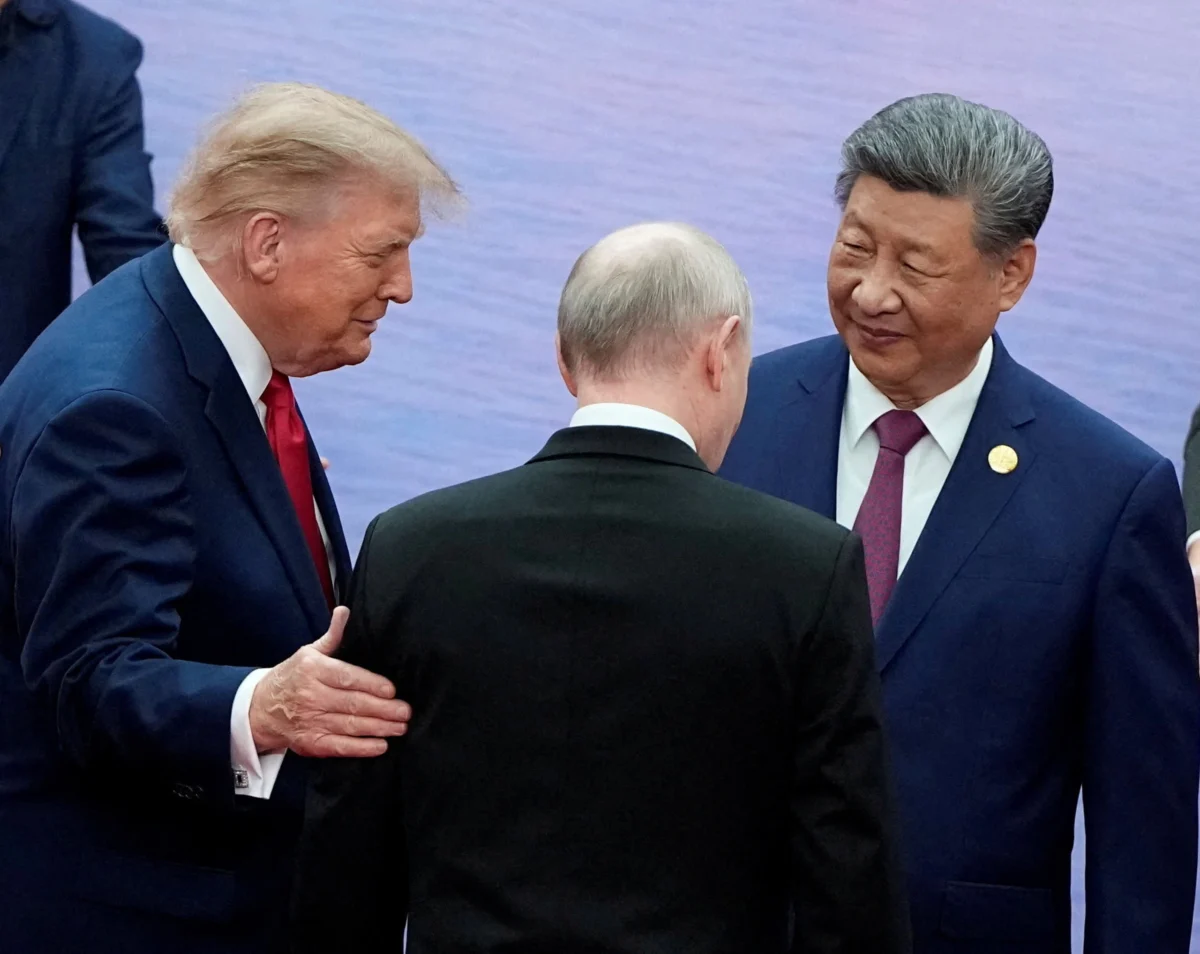
The Asia-Pacific Economic Cooperation (APEC) summit in Shenzhen, China, from November 17 to 19, 2026, convened global leaders amidst a complex tapestry of economic aspirations, technological rivalry, and delicate geopolitical maneuvering. The gathering, hosted by China during its "APEC Year," provided a critical platform for dialogue among the 21 member economies, including the United States, Russia, and Japan, at a time when bilateral tensions might otherwise have rendered such high-level engagements improbable. The summit’s proceedings, ranging from the APEC CEO Summit to the Economic Leaders’ Meeting and an exclusive welcome banquet, underscored both the enduring necessity of multilateral cooperation and the palpable shifts in global power dynamics.
The Strategic Significance of Shenzhen and APEC’s Mandate
Shenzhen, a beacon of China’s economic dynamism and technological prowess, served as a symbolic backdrop for the 2026 APEC summit. Renowned globally as a hub for innovation, the city’s selection highlighted Beijing’s emphasis on future-oriented growth and its pivotal role in the global technology landscape. APEC, established in 1989, has historically championed free and open trade and investment, fostering regional economic integration across the Asia-Pacific. In 2026, its mandate felt more crucial than ever, tasked with bridging divides between major economic blocs and addressing collective challenges such as supply chain resilience, climate change, and the burgeoning implications of artificial intelligence. The forum represents economies that collectively account for approximately 60% of global GDP and nearly half of world trade, making its outcomes profoundly impactful on the international stage.
Day One: APEC CEO Summit Opens with Calls for Reform (November 17)
The summit officially commenced with the APEC CEO Summit on November 17, drawing hundreds of business leaders, policymakers, and diplomats. Xiaomi CEO Lei Jun and U.S. Ambassador to China David Perdue were among the early attendees, signaling the convergence of economic and diplomatic interests. Chinese President Xi Jinping delivered the opening address, articulating a vision for "mutual opening up," "innovation-driven growth," and expanded practical cooperation across diverse fields. His remarks, delivered in Mandarin, aimed to translate initiatives into "tangible results," setting a tone of ambitious engagement for the three-day event.
Despite the gravity of Xi’s message, the audience’s response was notably restrained. Attendees, many raising smartphones to capture the moment, offered applause that was described by observers as "muted." This subtle detail hinted at the cautious optimism and underlying complexities that permeated the summit’s atmosphere, suggesting that while the call for cooperation was clear, the path forward remained fraught with challenges.
Following a lengthy intermission, Malaysian Prime Minister Anwar Ibrahim took the stage, delivering a compelling call for a transformation of the existing multilateral framework. Ibrahim lauded China for its "rare" recognition and support of smaller nations, a statement that resonated within a region where many countries seek to balance their relationships with competing global powers. His intervention highlighted a growing sentiment among developing economies for a more equitable and inclusive international order, potentially signaling a realignment of global influence away from traditional Western-dominated institutions.
The morning session also featured Russian President Vladimir Putin, who focused on his country’s economic resilience and asserted that Europe was "losing ground" in the global economic race. Putin’s address underscored Russia’s pivot towards Asia and its deepening economic ties with China, particularly in the face of ongoing Western sanctions and geopolitical pressures. Notably, the opening sessions were characterized by the absence of any G7 leader on stage, a point that drew considerable attention from media and attendees alike. Canadian Prime Minister Mark Carney eventually spoke later in the afternoon, but the morning’s lack of a prominent American or European voice was conspicuous, raising questions about the perceived engagement levels of these key economies. The most visible American presence during the morning came from business leaders featured in a promotional video preceding Xi’s speech, rather than a direct address from a government official.
The Welcome Banquet: A Glimpse into High-Stakes Diplomacy (November 18)
The evening of November 18 saw the highly anticipated welcome banquet, a government-heavy affair that offered a rare glimpse into the dynamics between the world’s most powerful leaders. The event began with a photo session featuring U.S. President Donald Trump, Russian President Vladimir Putin, and Chinese President Xi Jinping, a tableau of global power that immediately captured international headlines. For many, including an American reporter covering the event, it was a first opportunity to witness President Trump in person, as he emerged from a retinue of black-clad photographers and personnel.
The atmosphere within the banquet hall was outwardly cordial, though charged with unspoken geopolitical currents. Xi Jinping led a toast, raising a glass of red wine, which was joined by Vladimir Putin, seated just a few spots to Trump’s left. The Chinese President reiterated his earlier themes of expanding mutual openness, exploring innovation-driven growth, and identifying opportunities for practical cooperation. While Xi spoke broadly, the implicit focus was on the upcoming bilateral meeting with Trump and, more significantly, the highly anticipated trilateral meeting involving all three leaders scheduled for the following day.
Observations from the room suggested that the "trilateral conversation" might have already begun informally, with leaders and their delegations engaging in discreet exchanges around the long banquet table. Indeed, much of the substantive diplomacy at APEC, including critical bilateral meetings and other leader-to-leader exchanges, traditionally occurs away from the direct glare of the media. Earlier in the evening, Chinese Commerce Minister Wang Wentao and U.S. Treasury Secretary Scott Bessent, along with other members of the American delegation, were seen engaging in friendly conversation, hinting at the quiet efforts to maintain communication channels despite broader tensions.
However, a striking element of the evening was President Trump’s relatively subdued presence. The famously outspoken leader, known for his grand pronouncements on global stages like Davos, did not follow Xi with a toast of his own. This uncharacteristic restraint was particularly notable, given his past rhetoric, such as his assertion in Davos that the U.S. "must get Greenland." In Shenzhen, on Chinese soil, Trump was not the one holding the microphone, a stark contrast to his usual assertive style. This observation fueled speculation about the carefully managed diplomatic protocol or perhaps a strategic decision to allow the host nation to steer the narrative.
The Shadow of Tech: Nvidia, Spies, and Absent Titans
Perhaps the most palpable undercurrent at the banquet, and throughout the summit, was the lingering controversy surrounding the resignation of Nvidia CEO Jensen Huang. This corporate saga, which had gripped markets for the preceding ten days, involved allegations of Huang’s affair with an alleged Chinese spy. The scandal highlighted the intense geopolitical competition in the technology sector, particularly concerning advanced semiconductors and artificial intelligence. U.S. officials had previously stated that President Trump did not plan to raise these allegations during his meeting with President Xi, a decision reflecting the delicate balance between addressing national security concerns and maintaining a semblance of diplomatic stability.
The absence of Jensen Huang and Tesla CEO Elon Musk from the government-heavy banquet was particularly striking. Just two months prior, photographs had shown Huang and Musk sharing a table with Trump and Xi in Washington, D.C., symbolizing the crucial role of tech titans in high-level strategic dialogues. Earlier in May, during Trump’s visit to Beijing, Huang had even spoken with reporters, including this correspondent, inside the Great Hall of the People, with Musk also present. Their conspicuous absence in Shenzhen suggested a deliberate shift. While Musk was expected to join Trump’s delegation, he was not seen at the Wednesday evening event.
The lack of these prominent tech figures at a summit where artificial intelligence and innovation were central themes was interpreted by many as indicative of a changing landscape. It suggested that even as the world’s most powerful leaders grappled with the profound implications of AI, the discussions were increasingly government-led, perhaps distancing themselves from specific corporate controversies or signaling a new phase where national security and strategic competition overshadowed direct corporate lobbying at such high-level forums. This absence underscored the heightened sensitivity surrounding the technology sector and the complex interplay between innovation, corporate leadership, and state-level geopolitical rivalry.
Geopolitical Undercurrents: Strategic Stability and Shifting Alliances
APEC 2026, designated as "China Year," presented Beijing with a unique opportunity to host key economies like the U.S. and Japan at a juncture defined by unresolved tensions. The prevailing narrative of "U.S.-China strategic stability," while aspirational, was clearly tested by the events and interactions throughout the summit. The forum, despite its mandate for cooperation, invariably exposed the deep rifts and the evolving dynamics of global power.
For instance, the Malaysian Prime Minister’s praise for China’s "rare" recognition of smaller countries underscored a growing dissatisfaction with the traditional multilateral order among some nations. This sentiment, combined with Russia’s assertive claims about Europe losing ground, pointed to a fracturing of established blocs and the emergence of new alignments. China’s growing economic influence and its proactive diplomacy were positioning it as a key architect of a revised global order, particularly within the Asia-Pacific.
The interactions observed on the sidelines, such as the friendly chat between U.S. and Chinese trade negotiators, offered a glimmer of hope for de-escalation in specific areas, even as broader strategic competition continued. However, the overarching impression was one of a delicate balancing act, where leaders sought common ground on economic issues while navigating profound differences on technology, security, and governance.
Economic Implications and Future Outlook
The APEC region, representing a significant portion of the global economy, faces multifaceted challenges and opportunities. While the call for "mutual opening up" remains a core principle, the reality of increasing protectionist tendencies and supply chain diversification strategies presents formidable obstacles. Data from the preceding years indicated a complex trade environment, with overall APEC trade volumes growing but specific sectors experiencing significant disruptions due to geopolitical tensions and export controls.
Innovation-driven growth, particularly in areas like AI, digital economy, and green technologies, was identified as a key pathway forward. However, the Nvidia controversy vividly illustrated the deep-seated rivalry in the tech sector, raising questions about how "cooperation" in innovation could genuinely flourish amidst such competition. The summit’s discussions likely delved into the creation of frameworks for ethical AI development, data governance, and secure digital infrastructure, but progress on these fronts will inevitably be shaped by the strategic interests of the major powers.
Ultimately, the APEC summit in Shenzhen served as a crucial barometer of the state of multilateralism in 2026. It provided a platform for essential dialogue, allowing leaders to engage directly and often away from the public gaze. Yet, it also laid bare the profound shifts in global power, the persistent geopolitical rivalries, and the complex challenge of forging collective action in an increasingly fragmented world. The muted applause for Xi, the absence of prominent tech leaders, and Trump’s understated presence were not merely ceremonial details; they were subtle yet potent indicators of a new era of international relations, where the pursuit of economic cooperation must contend with the intractable realities of strategic competition. The legacy of Shenzhen 2026 will likely be defined by its attempt to bridge these divides, offering a glimpse into a future where global stability hinges on the delicate equilibrium between competing visions for prosperity and power.

