
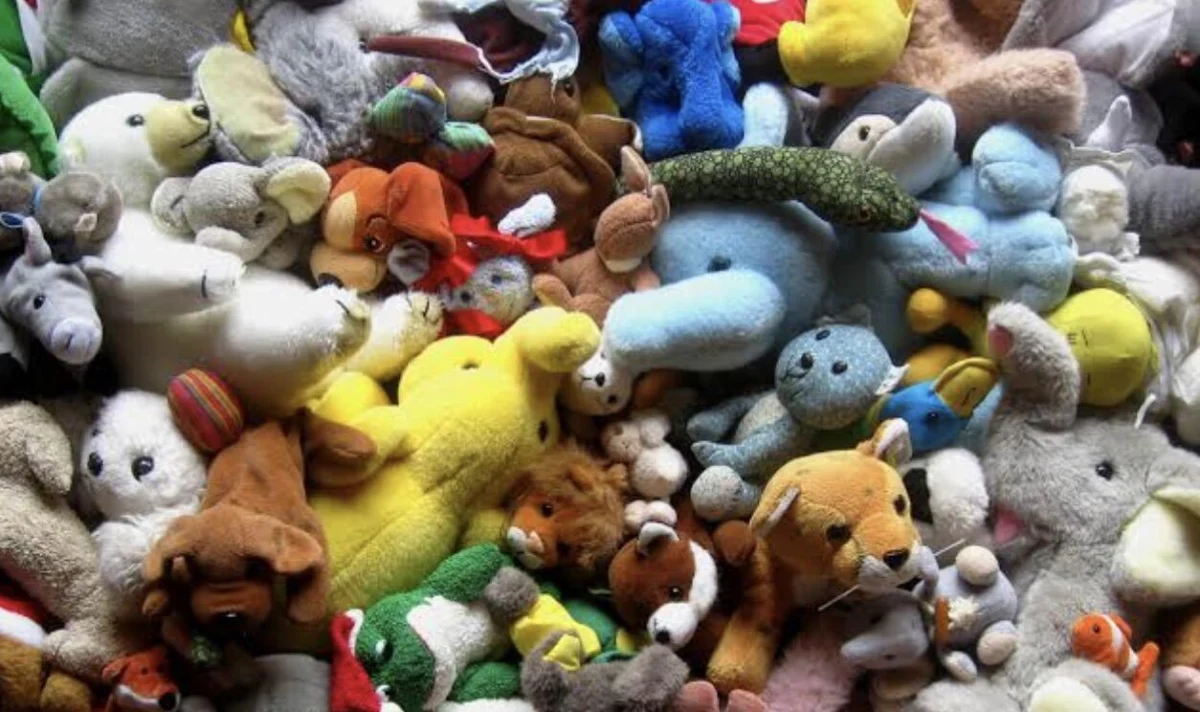
Before co-founding Anthropic, one of the leading forces in artificial intelligence research and development, Daniela Amodei reportedly employed a remarkably unconventional, yet profoundly insightful, method for navigating complex workplace dilemmas: a "stuffed animal advisory council." This intriguing practice, developed with her husband, involved assigning distinct temperaments and viewpoints to a collection of plush toys, then using these inanimate "advisers" to simulate how various managerial archetypes might approach a given problem. The revelation, detailed in an account in The Atlantic drawn from journalist Kevin Roose’s forthcoming book, The AGI Chronicles, offers a unique glimpse into the problem-solving philosophy of a key figure at the forefront of the AI revolution, and perhaps, a metaphor for the diverse perspectives that ultimately led to the seismic split that birthed Anthropic.
The Genesis of an Idea: The Stuffed Animal Advisory Council
The concept, while whimsical on the surface, speaks to a deeper need for robust, multi-faceted decision-making, particularly in high-stakes environments. Daniela Amodei and her husband meticulously crafted a miniature board of directors from their collection of stuffed animals. Each toy was imbued with a specific persona, representing a particular leadership style or cognitive bias. For instance, Jinji, a laid-back feline, epitomized the manager whose primary instinct was to streamline workflows, minimize unnecessary meetings, and reduce administrative burden. This character likely offered a perspective focused on efficiency and employee well-being, challenging overly bureaucratic tendencies.
In stark contrast, Maura, a pink bear, embodied the highly organized, detail-oriented, and demanding leader. Maura’s input would have pushed for meticulous planning, rigorous adherence to protocols, and an uncompromising focus on execution. This character served as a counterweight to Jinji, ensuring that thoroughness and accountability were not overlooked. Completing this diverse tableau was Beary Bonds, a panda designed to infuse discussions with compassion, generosity, and an emphasis on human-centric considerations. Beary Bonds likely served as the ethical compass, reminding Amodei to consider the broader human impact and foster a supportive environment.
Amodei herself attested to the practical value of this seemingly playful exercise, telling Roose in 2023 that it was "very useful in analyzing different personality types." This methodology allowed her to externalize potential viewpoints, anticipate objections, and explore a wider range of solutions than she might have considered relying solely on her own internal monologue. It effectively served as a mental simulation tool, fostering empathy and strategic foresight by forcing her to step into the shoes of various stakeholders. In the fast-paced, often impersonal world of tech, such a deliberate embrace of diverse perspectives, even through the proxy of plush toys, highlights an unusual yet effective approach to leadership.
Behind the Whimsical Facade: Tensions at OpenAI
While the stuffed animal council provided a private sanctuary for decision-making, it was developed during an increasingly turbulent period for Daniela Amodei and her brother, Dario Amodei, within OpenAI. Daniela, who had joined the organization in 2018, had transitioned into managing technical teams, a role that brought her into direct contact with several senior figures, including Greg Brockman and Mira Murati. What had once been a cordial relationship with Brockman, evidenced by his speaking at her 2017 wedding to Holden Karnofsky, began to fray under the pressures of professional disagreements and divergent visions for the company’s trajectory.
OpenAI, founded in 2015 by Sam Altman, Elon Musk, Greg Brockman, Ilya Sutskever, and others, initially launched as a non-profit dedicated to ensuring artificial general intelligence (AGI) benefits all of humanity. Its mission was ambitious: to advance digital intelligence in the way most likely to benefit humanity as a whole, unconstrained by the need to generate financial return. However, by 2019, the organization underwent a significant restructuring, establishing a "capped-profit" entity to attract the vast capital necessary for large-scale AI research, while maintaining its non-profit parent to oversee its ethical mission. This shift, while pragmatic for funding, introduced new complexities and potential ideological fissures.
Dario Amodei, a prominent researcher and vice president of research at OpenAI, harbored growing concerns about the leadership direction, particularly regarding Sam Altman and Greg Brockman. His anxieties centered on the pace and perceived recklessness of OpenAI’s AI development, fearing that an overemphasis on speed and commercialization might compromise critical safety considerations. Dario believed that a more deliberate, safety-first approach was paramount as AI systems grew increasingly powerful. These concerns led him to organize privately with like-minded researchers within OpenAI who advocated for greater caution and a more robust focus on the potential risks of advanced AI. This faction, which operated somewhat outside the company’s official communication channels, was reportedly dubbed "Dario’s clique" by some colleagues, underscoring the internal division.

The core of the disagreement lay in the philosophical debate surrounding AI safety: whether to prioritize rapid deployment and capability scaling, or to proceed with extreme caution, focusing on alignment and ethical safeguards first. This tension, common within the broader AI community, manifested acutely within OpenAI as its models, like GPT-2 and GPT-3, began to demonstrate unprecedented capabilities, hinting at the imminent arrival of AGI.
A Divergent Path: The "Divorce" and Founding of Anthropic
The internal disagreements at OpenAI eventually reached a critical mass, transforming from mere philosophical differences into concrete plans for an entirely new venture. By 2020, Dario Amodei began actively assembling a team, quietly recruiting researchers and engineers who shared his vision for advanced AI research guided by a distinct and rigorous safety philosophy. This nascent group sought to create an environment where the development of powerful AI was inextricably linked to robust safety protocols and ethical considerations from inception.
Daniela Amodei played a pivotal role in this exodus. Beyond her personal alignment with the new philosophy, she was instrumental in the logistical and diplomatic complexities of the departure, including sensitive negotiations with OpenAI as the group prepared to leave. The internal dynamics surrounding this significant split were so charged that those involved privately referred to it as "the divorce," a term that vividly captures the profound break and the emotional investment involved. This "divorce" was not merely a departure of talent; it represented a schism in the foundational approach to building the future of AI.
In December 2020, the Amodei siblings, along with a cohort of other prominent OpenAI researchers — including Jack Clark, Sam McCandlish, Tom Brown, Chris Olah, and Jared Kaplan — officially exited OpenAI. Shortly thereafter, they established Anthropic, with Ben Mann later recognized as an additional co-founder. The initial ambition for Anthropic was to build a comparatively smaller, more focused research operation, emphasizing a safety-first paradigm for AI development. This commitment to "Constitutional AI," a method for training helpful, harmless, and honest AI systems without extensive human feedback, would become a hallmark of their approach.
Anthropic’s Ascendancy: A New AI Frontier
What began as a focused research initiative quickly evolved into a major player in the global AI landscape. Anthropic’s commitment to responsible AI development, combined with its rapid advancements in large language models, attracted significant attention and investment. The company secured substantial funding rounds from major tech giants and venture capital firms. For instance, in 2023 alone, Anthropic raised over $7 billion, including a $4 billion investment from Amazon and a $2 billion investment from Google. These investments propelled Anthropic into the top tier of AI developers, positioning it as a direct and formidable competitor to OpenAI.
Anthropic’s flagship product, the Claude family of large language models, quickly gained recognition for its advanced capabilities, particularly in areas requiring nuanced understanding, complex reasoning, and adherence to ethical guidelines. Claude models are designed with a strong emphasis on safety, interpretability, and steerability, reflecting the core philosophy that underpinned the company’s founding. This focus has resonated with enterprises and researchers seeking AI solutions that are not only powerful but also trustworthy and aligned with human values.
Today, Anthropic has expanded dramatically, employing thousands of workers and boasting a valuation that places it among the industry’s most valuable companies. Recent reports have even suggested the potential for an initial public offering (IPO) that could value the company at an astonishing $2 trillion, a testament to the immense market confidence in its technology and vision. This rapid growth underscores the demand for AI that prioritizes safety and ethical deployment, a niche that Anthropic has masterfully carved out for itself.
Leadership and Innovation: The Amodei Influence
Daniela Amodei’s journey from using a stuffed animal advisory council to serving as Anthropic’s president and board chair is a remarkable trajectory. In her current role, she wields significant authority across the company’s research, engineering, product, and business operations, shaping its strategic direction and operational excellence. Her unique approach to problem-solving, perhaps hinted at by her earlier unconventional methods, likely contributes to Anthropic’s distinctive culture of innovation and thoughtful development. Holden Karnofsky, her husband and a former OpenAI non-profit board member, also eventually joined Anthropic, further solidifying the core leadership team.

The Amodei siblings’ decision to leave OpenAI was not merely a career move; it was a principled stand on the future of AI. Their foresight in prioritizing AI safety and developing robust alignment techniques has proven prescient as the industry grapples with the profound implications of increasingly sophisticated AI systems. Their "divorce" from OpenAI effectively created a crucial competitive dynamic, pushing both companies, and indeed the entire industry, to consider safety more deeply.
The Broader Context: AI Safety and Industry Dynamics
The narrative of Daniela Amodei’s stuffed animal council and the subsequent founding of Anthropic is more than just an interesting anecdote; it is a microcosm of the larger, ongoing debate within the AI community about responsible innovation. The rapid acceleration of AI capabilities has brought unprecedented opportunities but also significant risks, from misuse and bias to the existential concerns of uncontrolled superintelligence.
The creation of Anthropic represented a critical moment in the history of AI development, solidifying the idea that alternative approaches to building powerful AI are not only possible but necessary. It fostered a competitive landscape where different philosophies regarding safety and commercialization could be tested and refined. This competition, often referred to as "decentralized AI development," is seen by many as a healthy mechanism to prevent a single entity from dominating the future of AGI and to ensure a diversity of perspectives in its creation.
The Amodeis’ story highlights the profound impact that internal dissent and philosophical conviction can have on the trajectory of major technological advancements. It underscores that innovation is not solely driven by technical prowess but also by ethical frameworks, leadership styles, and a willingness to challenge established norms. In an industry often characterized by rapid iteration and a "move fast and break things" mentality, Anthropic’s deliberate, safety-conscious approach stands out as a significant counter-narrative.
Looking Ahead: The Future of AI and Anthropic
As Anthropic continues its trajectory of growth and innovation, the lessons from Daniela Amodei’s early, unconventional decision-making methods remain relevant. They speak to the enduring value of considering diverse viewpoints, fostering empathy, and embracing creative problem-solving, even when faced with the most complex technical and ethical challenges.
The future of AI is still being written, and companies like Anthropic, born out of a commitment to a particular vision of safety and responsibility, will play a crucial role in shaping it. The potential $2 trillion valuation speaks not only to the power of their technology but also to the market’s recognition of the critical importance of building AI that is not only intelligent but also trustworthy, beneficial, and aligned with humanity’s best interests. The stuffed animal advisory council, in its own whimsical way, perhaps offered an early, humble preview of the principled, multi-faceted approach that would come to define Anthropic’s mission and success.

