
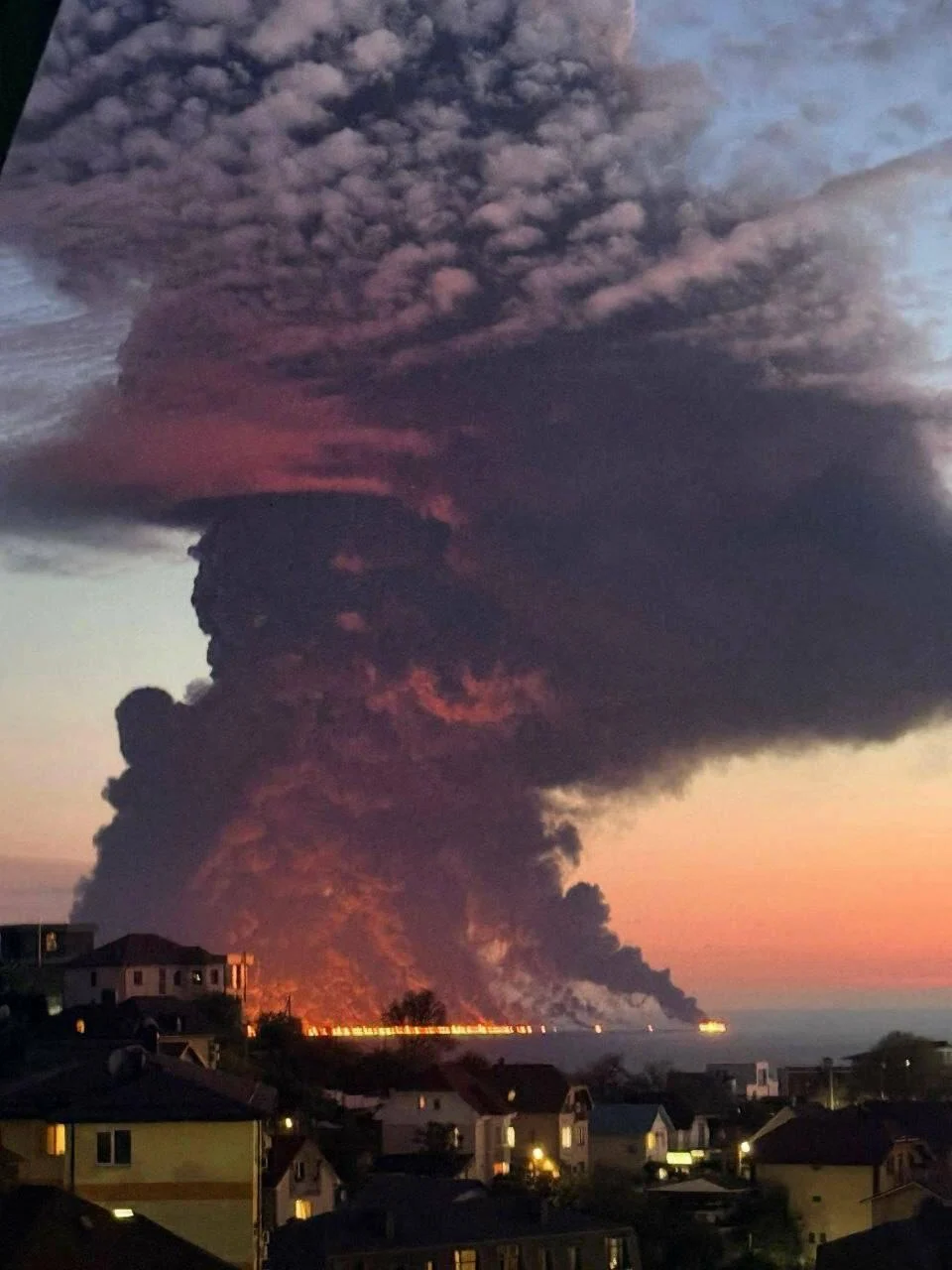
A significant maritime incident unfolded on Tuesday in the Black Sea, as a large tanker, believed to be part of Russia’s so-called ‘shadow fleet,’ caught fire near the bustling Russian resort city of Sochi. The vessel, identified in preliminary reports as likely the Aframax Rio, was seen producing an enormous plume of black smoke visible for miles, captivating and alarming onlookers along the Sochi coastline. The incident immediately ignited widespread speculation regarding its cause, particularly given the ongoing "tanker wars" in the strategically vital Black Sea, and has drawn attention to the complex and high-stakes environment surrounding Russian maritime trade.
The Blaze and Initial Observations
The Aframax Rio, a Liberian-flagged oil tanker, became engulfed in flames at a location described as being in close proximity to the Russian Black Sea port of Sochi. Eyewitness accounts and a plethora of images and videos circulating rapidly across Russian Telegram channels and other social media platforms depicted a dramatic scene: a massive column of dark smoke billowing skyward from the burning vessel. The sheer scale of the fire and the intensity of the smoke underscored the gravity of the situation, leading to immediate concerns about the safety of the crew, the integrity of the vessel, and potential environmental ramifications.
Reports indicated that the tanker was "loaded almost to the brim" with crude oil, bound for India, a significant buyer of Russian energy exports. This detail amplified the potential economic and ecological impact of the incident, as a fully laden crude oil tanker fire presents a formidable challenge to maritime emergency responders and poses a severe threat of widespread pollution. The estimated value of the cargo alone, approximately 760,000 barrels of oil, was placed at around $70 million, highlighting the substantial financial loss incurred by the event.
Official Confirmation and Public Response
Russian regional authorities in the nearby federal territory of Sirius, within the Krasnodar region, swiftly confirmed that a tanker had indeed caught fire in the Black Sea. This official acknowledgment validated the numerous public reports and visual evidence emerging from the area. However, critically, the authorities refrained from providing any details regarding the cause of the blaze. This omission immediately fueled speculation, particularly in the context of the ongoing conflict in Ukraine and the escalating maritime tit-for-tat exchanges in the Black Sea.
As a precautionary measure, and likely due to the proximity of the incident and the potential for environmental contamination, authorities announced the closure of beaches in the settlement. Sochi is a major tourist destination, and the closure of its scenic beaches underscores the immediate local impact of the tanker fire, disrupting leisure activities and raising concerns among residents and holidaymakers. The visual spectacle of a burning oil tanker off a popular resort coast is unprecedented in recent memory for the region, making it a stark reminder of the broader geopolitical tensions playing out in the area.

The ‘Shadow Fleet’ and Sanctions Context
The Aframax Rio‘s alleged involvement with Russia’s ‘shadow fleet’ is a crucial element in understanding the broader context of this incident. The ‘shadow fleet’ refers to a collection of older, often poorly maintained, and minimally insured vessels operating outside conventional maritime regulations and international oversight. These ships are frequently used by Russia to circumvent Western sanctions imposed following its full-scale invasion of Ukraine in February 2022. By obscuring ownership, employing flags of convenience, and engaging in ship-to-ship transfers in less regulated waters, these vessels facilitate the continued export of Russian oil, a critical source of revenue for the Kremlin.
The Aframax Rio itself had reportedly been sanctioned by Ukraine previously due to its alleged involvement in Russian oil exports. Ukraine’s strategy has increasingly focused on disrupting Russia’s economic lifelines and military logistics, including its energy trade. Sanctioning individual vessels or companies involved in transporting Russian oil is part of a broader international effort to limit Moscow’s financial capacity to wage war. The fact that the Aframax Rio was a target of such sanctions highlights its perceived role in supporting the Russian economy through illicit or sanction-evading means.
Aframax tankers are a class of medium-range crude oil tankers, typically with a deadweight tonnage (DWT) ranging from 80,000 to 120,000 tons. They are well-suited for transporting crude oil over shorter to medium distances and are frequently used in regions with shallower ports or for transshipment operations. The reported cargo of 760,000 barrels, equivalent to approximately 103,000 metric tons, falls squarely within the typical carrying capacity of an Aframax vessel, reinforcing its classification and the magnitude of the oil involved.
Speculation: Uncrewed Surface Vessels (USVs) and Maritime Warfare
While Russian authorities have remained tight-lipped about the cause, speculation quickly mounted that the Aframax Rio might have been targeted by uncrewed surface vessels (USVs). Ukraine has increasingly deployed these innovative and relatively low-cost naval drones as a strategic tool to challenge Russia’s naval dominance in the Black Sea and to strike at targets deep within Russian-controlled waters.
Since the full-scale invasion, Ukrainian USVs have achieved notable successes, including damaging or sinking several Russian naval warships and patrol boats. These drone attacks have forced the Russian Black Sea Fleet to adopt more defensive postures, relocate assets, and significantly alter its operational patterns. The use of USVs against commercial shipping, particularly those perceived to be aiding the Russian war effort or violating sanctions, represents a logical escalation of Ukraine’s maritime strategy. Such attacks aim to disrupt Russia’s economy, increase the cost and risk of its maritime trade, and undermine its ability to project power in the Black Sea.
Targeting a ‘shadow fleet’ tanker would align with Kyiv’s objectives to inflict economic pain on Russia and to deter other vessels from engaging in sanction-evading activities. The operational range of these drones has expanded considerably, demonstrating Ukraine’s growing capabilities to strike targets far from its coastline. If confirmed, an attack by a USV would mark a significant expansion of the maritime conflict, bringing the ‘tanker wars’ to a new and more economically impactful level.

Environmental Catastrophe Unfolding
The sheer scale of the fire and the nature of the cargo immediately raised alarms among environmental experts. Maritime Executive reported that the extensive nature of the blaze was likely "due to significant oil spillage." Visual evidence from the scene corroborated this assessment, showing "obvious signs of burning oil spreading aft down the starboard side" of the vessel. Later images and videos depicted "a large pool of burning oil on the water aft of the vessel and a towering column of smoke."
An oil spill of this magnitude, compounded by a massive fire, presents a severe ecological threat to the Black Sea’s delicate ecosystem. Crude oil contains a complex mixture of hydrocarbons and other toxic compounds that can have devastating effects on marine life, including fish, birds, and mammals. The immediate impacts include smothering organisms, poisoning marine species, and disrupting food chains. The burning oil releases hazardous air pollutants, including particulate matter, sulfur oxides, nitrogen oxides, and volatile organic compounds, which can impact air quality in coastal areas and contribute to acid rain.
The long-term consequences of such a spill can be equally dire, with oil persisting in sediments and coastal habitats for years, affecting biodiversity and ecosystem recovery. For a resort area like Sochi, renowned for its natural beauty and tourism, an oil spill represents an economic disaster, potentially ruining beaches, impacting fishing industries, and deterring visitors for an extended period. Cleanup operations for a burning oil spill are immensely complex and hazardous, requiring specialized equipment and techniques, and are often complicated by weather conditions and the continuous burning of the spilled product.
Broader Implications: Geopolitical, Economic, and Maritime Security
The incident involving the Aframax Rio carries significant geopolitical, economic, and maritime security implications:
Geopolitical Escalation: If the fire is indeed the result of a deliberate attack, it signifies a further escalation of the conflict in the Black Sea. It underscores Ukraine’s determination to disrupt Russia’s maritime trade and military operations, even at significant risk. Russia’s response to such an attack could involve increased security measures, retaliatory actions, or heightened rhetoric, further destabilizing the region.
Economic Impact on Russia: The loss of a fully laden oil tanker represents a direct financial blow to Russia’s oil export revenues. While one tanker may not cripple Russia’s overall oil trade, repeated incidents could increase the costs and risks associated with transporting Russian oil, making it less attractive to buyers and increasing insurance premiums for vessels operating in the region. This directly impacts Russia’s ability to fund its war efforts.

Challenges for the ‘Shadow Fleet’: The incident highlights the inherent vulnerabilities and risks associated with operating within the ‘shadow fleet.’ These vessels often lack adequate insurance coverage, advanced safety equipment, and robust maintenance schedules, making them more susceptible to accidents or damage. An attack on such a vessel could prompt some operators to reconsider their involvement, although the financial incentives for evading sanctions remain strong. Increased risks may also lead to higher "risk premiums" for those willing to continue operating within this fleet.
Maritime Security Concerns: The Black Sea has become a highly militarized and dangerous zone for commercial shipping since the start of the conflict. This latest incident, regardless of its ultimate cause, reinforces the perception of heightened risk for all vessels operating in the region, particularly those involved in Russian trade. Shipping companies, insurers, and international maritime organizations will likely reassess security protocols and risk assessments for routes transiting the Black Sea. The potential for miscalculation or accidental involvement of neutral vessels in conflict zones also remains a constant concern.
Environmental Policy and Responsibility: The incident brings to the forefront the issue of environmental responsibility and accountability in conflict zones. While the immediate focus is on the human and economic impact, the long-term ecological damage requires international attention. The lack of transparent information from Russian authorities about the cause and response efforts further complicates the assessment of environmental damage and the implementation of effective cleanup strategies.
Conclusion
The blazing Aframax Rio off the coast of Sochi serves as a stark visual metaphor for the volatile and increasingly dangerous situation in the Black Sea. Beyond the immediate tragedy of a burning ship and the looming environmental disaster, the incident underscores the relentless nature of the "tanker wars" and the strategic importance of maritime operations in the broader conflict. As investigations unfold—or are deliberately obscured—the international community will be closely watching for any official attribution of responsibility and the subsequent implications for regional stability, global energy markets, and the future of maritime security. The shadow fleet, born out of necessity to circumvent sanctions, now finds itself directly in the crosshairs of a conflict that shows no signs of abating, making every voyage a perilous gamble.

