

The fiscal landscape for mid-career professionals in the Northeastern United States has become increasingly complex, characterized by rising housing costs, inflationary pressures, and the necessity for robust long-term retirement planning. A recent comprehensive case study of a Connecticut-based couple, Michael and Brian, both 34, provides a detailed look at the financial challenges and opportunities facing dual-income households in the public and non-profit sectors. As they approach their tenth anniversary, the couple manages a household gross income of approximately $167,544, yet they find themselves navigating nearly $30,000 in consumer debt and the absence of real estate equity. This report analyzes their current financial standing, the socioeconomic factors influencing their trajectory, and the strategic recommendations provided by financial analysts to secure their long-term stability.

Financial Overview of a Mid-Career Connecticut Household
Michael and Brian represent a significant demographic of the American workforce: the "sandwich" generation of professionals who possess stable, high-value employment but struggle with liquid savings and debt cycles. Michael serves as a project coordinator for a state behavioral health agency and maintains a secondary role as a disability leadership coordinator. Brian is a quality assurance manager for a state-run hospital. Their combined net annual income, after taxes and benefit deductions, stands at $109,455.42.
Despite this substantial income, the couple identifies a sense of being "behind" their peers, a sentiment common among millennials who entered the workforce during periods of economic volatility. Their primary concerns center on a $28,259 consumer debt load, a lack of homeownership, and underfunded liquid savings. Currently, their assets total $91,250, the majority of which is held in retirement accounts such as 401(k)s, 403(b)s, and 457(b) plans, rather than accessible cash.

Chronology of Disruption: From Stability to Transition
The couple’s current financial anxiety is rooted in a series of disruptive events occurring between late 2022 and 2023. For eight years, they resided in a 600-square-foot studio apartment with a monthly rent of $945, which allowed for significant capital preservation. However, an unplanned relocation forced them into the 2023 rental market, which has seen unprecedented price hikes across the New England region.
The transition to a larger, $2,000-per-month two-bedroom apartment in a refurbished industrial mill more than doubled their housing expenses. This move coincided with significant veterinary expenses for two new kittens and Brian’s career transition from the private non-profit sector to the public sector. While Brian’s shift to a state position secured long-term benefits—including a pension and lifetime healthcare—the immediate costs of the relocation and associated lifestyle adjustments led to a reliance on credit, halting their previous momentum toward homeownership.

Analysis of Debt Structures and Interest Rate Sensitivity
The couple’s debt is currently segmented into three primary tranches, each with varying degrees of urgency based on interest rate "cliffs."
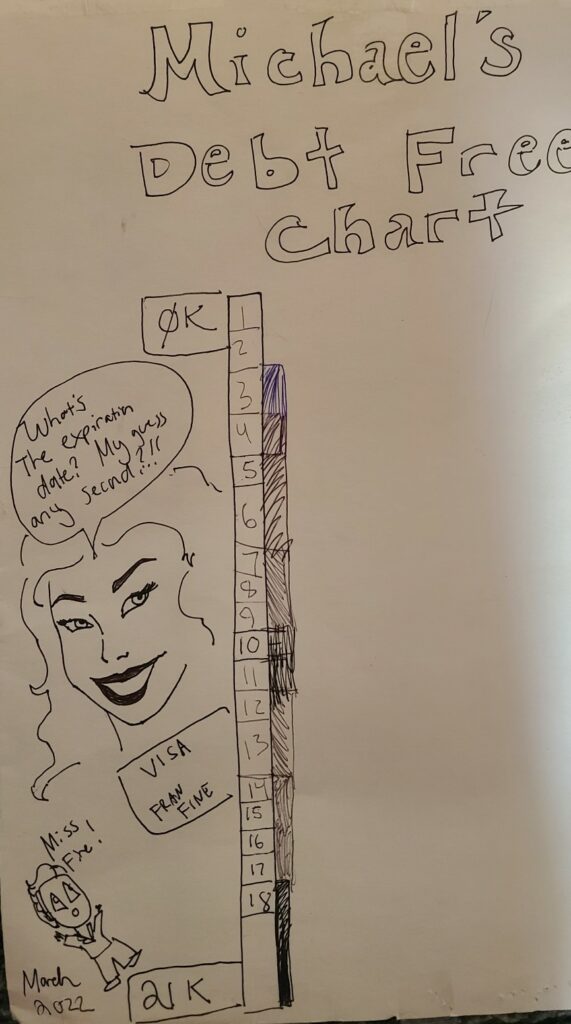
- High-Balance Promotional Debt: Brian holds a $16,057 balance on a Visa card with a 0% interest rate that expires in November 2023. Post-promotion, the rate will escalate to 17.99%, potentially adding nearly $3,000 in annual interest charges if left unaddressed.
- High-Interest Consumer Debt: Michael carries a $9,700 balance at a 10.99% interest rate. While lower than the national average for credit cards, it represents a persistent drain on monthly cash flow.
- Low-Balance Residual Debt: A $2,503 balance exists at 0.99%, also set to reset to a high double-digit rate in late 2023.
Financial analysts note that while the total debt of $28,259 is manageable relative to their $167k gross income, the psychological burden and the impending interest rate resets create a high-pressure environment. The couple’s current spending on "reduceable" and "discretionary" items—including $469 on groceries, $200 on dining out, and $1,064 on car-related expenses—suggests a significant opportunity for capital reallocation.

Institutional and Personal Retirement Projections
A critical strength in the couple’s portfolio is their access to institutional retirement vehicles. Brian’s employment with the State of Connecticut provides a "triple crown" of retirement security: a 403(b), a 457(b), and a defined-benefit pension. Projections suggest that after 35 years of service, Brian’s pension could yield a monthly payout of $4,150.
Michael contributes 10% of his salary to a 401(k) with a 4% employer match, currently valued at nearly $37,000. However, the couple expresses concern regarding the long-term viability of Social Security and the lack of asset diversification. Currently, their retirement contributions are substantial, yet they lack a "bridge" fund—liquid assets that can cover expenses prior to the age of 59.5, when most retirement accounts become accessible without penalty.
Strategic Recommendations for Fiscal Stabilization
Financial expert Liz Frugalwoods has provided a structured recovery plan focused on aggressive debt elimination and the establishment of a robust emergency fund. The recommendations emphasize that "spreadsheet problems" are solvable through disciplined tracking and behavioral shifts.
Spending Categorization and Potential Surplus
The analysis identifies that the couple’s current annual spending is $96,414.36 against a net income of $109,455.42. This leaves a theoretical surplus of $13,041. However, by moving to a "spending detox" model, the surplus could be dramatically increased.

The proposed budget suggests:
- Eliminating Discretionary Spending: Temporarily suspending expenditures on dining out, gifts, home goods, and subscriptions would save approximately $1,370 per month.
- Reducing Variable Costs: Lowering grocery bills and personal care expenses.
- Debt Snowball Implementation: By reallocating the $1,370 in savings plus their current $2,000 debt payments, the couple could apply $4,456 per month toward their balances. At this rate, the entire $28,259 debt could be retired in approximately 6.5 months, largely avoiding the high-interest triggers in November.
Long-Term Asset Diversification and Education ROI
A recurring theme in the couple’s goals is the pursuit of a master’s degree for Brian. From a journalistic and analytical perspective, the return on investment (ROI) for advanced degrees must be scrutinized. Current labor market data suggests that unless a graduate degree is tied to a specific, mandatory salary grade increase within the state system, the cost-to-benefit ratio may be unfavorable, particularly when the couple’s primary goal is saving for a down payment on a home.

Furthermore, the recommendation for Brian to roll over an old 401(k) into a self-directed IRA highlights the need for lower expense ratios and greater control over asset allocation. Managing investment fees is a critical, often overlooked component of wealth building for professionals in their 30s.
Broader Economic Implications for Millennial Professionals
The case of Michael and Brian mirrors a broader trend in the American economy. According to recent data, millennial households are often "high income, no assets" (HINAs). The combination of late-start careers, student loan burdens (which Brian successfully cleared previously), and a volatile housing market has delayed traditional milestones like homeownership.

In Connecticut, specifically, the high cost of utilities and property taxes adds an additional layer of difficulty. The couple’s electricity bill averages $235 per month, reflecting the state’s position as one of the most expensive energy markets in the country. Their desire to move to a more rural area may eventually lower their housing costs, but the initial barrier to entry—the down payment—requires a shift from a "feast or famine" spending cycle to a consistent "middle-path" austerity.
Conclusion: The Path Toward "Adulting" and Legacy
The study concludes that Michael and Brian are in a stronger position than their self-perception suggests. With a high household income, excellent benefits, and a clear path to debt freedom within a year, their goals of homeownership and business ownership are statistically achievable. The "shame" they feel regarding their debt is identified as a common psychological byproduct of the "comparison trap" facilitated by social media and peer observation.

By implementing rigorous expense tracking through platforms like Empower and prioritizing a six-month emergency fund, the couple can transition from reactive financial management to proactive wealth building. Their story serves as a blueprint for other professionals navigating the transition from the flexibility of their 20s to the structured financial requirements of their mid-30s and beyond. The ultimate success of their plan will depend on their ability to maintain a unified strategy as they approach their milestone anniversary and look toward a future of "earth to call their own."

