
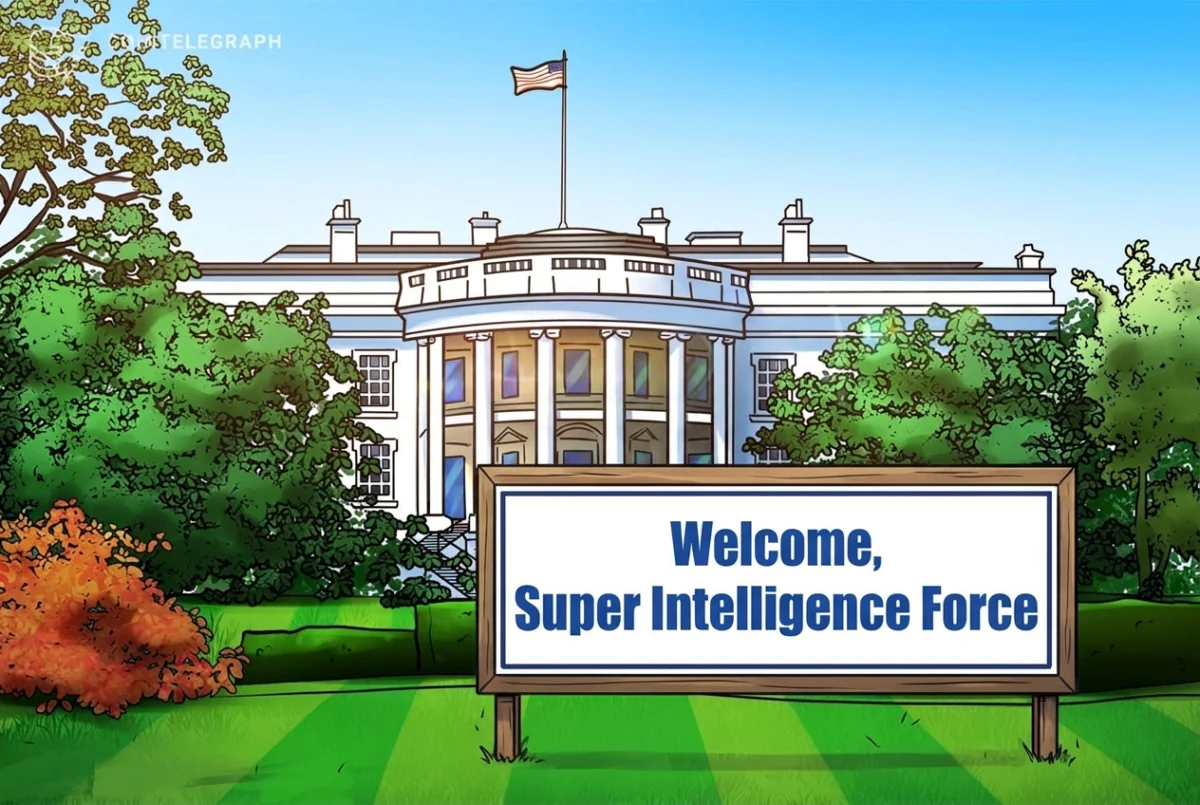
In a significant move signaling a heightened focus on advanced technological capabilities, President Donald Trump announced on Sunday via his Truth Social platform that Jay Clayton has been selected to spearhead the United States’ newly established Super Intelligence Force. This appointment, which follows earlier media reports on Friday, positions Clayton, currently serving as the U.S. Director of National Intelligence, at the helm of a critical initiative aimed at cementing American leadership in the rapidly evolving field of artificial intelligence.
The creation of the Super Intelligence Force marks a pivotal moment in the nation’s approach to artificial intelligence, drawing parallels to the establishment of the U.S. Space Force. The initiative, first reported by Cointelegraph on September 20th, was conceptualized as a dedicated entity to harness and direct federal government efforts toward maintaining global preeminence in "Super Intelligence." This term, as articulated by President Trump in his Truth Social post, underscores the administration’s ambition to push the boundaries of AI development and deployment across various sectors.
Establishing a New Frontier in National Security and Innovation
The stated mission of the Super Intelligence Force is clear: to "coordinate the effort of the Federal Government to ensure that America continues to lead the World in Super Intelligence." This directive suggests a comprehensive strategy encompassing research, development, ethical guidelines, and the strategic deployment of advanced AI technologies. The force is expected to operate as a central coordinating body, bridging the efforts of multiple federal agencies and ensuring a unified national approach to AI advancement.
Accompanying Jay Clayton in this endeavor will be a distinguished group of individuals with deep expertise in their respective fields. The announcement also revealed the inclusion of Andrew Ferguson, Chairman of the Federal Trade Commission, whose background in regulatory oversight will be crucial in navigating the complex legal and ethical landscape of AI. Scott Kupor, Director of the Office of Personnel Management, brings valuable experience in human capital management, essential for building and managing the specialized talent required for such an ambitious undertaking. Furthermore, Emil Michael, identified as Under Secretary of War for Research and Engineering and Chief Technology Officer for the Department of War, will lend his expertise in military technology and innovation, underscoring the national security implications of advanced AI.
Jay Clayton’s Extensive Experience and Mandate
Jay Clayton’s selection for this high-profile role is underpinned by his substantial experience in both the public and private sectors, particularly in areas touching upon technological regulation and national security. During President Trump’s first term, Clayton served as the Chairman of the Securities and Exchange Commission (SEC), where he played a key role in shaping regulatory frameworks for financial markets, including those increasingly impacted by technological innovation. His prior experience also includes serving as interim U.S. Attorney for the Southern District of New York, a position that honed his understanding of complex legal matters and national security challenges.
Sources close to the matter, as reported by CNN on Friday, indicated that Clayton is expected to retain his current position as Director of National Intelligence while simultaneously leading the Super Intelligence Force. This dual role highlights the perceived intersection of national intelligence and advanced AI capabilities. Clayton’s confirmation by the Senate in July to lead the intelligence community signifies a strong endorsement of his leadership and expertise, making him a well-positioned figure to navigate the intricate demands of both roles.
A Chronology of AI Focus and Strategic Initiatives
The announcement of the Super Intelligence Force and its leadership follows a discernible trajectory of increasing governmental attention towards artificial intelligence. The foundational groundwork for such an initiative can be traced back to earlier discussions and strategic planning within the administration.
- September 20, 2023 (Reported): Cointelegraph first reported on President Trump’s plans to establish an "AI Force," conceptually modeled after the Space Force, and to appoint an "AI czar." This initial report laid the groundwork for the formal announcement.
- Friday (Preceding Sunday Announcement): Media outlets, including CNN, published reports detailing potential appointments and the emerging structure of the AI initiative, citing sources close to the administration.
- Sunday: President Trump officially announced the formation of the Super Intelligence Force and the appointment of Jay Clayton as its leader via a post on his Truth Social platform. This announcement also revealed the inclusion of other key figures in the force.
This timeline illustrates a deliberate and phased approach to publicizing and implementing the administration’s AI strategy, allowing for initial reporting and subsequent formal confirmation.
Supporting Data and the Global AI Landscape
The establishment of the Super Intelligence Force arrives at a critical juncture in the global AI race. Nations worldwide are investing heavily in AI research and development, recognizing its transformative potential across economic, social, and military domains.
- Global AI Investment: According to various industry reports, global investment in artificial intelligence has seen exponential growth. For instance, Statista data indicates that the global AI market size was valued at USD 136.6 billion in 2022 and is projected to reach USD 1.39 trillion by 2030, exhibiting a compound annual growth rate (CAGR) of 33.2%. This massive financial commitment underscores the strategic importance of AI.
- National AI Strategies: Many countries, including China, the European Union, and various G7 nations, have already implemented comprehensive national AI strategies. These strategies often focus on promoting research, developing talent, establishing ethical guidelines, and fostering AI adoption in key industries. The U.S. initiative aims to consolidate and elevate these efforts under a unified federal command.
- Economic Impact: The economic implications of advanced AI are profound. McKinsey Global Institute reports suggest that AI could contribute up to $13 trillion to the global economy by 2030. Maintaining a leadership position in AI development is therefore directly linked to future economic competitiveness and prosperity.
- National Security Concerns: The application of AI in defense and security is a rapidly growing area. Advanced AI systems have the potential to revolutionize intelligence gathering, autonomous systems, cybersecurity, and strategic decision-making. The formation of a dedicated "Super Intelligence Force" directly addresses these national security imperatives.
The U.S. government’s focus on "Super Intelligence" suggests an ambition to move beyond incremental AI advancements and to pursue breakthroughs that could redefine technological capabilities. This could encompass areas such as artificial general intelligence (AGI), advanced machine learning algorithms, and novel AI architectures.
Broader Impact and Implications
The creation of the Super Intelligence Force and the appointment of its leadership team carry significant implications for the future of AI development and governance in the United States and globally.
- Centralized Coordination: The force is expected to act as a central hub, fostering collaboration between agencies like the Department of Defense, Department of Commerce, National Science Foundation, and intelligence agencies. This could lead to more efficient resource allocation and a more coherent national strategy.
- Ethical and Regulatory Frameworks: With the inclusion of FTC Chairman Andrew Ferguson, there is an expectation that the force will place a strong emphasis on developing robust ethical guidelines and regulatory frameworks for AI. This is crucial to address concerns related to bias, privacy, transparency, and accountability in AI systems.
- Talent Development: The involvement of Scott Kupor from the OPM suggests a focus on attracting, retaining, and developing the highly specialized talent pool required for advanced AI research and development. This may involve new educational initiatives, recruitment programs, and inter-agency collaborations.
- International Competition: The establishment of this force signals a clear intent to compete and lead in the global AI arena. It underscores the recognition that AI development is not just a technological race but also a geopolitical one, with significant implications for national influence and security.
- Potential for Public-Private Partnerships: While the force is a federal entity, successful AI advancement often relies on strong partnerships with the private sector and academic institutions. The appointment of individuals with experience across government and potentially industry suggests an openness to such collaborations.
The strategic objective of "leading the World in Super Intelligence" is ambitious and multifaceted. It will require not only technological innovation but also careful consideration of the societal impacts of AI. The composition of the Super Intelligence Force, with its blend of expertise in intelligence, regulation, human capital, and military technology, suggests a holistic approach to this critical national endeavor. The coming months and years will reveal the specific strategies and initiatives undertaken by this new entity, shaping the trajectory of artificial intelligence in the United States.

