

The global financial landscape has witnessed a dramatic surge in equity markets over the past several years, prompting investors and economists alike to question the sustainability of current valuations. The S&P 500 index, a benchmark for broad U.S. stock market performance, has climbed by approximately 57 percent in just the last two years, doubling its value over the past five. This remarkable growth has significantly boosted the net worth of many investors, pushing some well past their retirement targets and encouraging others to consider substantial expenditures. This period of rapid appreciation has ignited a crucial debate: Is this growth a reflection of genuine economic strength and innovation, or are we witnessing the formation of a financial bubble, particularly fueled by the pervasive excitement surrounding Artificial Intelligence?
Concerns about market overheating are not new, but the current environment presents unique characteristics. A recent inquiry from an investor encapsulated the prevailing sentiment: "The market seems to be in a huge bubble right now due to all sorts of hype around Artificial Intelligence. Does this make it more vulnerable to a huge crash in the future, and will it affect my retirement?" Addressing this question requires a deeper examination of market fundamentals, historical precedents, and the transformative potential of emerging technologies like AI.

Deconstructing Market Valuations: The Price-to-Earnings Conundrum
At its core, a stock represents an ownership share in a business, entitling its holder to a portion of the company’s future earnings. This concept is often likened to owning a rental property: an investor purchases an asset to generate income. The profitability of a rental property is measured by the rent collected minus expenses, yielding a net profit. The price an investor is willing to pay for this property is typically a multiple of that annual net income, known as the price-to-earnings (P/E) ratio. For instance, a property generating $24,000 annually in profit selling for $240,000 has a P/E ratio of 10. If the price inflates to $480,000 while earnings remain constant, the P/E ratio doubles to 20, indicating a less attractive return for the new buyer.
Applying this principle to the stock market reveals a similar trend. In 2019, an investment of $100,000 in the S&P 500, with dividends reinvested, would now be worth approximately $256,960—a 157% gain. However, during the same period, the underlying company earnings represented by that $100,000 investment only grew from $5,290 to $7,540, a more modest 42% increase. This disparity has caused the market’s P/E ratio to climb significantly, from around 20 in 2019 to approximately 30 in 2025, according to data from analysis sites like multpl.com.

A P/E ratio of 30 is considerably higher than the historical average for the S&P 500, which has typically ranged between 15 and 20 over long periods. This elevated ratio suggests that investors are currently paying a premium for future earnings, implying that future returns, as a percentage of current portfolio value, may be lower than historical averages. While owning stocks remains profitable in the long term, the entry point at a higher P/E indicates a potentially diminished rate of return compared to periods when stocks were available at lower valuations.
The "Magnificent Seven" and the AI Revolution
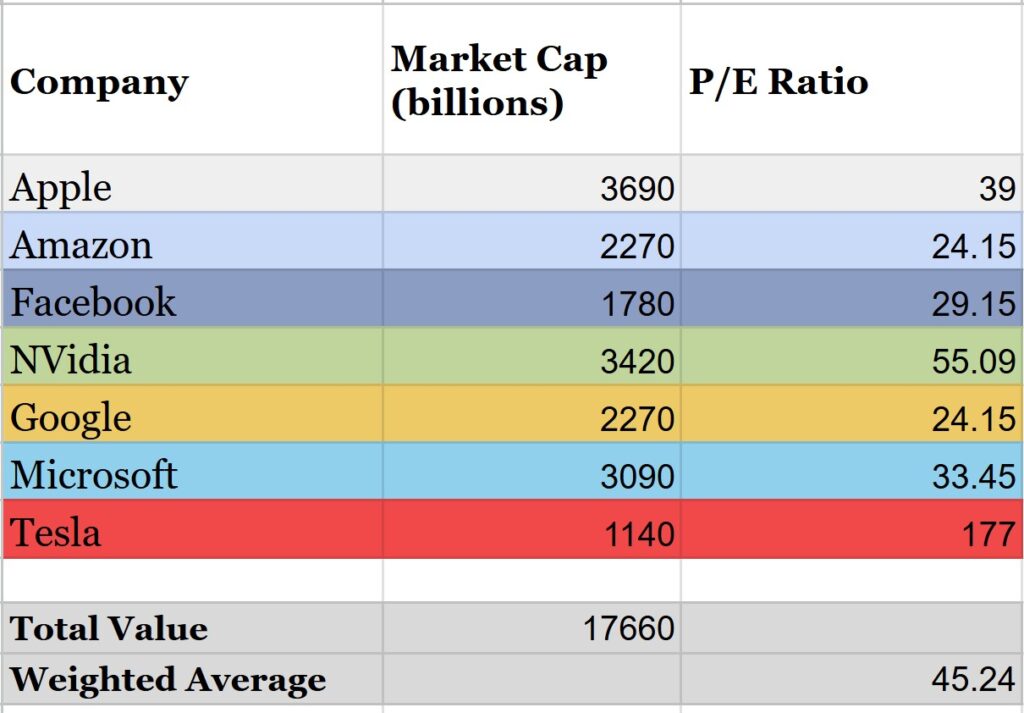
The current market euphoria is not evenly distributed across the S&P 500. A closer inspection reveals that roughly three-quarters of the recent growth in the index has been driven by just seven colossal technology companies, colloquially known as the "Magnificent Seven": Apple, Nvidia, Microsoft, Amazon, Alphabet (Google), Meta Platforms (Facebook), and occasionally Tesla. These companies collectively command a staggering market capitalization exceeding $17.66 trillion, representing over 25% of the entire S&P 500’s value. Their P/E ratios are significantly higher than the broader market, with a weighted average around 45, far surpassing the P/E of the remaining 493 companies in the index, which stands at a more modest 20.

The primary catalyst for this concentrated surge is the widespread belief in the transformative power of Artificial Intelligence. Recent breakthroughs in AI, particularly in generative AI and large language models, have demonstrated capabilities previously confined to science fiction, such as human-like reasoning, complex problem-solving, and creative generation across various domains. This has ignited a frenzy of investment and speculative interest, propelling the stock prices of companies perceived to be at the forefront of AI development.
Six of the Magnificent Seven are pouring hundreds of billions of dollars into building vast data centers and supercomputing infrastructure to power advanced AI models. Nvidia, the seventh, is a primary beneficiary of this spending spree, as it manufactures the specialized graphics processing units (GPUs) essential for AI computation. The unprecedented demand allows Nvidia to command premium prices, contributing significantly to its soaring valuation. Beyond infrastructure, industries across the spectrum anticipate a "new era of productivity," where AI-powered tools will streamline operations, enhance decision-making, and unlock unprecedented growth. Examples include AI assisting in legal document analysis, code debugging, medical diagnostics (e.g., melanoma identification), drug discovery, autonomous driving, and even the development of humanoid robots for mechanical labor. The vision is one of an "infinite workforce" of highly intelligent AI agents working without traditional labor costs, potentially removing a fundamental constraint on human productivity.
Uncertainty and Potential Headwinds
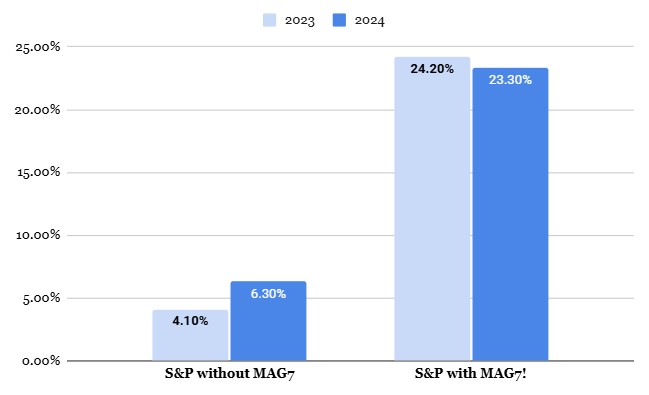
While the potential of AI is immense, the exact trajectory of its economic impact and the realization of forecast profits remain uncertain. Questions linger regarding cost overruns in AI infrastructure, intense competition among tech giants, and unforeseen challenges as AI capabilities advance. There are also broader societal implications to consider, such as potential mass unemployment dueructuring of the global workforce, and the concentration of wealth in the hands of a few tech titans. The historical record shows that technological revolutions, while ultimately beneficial, often bring periods of significant disruption and adjustment.
Historical Context and Economic Fundamentals
Drawing parallels to past market phenomena, such as the dot-com bubble of the late 1990s, offers a cautionary perspective. During that era, speculative fervor drove technology stock valuations to unsustainable levels based on future potential rather than current profits, leading to a significant market correction. While today’s leading tech companies generally possess robust business models and substantial current earnings, the rapid price appreciation and elevated P/E ratios in the AI sector raise similar questions about whether valuations have detached from realistic profit forecasts.
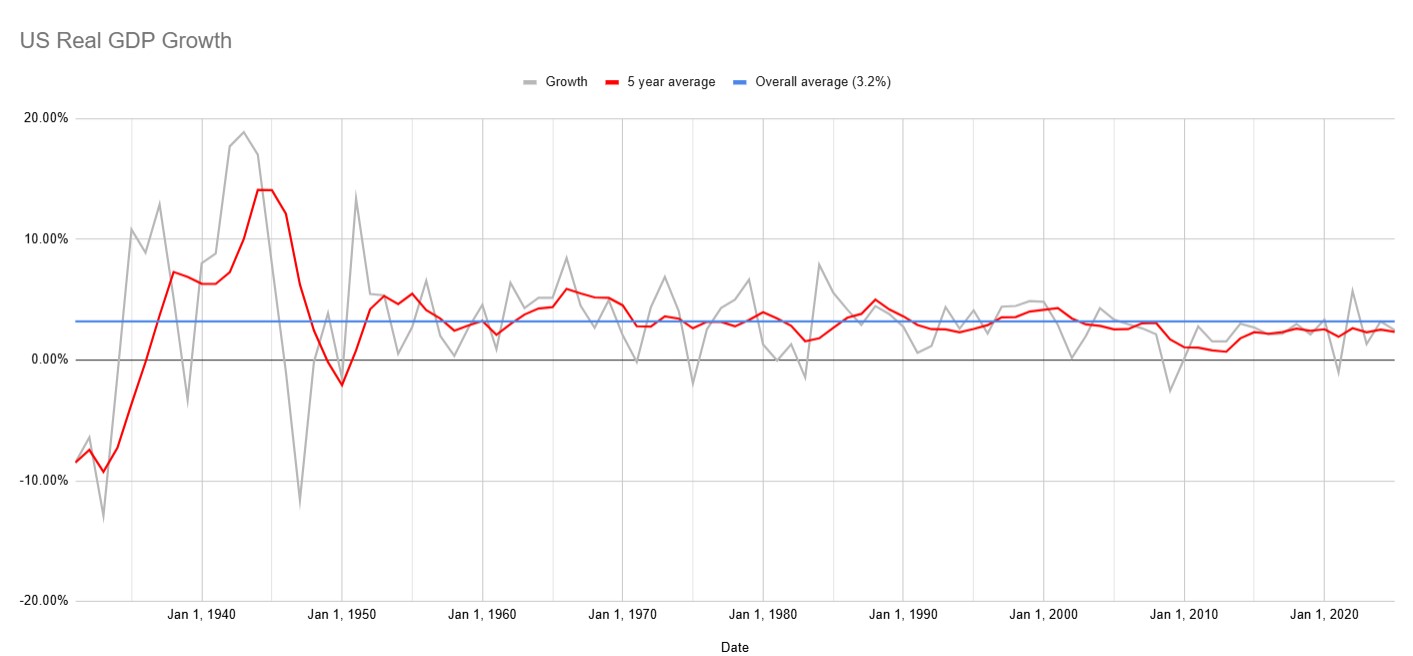
Historically, U.S. economic growth, as measured by real GDP, has averaged a remarkably consistent 3% after inflation, decade after decade. Interestingly, recent decades have seen a slightly slower average growth rate, which some analysts argue provides even less fundamental justification for the current rapid appreciation in the stock market, especially beyond the concentrated growth of the Magnificent Seven. This divergence between broader economic growth trends and concentrated market gains underscores the specific, technology-driven nature of the current market rally.
Expert Perspectives and Alternative Strategies
In an environment of elevated valuations, investors seek guidance from seasoned experts and explore diversified strategies. Vanguard, a leading investment management firm and a proponent of index fund investing, provides annual ten-year return forecasts. Their most recent projections suggest that international stocks and even bonds may outperform U.S. equities in the coming decade. This outlook is largely based on the lower P/E ratios observed in international markets; for example, Vanguard’s VXUS fund, which tracks international stocks, has a P/E ratio of approximately 15.9, indicating that these markets are trading at nearly a 50% discount compared to U.S. counterparts. However, it’s worth noting that Vanguard has made similar predictions in recent years, and the U.S. market, largely due to the AI boom, has continued to outperform.

Diversified portfolios, often managed by robo-advisors like Betterment, offer another approach. By allocating investments across various asset classes (e.g., stocks, bonds) and geographies (U.S., international), such portfolios aim to achieve slightly higher returns with lower volatility, along with potential tax advantages. A typical Betterment core portfolio has a weighted average P/E ratio of around 22, reflecting its broader diversification compared to a purely U.S. large-cap equity focus.
Even the venerable Warren Buffett, the "Oracle of Omaha," has signaled caution. Berkshire Hathaway, his investment conglomerate, is currently holding an extraordinary $334 billion in uninvested cash, a record sum. This substantial cash position, combined with Berkshire’s reluctance to even repurchase its own shares at their current P/E ratio (averaging around 21 in recent years), indicates Buffett’s view that attractive investment opportunities are scarce in today’s market.
For individual investors, decisions beyond stocks also gain prominence. The choice between paying off a mortgage and investing surplus cash in the stock market becomes more nuanced when expected stock returns are lower and mortgage interest rates are higher. For instance, a 7% mortgage presents a guaranteed 7% return on investment if paid off early, which can be highly competitive with potentially lower future stock market returns. This strategy also offers the psychological benefit and financial security of being debt-free.
The Enduring Principles of Investing
Despite the complexities and uncertainties of the current market, the fundamental principles of long-term investing remain constant. Market cycles of manias, panics, and corrections are an inherent part of the economic landscape. Attempting to time these fluctuations by selling out of the market in anticipation of a crash and hoping to buy back in at a lower price is a notoriously difficult and often losing game.
Over the long run, economies grow, and corporate earnings generally grow along with them. While future investors might choose to pay a lower multiple for those earnings than they do today, leading to a less aggressive growth path than the most optimistic projections, consistent investment will still yield positive returns. The key is to maintain a diversified portfolio, focus on long-term objectives, and avoid being swayed by daily news headlines or speculative frenzies. Instead, redirecting mental energy from market worries to productive activities, physical well-being, and enjoying the outdoors offers guaranteed, market-beating returns in terms of quality of life.
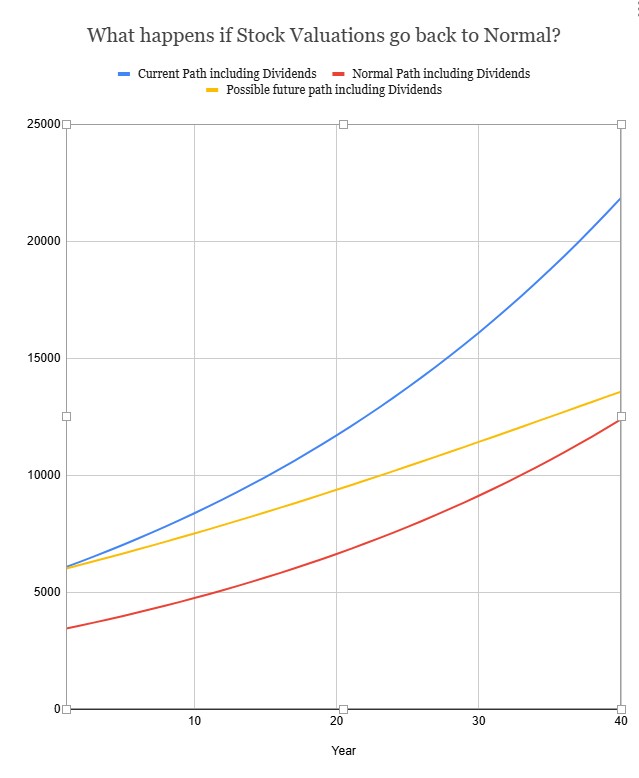
The current market environment, characterized by significant gains, high valuations, and the transformative potential of AI, presents both opportunities and challenges. While the future trajectory of AI’s impact and market valuations is inherently unpredictable, a disciplined, long-term investment approach grounded in diversification and an understanding of fundamental economic principles remains the most robust strategy for navigating these dynamic times.

