
What began as an innocuous five-star review for a heated vest on Amazon last winter unexpectedly propelled Mr. Money Mustache, the renowned proponent of financial independence, into the exclusive realm of Amazon Vine. This journey, initially perceived as a pathway to acquiring useful items for his construction business and the MMM-HQ Coworking space without direct cost, evolved into a nine-month saga that starkly illuminated the powerful psychological mechanisms Amazon employs, ultimately challenging his deeply held principles of frugality and environmental consciousness. The experience served as a compelling real-world experiment, exposing how even a financially independent individual can fall prey to subtle behavioral nudges and the addictive allure of perceived "freebies."
The Allure of Amazon Vine: An Invitation to the Inner Circle

Amazon Vine is an invitation-only program designed to generate honest and unbiased reviews for new and pre-release products. Members, known as "Vine Voices," receive products directly from participating vendors at no upfront cost, in exchange for submitting a review within a specified timeframe. The primary requirement is to review at least 80% of the items ordered to maintain membership status. For Amazon, Vine is a strategic tool to build trust and credibility around products, especially those newly launched, by providing comprehensive feedback from established, trusted reviewers. For reviewers, the promise is access to a diverse array of items, from household goods to electronics, tools, and apparel, seemingly without financial outlay.
Mr. Money Mustache, having already contributed numerous voluntary product reviews, viewed the invitation as a fortuitous alignment with his existing habits. "Who doesn’t like free stuff?" he mused, envisioning savings on legitimate purchases he would have made anyway. He promptly accepted the terms and conditions, unaware of the profound behavioral shifts and unexpected dilemmas that lay ahead. His initial objective was pragmatic: to save thousands of dollars on essential tools and materials for his ongoing construction projects and the development of the MMM-HQ, a coworking space. Indeed, this objective was partially met, yielding significant savings. However, this practical benefit soon became intertwined with a deeper, more insidious influence.
A Descent into the "Scarcity Brain" and the Online Casino Effect

The core of Mr. Money Mustache’s entanglement lay in the sophisticated psychological design of the Amazon Vine platform, which he identified as mirroring the principles outlined in Michael Easter’s book, Scarcity Brain. Easter’s work explores how modern platforms, from gambling sites to social media, exploit inherent evolutionary weaknesses in human psychology: the craving for novelty and the susceptibility to unpredictable rewards. MMM observed that Vine masterfully incorporated these elements, creating an environment akin to an online casino.
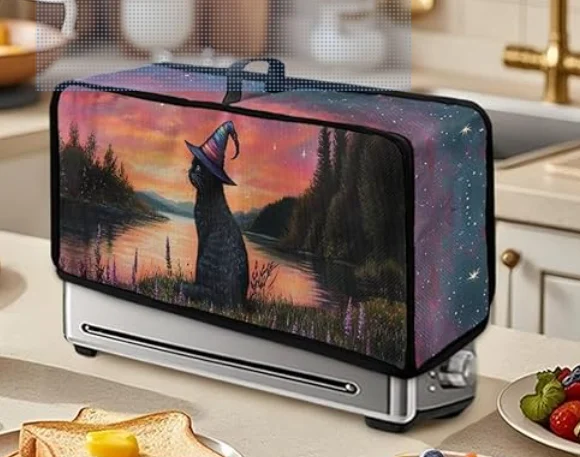
The Vine interface presented a constantly refreshed inventory of items, creating a perpetual sense of novelty and discovery. Each login offered a different selection, ranging from the genuinely useful to the utterly bizarre. This unpredictable availability of desirable products — sometimes a high-value EV charger or quality tools, other times "pink plastic disposable party plates" or a "toaster cover with a cat wearing a witch hat" — leveraged the principle of intermittent reinforcement. Just like a slot machine that pays out occasionally, the Vine platform ensured that enough valuable items appeared to keep reviewers engaged and checking back frequently. This unpredictability, coupled with the time-sensitive nature of many offers, triggered a powerful "fear of missing out" (FOMO), compelling MMM to check the Vine page daily, even when he had no specific need.
This gamified approach effectively hijacked his innate frugality instincts. The process of requesting items, waiting for delivery, unboxing, photographing, and batch-writing reviews became a weekly ritual, demanding time he would have preferred to dedicate to other pursuits. More concerning was the growing pile of "questionable items" and the associated waste from manufacturing and packaging, a direct contradiction to his core values of minimalism and environmental responsibility. Yet, despite this growing dissonance, the psychological grip of the program proved remarkably strong.

The Economic Realities: "Free" Comes with a Tax Bill
A crucial aspect of the "free" Vine products that often surprises participants is their tax implications. Amazon, in compliance with IRS regulations, tracks the Estimated Taxable Value (ETV) of all items received by Vine Voices. At the end of the year, members who receive products exceeding a certain threshold (typically $600) are issued a 1099-NEC (or 1099-MISC in some cases) for the retail value of these items. This means the "free" products are treated as taxable income.
For Mr. Money Mustache, this amounted to approximately $7,000 worth of items in 2025. Initially, he estimated a tax liability of around $1,750, based on his marginal tax rate of 25%. However, a critical piece of information, later gleaned from fellow Vine reviewers and online discussions, significantly altered this calculation. It is often possible to reduce the declared value of reviewed products for tax purposes, particularly if their resale value has been diminished by opening, testing, and reviewing. Some tax strategies allow for an 80% reduction in the estimated value, acknowledging that the products are no longer "new" or in their original, resalable condition. This adjustment could bring his tax bill down to a mere $50 for the "pure nonsense" items, effectively making the "free" items significantly cheaper, though still not entirely free.

The distinction between personal use and business use also played a role. Approximately 75% of the items MMM acquired were construction supplies or materials utilized for his business or the MMM-HQ renovations. These could potentially be categorized as business expenses, offsetting the taxable income. This highlights the complex financial nuances of participation, requiring careful record-keeping and tax planning.
The Critique of the System: From "VIP" to "Low-Wage Worker"
Beyond the psychological and financial aspects, MMM’s experience offered a critical perspective on the operational design of the Vine program itself. He noted several "reviewer-unfriendly features" that underscored the program’s true nature: reviewers are essentially performing labor for Amazon and its sellers, rather than being treated as VIPs.

The search functionality, for instance, was notoriously poor, lacking essential filters and sorting options. This deliberate design, MMM posited, forced reviewers to sift through endless pages of irrelevant or undesirable products, effectively maximizing exposure for all listed items while devaluing the reviewer’s time. Furthermore, the AI-based review evaluation system proved frustratingly bureaucratic and arbitrary. Tame, factual reviews would occasionally be flagged for "Not meeting our Community Standards" without specific explanations, necessitating tedious edits and re-submissions until the AI was "pacified."
These observations resonated with his prior "Uber Driving experiment" in 2017, where he similarly encountered systemic inefficiencies and a lack of agency as a worker. Both experiences reinforced his appreciation for "Fuck You Money" – the financial independence that allows one to choose work that is meaningful and empowering, rather than being subjected to systems designed by others without input or respect for one’s time.
Recovery and Broader Implications: Lessons in Self-Awareness

The "consumerism bender" eventually reached a turning point. Mr. Money Mustache recognized the habit was fueled by laziness and procrastination, diverting him from genuinely fulfilling activities like physical exercise, construction projects, and creative work. His recovery involved a deliberate behavioral hack: the "Keystone Habit" trick. By remapping his browser bookmark for the Vine page to his "Badassity Tracker"—a personal chart of daily habits—he transformed a temptation into a trigger for positive action. Instead of browsing for "free" stuff, clicking the bookmark now prompts him to engage in a quick exercise session.
This personal journey into the heart of Amazon Vine offers universal lessons:
- The Power of Behavioral Nudges: Even financially savvy individuals are susceptible to gamified systems that exploit psychological vulnerabilities. The constant novelty, intermittent rewards, and fear of missing out are potent motivators that can drive irrational behavior.
- The True Cost of "Free": Beyond the direct financial implications (taxes), there are significant indirect costs: time spent, mental energy expended, environmental impact of increased consumption, and the opportunity cost of neglecting more fulfilling activities.
- The Importance of Self-Reflection: MMM’s experience underscores the necessity of continuous self-assessment and questioning one’s habits and motivations. His willingness to acknowledge his folly and analyze it through a behavioral science lens provides a valuable case study.
- Avoiding the "One More Year Syndrome": The addictive nature of Vine, with its promise of incremental gains, mirrored the "One More Year Syndrome" he observes in others—the tendency to keep working or pursuing endeavors even when financially unnecessary, driven by habit, perceived benefits, or an inability to disengage.
- Environmental and Ethical Footprint: The article implicitly raises questions about the broader environmental impact of a system that incentivizes the creation and distribution of often superfluous products, contributing to increased consumption and waste.
Mr. Money Mustache’s candid account serves as a powerful reminder that vigilance against psychological manipulation is crucial, even in seemingly benign contexts like a product review program. His journey from an eager Vine Voice to a self-aware critic highlights the subtle yet pervasive ways modern consumer platforms can shape behavior, urging readers to scrutinize their own patterns and prioritize activities that genuinely align with their values and long-term well-being. Whether his public disclosure violates Vine’s terms and conditions remains to be seen, but the insights gained undoubtedly offer far greater value than any "free" item could.

