
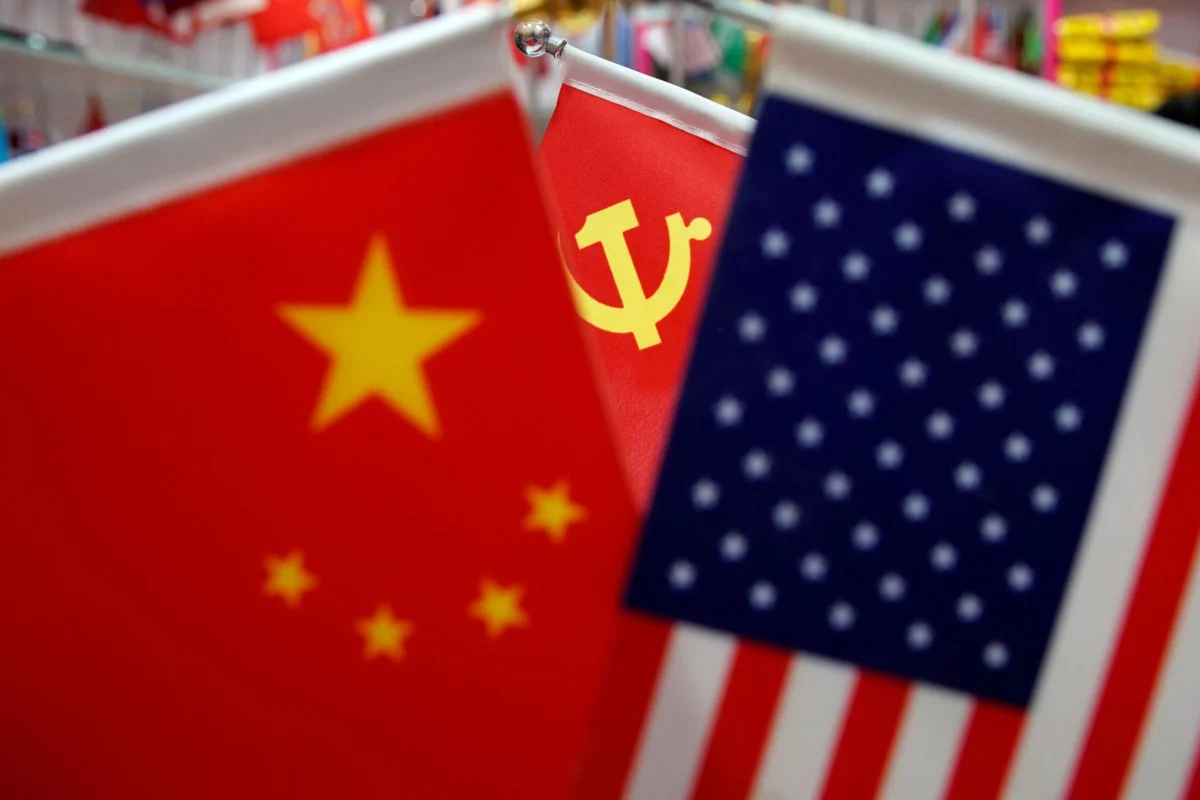
Washington D.C. — The United States and China have agreed to a temporary extension of their trade truce, preserving lower tariffs for a crucial two-month period and ensuring the continued flow of rare earth minerals vital for advanced industries. The announcement was made by U.S. Treasury Secretary Scott Bessent on Wednesday, local time, during an appearance on Fox News, coinciding with the arrival of Chinese President Xi Jinping in Washington, D.C., for a highly anticipated state visit through Friday. This limited extension signals a complex and often fraught relationship, where immediate de-escalation is sought even as fundamental disagreements persist.
The Announcement and Immediate Reactions
Secretary Bessent confirmed that the existing trade deal, initially forged between President Xi and then-President Donald Trump in South Korea last October, which was set to expire in November, would now be prolonged until January 10. This short-term reprieve aims to provide additional space for negotiations, though Bessent underscored that Beijing is expected to fulfill "more deliverables" during this period. The brevity of the extension, compared to widespread expectations of a six-month or longer renewal, immediately drew scrutiny from analysts and trade observers. Many had anticipated a more substantial commitment, reflecting the ongoing complexities and the perceived leverage Washington believes it holds.
The timing of Bessent’s announcement, as President Xi’s delegation touched down on U.S. soil, highlights the strategic messaging from the American side, setting a firm tone even as diplomatic pleasantries commenced. Footage from China’s state broadcaster captured President Trump and First Lady Melania Trump greeting President Xi and First Lady Peng Liyuan at the base of the Chinese leader’s jet. Notably, the carefully curated video focused on Xi and his wife accepting bouquets from two children, rather than a handshake between the two leaders, a subtle yet significant detail in diplomatic optics. Following the arrival, President Trump briefly addressed reporters, stating his intention to discuss the Iran war with President Xi, among "many other subjects," indicating a broader agenda beyond economic matters.
The initial reaction from Chinese state media was notably silent regarding Bessent’s comments on the trade truce, a typical approach that often precedes an official, coordinated response or reflects ongoing internal deliberations. However, President Xi, in an official readout upon his arrival, expressed confidence that his visit would yield "fruitful results" for both sides. He emphasized the importance of the two countries being partners, not rivals, and working towards a stable relationship where competition and differences are effectively managed. The readout, conspicuously, made no mention of tariffs, rare earths, or artificial intelligence—key contentious points that dominate the bilateral dialogue.
A History of Trade Tensions: From Tariffs to Truces
The current trade truce is a direct descendant of a tumultuous period marked by escalating tariffs and retaliatory measures that began in 2018 under the Trump administration. The initial rationale behind these tariffs was to address long-standing U.S. grievances regarding intellectual property theft, forced technology transfers, non-tariff barriers, and a substantial trade deficit. The U.S. imposed tariffs on hundreds of billions of dollars worth of Chinese goods, prompting China to retaliate with its own duties on American products, including agricultural goods. This "trade war" rattled global markets, disrupted supply chains, and introduced significant uncertainty for businesses worldwide.
A significant turning point came in October of last year when President Trump and President Xi agreed to a "Phase One" trade deal. This agreement, reached after protracted negotiations, involved China committing to purchase additional American agricultural and manufactured goods, energy, and services, alongside certain intellectual property protections and financial services reforms. In return, the U.S. agreed to roll back some tariffs and halt new ones. While hailed as a breakthrough, critics argued it left many structural issues unaddressed and that the core tariffs remained, impacting a wide range of consumer goods and industrial components. The deal provided a much-needed cooling-off period, preventing further escalation, but its underlying fragility was always a point of concern. The initial agreement was set for a one-year term, making its impending November expiration a critical juncture for both economies.
The Critical Role of Rare Earths
Beyond tariffs, the extension of the truce also explicitly covers the flow of rare earth minerals, a detail that underscores the strategic importance of these elements in modern industry and geopolitics. Rare earth elements are a group of 17 chemically similar metallic elements that are indispensable components in a vast array of high-tech products, including electric vehicles, wind turbines, smartphones, advanced defense systems, and medical imaging equipment. China dominates the global supply chain for these critical minerals, controlling approximately 80% of the world’s refined rare earth output. This dominance has long been a source of vulnerability for other nations, particularly the U.S., which relies heavily on Chinese imports for these essential materials.
Concerns about China potentially weaponizing its rare earth supply have surfaced periodically, especially during periods of heightened trade tensions. Restricting rare earth exports could cripple global manufacturing, particularly in sectors where the U.S. seeks to maintain technological leadership. Therefore, ensuring an uninterrupted flow of these minerals is not merely an economic consideration but a matter of national security and industrial resilience. However, as Jens Eskelund, president of the European Chamber of Commerce in China, pointed out, simply extending the trade truce does not fundamentally address the systemic challenges companies face, such as the lack of a standardized and transparent approach to applying for rare earths export licenses from China. This underlying regulatory uncertainty creates persistent risks for foreign businesses operating in or sourcing from China.

Beyond Trade: Broader Summit Agendas
While trade and tariffs remain central, the high-level summit between the two leaders encompasses a much broader agenda, reflecting the multifaceted nature of U.S.-China relations. Ahead of Xi’s arrival, U.S. Treasury Secretary Bessent held a significant meeting with Chinese Vice Premier He Lifeng in New York. A key outcome of this preliminary discussion, according to Bessent, was the exploration of establishing an alert system for artificial intelligence (AI) incidents. This initiative highlights the growing concern over the rapid advancement of AI and the potential for unintended consequences or misuse, necessitating a framework for communication and risk management between the world’s two leading AI powers.
AI, like rare earths, represents a critical arena of strategic competition. Both nations are investing heavily in AI research and development, seeing it as crucial for future economic growth, military advantage, and global influence. The proposal for an alert system, therefore, signifies a nascent effort to introduce a degree of stability and predictability into a potentially volatile technological arms race. However, the absence of Chinese counterparts at a summit dinner planned for Thursday, which U.S. tech executives are expected to attend, underscores the persistent divide and the difficulty in fostering comprehensive collaboration in sensitive technological domains.
Beyond AI, President Trump’s mention of discussing the Iran war with President Xi indicates the breadth of geopolitical issues on the table. China, as a permanent member of the UN Security Council and a significant energy importer, plays a crucial role in international efforts concerning Iran’s nuclear program and regional stability in the Middle East. Coordinating positions or at least understanding differing perspectives on such global flashpoints is a critical component of managing a complex bilateral relationship.
Industry Perspectives and Unresolved Challenges
The two-month extension, while providing a temporary reprieve, also serves as a stark reminder of the underlying dissatisfaction from the U.S. side regarding China’s trade practices. Scott Kennedy, a senior adviser at the U.S.-based think tank Center for Strategic and International Studies (CSIS), noted that the limited duration "suggests to me the U.S. is unsatisfied with China’s offers and wants to keep the heat on." Kennedy further speculated that this approach might also serve the purpose of increasing the likelihood of President Xi attending the upcoming G20 summit in Miami, offering another high-level platform for direct engagement.
From China’s perspective, senior researcher Dong Shaopeng from Renmin University of China emphasized that discussions on trade issues should proceed on the basis of mutual benefit, eschewing actively imposed restrictions. He expressed optimism that the trade truce could be "continually improved and extended," signaling Beijing’s desire for sustained stability and predictable trade relations. However, the requirement for "more deliverables" from Beijing indicates that the U.S. is seeking concrete actions and reforms rather than just extended dialogue. These deliverables likely encompass further market access, stronger intellectual property enforcement, and reductions in industrial subsidies—issues that have been at the core of U.S. complaints for years.
For global businesses, especially those deeply integrated into U.S.-China supply chains, the short extension offers only limited comfort. While avoiding an immediate return to higher tariffs, the continued uncertainty complicates long-term planning, investment decisions, and supply chain diversification strategies. Companies involved in manufacturing, agriculture, and technology sectors remain particularly vulnerable to the fluctuating political landscape between the two economic giants.
The Path Forward: Navigating a Complex Relationship
The current summit and the temporary trade truce extension are part of a broader, ongoing diplomatic dance between the world’s two largest economies. President Trump had previously visited Beijing in May, and potential future meetings include an Asia-Pacific Economic Cooperation (APEC) meeting in Shenzhen in November and the aforementioned G20 summit in Miami in December. These platforms offer crucial opportunities for leaders to engage directly, manage crises, and potentially forge agreements that could shape global economic and geopolitical trajectories.
President Xi’s delegation for the visit included high-ranking officials such as Politburo Standing Committee Member Cai Qi and China’s top diplomat Wang Yi, signaling the utmost importance Beijing places on these discussions. The composition of the delegation underscores the comprehensive nature of the issues being addressed, ranging from economic policy to foreign affairs and national security.
The limited two-month extension to the trade truce is not a resolution but a postponement. It buys time for further negotiations and provides a brief window of stability for markets, but it also underscores the deep-seated structural issues that remain unaddressed. The U.S. clearly intends to maintain pressure on China to meet its commitments and implement broader economic reforms. Conversely, China seeks a relationship based on mutual respect and benefit, wary of perceived attempts at containment or unilateral demands. The delicate balance between competition and cooperation, as articulated by President Xi, will continue to define this crucial bilateral relationship, with implications resonating across the global economy and international relations for years to come.

