
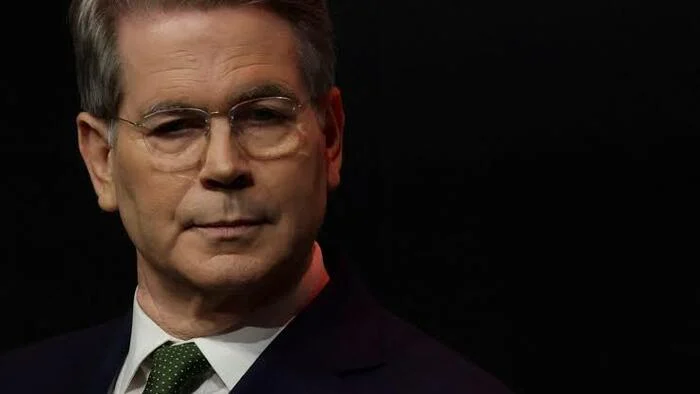
Treasury Secretary Scott Bessent is reportedly a leading candidate for President Donald Trump’s newly proposed "AI czar" position, a development that underscores the administration’s escalating focus on artificial intelligence governance and its intersection with national security and economic stability. This potential appointment follows Bessent’s increasingly vocal stance on AI regulation, most notably his recent public admonishment of "Doomsday Dario" and a frontier AI company for what he characterized as an attempt at regulatory capture and a demand for a "liability shield" from the US government. The move signals a potential consolidation of AI policy under a single, high-level official, reflecting a growing recognition within the Trump administration of AI’s transformative, yet potentially disruptive, global impact.
The Genesis of an AI Czar: Responding to a Rapidly Evolving Landscape
The creation of an "AI czar" role within the executive branch is not unprecedented in the history of US government, which has previously appointed "czars" for issues ranging from drugs to energy, often to streamline policy and command resources across disparate agencies. For AI, the rationale is particularly compelling given the technology’s pervasive influence across virtually all sectors – from defense and finance to healthcare and critical infrastructure. The rapid advancements in generative AI, large language models, and autonomous systems have outpaced existing regulatory frameworks, prompting calls for more coordinated and proactive governance.
President Trump’s intention to appoint an AI czar suggests a desire to centralize and expedite policy development, overcoming the bureaucratic inertia often associated with inter-agency coordination. This approach aligns with the administration’s broader strategy to assert American leadership in technological innovation while simultaneously mitigating potential risks. Observers suggest that such a role would involve shaping national AI strategy, coordinating research and development efforts, overseeing ethical guidelines, and engaging with international partners on global AI norms.
Scott Bessent’s Ascendance in AI Policy: From Treasury to Technology
Scott Bessent, currently serving as Treasury Secretary, has not traditionally been viewed as a primary voice in technology policy. However, his engagement with AI matters has intensified significantly over the past year. This shift was largely catalyzed by direct appeals from financial institutions, which expressed profound concerns to Bessent regarding the potential vulnerabilities that advanced AI systems could introduce into their complex, interconnected networks. The financial sector, a bedrock of the global economy, is particularly sensitive to systemic risks, and the advent of sophisticated AI tools capable of rapid, autonomous decision-making presents both unprecedented opportunities and existential threats. From algorithmic trading anomalies to AI-powered cyberattacks, the potential for disruption necessitated a high-level governmental response.
Bessent’s background as a seasoned investor and former hedge fund manager provides him with a unique perspective on risk assessment, market dynamics, and the intricate interplay between technology and economic stability. His understanding of financial markets’ vulnerabilities to AI-driven threats, such as flash crashes induced by AI trading algorithms or sophisticated fraud schemes leveraging deepfakes and advanced analytics, has evidently positioned him as a pragmatic voice on AI’s economic implications. This expertise could prove invaluable in a role focused on balancing innovation with risk management, especially as AI continues to reshape global economic structures.
The "Doomsday Dario" Episode and the Liability Shield Debate
A pivotal moment that catapulted Bessent into the AI policy spotlight was his recent public confrontation with "Doomsday Dario," a moniker he applied to a prominent figure in the AI community. Bessent strongly condemned an "apocalyptic essay" attributed to this individual, which he characterized as an thinly veiled attempt at "regulatory capture." The core of Bessent’s criticism revolved around the concept of a "liability shield" – a demand from certain frontier AI companies for governmental protection from legal responsibility for potential harms caused by their advanced AI systems.
"What did they try to do last week? It was, well there’s a 10 percent chance that we destroy the world, but we want the government to give us a liability shield and that’s good business for them, bad business for the American people," Bessent reportedly stated on CNBC earlier this week. This forceful rejection highlights a fundamental tension in AI development: the desire for rapid innovation versus the imperative for accountability and public safety. Bessent’s stance signals that the US government, under his influence, would not readily absolve AI developers of responsibility for the potentially catastrophic outcomes of their creations. This position aligns with a broader sentiment among policymakers globally that AI companies, particularly those developing frontier models, must internalize the societal risks associated with their technologies rather than externalizing them onto the public or the state. The debate over liability shields touches upon complex legal and ethical questions, including intellectual property, data privacy, algorithmic bias, and the very definition of agency when AI systems cause harm.
Charting a Course for Global AI Diplomacy: The US-China Dialogue
Beyond domestic policy, Bessent has also emerged as a key figure in international AI diplomacy. This week, he held an early dialogue with Chinese Vice Premier He Lifeng on the sidelines of the UN General Assembly, a precursor to President Trump’s anticipated meeting with Chinese leader Xi Jinping. Among the critical topics discussed was the potential establishment of a US-China "notification mechanism" designed to facilitate communication about AI incidents that pose threats to national security. This initiative is part of broader discussions aimed at formalizing a US-China dialogue on AI.
The geopolitical landscape of AI is largely defined by the intense competition between the United States and China, two global superpowers vying for technological supremacy. Both nations are investing massively in AI research, development, and deployment, seeing it as a critical component of future economic power and military advantage. However, the potential for AI-driven conflicts, whether through autonomous weapons systems or sophisticated cyber operations, necessitates channels for de-escalation and risk management. A "notification mechanism" could serve as a vital tool for preventing miscalculation or unintended escalation during AI-related incidents, similar to Cold War-era hotlines established to manage nuclear risks. This diplomatic outreach, led by Bessent, indicates a recognition that despite fierce competition, some level of cooperation and communication is essential to ensure global stability in an AI-powered world. Such a mechanism would require unprecedented levels of trust and transparency between the two nations, particularly concerning sensitive national security information related to AI deployment.
Contenders and the Decision-Making Process
While Semafor has identified Bessent as a frontrunner, the decision for President Trump’s AI point person is not final. The original article notes that Trump is known to sometimes favor "dark-horse candidates" in his appointments. Other prominent names reportedly in consideration for the AI czar position include Michael Kratsios, Director of the White House Office of Science and Technology Policy (OSTP), a long-standing Trump ally with a strong background in tech policy, and Scott Kupor, Director of the Office of Personnel Management (OPM), who previously served as a managing partner at the prominent venture capital firm a16z (Andreessen Horowitz) before joining the government.
Kratsios, having served in the OSTP, possesses deep institutional knowledge of federal science and technology initiatives and has been instrumental in shaping previous administrations’ AI strategies, including the American AI Initiative. His experience would offer continuity and a focus on scientific and technological advancement. Kupor, with his extensive venture capital background, brings a strong understanding of the AI industry’s entrepreneurial ecosystem, investment trends, and the challenges faced by startups. His appointment might signal a desire to foster innovation and bridge the gap between government policy and private sector growth. Each candidate brings a distinct set of experiences and perspectives, and Trump’s ultimate choice will likely reflect his administration’s primary priorities for AI governance – be it national security, economic competitiveness, ethical development, or a blend of these.
Despite the speculation, White House spokesman Kush Desai reiterated the administration’s standard position: "Any reporting about personnel decisions that have not been officially announced by the administration should be regarded as baseless speculation." This formal response underscores that the process is ongoing and the final decision rests solely with the President.
Implications of a Bessent Appointment
If Scott Bessent were ultimately tapped for the AI czar role, his appointment would carry significant implications across several domains.
For AI Policy Direction: Bessent’s background suggests a strong emphasis on risk management, economic stability, and national security in AI policy. His focus on preventing systemic vulnerabilities, particularly in the financial sector, could translate into stringent regulatory approaches for high-impact AI applications. His recent statements indicate a lean towards holding AI developers accountable, potentially influencing future legislation regarding AI liability and safety standards. This might mean increased scrutiny for companies developing frontier AI models, pushing them to invest more in safety research and robust testing protocols.
For the Tech Industry: AI companies could anticipate a more direct and possibly more demanding regulatory environment. The "liability shield" warning from Bessent suggests that the era of unfettered AI development without significant accountability may be drawing to a close. This could spur greater corporate responsibility initiatives, but also potentially raise concerns among some innovators about stifling regulation. However, a clear regulatory framework, even if stringent, can also provide certainty and help legitimate companies differentiate themselves from less responsible actors.
For US-China Relations: Bessent’s active engagement with Chinese officials on AI dialogue indicates a pragmatic approach to managing geopolitical competition. His appointment could elevate the importance of diplomatic channels for AI risk reduction, potentially leading to more formalized frameworks for managing AI-related incidents. This would be a crucial development in an era marked by increasing technological rivalry and a growing awareness of AI’s dual-use nature. The success of any notification mechanism would, however, depend on sustained political will and a commitment to transparency from both sides.
For the Executive Branch Structure: Bessent’s potential dual role, holding a Cabinet position while also serving as AI czar, mirrors the precedent set by Interior Secretary Doug Burgum, who simultaneously holds the "energy czar" moniker. This model suggests that the administration values deep expertise and direct executive authority in critical areas, allowing for swift action and integrated policy-making across traditional departmental boundaries. It could also signify a recognition that AI is not merely a technological issue but a cross-cutting challenge that requires a holistic government-wide approach.
Conclusion: A New Era of AI Governance
The potential appointment of Scott Bessent as President Trump’s AI czar marks a significant inflection point in the US government’s approach to artificial intelligence. It signals a move towards more centralized, proactive, and risk-aware governance, particularly in areas touching upon national security and economic stability. Bessent’s unique background, combining financial acumen with a newfound assertiveness in AI policy, positions him as a formidable figure in shaping America’s AI future. As the world grapples with the profound implications of advanced AI, the establishment of such a role reflects an urgent need for strategic leadership to navigate the opportunities and perils of this transformative technology on both domestic and international fronts. The coming months will reveal the final decision and the ultimate direction of US AI policy under this new executive architecture.

