
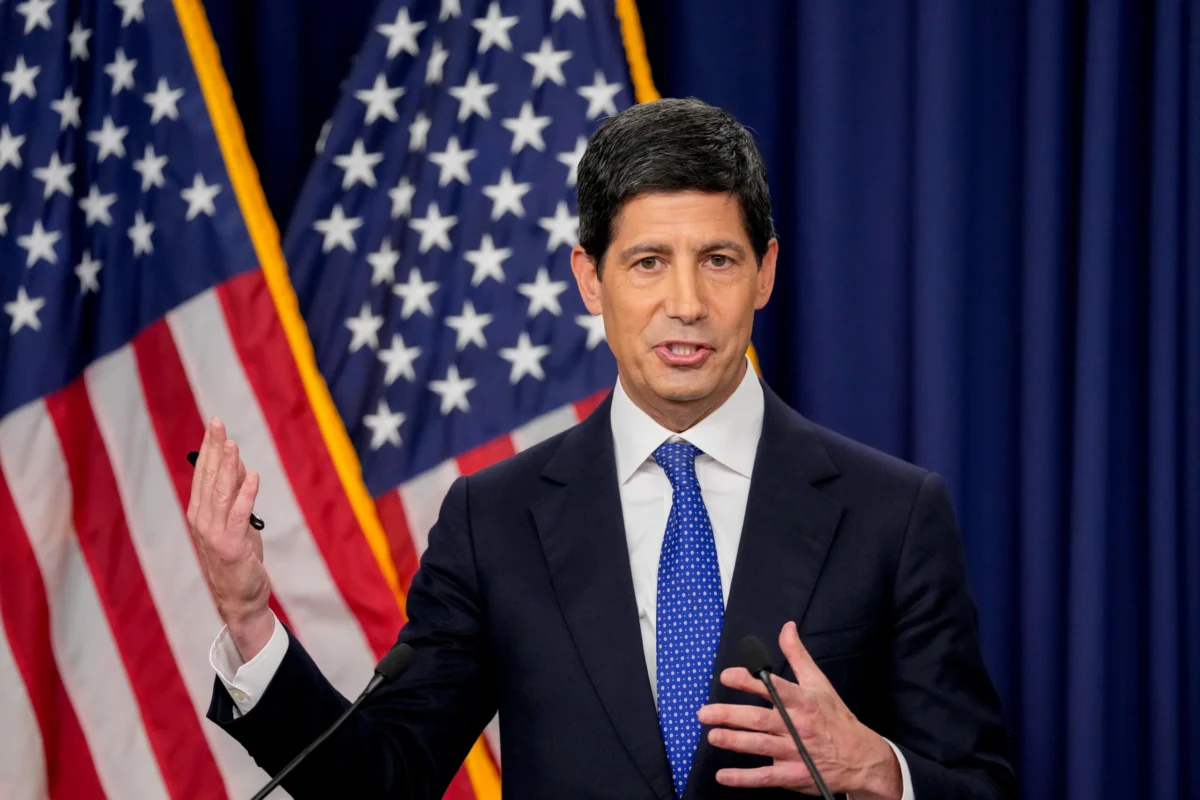
Washington D.C. — The Federal Reserve, on Wednesday, delivered a widely anticipated interest rate hike, marking another significant step in its persistent campaign to curb stubbornly high inflation. Following the Federal Open Market Committee (FOMC) meeting, Chairman Kevin Warsh conveyed a notably terse and resolute message during his press conference, underscoring the central bank’s staunch commitment to achieving price stability, even as signs of economic growth strengthen. The move, coming amidst a complex global economic landscape, has left financial markets grappling with the prospect of an extended period of monetary tightening.
The Latest Monetary Policy Adjustment
The Federal Reserve’s unanimous decision to raise the benchmark federal funds rate by 25 basis points places the target range between 5.25% and 5.50%. This marks the ninth consecutive rate hike since the tightening cycle began in early 2025, bringing the cumulative increase to 475 basis points. The FOMC statement accompanying the decision reiterated that while inflationary pressures have shown some signs of moderation in certain sectors, overall price stability remains elusive, warranting continued vigilance. The committee noted that the labor market remains robust, and economic activity has been expanding at a moderate pace, providing the flexibility for further policy adjustments if deemed necessary.
Chairman Warsh’s post-meeting news conference, held at the Marriner S. Eccles Federal Reserve Board Building, was characterized by a stern and unambiguous tone. He emphasized that the Fed’s primary mandate is to achieve maximum employment and price stability, and that the latter is currently the more pressing concern. "Our commitment to bringing inflation back to our 2% target is unwavering," Warsh stated, his remarks devoid of any hints of an imminent pause in the tightening cycle. "While we acknowledge the progress made, the job is not yet done. We will continue to act decisively, guided by the incoming data, to ensure that inflation expectations remain anchored and that price stability is restored for the long-term health of the American economy."
Economic Landscape: Mid-2026 Snapshot
The backdrop to the Fed’s latest decision is a nuanced economic picture. The labor market, despite the cumulative impact of rate hikes, remains remarkably resilient. The unemployment rate, hovering around 4.0%, signifies a tight job market, with robust wage growth in many sectors. This strength, while positive for workers, has contributed to persistent inflationary pressures, particularly in services. The latest data from the Bureau of Labor Statistics indicated average hourly earnings rose by 4.8% year-over-year in August, well above the rate consistent with the Fed’s 2% inflation target.
Inflation, specifically the core Personal Consumption Expenditures (PCE) price index, the Fed’s preferred measure, registered 3.5% year-over-year in July, stubbornly above the 2% target. This persistent inflation has been fueled by a combination of factors, including elevated energy prices, ongoing supply chain bottlenecks in key manufacturing sectors, and strong consumer demand. While commodity prices have eased from their 2024 peaks, the pass-through effects of earlier cost increases, coupled with higher labor costs, continue to filter through the economy.
Despite the inflationary headwinds, economic growth has shown signs of renewed vigor. Chairman Warsh noted that growth "has been strengthening since the start of the summer," referencing indicators such as increased consumer spending on discretionary goods and services, a modest uptick in business investment, and a rebound in certain manufacturing indices. Second-quarter GDP growth for 2026 was revised upwards to an annualized 2.3%, exceeding initial expectations. This unexpected resilience in economic activity provides the Fed with additional room to maneuver, allowing it to continue its aggressive fight against inflation without immediately tipping the economy into recession. However, it also means that the economy might be able to absorb higher rates for longer, potentially prolonging the tightening cycle.
A Chronology of Monetary Tightening: The Path to 5.50%
The Federal Reserve embarked on its current tightening cycle in February 2025, initiating a series of aggressive rate hikes in response to inflation that had surged well beyond its target following the post-pandemic economic rebound and geopolitical disruptions. The initial hikes were steep, with several 50-basis-point increases in the first half of 2025 as the Fed moved swiftly to catch up with rapidly rising prices. By the end of 2025, the federal funds rate had reached 4.00%.
As 2026 began, the pace of hikes moderated slightly, shifting to 25-basis-point increments, but the commitment remained firm. Chairman Warsh, who assumed the chairmanship in early 2026, inherited an economy grappling with entrenched inflation. His tenure has been marked by a consistent, hawkish stance, emphasizing the Fed’s independence and its singular focus on price stability. This latest hike in September brings the total number of increases under his leadership to four, firmly establishing his resolve. The consistent messaging from the FOMC under Warsh has aimed to recalibrate market expectations, signaling that the Fed is prepared to endure short-term economic discomfort to achieve its long-term objectives.
Market Reactions and Expert Interpretations
Financial markets reacted to the Fed’s announcement with a mix of initial volatility and a subsequent recalibration of expectations. Equity markets, after an initial dip, showed some resilience, but investor sentiment remained cautious. The S&P 500 briefly fell by 0.8% immediately after the announcement before recovering some ground to close down 0.3% for the day.
Andrzej Skiba, head of the BlueBay U.S. Fixed Income team at RBC Global Asset Management, observed the immediate impact: "Risk assets were not enamored with the outcome of today’s FOMC. Hopes of limited hikes ahead faded in the face of the Fed’s resolve to address inflation. Still, after the initial reset, we believe Chair Warsh’s clear messaging could actually help support Treasury prices further out the curve." Skiba’s analysis suggests that while the near-term outlook for risk assets might be challenging, the clarity from the Fed could reduce uncertainty for longer-term fixed income investors, as a clear path to inflation control could stabilize future expectations. Indeed, longer-dated Treasury yields, particularly the 10-year, saw a slight initial uptick before stabilizing, reflecting this nuanced view.
Economists offered varying perspectives on the Fed’s strategy. Mike Madowitz, principal economist at the Roosevelt Institute, a liberal think tank, expressed concerns about the broader implications of the Fed’s aggressive posture. "This is unlikely to be the end of Fed rate hikes," Madowitz stated. "It’s hard to look at roughly 4% unemployment and a core PCE forecast of 3.5% and say the Fed shouldn’t be focused on inflation. But monetary policy looks like a really costly way to solve this problem right now." Madowitz’s comments highlight the ongoing debate about whether monetary policy alone can effectively tackle inflation driven by a multitude of factors, including supply-side constraints and fiscal policy, without incurring significant costs in terms of economic growth and employment. He argued that alternative approaches, such as targeted supply-side investments or fiscal measures, might offer less costly solutions.
Krishna Guha, head of economics and central bank strategy at Evercore ISI, commended Chairman Warsh’s communication strategy. "Warsh’s press conference was coherent, confident and consistently hawkish without coming across as crazily so," Guha noted. "He balanced a stern but disciplined message on inflation with an upbeat take on growth which he said has been strengthening since the start of the summer." Guha’s assessment underscores the delicate tightrope walk the Fed chairman is navigating: maintaining credibility in the inflation fight while reassuring markets and the public that the economy remains robust enough to withstand further tightening without a severe downturn. This calibrated hawkishness aims to manage expectations without sparking undue panic.
Implications for Businesses, Consumers, and Global Markets
The Federal Reserve’s continued tightening has profound implications across the economy. For consumers, higher interest rates translate directly into increased borrowing costs for mortgages, auto loans, and credit card debt. The average 30-year fixed-rate mortgage, for instance, has risen to over 7.5%, placing additional pressure on housing affordability and potentially cooling the still-hot real estate market. This also means a larger portion of household budgets will be allocated to debt servicing, potentially curbing discretionary spending and slowing economic activity.
Businesses, particularly small and medium-sized enterprises (SMEs), face higher costs for capital, which could dampen investment and expansion plans. Corporations with significant variable-rate debt may see their interest expenses rise, impacting profitability. Sectors sensitive to interest rates, such as technology, real estate, and durable goods manufacturing, are likely to experience increased headwinds. However, financial institutions, benefiting from wider net interest margins, might see improved profitability in the near term.
Globally, the Fed’s hawkish stance strengthens the U.S. dollar, which can make American exports more expensive and imports cheaper. This impacts trade balances and can exert pressure on other central banks to tighten their own monetary policies to prevent excessive currency depreciation and imported inflation. Emerging markets, in particular, may face challenges as capital flows back to the U.S. in search of higher yields, potentially straining their financial systems. The European Central Bank and the Bank of England are also grappling with persistent inflation, though their respective economic contexts and policy responses may diverge from the Fed’s aggressive posture.
The Path Ahead: Navigating Uncertainty
The Federal Reserve’s current trajectory suggests that the fight against inflation is far from over. The latest "dot plot" — the FOMC members’ projections for future interest rates, which Warsh’s Fed has continued to use as a guidance tool — indicates that a majority of officials foresee at least one more rate hike by the end of 2026, pushing the terminal rate above 5.50%. A significant minority even anticipate two further hikes. This suggests that the current tightening cycle could extend well into late 2026 or even early 2027, depending on how economic data evolves.
The Fed will be meticulously monitoring a range of economic indicators in the coming months, including monthly inflation reports (CPI and PCE), labor market statistics (job growth, wage pressures, unemployment claims), and gauges of consumer spending and business investment. Any significant deceleration in inflation, particularly core inflation, or a noticeable weakening in the labor market could prompt the Fed to pause its tightening. Conversely, continued resilience in growth and persistent inflationary pressures would reinforce the need for further action.
The primary risk remains the potential for the Fed to overtighten, pushing the economy into a recession, or to underestimate the stickiness of inflation, requiring even more aggressive action down the line. Chairman Warsh’s coherent and confident messaging aims to minimize this uncertainty by clearly articulating the Fed’s priority and commitment. As the global economy continues to navigate a complex post-pandemic recovery and ongoing geopolitical shifts, the Federal Reserve’s steadfast resolve under Chairman Warsh underscores a long and potentially challenging road ahead for achieving lasting price stability.

