

Brian and Michael, two 34-year-old professionals residing in central Connecticut, represent a growing demographic of high-earning Americans who find themselves caught between significant career success and persistent financial instability. Despite a combined gross annual household income of approximately $167,544, the couple faces a complex web of consumer debt, rising housing costs, and the psychological pressure of delayed milestones. As they approach their tenth anniversary, their situation highlights the broader economic challenges facing Millennials in the Northeastern United States, particularly regarding the transition from high-cost renting to sustainable homeownership.

The Financial Profile: Income vs. Liability
The couple’s financial architecture is characterized by stable, public-sector employment with robust benefits, contrasted against significant short-term liabilities. Brian serves as a quality assurance manager for a state-run hospital, while Michael operates as a project coordinator for a state behavioral health agency, supplemented by a secondary role as a disability leadership coordinator.
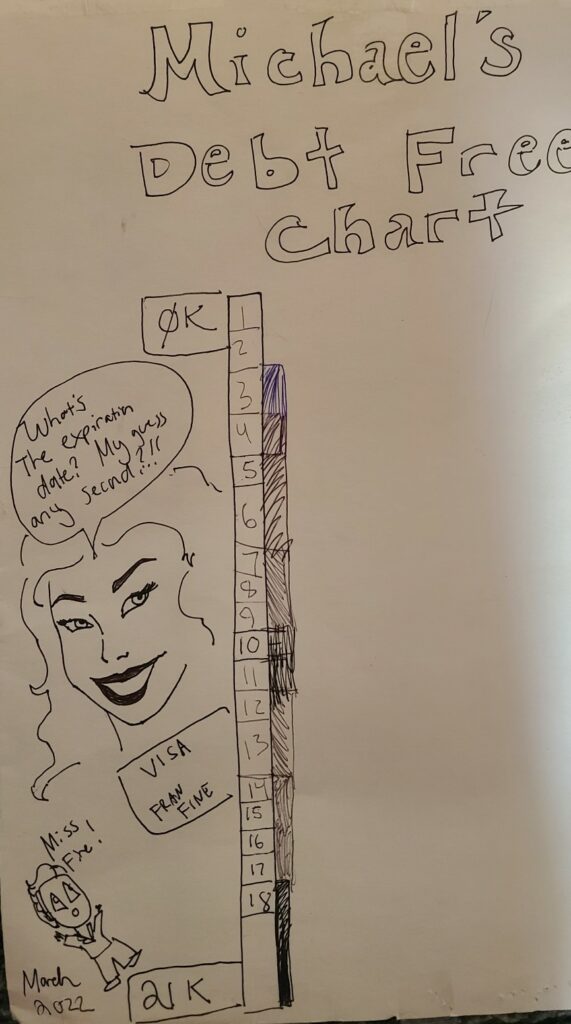
Their total net annual income, after taxes and benefit deductions, stands at $109,455.42. However, this liquidity is currently hampered by $28,259 in consumer debt across three credit cards. A critical factor in their immediate financial timeline is the expiration of 0% and 0.99% introductory interest rates on two of Brian’s accounts in November 2023. If these balances—totaling over $18,000—are not addressed before the deadline, they will be subject to interest rates as high as 17.99%, potentially creating a debt spiral that could jeopardize their long-term goals.

On the asset side, the couple holds approximately $91,250 in various accounts. This includes Michael’s 401k ($36,992), Brian’s former 401k ($19,305), and a projected state pension for Brian estimated to pay $4,150 monthly upon retirement in 2054. However, their liquid "emergency" savings are relatively low at $9,000, representing only about five weeks of their current $8,035 monthly expenditure.
Chronology of Financial Displacement: 2022-2023
The current financial strain is largely the result of a turbulent twelve-month period beginning in late 2022. For eight years, the couple occupied a 600-square-foot studio apartment with a monthly rent of $945. This low overhead allowed for significant debt repayment, including Brian’s successful liquidation of $58,000 in student loans.

The trajectory shifted abruptly when the couple was forced to navigate a volatile rental market following the sale or redevelopment of their previous residence. Over a 3.5-month period, they transitioned into a two-bedroom, two-bathroom luxury apartment in a refurbished industrial mill. While the move provided necessary space for professional home offices and personal "treasures," it resulted in a 111% increase in housing costs, with rent jumping to $2,000 per month.
This move coincided with several "predictable emergencies," including high-cost car repairs for their 2007 Mercedes and Subaru—both of which have surpassed 175,000 miles—and significant veterinary expenses for two new kittens with chronic health issues. These compounding factors halted their progress toward a home down payment and forced a return to credit card reliance.

Supporting Data: The Connecticut Economic Context
The challenges faced by Brian and Michael are mirrored in state-level economic data. According to recent housing market reports, Connecticut has experienced some of the sharpest rent increases in the country, driven by low inventory and an influx of residents from the New York and Boston metropolitan areas. The couple’s electricity costs, averaging $235 per month, also reflect Connecticut’s status as a state with some of the highest utility rates in the continental United States.
Furthermore, the "shame" expressed by both partners regarding their financial status is a documented phenomenon among Millennials. A 2023 study on "money dysmorphia" suggests that high-earning professionals often feel behind their peers due to the visible markers of wealth—such as homeownership—being increasingly decoupled from income levels due to high interest rates and inflated property values.
Strategic Analysis of Debt and Investment
Financial analysts and consultants, including Elizabeth Willard Thames (known professionally as Liz Frugalwoods), suggest that the couple’s primary hurdle is not income, but the lack of a rigorous expense tracking system. With a net income exceeding $109,000 and reported expenses of $96,414, the couple should theoretically have a $13,041 annual surplus. The discrepancy between this mathematical surplus and their current debt load suggests "leaky" spending in discretionary categories.
Debt Repayment Hierarchy
The immediate strategy for the couple involves a "sprint" to eliminate high-interest liabilities. Analysts recommend a temporary "spending detox," categorizing all costs into Fixed, Reducible, and Discretionary. By eliminating discretionary spending—such as eating out ($200/mo), home goods ($200/mo), and various subscriptions—the couple could potentially pivot $4,456 per month toward debt. At this rate, they would be consumer debt-free within approximately seven months, effectively neutralizing the November interest rate "cliff."

Retirement Optimization
Brian’s access to a "triple crown" of retirement vehicles—a 403b, a 457b, and a state pension—places the couple in an elite tier of retirement security. Specifically, the 457b plan offers a unique advantage: funds can be withdrawn penalty-free upon separation from the employer, regardless of age. This makes it an ideal vehicle for their goal of "athletic success and travel" in early-to-mid retirement.
Broader Impact and Future Implications
The case of Brian and Michael serves as a bellwether for the "middle-class trap" in high-cost-of-living (HCOL) areas. Their desire for homeownership is currently at odds with their lifestyle costs and debt obligations. In the current economic climate, the transition from renter to owner requires more than just a high salary; it requires a strategic "reset" of the debt-to-income ratio.

The Homeownership Threshold
For Brian and Michael to achieve their ten-year goal of owning a rural property with a garden, they must first establish a "buffer" that prevents them from returning to credit card debt when emergencies arise. Analysts suggest that a home down payment should only be pursued after the establishment of a six-month emergency fund (approximately $40,000 to $48,000 based on current spending).
Educational and Career Decisions
A significant point of internal debate for the couple is the pursuit of a master’s degree for Brian. From a purely fiscal perspective, such an investment is only recommended if it carries a guaranteed, iron-clad salary increase that outweighs the tuition costs and the opportunity cost of time. In the public sector, where salary scales are often rigid, the Return on Investment (ROI) for advanced degrees must be calculated with precision to avoid adding to the debt burden.

Conclusion: A Path to the "Next Level of Adulting"
While Brian and Michael feel "behind," an objective analysis of their balance sheet reveals a foundation of strength. They possess high-value career skills, comprehensive healthcare and pension benefits, and a shared commitment to financial transparency. Their "adulting" crisis is less a result of failure and more a reflection of a transitional year marked by forced relocation and unexpected costs.
By adopting a rigorous tracking system and prioritizing debt liquidation over lifestyle expansion in the short term, the couple is well-positioned to unlock the "next level" of their financial life. The path forward requires a shift from a "feast and famine" cycle of spending to a sustainable, middle-ground approach that aligns their daily expenditures with their long-term legacy goals. As they reach their ten-year milestone this November, the elimination of their credit card debt could serve as the ultimate anniversary gift, providing the "room to breathe" they seek in their professional and personal lives.

Timeline of Financial Recovery (Projected):
- September 2023: Initiation of rigorous expense tracking and "spending detox."
- November 2023: 10-year anniversary; targeted payoff of Brian’s Navy Federal Visa.
- March 2024: Projected elimination of all consumer credit card debt.
- April 2024 – December 2024: Aggressive building of a six-month emergency fund.
- 2025: Commencement of dedicated home down payment fund.
- 2026-2027: Target window for entering the Connecticut real estate market.
Official Statement on Financial Consultation:
Financial experts emphasize that while "spreadsheet problems" like debt are manageable, they require a fundamental shift in behavior. "Money makes life easier, but it doesn’t solve life," notes Liz Frugalwoods. The goal for high-earning couples like Brian and Michael is to ensure their money enables the life they want, rather than dictating the terms of their stress.

