
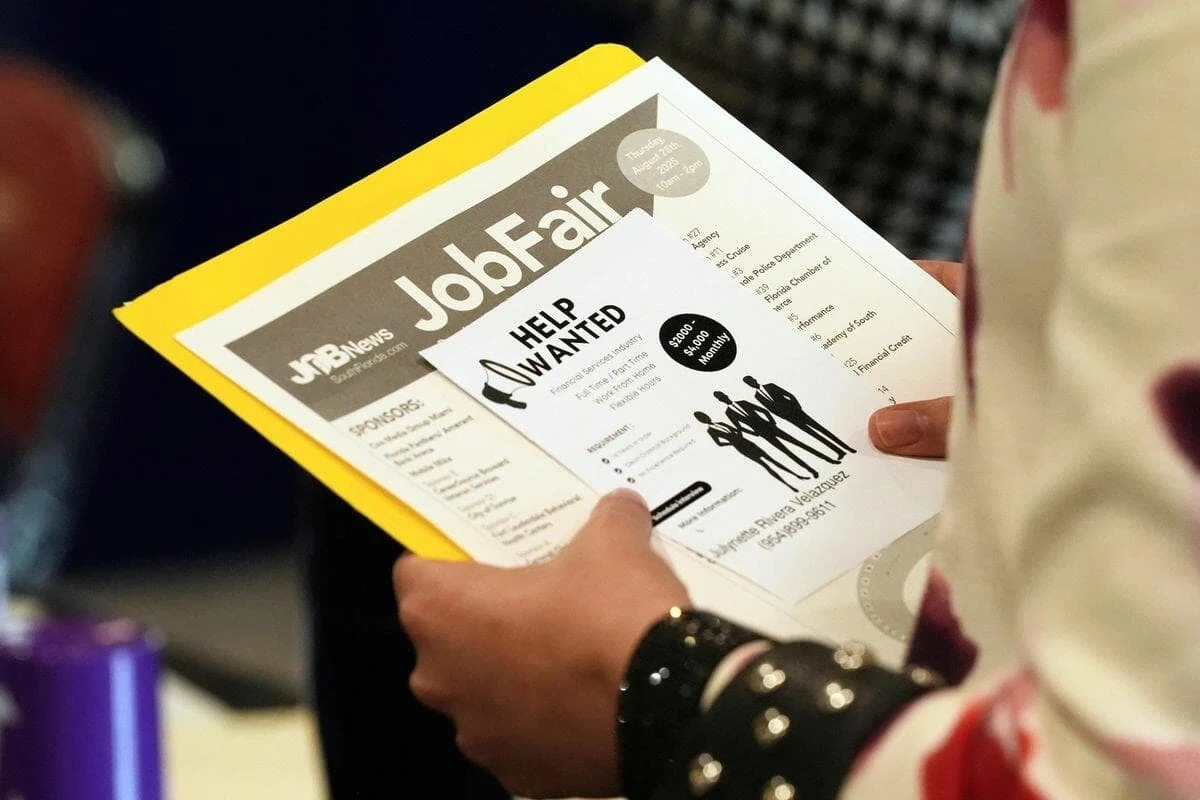
Despite a robust August jobs report that saw nonfarm payrolls surge by an unexpected 162,000—significantly surpassing the consensus forecast of 56,000—new research from the Richmond Federal Reserve indicates a concerning undercurrent in the American labor market. The seemingly positive headline figures are obscuring a persistent and worsening challenge for long-term unemployed Americans, a demographic increasingly struggling to re-enter the workforce. This paradox, highlighted by the Richmond Fed, suggests that while overall job creation appears strong, the anemic pace of hiring in prior months has created significant hurdles for those out of work for extended periods.
The long-term unemployment rate, defined as individuals jobless for 27 weeks or longer as a share of the total unemployed, has been on a steady upward trajectory since early 2023. According to the Bureau of Labor Statistics (BLS) report from August, more than one-quarter (27 percent), or 1.93 million, of all unemployed Americans had been out of work for a prolonged period. This marks a notable increase from July, when the figure stood at 25.5 percent, or 1.77 million individuals. This escalating trend points to a growing segment of the population facing entrenched difficulties, even as the broader economic narrative often emphasizes a resilient job market.
The Federal Reserve’s Dual Mandate and the Nuance of "Maximum Employment"
Federal Reserve Chairman Kevin Warsh, in his keynote address at the Jackson Hole Economic Symposium last month, offered a generally optimistic assessment of the labor market, noting the overall unemployment rate hovering around 4 percent for the past couple of years. Such a low aggregate unemployment rate would typically suggest that the Fed is achieving its maximum employment mandate, one of its two primary objectives alongside price stability. However, the rising tide of long-term unemployment introduces a critical nuance to this assessment.
The concept of "maximum employment" is not merely about a low headline unemployment rate; it also encompasses a healthy, dynamic labor market where individuals can readily find suitable work and employers can find necessary talent. The Richmond Fed’s analysis suggests that the current conditions fall short of this ideal for a significant portion of job seekers. A labor market with persistent long-term unemployment, even if overall unemployment is low, can lead to structural issues, reducing potential economic output and exacerbating social inequalities. This divergence between aggregate statistics and individual experiences presents a complex challenge for policymakers striving for truly broad-based economic prosperity.
A Shifting Chronology of Labor Market Dynamics
The current state of the U.S. labor market can be understood through a timeline of evolving trends that began to solidify in the post-pandemic era.
Early 2023: The long-term unemployment rate began its steady climb, signaling a fundamental shift from the rapid re-employment seen in the immediate aftermath of the pandemic-induced recession. This period was characterized by a gradual slowdown in the initial rapid job recovery, making it harder for those who remained unemployed to secure new positions.

Mid-202X: Despite periods of strong monthly job growth, the underlying dynamics began to favor a "low-hire, low-fire" environment. As the Richmond Fed economists articulated in their September 1 paper, this market features both slower job creation and less job separation activity, including firings and layoffs. While the reduction in layoffs might appear positive, it also means fewer new openings are being created as employers hold onto existing staff, making it particularly challenging for those who are already jobless to find new opportunities. This environment contrasts sharply with more dynamic periods where high rates of hiring and firing allowed for greater fluidity in the labor market.
Late 2025 – Present: Weekly unemployment claims have remained remarkably low, generally fluctuating between 189,000 and 230,000, figures near 57-year lows. Similarly, the number of layoffs and the layoff rate have also been near record lows. This stability in initial claims and layoffs might suggest a strong and secure job market. However, continuing jobless claims, which track individuals receiving benefits after their initial claim, have been on a downward trajectory since late 2025. This trend could signal two distinct phenomena: either workers are finding new job opportunities more readily, or, more troublingly for the long-term unemployed, many Americans are exhausting their state-mandated unemployment benefits, which typically cap eligibility at 26 weeks. For those who have been searching for several months, the expiration of benefits without securing a new job can lead to financial distress and, critically, discourage further job-seeking efforts.
The Richmond Fed explicitly noted this concern: "The data have yet to show that job-finding prospects are improving meaningfully for those who have been jobless for an extended duration." They further highlighted that "those who have been out of work for a year or more are experiencing more challenges seeking reemployment relative to the ‘standard’ long-term unemployed," indicating a deepening chasm within the unemployed population.
The Broader Impact: Labor Force Participation and Demographic Shifts
The challenges faced by the long-term unemployed are intrinsically linked to broader trends in labor force participation. The U.S. labor force participation rate (LFPR) ticked up slightly to 61.6 percent in August from 61.4 percent in July, but it continues to hover near its lowest level since the 1970s, excluding the anomaly of the pandemic-induced shutdowns. This persistent low participation rate signals that a significant portion of the working-age population is not actively engaged in the job market.
While a part of this phenomenon can be attributed to the ongoing demographic shift of older workers exiting the labor market into retirement, a more concerning trend involves younger demographics. The participation rate for males aged 16 to 24 plummeted to approximately 56 percent last month, a significant drop from 69 percent in 2000. This decline among young men represents a substantial loss of potential human capital and future economic productivity. Reasons for this decline are multifaceted and include factors such as increased enrollment in higher education, engagement in gig economy jobs not fully captured by traditional employment statistics, or, alarmingly, a growing segment of "discouraged workers" who have simply given up searching for suitable employment opportunities due to a perceived lack of prospects. The Richmond Fed’s findings regarding the struggles of the long-term unemployed directly feed into this narrative of discouraged workers, as prolonged joblessness can erode confidence and motivation.
The Paradox of Persistent Skills Shortages
Compounding the issue of long-term unemployment is the persistent and growing skills gap across various sectors of the U.S. economy. Despite the choppy job growth earlier this year, labor demand remains robust in many areas. Job vacancies are close to 7.3 million, indicating a significant number of open positions that employers are struggling to fill. Small businesses, often considered the backbone of job creation, have consistently indicated plans to bolster their hiring in the coming months, yet they too face challenges in recruitment.
The primary obstacle for employers is not a lack of demand for labor, but rather a shortage of qualified workers to fill these openings. The Federal Reserve’s Beige Book, a periodic report summarizing economic conditions across the central bank’s 12 districts, consistently highlights this issue. For instance, the summer report noted "healthy" employment demand in the construction and manufacturing sectors but qualified it by stating, "Labor availability was mixed. Skilled trades and technical workers were difficult to find." This sentiment is echoed across various industries, from healthcare to information technology.

A recent report from labor market intelligence firm Lightcast, published on August 25, estimated that employers face a talent gap of approximately 1.3 million workers. The report further underscored the severity of this issue by revealing that seven of the ten most in-demand skilled-trade occupations—including construction workers, electricians, and various technicians—already face significant labor shortages. Ron Hetrick, principal economist at Lightcast, emphasized the long-standing nature of this problem, stating, "The impending lack of skilled trades workers has been a resounding issue in our economy for years."
This skills shortage is particularly critical at a time when the United States is experiencing a resurgence in manufacturing, partly fueled by the artificial intelligence (AI) boom and strategic initiatives to reshore production. The expansion of data centers alone, driven by the increasing demands of AI and digital infrastructure, has necessitated the addition of approximately 315,000 skilled-trade workers in the past five years. However, the pipeline of workers with the specialized skills required for these modern manufacturing processes, advanced technology roles, and complex infrastructure projects is insufficient to meet demand. This mismatch between the skills available in the labor pool and the skills required by employers creates a formidable barrier for the long-term unemployed, many of whom may lack the specific training or certifications needed for these in-demand positions.
Analysis of Implications and Policy Considerations
The confluence of rising long-term unemployment and a persistent skills gap presents a multifaceted challenge with significant economic and social implications.
Economic Implications:
- Reduced Productivity and Growth: A large pool of long-term unemployed individuals represents lost economic potential. Their skills may atrophy, and their disconnection from the workforce reduces overall productivity. Simultaneously, unfilled skilled positions can constrain business expansion and innovation, thereby limiting overall economic growth.
- Wage Pressures and Inflation: The skills gap can contribute to upward wage pressure in specific skilled sectors, potentially fueling inflationary concerns even as a significant portion of the workforce remains underutilized. This creates a difficult environment for the Federal Reserve, as addressing one aspect of its dual mandate (price stability) might inadvertently exacerbate challenges in the other (maximum employment).
- Structural Unemployment: If the mismatch between available workers and available jobs becomes entrenched, it can lead to structural unemployment, which is much harder to solve with traditional monetary or fiscal policies alone.
Social Implications:
- Increased Inequality: Long-term unemployment disproportionately affects certain demographic groups and can widen income and wealth disparities. The financial and psychological toll on individuals and families can be severe, leading to increased poverty, stress, and social disengagement.
- Erosion of Human Capital: Extended periods of joblessness can lead to a deterioration of skills, making it even harder for individuals to re-enter the workforce. It also impacts mental health and overall well-being.
- Demographic Challenges: The declining labor force participation among young men and the continued exit of older workers, without adequate replacement in skilled trades, signals a potential future workforce crisis.
Policy Considerations:
Addressing these complex labor market dynamics will require a concerted effort from policymakers, educational institutions, and the private sector.
- Targeted Retraining and Upskilling Programs: Government-funded initiatives and partnerships with community colleges and vocational schools could provide the necessary training for the long-term unemployed to acquire in-demand skills in sectors like advanced manufacturing, construction, and technology. These programs need to be agile and responsive to evolving industry needs.
- Apprenticeship Expansion: Expanding apprenticeship programs, especially in skilled trades, can provide hands-on training and a direct pathway to employment, bridging the gap between education and industry demands.
- Improved Labor Market Information: Better data collection and dissemination about specific skill shortages and future job growth areas can help job seekers and educational institutions align their efforts more effectively.
- Support for Displaced Workers: Enhanced support services, including career counseling, job search assistance, and mental health resources, are crucial for individuals struggling with long-term unemployment.
- Immigration Reform: Strategic immigration policies that facilitate the entry of skilled workers in shortage areas could help alleviate immediate talent gaps while domestic training pipelines are strengthened.
In conclusion, while headline economic indicators like the August jobs report paint a picture of strength, a deeper dive into the U.S. labor market reveals significant underlying fragilities. The rising tide of long-term unemployment, coupled with a persistent skills gap and declining labor force participation among key demographics, signals a challenging road ahead. A comprehensive and nuanced approach will be necessary to ensure that the benefits of economic growth are broadly shared and that all Americans have a genuine opportunity to contribute to and thrive in the evolving workforce.

