
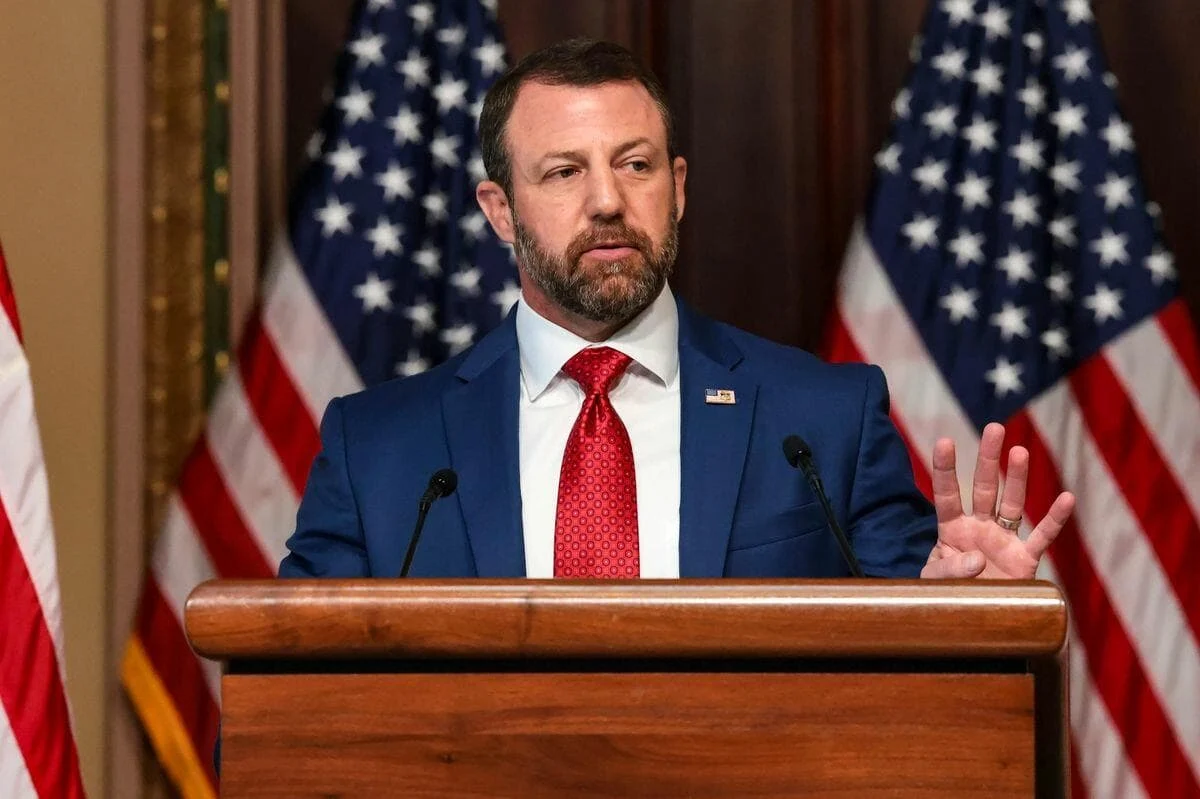
The Department of Homeland Security (DHS) has unveiled a significant proposed rule change that seeks to eliminate the 60-day grace period currently afforded to certain non-immigrant visa holders, such as those on H-1B visas, after they lose their employment. This alteration, if finalized, would mandate the immediate departure of these individuals from the United States unless they secure alternative legal status or employment instantaneously. The proposal, authored by Secretary of Homeland Security Markwayne Mullin, was filed on September 10 and is slated for formal publication in the Federal Register on September 11, initiating a 60-day public comment period before a final decision is rendered.
The Proposed Rule: Details and Rationale
Under the existing framework, non-immigrants holding temporary work visas, most notably the H-1B visa for specialty occupations, are granted a 60-day window following job termination to either find new employment with a sponsoring company, change their visa status, or prepare for their departure from the United States. This period was originally designed to provide a degree of flexibility and reduce abrupt disruptions for highly skilled workers contributing to the U.S. economy.
Secretary Mullin, however, articulated a revised perspective in the proposed rule. He stated that DHS now believes "that once the alien is no longer fulfilling the very specific conditions under which he or she was admitted or otherwise provided status, such status, as well as the authorization to remain in the United States, should definitively cease and the impacted alien should immediately depart the United States (unless otherwise authorized to lawfully remain in the United States)." This rationale underscores a fundamental shift towards a stricter interpretation of non-immigrant visa conditions, emphasizing that the authorization to reside in the U.S. is contingent solely on the fulfillment of the specific purpose for which the visa was granted—in this case, active employment.
Mullin further argued that the original rulemakers did not adequately consider the "negative effects" of the grace period. While not extensively detailed in the initial summary, these "negative effects" are broadly inferred to include potential administrative burdens on immigration officers dealing with extended stays and paperwork, as well as an underlying concern about individuals potentially overstaying or exploiting the grace period. The proposal posits that this stricter approach aligns more closely with requirements for aliens in other non-immigrant categories where failure to meet specific conditions results in immediate cessation of status.
Historical Context of the Grace Period
The 60-day grace period for certain high-skilled non-immigrant workers was a relatively recent development, formally introduced by the Obama administration in January 2017. Prior to this, the departure requirement was generally more immediate, though often subject to discretionary enforcement. The 2017 rule aimed to provide greater clarity and flexibility for non-immigrant workers, particularly those in H-1B, O-1, L-1, and E-visas, who often hold crucial roles in technology, science, engineering, and other specialized fields. The stated intention was to allow these skilled individuals to remain in the U.S. for a limited time to seek new employment, thereby retaining valuable talent within the country and reducing the "brain drain" that might occur if they were forced to leave immediately. This policy was seen as a way to enhance U.S. competitiveness by making it more attractive for global talent to choose the United States as a place to work and innovate.
The current proposal marks a direct reversal of this policy, reflecting a different philosophy regarding the balance between attracting global talent and prioritizing immediate workforce adjustments for U.S. citizens and permanent residents.
Broader Immigration Policy Landscape
This proposed change does not occur in a vacuum but is situated within a broader, often contentious, debate about U.S. immigration policy. Over recent years, there has been a fluctuating emphasis on various aspects of immigration, from border security and enforcement to economic competitiveness and the protection of domestic jobs. Administrations have often reevaluated and adjusted visa programs, particularly the H-1B, which is frequently at the center of discussions regarding skilled labor, outsourcing, and potential wage depression.
Critics of the H-1B program often argue that it can be exploited by companies to replace American workers with cheaper foreign labor, or that it creates an oversupply of skilled workers, driving down wages. Proponents, however, contend that the H-1B visa is essential for U.S. companies to access specialized talent not readily available domestically, particularly in rapidly evolving sectors like technology, and that these workers contribute significantly to innovation and economic growth. The DHS proposal appears to lean towards addressing the concerns of the former group, prioritizing the immediate availability of jobs for U.S. workers in instances where a foreign worker’s employment status changes.
Potential Economic Ramifications

If finalized, the elimination of the 60-day grace period could have multifaceted economic consequences, particularly for industries heavily reliant on H-1B and other specialized foreign workers. The DHS itself estimates that the change "could cause thousands of jobs to not be filled by specialty foreign workers."
The department presumes that companies seeking to fill these positions "will either offer the same jobs to equally qualified U.S. workers or go through the I-129 petition process depending on their workforce requirement." The I-129 petition is the standard form used to petition for a non-immigrant worker. While this assumption suggests a shift towards domestic hiring, it overlooks potential challenges.
- Talent Gaps: In sectors like advanced technology, artificial intelligence, and specialized healthcare, companies often struggle to find U.S. workers with the exact niche skills and experience. An immediate departure requirement could exacerbate these talent gaps, potentially delaying projects, hindering innovation, and impacting companies’ ability to compete globally.
- Operational Disruptions: For businesses, losing a highly specialized employee abruptly can cause significant operational disruptions. The time and resources required to find, vet, and onboard a replacement—whether domestic or another foreign worker through a new I-129 petition—can be substantial.
- Reduced Attractiveness for Global Talent: The U.S. competes with countries like Canada, the UK, Germany, and Australia for top global talent. These countries often offer more flexible immigration pathways and clearer routes to permanent residency. Eliminating the grace period could make the U.S. a less appealing destination for highly skilled professionals, who might prefer countries offering greater stability and less risk in their employment status. This could lead to a "brain drain" where valuable intellectual capital and innovation move elsewhere.
- Economic Contribution of H-1B Workers: Studies have consistently shown that H-1B workers contribute significantly to the U.S. economy through innovation, entrepreneurship, and tax payments. A policy that makes their employment less secure could deter this contribution. For example, H-1B visa holders often contribute to STEM fields, leading to new patents and companies.
Industry and Stakeholder Reactions (Anticipated)
While the proposal is still in its public comment phase, anticipated reactions from various stakeholders can be reasonably inferred based on historical stances on similar immigration policies.
- Tech Industry and Business Lobbies: Organizations representing technology companies and broader business interests, such as the U.S. Chamber of Commerce or the National Association of Manufacturers, are likely to express strong opposition. Their arguments would center on the critical need for specialized talent, the administrative burden of immediate replacements, the potential for reduced innovation, and the impact on U.S. global competitiveness. They would emphasize that a 60-day grace period provides necessary flexibility in dynamic labor markets.
- Immigration Advocates and Civil Rights Groups: Groups like the American Immigration Lawyers Association (AILA) and the American Civil Liberties Union (ACLU) are expected to voice significant concerns. They would highlight the humanitarian impact on individuals and families, the increased precarity of life for visa holders, potential for due process issues, and the risk of creating a larger population of individuals who might inadvertently fall out of status due to circumstances beyond their immediate control. They might also argue that the proposal undermines the very purpose of attracting and retaining skilled immigrants.
- Labor Unions and Proponents of Stricter Immigration: Conversely, some labor organizations and groups advocating for reduced immigration may support the proposal. Their arguments would likely focus on protecting American jobs, ensuring that U.S. citizens and permanent residents are prioritized for available positions, and addressing concerns about potential wage suppression linked to temporary worker programs.
- Affected Visa Holders: The immediate impact on H-1B and other affected visa holders would be one of heightened anxiety and uncertainty. The prospect of losing a job and having to immediately depart the country, potentially disrupting families, mortgages, and children’s schooling, would be immense. This could lead to a chilling effect, where visa holders become less willing to take risks or change jobs, or more inclined to seek opportunities in other countries.
Administrative and Legal Challenges
Implementing such a change would also present administrative and potentially legal challenges.
- Increased Workload for USCIS: While Secretary Mullin cited administrative burden as a reason for the change, eliminating the grace period could paradoxically increase the workload for U.S. Citizenship and Immigration Services (USCIS) in different ways. It might lead to a surge in immediate departure processing, a rise in requests for status changes filed under extreme duress, or an increase in overstay violations if individuals cannot leave immediately or find alternative status.
- Enforcement Mechanisms: Enforcing an "immediate departure" requirement would be complex. Tracking job losses and ensuring immediate compliance across thousands of visa holders could strain DHS resources.
- Potential for Overstays: Without a grace period, individuals who lose their jobs might face immense pressure and practical difficulties in arranging immediate departure, potentially leading to an increase in undocumented status if they cannot comply. This could have long-term negative consequences for individuals and the immigration system.
- Legal Scrutiny: Any final rule could face legal challenges from advocacy groups or affected individuals, particularly if it is perceived to be arbitrary, capricious, or to violate administrative procedures.
Global Talent Competition
In an increasingly globalized economy, the competition for skilled talent is fierce. Countries around the world are actively reforming their immigration policies to attract high-skilled workers, recognizing their contribution to economic growth and innovation.
- Canada’s Express Entry System: Canada, for example, has a streamlined "Express Entry" system that often provides a clearer path to permanent residency for skilled workers.
- UK’s Global Talent Visa: The UK offers a "Global Talent" visa for leaders and potential leaders in science, humanities, engineering, arts, and digital technology.
- Germany’s Blue Card: Germany’s EU Blue Card program aims to attract highly qualified workers from outside the EU.
These nations often highlight the stability and long-term prospects they offer. A policy change in the U.S. that introduces greater precarity for skilled foreign workers could inadvertently push valuable talent towards these competing nations, diminishing the U.S.’s standing as a premier destination for global innovators and experts.
The Regulatory Process Ahead
The proposal’s publication in the Federal Register on September 11 will officially open a 60-day public comment period. During this time, individuals, businesses, advocacy groups, and other stakeholders can submit their feedback, concerns, and supporting data to the DHS. These comments are a crucial part of the rulemaking process, allowing the agency to consider a wide range of perspectives and potential impacts before finalizing the rule.
Following the comment period, DHS officials will review all submitted feedback. Based on this review, they will decide whether to finalize the rule as proposed, make alterations in response to comments, or potentially withdraw the proposal entirely. The final rule, if issued, would then specify an effective date. This process typically takes several months, and the ultimate outcome remains uncertain, subject to the weight of public input and the administration’s policy priorities.
In conclusion, the DHS proposal to eliminate the 60-day grace period for certain non-immigrant visa holders after job loss represents a significant policy shift. While framed as a measure to streamline immigration processes and prioritize domestic workers, its potential ramifications for the U.S. economy, specific industries, and the nation’s ability to attract and retain global talent are substantial and will undoubtedly be a central point of discussion during the upcoming public comment period.

