

The annual county fair in Vermont, traditionally a celebration of agricultural heritage and community gathering, has increasingly become a primary site for early childhood financial intervention. As local families navigate the high-density consumer environment of the fairgrounds, a growing movement of experiential learning is taking root, utilizing the "panorama of consumerism" to teach children as young as five and seven the fundamentals of capital, labor, and debt management. This pedagogical approach, often referred to as a "family money philosophy," seeks to demystify the complexities of the adult economic world through practical, real-world application.
The Framework of the Household Economy
At the center of this educational model is a clearly defined division between essential needs and discretionary wants. Under this framework, parents assume the role of the primary economic provider, covering all "needs," which include housing, healthcare, nutrition, and foundational educational resources such as library books and museum admissions. Discretionary spending, however, is shifted entirely to the children, who must finance their own "wants" using capital earned through a structured household labor market.

The discretionary categories typically targeted in this model include supplemental food items (such as desserts at restaurants), souvenirs and trinkets from gift shops or fairs, and non-essential educational materials, specifically those marketed through school-sanctioned events like the Scholastic Book Fair. By drawing a hard line between parental provision and personal acquisition, educators argue that children develop a more acute sense of value and opportunity cost before they reach adolescence.
The Internal Labor Market: Chores and Compensation
To facilitate this system, families implement an internal labor market where children perform specific tasks in exchange for "fair market value" compensation. This system distinguishes between "Daily Unpaid Work"—tasks required for the maintenance of the self and the shared living space—and "Compensated Chores," which are tasks that provide a broader benefit to the family unit.
According to data gathered from participating Vermont households, unpaid labor typically includes:

- Personal laundry management.
- Collection of agricultural yields (e.g., chicken eggs) for family consumption.
- Disposal of organic waste and compost.
- General maintenance of personal living quarters.
In contrast, compensated labor involves higher-level organizational or maintenance tasks. A recent case study involved a seven-year-old subject negotiating a $10 lump-sum payment for the complete reorganization of kitchen cabinetry. Other seasonal tasks in this internal economy include:
- Invasive species removal (e.g., pulling burdock).
- Assisting with firewood stacking (a critical winter preparation in Vermont).
- Deep-cleaning communal areas, such as vacuuming family vehicles or scrubbing shared bathrooms.
The system operates on a "completion-only" payment model. If a task is not performed to a professional standard—such as emptying trash but leaving debris on the stairs—payment is withheld until the error is rectified. This reinforces the concept of quality control and accountability in a professional setting.
Debt as a Pedagogical Tool: The Turquoise Unicorn Case Study
One of the most significant aspects of this financial education strategy is the controlled exposure to debt. During the previous year’s county fair, an incident involving a $13 inflatable turquoise unicorn served as a foundational lesson in consumer credit for a seven-year-old subject. Possessing only $9 in capital, the child was permitted to borrow the remaining $4 from the "parental bank" under the condition that the debt be serviced through mandatory labor.
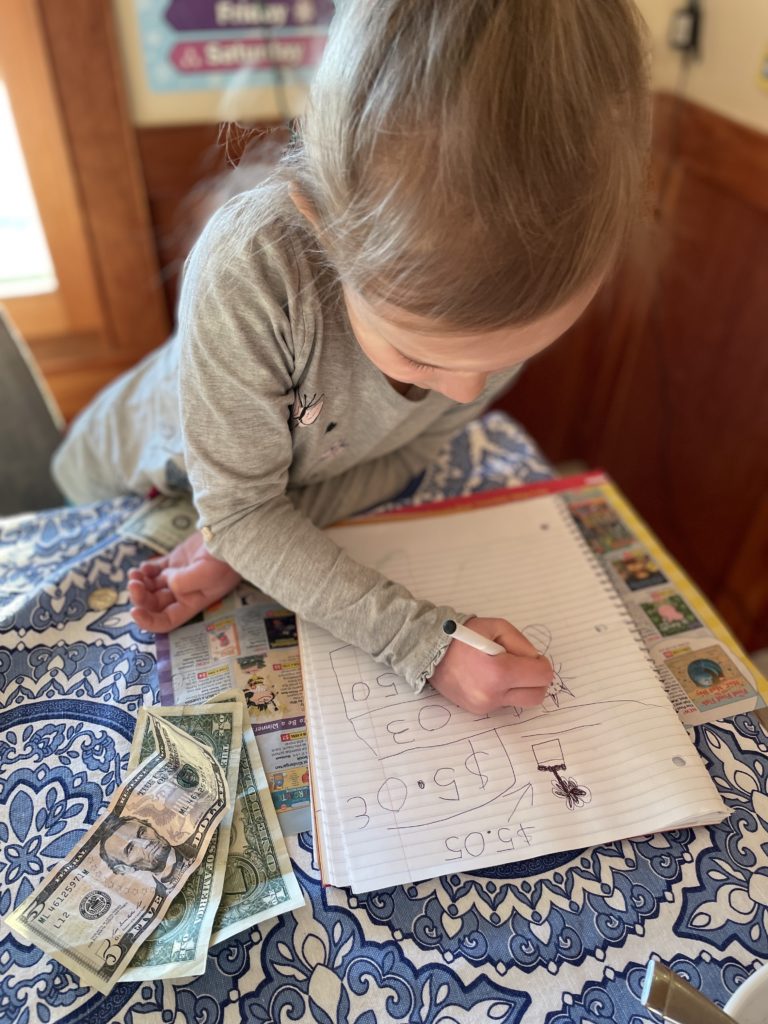
The subsequent "debt service" phase proved revelatory. The child expressed significant dissatisfaction when performing chores to pay off an item already in their possession, noting that "it is not fun to do chores to earn money for something I’ve already bought." This visceral reaction to the loss of future labor to past consumption is a cornerstone of the program. Financial analysts suggest that experiencing the "burden of the past" in a low-stakes environment at age seven can prevent high-stakes credit card mismanagement in early adulthood. Since this incident, the subject has reportedly refused to enter into any further debt agreements, opting instead for a strict "spend only what you have" policy.
Quantitative Reasoning and Collaborative Consumption
The fair and subsequent community events also provide opportunities for advanced mathematical application. A recurring "Pizza Night" at a local farm highlighted the complexities of shared expenses. When two siblings (ages five and seven) decided to split a $7 dessert, they were forced to confront the challenge of dividing an odd number using standard currency denominations.
This scenario required the children to:
- Calculate the individual cost ($3.50 each).
- Identify the physical coins and bills necessary to reach that total.
- Negotiate the purchase independently at the point of sale.
By requiring children to conduct the transaction with the vendor themselves, the program builds "transactional confidence," reducing the anxiety often associated with financial interactions.
Broader Context: The State of Financial Literacy
The implementation of these household-level strategies comes amid a national push for improved financial literacy. According to the S&P Global FinLit Survey, the United States ranks 14th in the world for financial literacy, with only 57% of adults considered financially literate. Furthermore, research from the Council for Economic Education indicates that while more states are mandating personal finance courses in high school, the gap in early childhood exposure remains significant.
Pedagogical experts suggest that "scaffolded education"—introducing concepts like counting and price-reading before moving to abstract concepts like interest and inflation—is the most effective way to build long-term fiscal responsibility. The Vermont model aligns with Lev Vygotsky’s "Zone of Proximal Development," where children perform tasks just beyond their independent capability with the guidance of a "More Knowledgeable Other" (in this case, the parent).

Logistics and Asset Management
A secondary but vital pillar of the initiative is the physical management of assets. Children are required to maintain their own wallets and purses and are solely responsible for their transport to and from commercial venues. The "forgotten wallet" serves as a natural consequence; if a child fails to bring their capital to the fair, they are unable to participate in the market.
A recent incident at a science museum gift shop underscored the importance of asset security. A child misplaced a wallet containing their entire savings just before a purchase. The subsequent recovery process—involving an inquiry at the "Lost and Found"—taught a high-stress lesson in the fragility of physical capital. The realization that lost cash is often unrecoverable serves as a powerful deterrent against negligence.
Future Implications: The "Bank of Parental Units"
The next phase of the Vermont financial experiment involves the introduction of the "Bank of Parental Units," a system designed to teach the concept of interest and long-term savings. Recognizing that young children naturally tend toward immediate gratification (spending all earned capital on short-term "treats"), the proposed internal banking system will offer high interest rates on savings to demonstrate the power of compound growth.

By shifting from a cash-on-hand model to a ledger-based savings model, parents aim to transition their children from "consumers" to "savers." This phase will introduce more abstract concepts, including:
- The difference between nominal and real value.
- The benefit of delayed gratification.
- The mechanics of interest accrual.
Conclusion
The use of the Vermont county fair as a laboratory for financial education represents a shift toward "stealth learning" in parenting. By demystifying money and treating it as a neutral tool—rather than a source of status or anxiety—these families are attempting to equip the next generation with the resilience needed to navigate an increasingly complex global economy.
As one young subject noted in a self-authored "book" about her mother’s career in financial consulting: "Her job is to help other people with their money… the meetings are very boring, but they are really important." This recognition—that finance is a serious, functional necessity rather than a mysterious adult secret—may be the most valuable outcome of the entire Vermont initiative. The success of these early interventions will ultimately be measured not by the number of turquoise unicorns purchased, but by the financial stability of these children as they enter the adult workforce in the decades to come.

