

Pineapple Financial has achieved a significant milestone in its strategic initiative to transition its extensive historical loan portfolio onto the blockchain, successfully migrating over $1 billion worth of residential mortgage records onto Injective, a layer-1 blockchain specifically engineered for financial applications. This move represents a pivotal step in Pineapple Financial’s ambitious plan to bring its entire portfolio of funded mortgages onto a decentralized ledger, promising enhanced transparency, efficiency, and accessibility within the mortgage market.
The company’s long-term vision, as detailed by Injective, encompasses the eventual migration of more than 29,000 funded mortgages, collectively valued at over $10 billion. Crucially, each mortgage is being represented by an immutable onchain record directly linked to its underlying loan file. This approach distinguishes itself from traditional securitization methods, where loan assets are repackaged into new securities. Instead, Pineapple Financial is focusing on digitizing the existing loan data, ensuring that each onchain record serves as a verifiable digital twin of the original mortgage agreement.
These comprehensive onchain records are designed to be rich in detail, encompassing over 500 distinct data points. This granular level of information includes essential loan-level data meticulously curated to facilitate robust verification processes, establish irrefutable audit trails, and enable sophisticated risk analysis. Pineapple Financial’s dedicated dashboard, which tracks the progress of this digital transformation, currently showcases 2,079 mortgage records that have been successfully migrated. This figure marks a substantial increase from the 1,259 records that were onchain at the initiative’s inception in December 2025, underscoring the accelerating pace of the migration.
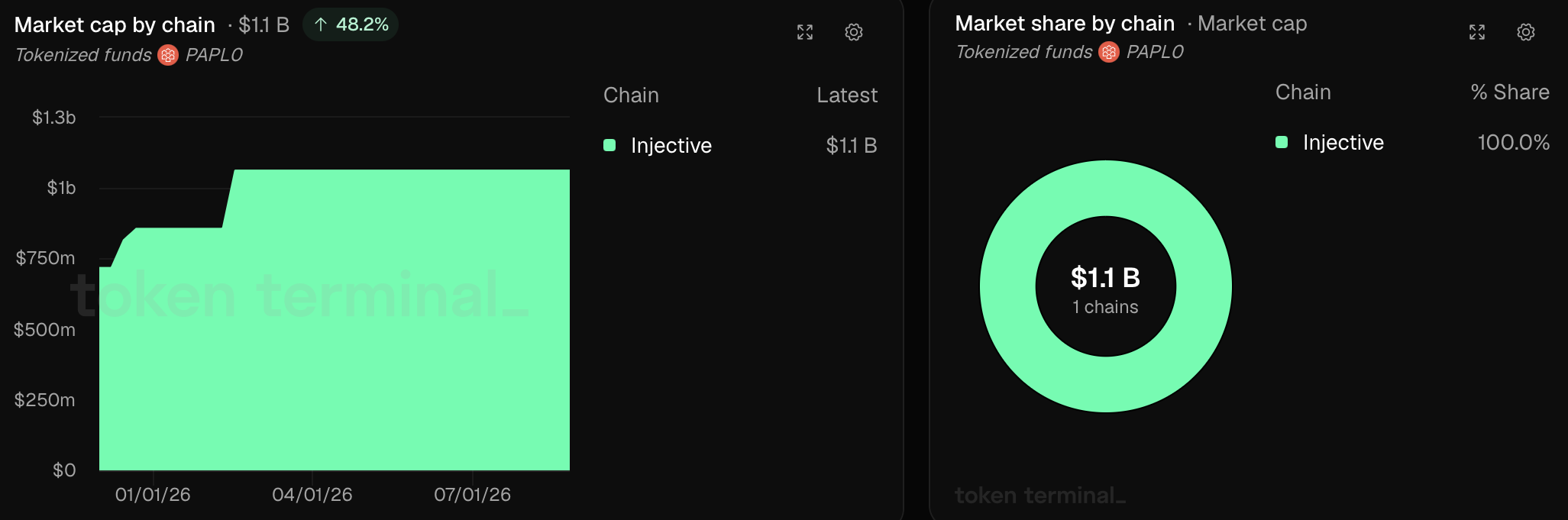
The token representing these digitized mortgage records, known as PAPL0, currently boasts an asset market capitalization of approximately $1.1 billion. Data from Token Terminal indicates a remarkable surge of 48.2% in its market cap over the past nine months. It is important to note that these PAPL0 tokens represent the onchain mortgage records themselves and do not confer ownership of the underlying loans. This distinction is vital for understanding the nature of the assets being tokenized and their associated rights.

A Deeper Dive into the Injective Partnership and the PAPL0 Token
The strategic partnership between Pineapple Financial and Injective extends beyond the mortgage record migration. The collaboration also involves a substantial $100 million Injective (INJ) digital asset treasury held by Pineapple Financial. This treasury plays a crucial role in the network’s ecosystem, with Pineapple Financial actively staking INJ tokens. Kraken serves as a primary validator for these staked holdings, contributing to the security and decentralization of the Injective network. This dual-pronged approach – the migration of real-world assets and the active participation in the underlying blockchain’s governance and security – highlights Pineapple Financial’s deep commitment to the Injective platform.
The PAPL0 token, as a representation of mortgage records, offers a unique avenue for financial institutions and investors to interact with historical loan data. The ability to access and analyze over 500 data points per record onchain provides unprecedented opportunities for due diligence, portfolio management, and the development of new financial instruments. The significant growth in PAPL0’s market capitalization suggests increasing investor confidence in the project and the potential of tokenized mortgage data.
The Accelerating Trend of Real Estate Tokenization
Pineapple Financial’s initiative is occurring against a backdrop of rapidly growing interest in the tokenization of real estate and other traditionally illiquid assets. The inherent characteristics of blockchain technology—immutability, transparency, and programmability—make it an ideal infrastructure for transforming these assets. Tokenization has the potential to democratize access to real estate investments, allowing for fractional ownership, easier transferability, and improved liquidity.
In June, Apex Group made headlines by joining a consortium that includes financial giants like Goldman Sachs, Archax, and LRC Group in launching a tokenized real estate fund. Shares in this fund are issued as digital tokens via Goldman Sachs’ Digital Asset Platform. This structure provides investors with blockchain-verified ownership of fund shares, a significant departure from merely recording property data onchain. This demonstrates a clear move towards creating digital representations of ownership and investment interests within the real estate sector.
Dubai has also emerged as a proactive hub for real estate tokenization. Following a successful pilot phase that saw approximately $5 million in property tokenized with transactions recorded on the XRP Ledger, the Dubai Land Department expanded its tokenization efforts in February, initiating the second phase of its program. These developments signal a global trend towards embracing blockchain technology to streamline and modernize real estate transactions.
Contextualizing Tokenized Real Estate within the Broader RWA Market
While the momentum in real estate tokenization is undeniable, it is important to contextualize its current standing within the broader market for tokenized real-world assets (RWAs). According to RWA.xyz, the tokenized real estate sector currently holds a distributed value of approximately $226.5 million. Over the past 30 days, this segment has experienced a growth of 11.7%. In comparison, the entire RWA market, encompassing various asset classes like bonds, commodities, and equities, represents a significantly larger figure of $38.8 billion. This comparison illustrates that while tokenized real estate is gaining traction, it still represents a relatively nascent but rapidly evolving segment of the tokenized RWA landscape.
The data from RWA.xyz highlights the potential for substantial growth within the tokenized real estate market. As more institutions and projects like Pineapple Financial bring diverse real estate-related assets onto the blockchain, the overall market value is expected to climb. The challenges and opportunities in this space are multifaceted, involving regulatory clarity, technological scalability, and investor education.
The Future Implications of Mortgage Record Tokenization
The successful migration of over $1 billion in mortgage records by Pineapple Financial onto Injective has profound implications for the future of the mortgage industry and the broader financial ecosystem. By creating transparent, verifiable, and easily accessible onchain records, Pineapple Financial is laying the groundwork for several transformative developments:
- Enhanced Efficiency and Reduced Costs: Traditional mortgage servicing involves a labyrinth of paperwork, manual processes, and intermediaries, leading to significant operational costs and potential for errors. Blockchain technology can automate many of these processes, reducing transaction times and expenses for both lenders and borrowers.
- Improved Transparency and Auditability: The immutable nature of blockchain ensures that all transactions and data modifications related to a mortgage are permanently recorded and accessible. This creates an unparalleled level of transparency, making it easier for regulators, auditors, and investors to verify loan details and track ownership history. This can significantly mitigate risks associated with fraud and misrepresentation.
- Greater Liquidity for Loan Portfolios: While PAPL0 tokens do not represent direct ownership of loans, the onchain representation of mortgage records could pave the way for new forms of liquidity. The ability to easily access and analyze granular loan data could facilitate the creation of more efficient secondary markets for mortgage-backed securities or other mortgage-related financial products.
- Democratization of Investment: By tokenizing mortgage data, Pineapple Financial is creating the potential for a broader range of investors to gain exposure to the mortgage market. This could lead to more diversified investment portfolios and increased capital availability for the housing sector.
- Innovation in Financial Products: The rich dataset of over 500 data points per mortgage record available onchain can serve as a foundation for innovative financial products. This could include advanced risk assessment tools, AI-driven loan analytics, and new forms of collateralized lending.
- Streamlined Due Diligence: For institutions looking to acquire or invest in mortgage portfolios, the tokenized records on Injective offer a significantly streamlined due diligence process. All necessary information is readily available and verifiable onchain, reducing the time and resources required for traditional due diligence.
The ongoing migration by Pineapple Financial is not merely a technical undertaking; it is a strategic redefinition of how mortgage assets are managed and interacted with in the digital age. The choice of Injective, a blockchain designed with financial applications in mind, further validates the seriousness and long-term commitment of Pineapple Financial to leveraging blockchain for core financial operations. As more of its $10 billion portfolio transitions onto the network, the impact on market efficiency, transparency, and accessibility is expected to grow substantially. The success of this initiative could serve as a blueprint for other financial institutions looking to harness the power of blockchain technology for asset digitization and management.

