
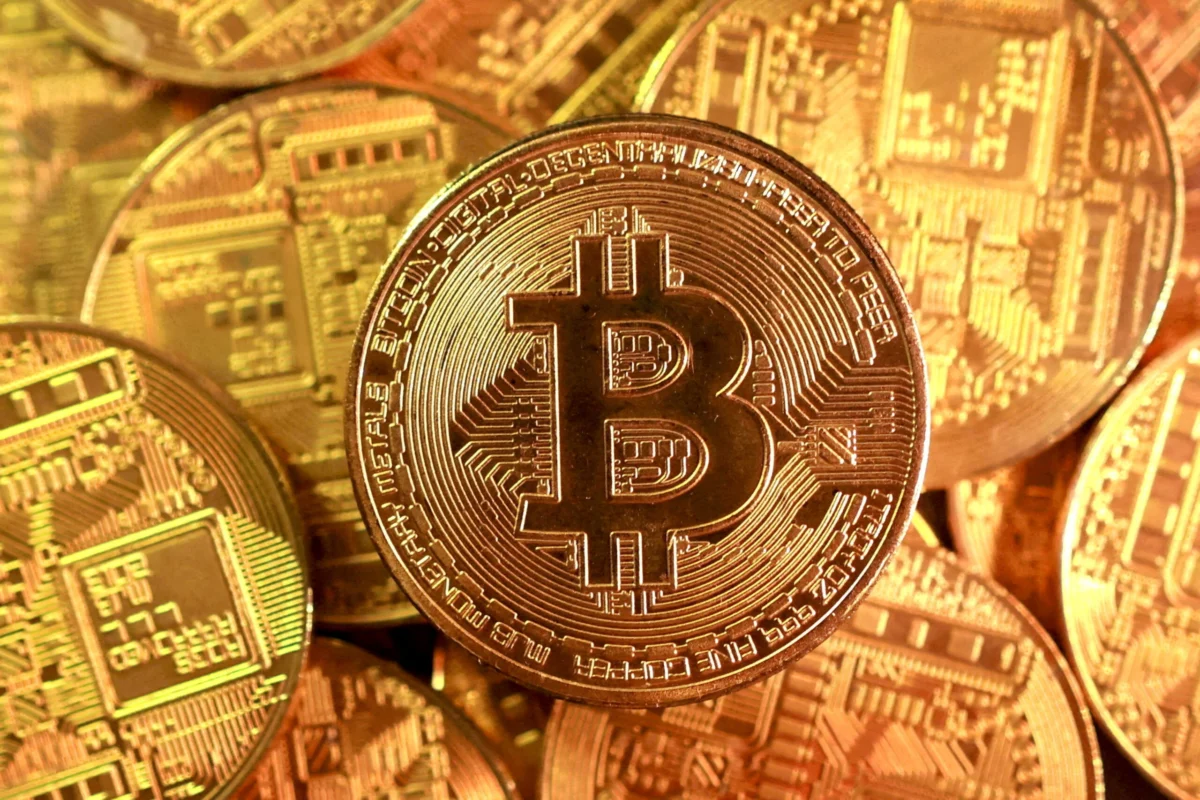
Bitcoin, the world’s leading cryptocurrency by market capitalization, is poised to close its third consecutive week with gains, as investors increasingly seek refuge in digital assets amidst heightened volatility across traditional equities, currencies, and bond markets. The recent rally underscores a significant shift in market sentiment, propelling Bitcoin to levels not seen in months and drawing renewed attention to its role as a potential hedge against broader economic uncertainties.
The digital token registered a notable 4.6% increase week-to-date, peaking overnight at $82,272.31. This surge marks its highest valuation since May 11, when Bitcoin briefly touched $82,499.99, indicating a strong recovery and a test of previous resistance levels. As of its last reported trade, Bitcoin was priced at $81,151.10, maintaining much of its upward momentum. This latest price action represents a stark contrast to the earlier part of the year, during which the cryptocurrency largely languished within a tighter trading range.
Bitcoin’s Journey Through 2024: From Consolidation to Breakout
For a significant portion of the current year, Bitcoin’s price trajectory had been characterized by a period of consolidation. From early June through late August, the cryptocurrency predominantly traded within a defined corridor, fluctuating roughly between $60,000 and $70,000. This phase, often described by market analysts as "the doldrums," followed an initial surge earlier in the year, which had seen Bitcoin break new all-time highs fueled by factors such as the approval of spot Bitcoin Exchange-Traded Funds (ETFs) in the United States. However, the initial euphoria gave way to a more cautious market, as investors grappled with evolving macroeconomic conditions, including persistent inflation concerns, varying global interest rate policies, and geopolitical tensions. Regulatory scrutiny in various jurisdictions also contributed to a period of subdued trading activity and price discovery, with many market participants adopting a wait-and-see approach.
The turning point for Bitcoin arrived in late August when the digital asset decisively broke above the $70,000 threshold. This breach of a significant psychological and technical resistance level signaled a renewed bullish sentiment. Since then, Bitcoin has maintained its upward trajectory, steadily climbing and attracting a fresh wave of investor interest. This breakout was not an isolated event but rather the culmination of several converging factors, primarily the re-emergence of what market participants refer to as the "debasement trade."
The Resurgence of the "Debasement Trade" and Macroeconomic Tailwinds
The concept of the "debasement trade" centers on a strategic shift by traders and investors away from traditional fiat currencies, particularly the U.S. dollar, and into alternative assets perceived as stores of value. These assets typically include cryptocurrencies like Bitcoin and traditional safe havens such as gold. The underlying premise of this trade is a concern over the diminishing purchasing power of fiat currencies due to inflationary pressures, expansive monetary policies, or a general erosion of confidence in government-issued money.
Several macroeconomic developments have provided fertile ground for the debasement trade to regain significant momentum. A key factor has been the persistent global inflationary environment. While inflation rates in some major economies have shown signs of moderation, they largely remain above central bank targets. This enduring inflationary pressure fuels investor demand for assets that historically perform well during periods of currency devaluation, making Bitcoin, often dubbed "digital gold," an attractive option.
Furthermore, the actions and rhetoric of major central banks play a crucial role. Any indication of a pivot towards more accommodative monetary policies, such as pausing interest rate hikes or even suggesting future rate cuts, can weaken the domestic currency and bolster the appeal of alternative assets. In this context, a significant catalyst for the recent Bitcoin surge was the U.S. Treasury’s announcement regarding an increase in its purchases of longer-dated Treasuries. As Dominika Nestarcova, Goldman Sachs executive director of digital assets, elucidated in a recent note, this move had direct implications for financial markets. She observed: "The price breakout came towards the [end of August] with the re-emergence of the debasement trade re-igniting investor interest in BTC – the U.S. Treasury announced it would increase purchases of longer-dated Treasuries, long yields fell, the dollar weakened, and BTC and gold moved higher."
This analysis highlights a critical chain of events: increased demand for longer-dated Treasuries by the U.S. Treasury itself can suppress their yields. Lower long-term Treasury yields reduce the attractiveness of holding dollar-denominated debt, thereby diminishing the dollar’s appeal relative to other currencies. A weakening U.S. Dollar Index (DXY), which measures the dollar against a basket of major currencies, makes dollar-denominated assets like Bitcoin cheaper for international investors and can signal a broader loss of confidence in the dollar’s purchasing power. This confluence of factors creates a powerful incentive for investors to diversify into assets like Bitcoin and gold, which are perceived to be less susceptible to fiat currency debasement.
Broader Cryptocurrency Market Performance: Altcoins Follow Suit

The bullish sentiment emanating from Bitcoin’s strong performance has naturally spilled over into the broader cryptocurrency market, with several altcoins also experiencing significant gains. This phenomenon, often observed during Bitcoin-led rallies, indicates a renewed risk appetite among investors for the wider digital asset ecosystem.
Ether (ETH), the native cryptocurrency of the Ethereum blockchain and the second-largest digital asset by market capitalization, mirrored Bitcoin’s upward trend. On Friday, Ether climbed to a high of $2,545.62, marking its most elevated level since August 27. This resurgence in Ether’s price reflects continued optimism surrounding the Ethereum network’s ongoing development, its pivotal role in decentralized finance (DeFi) and non-fungible tokens (NFTs), and expectations for future upgrades.
Similarly, Solana (SOL), a high-performance blockchain platform known for its speed and scalability, recorded an impressive jump. Solana’s price surged to approximately $105.70, reaching its highest valuation since August 31. Solana’s rally is indicative of renewed interest in alternative Layer 1 blockchains and their ecosystems, particularly those demonstrating robust technological advancements and growing developer activity. The collective ascent of these major cryptocurrencies suggests a strengthening overall market sentiment, moving beyond just Bitcoin to encompass a broader spectrum of digital assets.
The Role of Institutional Adoption and Market Structure
While not a direct trigger for this specific week’s surge, the underlying framework of institutional adoption continues to play a crucial role in Bitcoin’s sustained growth and legitimacy. The approval of spot Bitcoin ETFs earlier in the year was a landmark event, providing a regulated and accessible pathway for institutional investors and traditional financial players to gain exposure to Bitcoin without directly holding the asset. These ETFs have seen consistent inflows, indicating a steady accumulation by larger entities and lending credibility to Bitcoin as a legitimate asset class.
This institutional involvement differentiates the current rally from previous, often retail-driven, bull markets. The presence of sophisticated institutional players brings greater market depth, liquidity, and a more robust infrastructure, potentially mitigating some of the extreme volatility historically associated with cryptocurrency markets. Furthermore, the increasing integration of digital assets into traditional financial products and services signifies a maturation of the crypto ecosystem, fostering greater confidence among a wider array of investors.
Market Sentiment, Technical Analysis, and Future Outlook
From a technical analysis perspective, Bitcoin’s decisive break above the $70,000 resistance level was a critical bullish signal. Such breakouts often trigger further buying pressure as short sellers cover their positions and new investors enter the market, anticipating continued upward movement. The psychological threshold of $80,000 being surpassed further solidifies this positive sentiment, potentially paving the way for a retest of previous all-time highs. Trading volumes have also largely supported the recent rally, indicating genuine buying interest rather than thin market manipulation.
Looking ahead, analysts suggest a cautiously optimistic outlook. The macroeconomic environment, characterized by persistent inflation concerns and evolving central bank policies, is likely to remain a dominant driver for the debasement trade. Should the U.S. dollar continue to weaken or if there are further indications of central banks adopting more dovish stances, assets like Bitcoin and gold could continue to attract capital.
However, the cryptocurrency market remains inherently volatile, and potential headwinds persist. Regulatory developments, particularly from major economies, could introduce uncertainty. Any unexpected shift in macroeconomic indicators, such as a sudden strengthening of the U.S. dollar or a more hawkish pivot from central banks, could trigger profit-taking and a reversal of fortunes. Geopolitical events also continue to cast a shadow, with their potential to induce sudden market shifts. Investors are therefore advised to remain vigilant and consider the inherent risks associated with digital asset investments.
For retail investors, the renewed bullish momentum offers potential for further gains but also underscores the importance of a diversified portfolio and a clear understanding of risk tolerance. For institutional investors, Bitcoin’s performance continues to be a key indicator of broader market sentiment regarding inflation and the stability of traditional fiat currencies, reinforcing its emerging role as a macro asset. The current rally positions Bitcoin not just as a speculative asset, but as a significant player in the evolving landscape of global finance, capable of attracting substantial capital during periods of economic uncertainty.

