
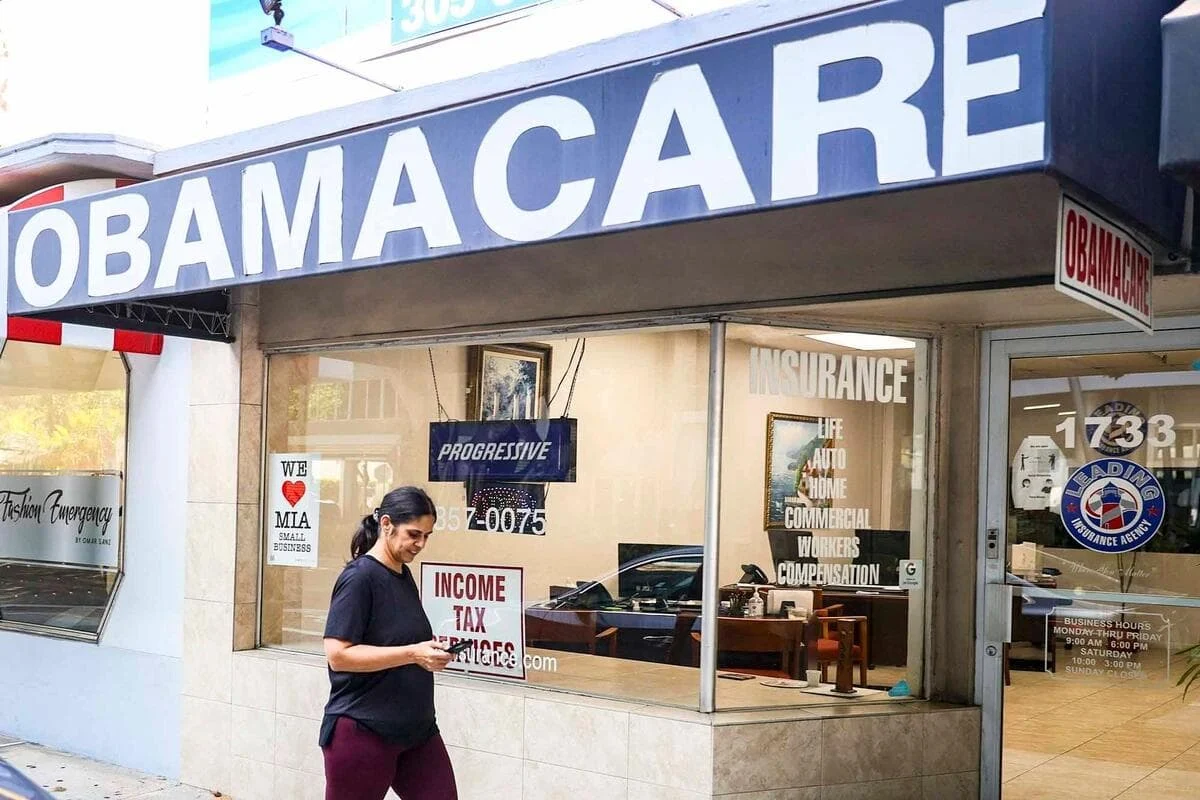
A recent report by the Paragon Health Institute has ignited a significant debate over the integrity of federal health insurance programs, asserting that taxpayers incurred an estimated $65 billion in costs in 2024 for health insurance premiums covering individuals who either did not exist or failed to meet eligibility criteria. This substantial sum, detailed in the institute’s August 26 report, points to widespread issues within the expanded Medicaid program and the Affordable Care Act (ACA) Marketplace, commonly known as Obamacare. Researchers concluded that these two signature programs of the ACA improperly enrolled a combined 14.3 million individuals in 2024, raising critical questions about program oversight, administrative efficiency, and the potential for fraud and waste.
The findings from Paragon Health Institute suggest that approximately 34 percent of all Marketplace enrollees in 2024 were either fraudulent, duplicates, or simply did not satisfy the necessary benefit requirements. Alarmingly, this trend reportedly escalated in the subsequent year, with improper exchange enrollment increasing by more than 26 percent from 2024 to 2025, reaching an estimated 6.5 million enrollees. These figures underscore a persistent challenge in managing the complex landscape of federal health subsidies and coverage.
Understanding the Affected Programs: Expanded Medicaid and Obamacare
To fully grasp the scope of the alleged improper enrollments, it is essential to understand the structure and eligibility criteria of the programs under scrutiny:
- Expanded Medicaid: This component of the ACA allows states to extend Medicaid coverage to individuals earning up to 138 percent of the federal poverty level (FPL). For context, in 2024, this threshold was approximately $35,600 for a family of three, or roughly $20,120 for an individual. Traditional Medicaid, by contrast, typically covers individuals up to 100 percent of the FPL. The expansion was designed to cover a broader segment of low-income adults who previously fell into a "coverage gap."
- Obamacare (ACA Marketplace Subsidies): The ACA Marketplace offers subsidized health insurance plans to individuals and families who do not have access to affordable employer-sponsored coverage. In 2024, eligibility for premium tax credits through the Marketplace extended to those earning up to 400 percent of the FPL. This translated to approximately $103,000 for a family of three or about $58,320 for an individual. These subsidies significantly reduce the cost of premiums, making health insurance more accessible.
Both programs are administered through the Affordable Care Act Marketplace, with actual coverage often provided by commercial insurance companies, which then receive premium payments, partly subsidized by federal funds.
The Mechanics of Improper Enrollment: A Deep Dive into Paragon’s Claims
The Paragon Health Institute’s report, based on an analysis of federal data from surveys, program enrollment records, and spending figures, identifies several categories of improper enrollment:
Medicaid Expansion Irregularities
For Medicaid expansion, researchers estimated that over 9 million enrollees in 2024 likely did not qualify for benefits. The reasons cited include:
- Income Exceeding Limits: Many individuals may have had incomes above the 138 percent FPL threshold. While surveys can have reporting discrepancies, the scale suggests significant issues.
- Citizenship, Immigration, or Residency Requirements: Non-compliance with these foundational requirements means individuals should not have been enrolled in a federally funded program.
- Misdirection to Traditional Medicaid: Some individuals might have qualified for traditional Medicaid but were improperly placed into the expansion program, potentially affecting state-federal funding mechanisms and reporting.
Obamacare Marketplace Vulnerabilities
The report highlights particular vulnerabilities within the Obamacare Marketplace, especially concerning the "$0 premium policies" that became more prevalent in the post-COVID years. These policies, often enabled by enhanced federal subsidies introduced by legislation like the American Rescue Plan Act of 2021 and extended by the Inflation Reduction Act of 2022, made plans extremely attractive, sometimes costing enrollees nothing out of pocket. While intended to boost coverage, this environment, according to Paragon President Brian Blase, became a target for fraud.
Blase, testifying before Congress in December, elaborated on how unscrupulous insurance brokers allegedly enrolled individuals in the program without their knowledge. This practice not only generated commission checks for the brokers but also triggered premium payments from the federal government to insurance companies for non-existent or unaware policyholders. These "phantom enrollees" are often detected by their complete lack of activity or claims once enrolled.
Further supporting the claim of widespread issues, the report noted that 28 states recorded more people enrolled in Obamacare than the number of residents in those states who actually met the income requirements. This statistical anomaly suggests a significant disconnect between reported enrollments and actual eligible populations.
Contextualizing the Think Tank: Paragon Health Institute
The Paragon Health Institute is a conservative think tank focused on health policy. Their reports often advocate for market-based reforms and critique government-led healthcare initiatives, particularly the ACA. Brian Blase, its president, previously served as a Special Assistant to the President for Healthcare Policy at the National Economic Council under the Trump administration, giving him firsthand experience and a particular perspective on federal health programs. The institute’s consistent focus on identifying waste, fraud, and abuse in government spending is a central theme in their research.
A History of Scrutiny and Skepticism
This is not the first time Paragon Health Institute has published analyses questioning the integrity of ACA enrollments. Their previous reports have also drawn attention to potential improper enrollments, though the $65 billion cost calculation is a new and striking addition. These earlier analyses have, however, been met with skepticism from various quarters, including state-based marketplaces and other health policy organizations.

-
Covered California’s Stance: Covered California, the state’s health insurance marketplace and one of the largest and most successful in the nation, has consistently pushed back against claims of systemic fraud. In response to previous Paragon reports, Covered California stated, "There is no evidence of systemic fraud, waste, or abuse in [state-based marketplaces]." They argue that their rigorous verification processes and data matching systems are robust enough to prevent widespread malfeasance.
-
America’s Health Insurance Plans (AHIP): Representing the health insurance industry, AHIP also weighed in on the interpretation of "phantom enrollees." In a 2025 statement, AHIP countered the notion that a lack of claims necessarily indicates fraud. "A ‘no-claims’ year is evidence that a consumer stayed healthy or only had a few months of coverage—not that taxpayer money was misdirected or that their policy was illegitimate," their statement read. This highlights the complexity of distinguishing between genuine low-utilization and fraudulent enrollment.
-
Center on Budget and Policy Priorities (CBPP): The CBPP, a progressive think tank, has also challenged Paragon’s research methodology. Regarding a previous Paragon report, the CBPP noted, "There are a number of reasons why people who report incomes somewhat above 138 percent of the poverty line in a survey may be eligible for the Medicaid expansion." They argue that survey data can be imprecise, and income fluctuations, deductions, or specific state-level eligibility rules can mean individuals who appear over the limit in a survey might still legitimately qualify. For instance, modified adjusted gross income (MAGI) calculations used for Medicaid eligibility can differ from simple gross income reported in surveys.
These differing viewpoints underscore the ongoing debate about the actual scale of improper payments versus administrative complexities and data interpretation in large-scale government programs.
Government Accountability Office Confirms Vulnerabilities
Despite the skepticism from some quarters, independent government watchdogs have also identified significant vulnerabilities within the ACA programs. In a December 2025 report, the Government Accountability Office (GAO) provided compelling evidence of actual fraud:
- Nonexistent Identities: GAO investigators successfully enrolled 20 nonexistent identities into Obamacare in 2024. This was achieved using easily created counterfeit documents and Social Security numbers that had never been issued to any person. As of September 2025, 18 of these false enrollments were still active, costing taxpayers over $10,000 per month. This demonstration proved that the system was susceptible to sophisticated fraudulent attempts.
- Death File Matches: The GAO also uncovered 26,000 accounts that received subsidies in 2023 based on Social Security numbers matching records in the Social Security Administration’s death file. This points to a failure in cross-referencing databases, allowing subsidies to continue for deceased individuals. The report indicated that taxpayers paid over $94 million in subsidies for one year based on these false enrollments alone.
The GAO’s findings lend significant credence to the argument that program integrity issues are not merely theoretical or statistical anomalies but involve concrete instances of fraud and waste.
Federal Government’s Aggressive Response and Savings
In response to growing concerns and internal findings, the federal government has taken aggressive action over the past two years to identify and root out improper enrollments. These measures reflect a concerted effort to enhance program integrity and protect taxpayer funds:
- Agent and Broker Suspensions: The government has suspended agents and brokers from participating in the program due to suspected fraudulent activities. This targets the "unscrupulous brokers" identified by Brian Blase.
- Reinstatement of Data Matching: Efforts have been made to reinstate and improve data matching between federal programs. This is crucial for preventing duplicate enrollments, ensuring eligibility, and catching discrepancies like those involving deceased individuals.
- Cancellation of Phantom Enrollments: Systematic reviews and investigations have led to the cancellation of enrollments identified as "phantom policies," where individuals were enrolled without their consent or knowledge.
- Medicaid Eligibility Recertification: For Medicaid, more stringent eligibility recertification processes have been implemented, requiring beneficiaries to prove their continued eligibility every six months. This addresses the challenge of maintaining accurate enrollment rolls as individuals’ financial situations change.
These actions have begun to yield tangible results. The Centers for Medicare and Medicaid Services (CMS) reported in January that it had removed over 1 million enrollees. This group included individuals concurrently enrolled in Obamacare and Medicaid or the Children’s Health Insurance Program (CHIP), as well as those who had failed to file and reconcile previously received subsidies. Additionally, another 250,000 individuals were removed who had been enrolled without their consent, directly addressing the "phantom enrollee" issue.
These significant cleanup efforts have produced an estimated $10 billion in annual savings, according to a government statement. While substantial, this figure represents a fraction of the $65 billion alleged by the Paragon Health Institute, highlighting the potential scale of the problem and the ongoing challenges in complete recovery and prevention.
Broader Impact and Implications
The revelations from the Paragon Health Institute report, coupled with the GAO’s findings and the government’s remedial actions, carry several significant implications:
- Taxpayer Burden and Public Trust: The alleged misspending of billions of dollars erodes public trust in government efficiency and fiscal responsibility. Taxpayers, who fund these programs, expect their contributions to be used judiciously and effectively.
- Program Sustainability: Widespread improper enrollments, whether due to administrative error or outright fraud, threaten the long-term financial sustainability of critical health programs like Medicaid and the ACA Marketplace.
- Policy Debate on ACA: These findings fuel ongoing political debates about the Affordable Care Act itself. Critics often point to administrative costs and potential for fraud as reasons to reform or repeal the law, while proponents argue that such issues are manageable and do not negate the benefits of expanded coverage.
- Challenges of Large-Scale Administration: Administering vast social programs that aim to cover millions of people inevitably comes with immense challenges in verification, oversight, and fraud prevention. The balance between ease of access to care and rigorous integrity checks is a constant struggle for policymakers.
- Need for Continued Vigilance: The fact that both private think tanks and government watchdogs are identifying similar issues underscores the need for continuous vigilance, technological upgrades in data matching, and robust enforcement mechanisms to safeguard federal funds. The $10 billion in savings demonstrates that proactive measures can make a difference, but the alleged remaining gap indicates a persistent problem.
Conclusion
The Paragon Health Institute’s report, claiming $65 billion in improper health insurance enrollments in 2024, has brought renewed attention to the integrity of the nation’s federal health programs. While the report’s methodology and the scale of its findings have faced skepticism from some organizations, the concrete evidence of fraud presented by the Government Accountability Office confirms that significant vulnerabilities exist. The federal government’s subsequent aggressive actions, leading to $10 billion in annual savings, demonstrate a recognition of these issues and a commitment to addressing them. However, the sheer magnitude of the alleged improper spending highlights the ongoing complexities of administering large-scale health programs and the critical need for sustained efforts to ensure that taxpayer dollars are spent responsibly, effectively, and on genuinely eligible beneficiaries. The debate over the true extent of the problem and the most effective solutions will undoubtedly continue as policymakers strive to balance broad access to healthcare with robust program integrity.

