
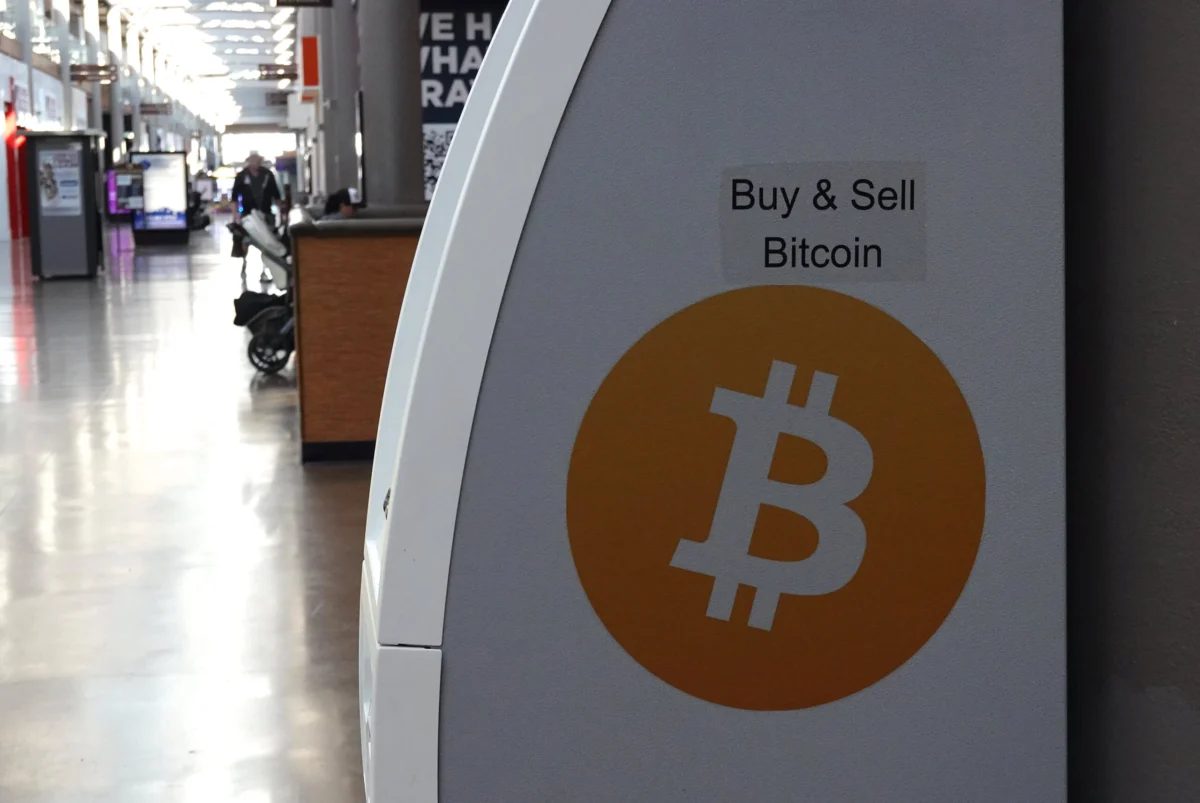
Bitcoin, the world’s preeminent cryptocurrency, has experienced a remarkable resurgence in August 2026, registering a rally exceeding 20% this week alone. This significant upward movement has propelled its price to levels not witnessed since May, rekindling optimism among investors and analysts alike. However, despite the current bullish momentum, participants on the prediction market platform Kalshi are forecasting a more tempered outlook for the year’s end, estimating Bitcoin’s price to stabilize around $75,000. This projection, derived from the average of various contracts on the platform, suggests a slight retrenchment from its current trading levels, which recently surpassed $77,000.
The catalysts behind this impressive rally are multifaceted, intertwining critical macroeconomic interventions with significant legislative progress in the digital asset space. Primarily, a decisive intervention by the U.S. Treasury to alleviate a sell-off in the bond market played a crucial role. This action effectively eased pressure on a broad spectrum of risk assets, including cryptocurrencies, by stabilizing yields and improving overall market liquidity. Concurrently, a high-profile event at the White House, featuring President Donald Trump, leading crypto executives, and key regulators, provided a powerful political impetus. The unified front at this gathering underscored a collective push for Congress to approve the long-anticipated market structure Clarity Act proposal, a legislative initiative widely seen as pivotal for the future of the cryptocurrency industry.
The Anatomy of Bitcoin’s August Rally: A Dual Catalyst Approach
The confluence of a stabilizing macroeconomic environment and a clear signal of regulatory intent created a potent tailwind for Bitcoin. Understanding these two primary drivers is essential to grasping the current market dynamics and future outlook.
-
U.S. Treasury Intervention and Its Ripple Effect:
In early August 2026, global financial markets were grappling with renewed volatility, particularly in the bond market. Rising inflation expectations, coupled with concerns over sovereign debt levels and an aggressive monetary policy stance from the Federal Reserve earlier in the year, had pushed U.S. Treasury yields significantly higher. This upward pressure on bond yields typically translates to increased borrowing costs for corporations and consumers, tightening financial conditions and making riskier assets less attractive. As institutional investors sought the safety of government bonds, capital often flowed out of more speculative investments like equities and cryptocurrencies.The U.S. Treasury’s intervention, which reportedly involved strategic bond purchases or other liquidity-enhancing measures, aimed to calm these market jitters and prevent a broader contagion. By injecting liquidity and signaling a commitment to market stability, the Treasury effectively lowered bond yields or at least arrested their rapid ascent. This move had an immediate and positive impact on risk assets. When the perceived risk-free rate (represented by Treasury yields) declines or stabilizes, the relative attractiveness of assets with higher growth potential, such as technology stocks and cryptocurrencies, increases. Investors become more willing to allocate capital to these assets, driving up their prices. For Bitcoin, which has increasingly demonstrated correlation with broader risk asset performance, this macroeconomic pivot was a foundational element of its recent upward trajectory. It underscored the growing interconnectedness of the crypto market with traditional finance, a trend that has accelerated over the past few years.
-
The Clarity Act: A Legislative Cornerstone for Crypto:
The second, equally significant catalyst was the renewed political momentum behind the market structure Clarity Act. For years, the cryptocurrency industry has operated under a patchwork of regulations, with conflicting guidance from various agencies like the Securities and Exchange Commission (SEC) and the Commodity Futures Trading Commission (CFTC). This regulatory ambiguity has been a persistent hurdle for institutional adoption, hindering innovation and creating legal uncertainty for businesses operating in the space. Many firms have expressed reluctance to fully commit to the U.S. market without a clear, comprehensive regulatory framework.The Clarity Act proposal aims to address these fundamental issues by providing a definitive legal classification for digital assets, distinguishing between securities and commodities, and outlining clear rules for their issuance, trading, and custody. Such clarity is expected to foster investor protection, prevent market manipulation, and enable crypto businesses to operate with greater confidence and less legal risk. The White House event, featuring President Trump alongside a bipartisan group of legislators, key regulatory figures, and prominent crypto industry leaders, sent a powerful signal that the executive branch and segments of Congress are serious about advancing this legislation. The presence of the President himself elevated the discussion from niche industry advocacy to a matter of national economic importance, suggesting a significant political will to push the Act through Congress. This endorsement from the highest office is perceived as a critical step towards de-risking the crypto market from a regulatory standpoint, making it more appealing to a broader range of investors, including large institutional players who require robust legal certainty.
Prediction Markets and the Kalshi Outlook: A Glimpse into Collective Sentiment
Prediction markets, like Kalshi, offer a unique lens through which to gauge collective sentiment and expectations about future events. Unlike traditional polls or surveys, these platforms involve real money at stake, theoretically incentivizing participants to trade based on their genuine beliefs and information, rather than mere speculation or casual opinion. This mechanism often imbues prediction markets with a certain predictive power, sometimes outperforming expert forecasts.
Kalshi’s contracts for Bitcoin’s year-end price are structured in a binary "yes" or "no" format, asking traders to wager on whether the cryptocurrency will fall within specific $5,000 price ranges at midnight on January 1, 2027. These contracts are then resolved using highly reliable Bitcoin price data from CF Benchmarks, ensuring transparency and accuracy.
The evolution of Kalshi’s forecast provides a telling narrative of changing market sentiment. Before Wednesday’s rally and the White House event, Kalshi traders had largely coalesced around a year-end price of approximately $66,000 for Bitcoin. This lower estimate reflected the prevailing cautious sentiment amidst ongoing regulatory uncertainties and a less stable macroeconomic backdrop. However, the dramatic events of this week — the Treasury’s intervention and the strong political push for the Clarity Act — demonstrably shifted these expectations. The average forecast subsequently climbed to $75,000.
While this represents a significant upward revision, it also carries a nuanced message. Bitcoin’s current trading levels are above $77,000, meaning the $75,000 year-end projection implies a slight decline from its immediate peak. This suggests that while traders acknowledge the strength of the recent rally and the positive catalysts, there remains a degree of caution regarding its sustainability or the potential for further exponential growth in the short term. It could indicate an expectation of consolidation after the rapid ascent, or an acknowledgment of potential headwinds that might still emerge before the year concludes.
Bitcoin’s Journey in 2026: A Chronology of Volatility and Growth
The current rally in August is not an isolated event but rather the latest chapter in Bitcoin’s characteristically volatile yet ultimately upward-trending journey through 2026. The year began with Bitcoin consolidating gains from a recovery period in late 2025, trading in a range that reflected lingering economic uncertainties and the ongoing debate surrounding digital asset regulation.
- Early 2026 Consolidation: The first quarter saw Bitcoin largely trading sideways, absorbing supply from earlier investors and slowly building a base. Institutional interest remained strong, but significant capital inflows were tempered by the lack of clear regulatory guidance and macroeconomic jitters, including persistent inflation concerns.
- The May Peak and Subsequent Correction: Bitcoin experienced a significant rally leading into May, reaching heights that represented a substantial recovery from the lows of the previous bear market cycle. This surge was partially driven by growing anticipation of institutional products and a general improvement in risk appetite across global markets. However, this peak was followed by a sharp correction, erasing a significant portion of those gains. This downturn was attributed to a combination of factors: renewed concerns about global economic growth, a tightening liquidity environment, and a specific regulatory crackdown in a major Asian market that triggered widespread selling pressure. The market entered a period of retrenchment, leaving many investors wondering about the immediate future.
- The August Recovery: The past week’s events have decisively broken this period of stagnation. The U.S. Treasury’s intervention, which prevented a further escalation of bond market distress, provided the necessary liquidity and confidence for capital to flow back into risk assets. This macroeconomic tailwind was then amplified by the White House’s unequivocal support for the Clarity Act. The combination proved potent, quickly pushing Bitcoin past critical resistance levels and re-establishing an upward trajectory not seen since its May peak. This chronological context highlights Bitcoin’s resilience and its increasing responsiveness to both macro-financial policy and legislative developments.
Broader Market Reactions and Expert Analysis
The recent developments have elicited varied but generally positive reactions across the financial spectrum. Institutional investors, who have been increasingly allocating to digital assets, view the Clarity Act’s progress as a crucial de-risking factor.
"The dual tailwind of macroeconomic stability and regulatory clarity is precisely what institutional capital needs to commit more fully to the digital asset space," commented a senior portfolio manager at a prominent hedge fund, requesting anonymity due to ongoing client discussions. "The Treasury’s move signals a commitment to broader market health, and the White House’s push for the Clarity Act addresses the single biggest impediment to widespread adoption: regulatory uncertainty."
Crypto analysts have also weighed in, emphasizing the long-term implications. Dr. Anya Sharma, a leading blockchain economist, stated, "While the 20% rally is impressive, the true significance lies in the potential for the Clarity Act to fundamentally reshape the U.S. crypto landscape. A well-defined regulatory framework will not only attract more institutional players but also foster innovation by providing a stable environment for startups and developers."
However, some experts advise tempered enthusiasm. "Prediction markets like Kalshi, while insightful, are still a reflection of sentiment and can be volatile themselves," cautioned Mr. Ben Carter, a market strategist specializing in emerging technologies. "The $75,000 year-end projection, slightly below current levels, suggests that even informed traders are factoring in potential future headwinds or a period of consolidation. The Clarity Act still needs to pass Congress, and its final form could differ from the current proposal." This cautious optimism underscores the inherent volatility and evolving nature of the cryptocurrency market.
Implications for the Cryptocurrency Ecosystem and Beyond
The potential passage of the Clarity Act and the demonstrated responsiveness of Bitcoin to macro-financial policy carry profound implications for the entire cryptocurrency ecosystem and its integration into the global economy.
- Regulatory Blueprint: Should the Clarity Act successfully pass, it could serve as a significant regulatory blueprint for other nations grappling with how to oversee digital assets. A clear, comprehensive framework in the world’s largest economy would set a precedent, potentially leading to more harmonized global regulations. This would reduce compliance burdens for international crypto firms and foster a more interconnected global digital asset market.
- Accelerated Institutional Adoption: Regulatory certainty is the bedrock upon which institutional investment is built. With clearer rules on asset classification, custody, and trading, major financial institutions—pension funds, endowments, sovereign wealth funds—will have a much stronger basis to allocate a larger portion of their portfolios to Bitcoin and other digital assets. This influx of institutional capital would not only boost prices but also significantly enhance market liquidity and stability.
- Innovation and Economic Growth: A well-defined regulatory environment provides a secure foundation for innovation. Crypto startups and blockchain developers would face less uncertainty, encouraging investment in new technologies, decentralized applications (dApps), and novel financial services. This could unlock significant economic growth, creating jobs and fostering technological leadership for the U.S. in the burgeoning digital economy.
- Mainstream Integration: As regulatory clarity increases and institutional adoption deepens, cryptocurrencies are likely to become even more integrated into mainstream financial products and services. This could include broader availability of crypto-backed loans, expanded payment options, and more seamless integration with traditional banking systems.
- Enhanced Investor Protection: A core tenet of the Clarity Act is investor protection. By establishing clear rules and oversight mechanisms, the legislation aims to reduce instances of fraud, market manipulation, and other illicit activities, thereby increasing public trust in the digital asset market.
- Challenges Ahead: Despite the positive momentum, challenges remain. The legislative process can be unpredictable, and the Clarity Act could still face amendments or resistance. Furthermore, the broader macroeconomic landscape remains dynamic, with inflation and interest rates constantly influencing market sentiment. Technological advancements and the emergence of new digital assets also mean the regulatory framework will need to be adaptable and forward-looking.
The Path Forward: Navigating Uncertainty with Optimism
Bitcoin’s current rally signals a renewed confidence in the digital asset market, driven by a powerful combination of proactive macroeconomic policy and a concerted political push for regulatory clarity. The White House event, featuring President Trump and key industry players, marks a significant turning point, underscoring the growing recognition of cryptocurrencies’ importance in the global financial system.
While prediction markets like Kalshi offer a measured outlook, suggesting a stabilization around $75,000 by year-end, the underlying factors that have fueled this rally—a more stable bond market and the prospect of a comprehensive regulatory framework—point towards a more mature and resilient cryptocurrency ecosystem. The successful passage of the Clarity Act could indeed be a watershed moment, paving the way for unprecedented institutional engagement and mainstream adoption. As 2026 draws to a close, all eyes will remain on Washington and global financial markets, as the future trajectory of Bitcoin and the broader digital asset landscape continues to unfold.
Disclosure: CNBC and Kalshi have a commercial relationship that includes customer acquisition and a minority investment.

