
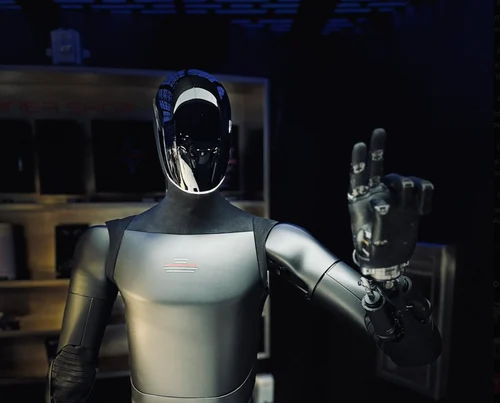
The global landscape of advanced robotics is witnessing a dramatic acceleration, with significant capital flows concentrating on high-growth, newly listed entities in the physical AI sector. A prime example is the Chinese robotics maker Unitree, which recently experienced a blockbuster Shanghai debut, with its IPO reportedly oversubscribed 5,550 times. This fervent retail interest in physical AI underscores Beijing’s strategic intent to establish dominance in the burgeoning humanoid robotics market. Simultaneously, across the Pacific, Tesla’s manufacturing hub in Fremont, California, is undergoing a profound transformation, signaling a pivotal shift in its strategic focus from electric vehicles to the mass production of robotaxis and humanoid robots, according to a recent JPMorgan analyst report.
Tesla’s Strategic Pivot: Fremont’s Transformation into a Robotics Hub
JPMorgan analyst Rajat Gupta, who closely tracks Tesla, recently conducted a comprehensive tour of the company’s Fremont factory. His observations, shared with clients this week, reveal a facility in active transition, moving beyond its foundational role as the birthplace of Tesla’s iconic electric vehicles. The sprawling, approximately 5-million-square-foot complex is now being reconfigured to facilitate the large-scale manufacturing of Tesla’s autonomous robotaxis and its much-anticipated Optimus humanoid robots.
A significant indicator of this strategic pivot is the decommissioning of the production lines for the Model S and Model X, two of Tesla’s premium and long-standing EV models, which concluded in May. These areas are not lying dormant; instead, they are being rapidly repurposed for the installation of advanced manufacturing equipment dedicated to Optimus. Gupta’s report noted that these new production lines were "tarped off at the time of our visit," suggesting active installation and a degree of proprietary secrecy surrounding the operation. This four-month transition period, following the cessation of S/X production, is largely on schedule, aligning with Tesla’s previously communicated timelines.
The initial deployments of Optimus humanoids are slated for the second half of 2026. These early units will not immediately integrate into Tesla’s factory operations. Instead, they are earmarked for an initiative dubbed "Optimus Academy." This specialized environment will serve as a critical training ground, enabling the robots to interact with real-world scenarios and collect invaluable data to refine their capabilities. Following this intensive training phase, Optimus robots are expected to be deployed internally within Tesla’s own factories, further enhancing data collection and optimizing operational efficiencies. Commercial sales to external customers are projected to commence as early as the second half of 2027, marking Tesla’s entry into the broader humanoid robotics market.
Optimus: A Detailed Roadmap to Commercialization
Tesla’s vision for Optimus is ambitious, extending beyond mere factory automation. The company aims for a production target of approximately 1 million units at the Fremont factory, with a longer-term aspiration of manufacturing around 10 million units at its Gigafactory in Texas. This scale underscores the company’s belief in the transformative potential of humanoid robots across various sectors.
The development timeline for Optimus is meticulously planned. The "Optimus Academy" phase in 2H26 is crucial for developing robust, adaptive AI. By retaining data ownership internally and aligning humanoid data collection with its established Full Self-Driving (FSD) methodology, Tesla seeks to maintain a competitive edge and avoid third-party data complexities. This approach is fundamental to preserving its long-term differentiation in a rapidly evolving market.
While the design finalization of Optimus represents a significant milestone, aesthetics are still "a work in progress," indicating a focus on functionality and scalability first. The unveiling of the Gen 3 Optimus is strategically timed closer to its Start of Production (SoP) to protect competitive advantages, with Gen 4’s scope and capabilities being informed by the real-world performance and field experience of Gen 3.
The immediate benefits of Optimus within Tesla’s own operations are expected in "stamping and body-in-white operations," areas characterized by repetitive and potentially hazardous tasks. In contrast, general assembly lines, which still demand a high degree of human dexterity and problem-solving, are considered a "longer-dated application" for humanoids, highlighting the incremental nature of AI integration into complex manufacturing processes.
The Robotaxi Revolution: FSD v15 and Cybercab’s Economic Promise
Beyond humanoid robots, the Fremont factory’s transformation is also deeply intertwined with Tesla’s robotaxi ambitions. Gupta’s factory tour reinforced "greater conviction in the robotaxi fleet ramp through late 2026 and early 2027," with timelines for both robotaxis and Optimus aligning with the company’s long-term strategic thesis.
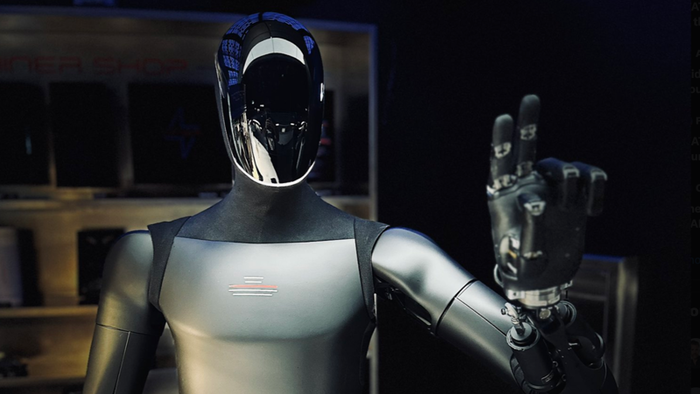
The ramp-up of Cybercab production is intrinsically linked to the anticipated launch of FSD v15 later this year. Management expressed significant optimism regarding the trajectory and pace of Cybercab production, emphasizing that technology validation and "unboxed manufacturing" are progressing in parallel. Tesla is intentionally holding back on integrating Model Y units into the robotaxi fleet, a move that reflects strong confidence in its ability to rapidly scale the purpose-built Cybercab fleet in the near term.
FSD v15 is touted as a "step change in performance," comparable to the substantial leap observed from v13 to v14. Key enhancements in v15 include a significant increase in parameter count, a larger context window for AI processing, and an approximate 20% reduction in latency. The upgrade encompasses seven core technologies, with roughly 40% already undergoing testing within the robotaxi fleet, yielding "encouraging" initial feedback. Tesla’s continuous focus is on minimizing regression in core driving functions while introducing new capabilities, positioning FSD v15 as the "primary gateway to scaling unsupervised FSD."
For the demanding computational requirements of FSD v15 and future robotaxi models, Tesla’s current AI/HW4 stack is capable of supporting unsupervised FSD. However, the company is already looking ahead with its AI4.5 compute system, designed to accommodate rising compute and memory demands as robotaxi models scale and context windows expand. This advanced system offers approximately 10% more FLOPS (Floating Point Operations Per Second) and double the memory, ensuring future-proofing for increasingly sophisticated AI algorithms.
The economic model for robotaxis remains compelling. Tesla highlights that current robotaxi economics, utilizing Model Y and Model 3 vehicles, project total ownership costs of roughly $0.60 to $0.70 per mile at average personal-vehicle utilization rates. These costs drop further to approximately $0.50 to $0.60 per mile at utilization rates four to five times higher, typical for robotaxis. This is significantly below the estimated $2.50 to $3 per mile charged by existing rideshare operators, presenting a disruptive potential for the mobility market.
Tesla’s vision, however, extends far beyond traditional ridesharing, which represents only a "low-single-digit percentage" of the overall mobility market. The Cybercab platform is designed to broaden the Total Addressable Market (TAM) by driving total ownership costs down to an ambitious $0.30 per mile. Management also reiterated that Cybercab is merely the "initial form factor," with "additional vehicle types expected to follow as the platform evolves," citing the Robovan demonstration from a previous event as an example of future possibilities.
Manufacturing Innovation at Fremont: Giga Casting and Unboxed Assembly
The factory tour provided insights into Tesla’s innovative manufacturing processes that underpin its ambitious production targets. The Fremont facility serves as a primary test bed for innovation, leveraging advanced techniques to enhance manufacturing speed and precision.
One such innovation is Tesla’s "giga-casting" process, first introduced with the Model Y. This revolutionary approach consolidates approximately 70 underbody components that would otherwise require complex welding, significantly streamlining production. This reduces the number of robots needed on the welding line; the Model Y utilizes roughly 300 robots compared to approximately 1,000 for the Model 3, demonstrating a substantial efficiency gain. Tesla attributes this advancement to its deep materials-science expertise, including the development of a custom aluminum alloy, a capability enhanced through its collaboration with SpaceX. For stamping operations, Tesla employs Schuler presses equipped with six progressive, interchangeable dies, stamping around 10 visible vehicle components in-house while sourcing hundreds of other stamped parts from suppliers.
Another key innovation is "unboxed manufacturing," which is being leveraged for Cybercab production. This process involves building large subassemblies independently and in parallel, allowing for open access from all angles and enabling simultaneous installation. This approach streamlines the overall assembly process, a critical factor for rapid scaling.
The factory also showcases Tesla’s extensive automation capabilities, featuring numerous custom-built robots and proprietary software designed to optimize efficiency. Production continues under several modernized tents, originally erected during the challenging "Model 3 production hell" days, which remain integral to the facility’s operations, highlighting Tesla’s adaptability and iterative approach to manufacturing.
Market Dynamics and Demand Drivers: FSD as a Catalyst
The recent rebound in Tesla’s unit volumes is attributed to progress in FSD functionality and a refreshed model lineup. Second-quarter 2026 unit sales surged by 25% year-over-year and 34% sequentially, marking the largest quarter-over-quarter increase since 2019. The introduction of new base variants, alongside the Model Y L and updated performance models, has broadened Tesla’s offerings, catering to a wider range of use cases and price points.

FSD has become a centerpiece of Tesla’s product portfolio, with improved functionality generating significant customer interest. Management noted a growing trend of customers visiting showrooms specifically to inquire about FSD. This sales momentum is evident internationally, with markets such as Australia, South Korea, and early results from Europe showing a "step change in demand" following the FSD rollout.
Regarding FSD approval in Europe, Tesla is pursuing a dual-track strategy. The company is engaging directly with the EU, where the approval timeline has been repeatedly delayed and is now expected in October. Concurrently, Tesla is working with individual countries like the Netherlands, whose regulatory frameworks could potentially be adopted by other EU member states. Early driving data from Europe indicates promising safety metrics, including approximately five times fewer collisions across about 65 million kilometers of FSD driving, which management believes is gradually increasing regulatory momentum. Once approved, activation in European markets is anticipated to be relatively swift, measured in "weeks rather than months or quarters."
FSD pricing remains iterative in the near to medium term, but it represents a "significant long-term opportunity." The transition from upfront FSD purchases to a subscription-only model is designed to maintain flexibility and capture the increasing value of continuous functionality improvements. In the near term, management is prioritizing vehicle activations and FSD usage, particularly given that roughly 50% of Tesla owners historically have not tried FSD, and a substantial cohort of customers who previously accessed older versions have not activated new subscriptions. Tesla observes strong customer retention once drivers experience the technology, supporting its one-month free trial for all new customers and the decision to maintain pricing at approximately $99 per month.
Financial Implications and Future Outlook
From a financial perspective, Tesla has implemented targeted pricing adjustments for certain Model Y and Model 3 variants globally to offset commodity-cost headwinds. Changes to interest-rate subsidies are also expected to alleviate some pressure on gross margins. The first and second-quarter 2026 gross margins were modestly affected by the shift toward subscription-based FSD monetization, as upfront FSD purchases concluded in the US and Canada in February 2026 and are being phased out elsewhere by August 2026.
The ramp-up of cathode and anode production, which commenced in January 2026, is expected to gradually contribute to cost-of-goods-sold efficiencies. Typically, it takes about 18 months for a plant to achieve an appropriate level of scale and utilization, though isolating the magnitude of these savings may be challenging amidst other dynamic factors. Broadly, Tesla’s operating philosophy remains centered on expanding the top line and leveraging its significant production capacity, with a target of up to 3 million units, compared to JPMorgan’s estimate of approximately 1.8 million deliveries in 2026.
The Geopolitical Dimension: US vs. China in Robotics
The emerging robotics race between the West and China is increasingly centered on two key players: Tesla with its Optimus and robotaxi initiatives, and China’s Unitree. Both companies are aggressively preparing to ramp up factory output and commercial deliveries over the next year, signaling a fierce competition for market leadership in physical AI.
However, the West faces a significant supply-chain challenge. China currently exerts substantial control over critical components essential for manufacturing humanoids. This includes rare-earth materials, which are vital for permanent magnets used in electric motors, as well as actuators, electric motors themselves, and various optical components. While Tesla is poised to lead the Western commercialization effort, a critical vulnerability exists: without secure domestic or allied sources for these components, the US risks building its nascent humanoid robotics industry on a supply chain that Beijing could potentially restrict. This geopolitical leverage is already evident in critical materials ranging from tungsten to germanium, where China has demonstrated its ability to influence global markets. The long-term implications of such supply chain dependencies could significantly impact the pace and cost of humanoid robot development and deployment in Western economies, adding a complex geopolitical layer to the technological race.
In conclusion, Tesla’s profound pivot at Fremont underscores a strategic reorientation towards a future dominated by physical AI. While the immediate commercial story for Optimus is slated for the second half of 2027, the groundwork being laid now is crucial for its long-term viability. This transformation, coupled with the rapid advancements in FSD and robotaxis, positions Tesla at the forefront of a global technological revolution. However, the broader context of a tightening US-China robotics race, particularly concerning critical supply chain dependencies, introduces an element of geopolitical risk that could shape the trajectory of this transformative industry for decades to come. Tesla shares remain locked in a bear market, suggesting that while the long-term vision is compelling, market skepticism persists regarding the immediate commercial viability and the execution risks involved in such an ambitious undertaking.

