
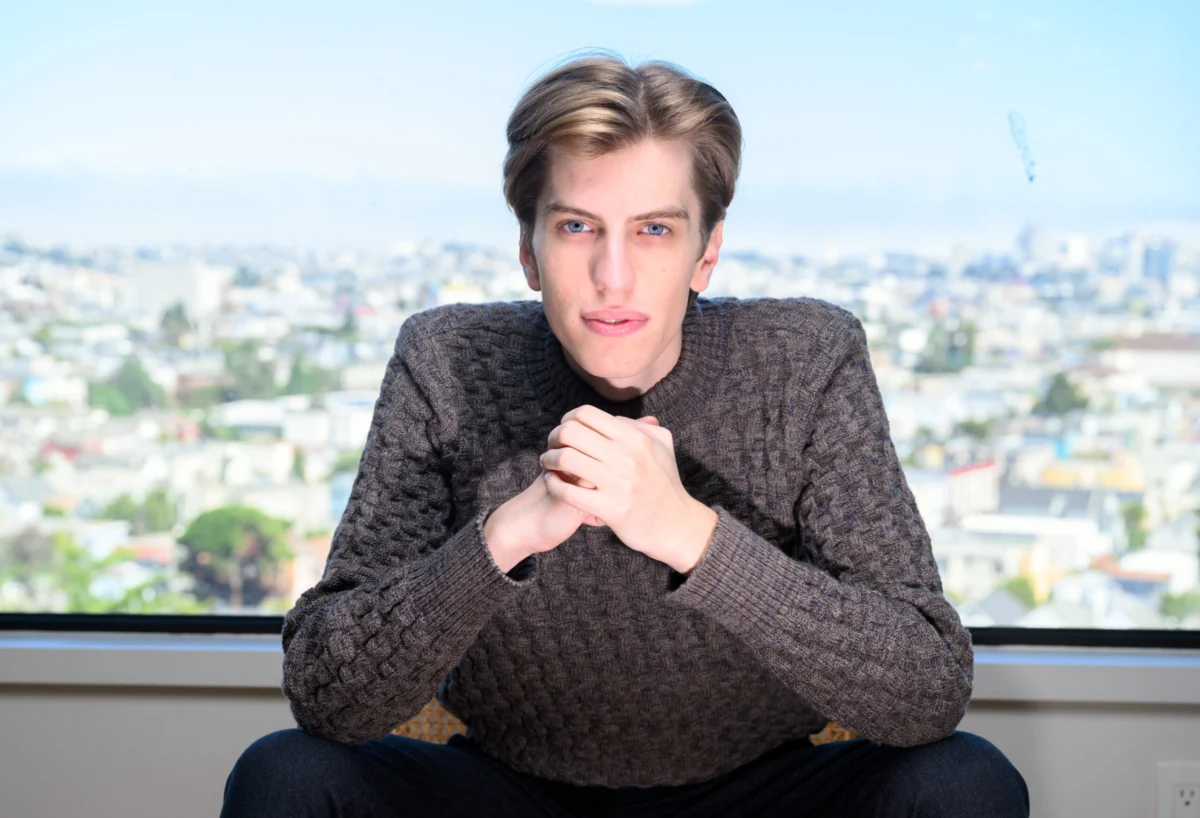
In a dramatic turn of events that has sent ripples through both Silicon Valley and Wall Street, Leopold Aschenbrenner, the self-proclaimed prophet of artificial super intelligence, witnessed the precipitous collapse of his AI-themed hedge fund, Situational Awareness. The fund, which at its zenith earlier this month commanded an impressive $45 billion in assets under management (AUM) and boasted gains exceeding 1,000% since its inception just two years prior, saw its holdings plummet by over 75% to approximately $10 billion. This staggering decline, triggered by tumbling semiconductor stocks and a cascade of margin calls, marks Aschenbrenner as the most high-profile casualty yet in the volatile, high-stakes arena of the artificial intelligence boom.
Aschenbrenner, a polarizing figure lauded by some as a visionary and dismissed by others as a lucky novice, had positioned his fund as a direct financial manifestation of his June 2024 manifesto, also titled "Situational Awareness." This sprawling, 165-page essay, which became mandatory reading in certain tech circles, argued that artificial general intelligence (AGI) was imminent and that few truly grasped the transformative speed of its arrival. For two years, his fund appeared to validate his audacious claims, capitalizing on an unprecedented surge in AI-related equities. However, the harsh realities of market dynamics, particularly the perils of highly leveraged positions in a frothy sector, ultimately exposed the limits of his singular vision.
The Meteoric Rise: A Prophet’s Investment Thesis
Leopold Aschenbrenner’s journey to the helm of a multi-billion-dollar hedge fund began with a prodigious intellect and an unconventional career path. A Columbia University valedictorian at the tender age of 19, Aschenbrenner quickly immersed himself in the nascent world of AI safety and effective altruism. His early career included a stint at the Future Fund, the philanthropic arm of Sam Bankman-Fried’s now-disgraced crypto empire, FTX. He later joined OpenAI’s Superalignment team in 2023, tasked with ensuring AI systems remained aligned with human interests, working under the prominent AI researcher Ilya Sutskever.
It was during his time at OpenAI that Aschenbrenner developed a profound conviction about the accelerated timeline for advanced AI. His controversial departure from the company in early 2024, following accusations of improperly sharing confidential information—a characterization he disputes, claiming he was raising legitimate security concerns—only amplified his voice. Weeks later, he unleashed "Situational Awareness," an essay that argued governments and the public were grossly underestimating the pace of AI development, predicting AGI within years. This essay captivated a segment of the tech community, positioning Aschenbrenner as an insider with unique insights into AI’s trajectory.
Capitalizing on this newfound fame and the pervasive excitement surrounding AI, Aschenbrenner launched his hedge fund, also named Situational Awareness, in July 2024. He quickly secured significant seed capital, reportedly raising $225 million from influential tech figures such as Stripe co-founders Patrick and John Collison, former GitHub CEO Nat Friedman, and investor Daniel Gross. This initial backing, coupled with his bold predictions, fueled an extraordinary two-year run. The fund meticulously tracked Aschenbrenner’s high-conviction AI plays, largely focusing on public equities in the semiconductor and AI infrastructure space, alongside strategic stakes in private companies like Anthropic. Before this month’s dramatic decline, Situational Awareness had delivered returns exceeding 1,000% since its inception, a performance that cemented Aschenbrenner’s reputation as a prodigy in the eyes of his online followers and a growing list of investors. The Wall Street Journal reported last month that Aschenbrenner was only 24 years old, adding to the mystique of his rapid ascent.
The Unraveling: A Week of Turmoil in July 2026
The turning point for Situational Awareness arrived with brutal swiftness in late July 2026. The fund’s heavy concentration in semiconductor stocks, many of which had seen stratospheric gains in the preceding months, became its Achilles’ heel. Key holdings included industry giants like SK Hynix and emerging infrastructure players like CoreWeave, both bellwethers of the AI hardware boom. As global markets reacted to a confluence of factors—including unexpectedly soft demand signals from certain tech sectors, growing concerns over geopolitical stability impacting supply chains, and a general recalibration of investor enthusiasm following an extended rally—semiconductor equities began to tumble.
The true vulnerability of Situational Awareness, however, lay in its aggressive use of leverage. Reports indicated the fund employed leverage as high as 400%, meaning it borrowed four times its equity to amplify its investment positions. While this strategy had supercharged returns during the bull run, it also exponentially magnified risk. As stock prices declined, the value of the fund’s underlying collateral eroded rapidly, triggering margin calls from its lenders. Unable to meet these demands with sufficient cash or additional collateral, Aschenbrenner’s fund was forced into a fire sale of its most liquid assets.
By Thursday, July 30, 2026, the situation had become critical. Situational Awareness was compelled to offload all its leveraged public stock bets at a significant discount. The buyer was Ken Griffin’s Citadel, one of the world’s largest and most sophisticated hedge funds, known for its market-making capabilities and willingness to capitalize on distressed assets. This forced liquidation reduced Situational Awareness’s holdings from its peak of $45 billion to a mere $10 billion, representing a staggering loss of approximately $35 billion in value. Sources with direct knowledge of the situation, speaking anonymously due to the sensitive nature of the information, confirmed the extent of the implosion.
A Visionary or a Risk-Taker? The Man Behind the Fund

Aschenbrenner’s background painted a picture of exceptional academic achievement coupled with a distinct personality. Born in Germany to physician parents, he displayed an early aptitude for mathematics and computer science, skipping several grades and graduating high school at 15. His academic paper at Columbia, "Existential Risk and Growth," showcased an early fascination with profound, long-term global challenges.
However, his social demeanor was often noted as unconventional. A Columbia classmate, Sofia Montrone, described him as "child-like" and "socially awkward" in a Zoom interaction before their 2021 graduation. Aschenbrenner himself has acknowledged his "weirdness" and "disagreeableness," traits he believes were stifled in German culture but became the source of his intellectual edge.
His critics on Wall Street were quick to point out his complete lack of prior experience in managing money before launching Situational Awareness in July 2024. Many seasoned traders viewed his success as more a product of market timing and luck during an unprecedented AI bubble than financial acumen. Jerry Diao, who runs a Wall Street coaching firm, encapsulated this sentiment: "A lot of people saw this blow-up as a matter of not if, but when. Maybe his views on AI are correct in the long run, but in the public markets, you have to be prepared for the short-term." The reliance on 400% leverage, a figure that raised eyebrows among veteran investors, made the fund inherently vulnerable to market corrections, regardless of the long-term potential of AI.
From Effective Altruism to OpenAI’s Firing: A Chronology of Controversies
Aschenbrenner’s career trajectory was heavily influenced by the Effective Altruism (EA) movement, which he helped establish at Columbia. This philosophy, popular in some tech circles, advocates for individuals to maximize their earnings to donate to causes that can most effectively help humanity. This network proved to be a critical pipeline for his early career.
After graduating in 2021, Aschenbrenner’s EA connections led him to the Future Fund, the philanthropic arm of FTX, founded by fellow effective altruist Sam Bankman-Fried. He worked there during the period leading up to FTX’s spectacular collapse, an association that, for his critics, further underscored a pattern of involvement with entities that ultimately faced significant controversy or legal scrutiny.
In 2023, Aschenbrenner moved to OpenAI, joining the critical Superalignment team. This team, under Ilya Sutskever, was dedicated to ensuring that advanced AI systems remain safe and beneficial. However, his tenure at OpenAI was short-lived and ended controversially. After a security breach at the company, Aschenbrenner authored an internal memo warning the board about inadequate security measures against foreign espionage, specifically naming China. In 2024, he was subsequently fired, with OpenAI accusing him of improperly sharing confidential information. Aschenbrenner disputed this characterization, stating he was merely raising legitimate concerns about the company’s security practices. Scott Aaronson, a computer scientist formerly with OpenAI, expressed sympathy for Aschenbrenner, telling CNBC, "It sounded like he was trying to do the right thing and they overreacted." An OpenAI spokesman declined further comment, referring to past statements disagreeing with many of Aschenbrenner’s claims.
Broader Market Implications and the Road Ahead
The dramatic unraveling of Situational Awareness serves as a potent cautionary tale for the broader AI investment landscape. While the long-term prospects of artificial intelligence remain robust, the incident highlights the extreme volatility and speculative fervor that can accompany nascent, transformative technologies. It underscores the distinction between a long-term technological vision and the short-term realities of public market investing, especially when amplified by aggressive financial engineering.
For institutional investors and venture capitalists, Aschenbrenner’s story will likely prompt a renewed scrutiny of funds that rely heavily on highly leveraged positions in concentrated sectors. The episode could temper some of the unbridled enthusiasm that has characterized AI investment, encouraging a more cautious approach to valuations and risk management. It also raises questions about the increasing trend of "prophet-investors"—individuals with strong technical backgrounds but limited financial experience—who leverage their perceived insights into specific technological futures to attract significant capital.
The near-collapse of Situational Awareness also casts a shadow over a deeply personal moment for Aschenbrenner. Sources close to the situation revealed that the fund’s implosion coincided with his wedding, scheduled for this weekend. Aschenbrenner is engaged to Avital Balwit, who serves as chief of staff for Anthropic CEO Dario Amodei, according to a Fortune profile. This personal milestone now arrives amidst a significant professional crisis, adding another layer to a story already rich with drama and consequence.
While the hedge fund itself did not immediately respond to requests for comment, the market has already delivered its verdict. The assets that were once a testament to Aschenbrenner’s "situational awareness" of an AI-driven future have been dramatically repriced by the cold, hard logic of Wall Street. The incident stands as a stark reminder that even the clearest vision of the future cannot entirely insulate an investor from the unpredictable currents and unforgiving mechanics of financial markets. The "wild ride" Aschenbrenner predicted for the AI age has indeed begun, but not in the way he, or his investors, might have anticipated.

