
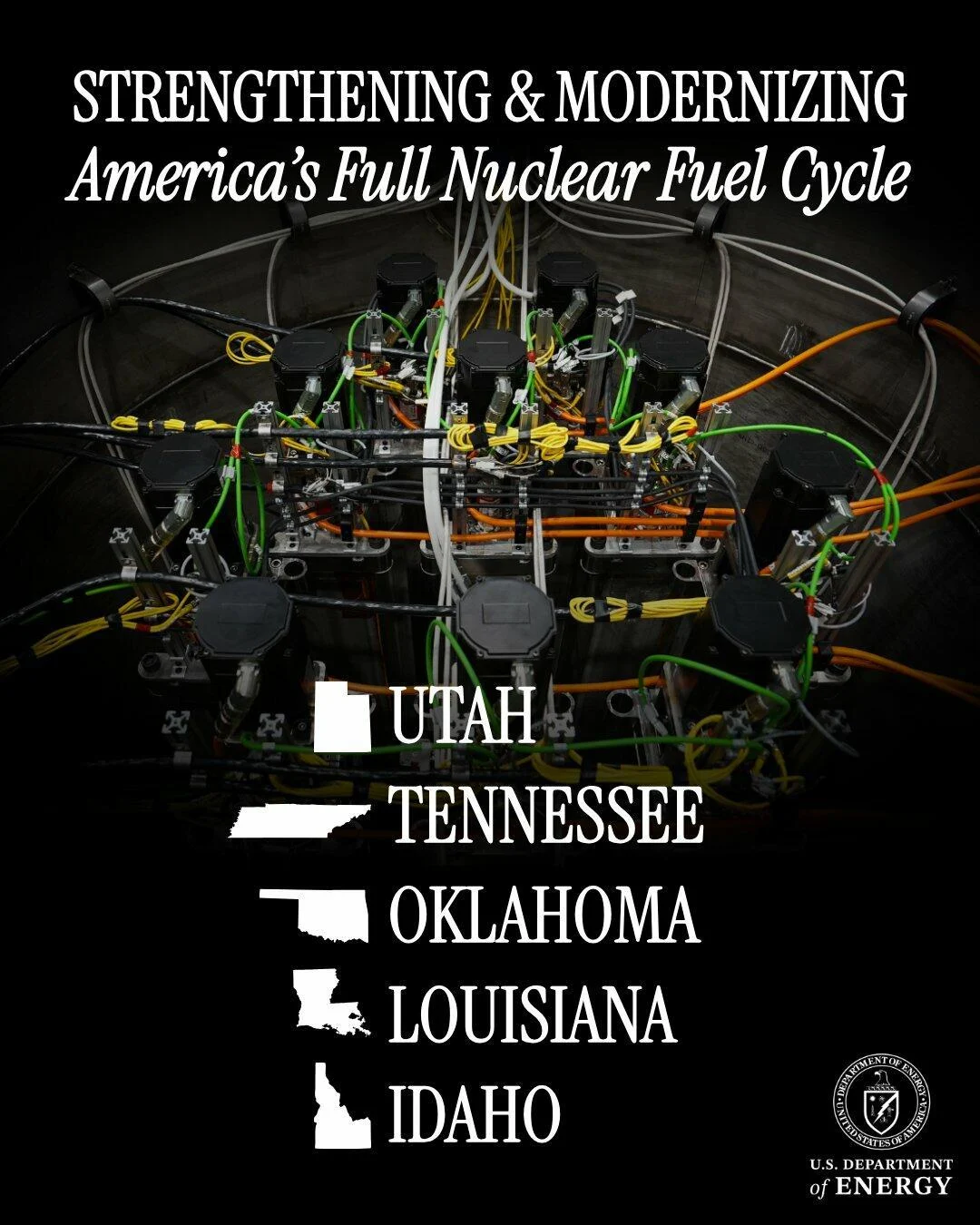
The Department of Energy (DOE) has officially named Utah, Tennessee, Oklahoma, Louisiana, and Idaho as the initial five potential host states for its ambitious Nuclear Lifecycle Innovation Campuses (NLICs). This selection marks a significant advancement in a federal initiative designed to compel states to embrace the entirety of the nuclear industry, moving beyond selective support for only its most convenient aspects. The move underscores a growing federal resolve to establish integrated nuclear ecosystems, addressing the long-standing challenge of managing the full scope of nuclear energy generation, from fuel production to waste disposition.
Understanding the Nuclear Lifecycle Innovation Campuses (NLICs)
The NLIC program represents a paradigm shift in how the United States approaches nuclear energy. Unlike traditional nuclear power plant projects, which often focus solely on electricity generation, these campuses are envisioned as comprehensive hubs for the entire nuclear fuel cycle. This includes critical stages such as uranium enrichment, fuel fabrication, the advanced reprocessing or recycling of used nuclear fuel, and the safe, final disposition of materials that cannot be reused. Beyond these core functions, a campus could also integrate advanced reactor designs, enhance power generation capabilities, house manufacturing facilities for nuclear components, and even co-locate energy-intensive data centers, creating a synergistic industrial complex.
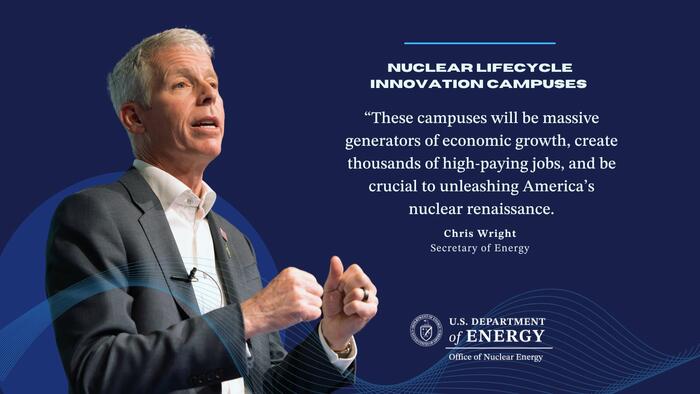
Energy Secretary Chris Wright formalized Memorandums of Understanding (MOUs) with the five selected states following a rigorous review process that saw 28 applications submitted from 26 states. These agreements are not final commitments but rather enable the federal government and the chosen states to collaboratively explore and develop the potential for establishing these multi-faceted campuses. The implications of hosting an NLIC are substantial, with each campus projected to attract up to an astounding $50 billion in capital investment. This immense financial influx is anticipated to generate nearly $10 billion in state and local tax revenue and create an estimated 25,000 high-paying jobs, offering a powerful economic incentive for participating states.
A New Paradigm for Nuclear Energy Development
The DOE’s initiative is strategically designed to tackle a fundamental flaw in the historical development of the U.S. nuclear industry: a fragmented approach where states often welcomed the economic benefits and clean energy promise of reactors but shied away from the responsibilities associated with the nuclear fuel cycle’s later stages, particularly waste management. The NLIC program explicitly offers states the opportunity to build entire nuclear industrial ecosystems, thereby fostering a sense of shared responsibility and moving away from a model where federal reactor grants are accepted while the subsequent fuel management is relegated as "somebody else’s problem."
This distinction is crucial and helps explain why some states, previously vocal in their support for nuclear energy, were conspicuously absent from this initial shortlist. The program acts as a litmus test, challenging states to demonstrate a holistic commitment to nuclear power, from generation to stewardship of its byproducts. This integrated approach aligns with broader national goals of energy independence, decarbonization, and maintaining a competitive edge in advanced nuclear technologies on the global stage.
The Unresolved Challenge of Spent Nuclear Fuel
The impetus behind the NLIC program is deeply rooted in the United States’ long-standing and largely unresolved challenge of managing spent nuclear fuel. For decades, the nation has grappled with the absence of a permanent, centralized repository for high-level radioactive waste. The ambitious Yucca Mountain project in Nevada, once envisioned as the nation’s solution, faced decades of political and scientific opposition, ultimately stalling and leaving the country without a definitive long-term disposal strategy.
As a result, approximately 95,000 metric tons of used nuclear fuel have accumulated across the country, much of it stored in temporary facilities at operating and decommissioned reactor sites. While experts consistently affirm that this fuel has been safely stored for decades in robust pools and dry casks, the decentralized and interim nature of these solutions presents ongoing logistical and political complexities. Anti-nuclear activists have historically leveraged public concern, often portraying any proposed storage location as a potential disaster site, a phenomenon commonly referred to as "Not In My Backyard" (NIMBYism). This persistent opposition has severely hampered efforts to establish consolidated interim storage facilities or a permanent repository, creating a bottleneck that has stifled further nuclear expansion and innovation. The NLIC program seeks to overcome this hurdle by integrating waste management solutions directly into the economic and industrial fabric of participating states, offering substantial incentives for those willing to embrace the full lifecycle.
Case Studies in Selective Support: Texas’s Pro-Reactor, Anti-Waste Stance
The selective enthusiasm for nuclear power, highlighted by the DOE’s initiative, is vividly illustrated by the experiences of states like Texas. For years, Texas has aggressively positioned itself as a burgeoning capital for advanced nuclear power. In 2025, the state established the Texas Advanced Nuclear Energy Office (TANEO) and allocated a significant $350 million towards reactor development, construction reimbursement, and supply-chain projects. State officials proudly declared this the largest state investment of its kind in the nation, signaling a clear intent to lead in the nuclear renaissance.
However, this fervent support for nuclear innovation proved to be rather selective when faced with the less "convenient" aspect of the nuclear fuel cycle. When Orano USA and Waste Control Specialists proposed a consolidated interim storage facility for used nuclear fuel in Andrews County, Texas’s enthusiasm for nuclear technology underwent a dramatic shift. Governor Greg Abbott explicitly urged the Nuclear Regulatory Commission (NRC) to reject the proposal, citing the location as unsuitable and expressing concerns that the facility could jeopardize the environmentally sensitive and economically vital Permian Basin. Texas legislators subsequently enacted laws opposing high-level waste storage, and the state engaged in a protracted legal battle against the NRC license, taking its fight all the way to the Supreme Court.

This dichotomy underscored a clear pattern: while nuclear reactors were embraced as a catalyst for economic development and clean energy, the very fuel that powered them was deemed "somebody else’s problem." This approach, prioritizing the benefits of power generation while externalizing the costs and responsibilities of waste management, directly contradicts the comprehensive lifecycle vision championed by the NLIC program.
New Mexico’s Retreat: From Innovation Hub to "Untenable" Storage
New Mexico provides an even more stark example of this selective support. The state has demonstrated a strong inclination to back nuclear technology when it translates into direct investment and high-paying jobs. It committed $3 million in economic-development funding and an additional $1.8 million in workforce assistance to support Kairos Power’s expansion in Albuquerque. Kairos Power is a company at the forefront of developing molten-salt coolant and advanced fuel-manufacturing technologies for next-generation reactors, representing a significant investment in nuclear innovation.
Yet, New Mexico’s reception cooled considerably when Holtec International proposed its HI-STORE consolidated interim storage facility in Lea County. Despite the NRC licensing the multibillion-dollar project in 2023, New Mexico’s governor and legislature mounted a formidable opposition campaign through legislation, threats to permits, and extensive litigation. Even after a favorable Supreme Court decision revived the federal licensing pathway, Holtec ultimately abandoned the project. The company described the path forward in New Mexico as "untenable," indicating its intention to seek out states that demonstrated a more accommodating and less confrontational stance towards nuclear waste storage.
This history of fierce opposition to essential components of the nuclear fuel cycle undoubtedly diminished New Mexico’s appeal as a candidate for a federal program explicitly centered on the entire nuclear lifecycle. The state’s actions sent a clear message that while it valued the research and development aspects of nuclear technology, it was unwilling to shoulder the responsibility of managing its byproducts.
Implications for the Future of U.S. Nuclear Energy
The NLIC program is more than just an infrastructure initiative; it’s a strategic gambit by the DOE to fundamentally reshape the U.S. nuclear energy landscape. By incentivizing states to adopt a holistic approach, the program aims to:

- Foster a truly integrated nuclear fuel cycle: This would reduce reliance on foreign entities for enrichment and reprocessing services, enhancing national energy security.
- Accelerate advanced reactor deployment: With a clear path for fuel and waste management, the deployment of innovative small modular reactors (SMRs) and other advanced designs could be streamlined.
- Create regional economic powerhouses: The projected investments and job creation could transform host communities into centers of high-tech manufacturing and innovation.
- Address long-term waste management: By integrating reprocessing and final disposition into the campus model, the program seeks to move beyond the current interim storage paradigm towards more sustainable solutions.
- Overcome NIMBYism: The substantial economic incentives and the promise of a comprehensive, rather than piecemeal, approach could help mitigate local opposition by demonstrating a commitment to responsible, cradle-to-grave management.
The program also implicitly challenges the notion that nuclear energy is solely a federal responsibility when it comes to waste. It signals a shift towards greater state-level partnership and ownership in managing the complexities of this vital energy source.
Looking Ahead: The Path for Host States and the Nation
For Utah, Tennessee, Oklahoma, Louisiana, and Idaho, the signing of these MOUs marks the beginning of an intensive exploration phase. This will involve detailed site assessments, community engagement, environmental impact studies, and further collaboration with federal agencies to determine the feasibility and optimal configuration of potential NLICs within their borders. Success in these states could serve as a powerful model for others, demonstrating that embracing the full nuclear lifecycle can lead to profound economic and strategic advantages.
The DOE’s NLIC program offers a compelling bargain: states willing to accept the responsibilities of the complete nuclear fuel cycle stand to enjoy tens of billions of dollars in investments and thousands of high-paying jobs for their constituents. As the nation grapples with climate change, energy security concerns, and the need for reliable baseload power, nuclear energy is increasingly recognized as a critical component of a diversified energy portfolio. However, its full potential can only be realized if the entire lifecycle, including responsible waste management, is embraced. The NLIC program represents a bold step towards ensuring that states truly commit to supporting nuclear energy, not just its "convenient parts," but its entire, vital contribution to the nation’s future.

