
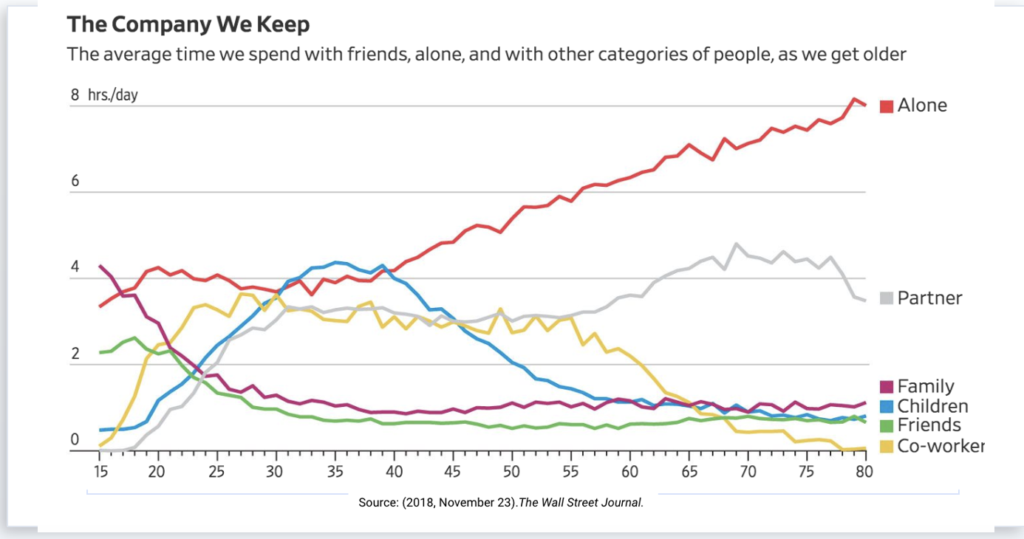
The transition into retirement, while often anticipated with a sense of liberation and expanded personal freedom, presents a unique set of psychological challenges that can catch many individuals by surprise. Foremost among these is the significant increase in solitary time, which amplifies the internal landscape of one’s thoughts and self-dialogue. This period of life, characterized by the absence of structured work environments and established professional identities, necessitates a deeper engagement with the conversations that unfold within one’s own mind. Experts in psychology and self-development are increasingly highlighting the profound impact of this inner discourse, emphasizing that the most critical dialogues experienced during retirement may be those that occur entirely within the individual.
These internal conversations are far-reaching, encompassing a spectrum of cognitive and emotional processes. They can manifest as forward-looking planning and imaginative envisioning, or as reflective introspection. Conversely, this inner dialogue can also become a breeding ground for anxieties, the repetitive replay of past events, persistent questioning, self-criticism, and even self-blame. Research presented on platforms such as "The Retirement Wisdom Podcast" indicates that the nature of this internal dialogue can either serve to constrain an individual’s life and opportunities or, conversely, equip them to embark on their subsequent life chapter with greater intention and a broader sense of possibility.
A significant contributor to this field is Dr. Marilee Adams, Founder and CEO of The Inquiry Institute and author of the influential book, "Change Your Questions, Change Your Life." Her latest work, the fifth edition of this seminal text, delves into the critical role of self-posed questions in shaping our mental frameworks. Dr. Adams posits a fundamental dichotomy in human mindset: the "Judger" and the "Learner." Judger questions, she explains, are typically backward-looking or inwardly focused, often laced with a tone of criticism or blame, such as "What’s wrong with me?" or "Why did this happen?" In contrast, Learner questions are designed to foster curiosity, cultivate a sense of agency, and open avenues for potential, exemplified by inquiries like "What do I want now?" or "How else can I approach this?"
The relevance of this distinction becomes particularly pronounced as individuals navigate the profound life transition of retirement. The dissolution of the familiar structures, identities, and feedback mechanisms inherent in professional life can allow Judger-oriented thinking to gain significant momentum. Without external anchors, the tendency to fall into self-critical patterns can intensify. Conversely, the adoption of "wise questions," as advocated by Dr. Adams, can serve to redirect attention toward core values and aspirations, such as the pursuit of deeper meaning, increased joy, opportunities for contribution, the nurturing of relationships, and continuous personal growth.
Parallel research in the domain of internal dialogue is being conducted by Dr. Ethan Kross, Director of the Emotion & Self Control Laboratory at the University of Michigan and author of "Chatter: The Voice in Our Head, Why It Matters, and How to Harness It." Dr. Kross’s work centers on the scientific understanding of self-talk and distinguishes between ordinary negative thoughts and what he terms "chatter." Chatter is characterized by persistent, repetitive loops of worry, rumination, and catastrophizing. His research underscores that negative emotions themselves are not inherently detrimental; in measured doses, they can serve as valuable learning experiences. The critical issue arises when individuals become trapped in these negative emotional cycles.
A strong convergence of thought exists between Dr. Adams and Dr. Kross regarding the ultimate objective of managing one’s inner voice. Neither suggests the elimination of this internal monologue; rather, both advocate for the development of greater skillfulness in engaging with it. A key point of agreement is the universal presence of an inner critic and the necessity of accepting its existence. Furthermore, both researchers emphasize that heightened self-awareness is the precursor to genuine choice. They provide practical methodologies designed to shift individuals from automatic, reactive responses to more deliberate, intentional engagement with their thoughts and emotions.
Dr. Adams’s contribution is particularly noteworthy for the elegant framework she provides through "The Choice Map." This tool offers a clear linguistic structure and a practical roadmap for navigating internal dialogue. The process involves recognizing the presence of the Judger mindset, consciously pausing, and then actively transitioning into the Learner mindset. A particularly potent question offered by Dr. Adams for facilitating this shift is, "Who do I choose to be in this moment?" This question empowers individuals to assert their agency and consciously define their present state, rather than being passively defined by their internal critic.
Dr. Kross, on the other hand, champions a "toolbox" approach, recognizing that different situations call for distinct strategies. Among his recommended techniques is "distance self-talk," which involves addressing oneself by name and offering coaching and advice as one would to a trusted friend. Another valuable tool is "mental time travel," where individuals are encouraged to consider how a current problem might appear from a future perspective, such as six months or a year hence. Incorporating physical activities, such as a walk in nature, as a grounding ritual can further enhance an individual’s capacity to become a more effective "chatter advisor," equipped with a personalized repertoire of coping mechanisms.
Practical Strategies for Navigating Inner Dialogue
For individuals seeking to harness their internal conversations more effectively, particularly during the transition to retirement, several actionable strategies can be employed. The initial step involves cultivating a heightened awareness of one’s ongoing inner dialogue. This practice of mindful observation allows for the identification of recurring thought patterns and emotional responses.
Drawing from Dr. Adams’s work, a simple yet powerful technique for interrupting the momentum of habitual thinking involves a physical pause. This "Stop. Breathe. Be." practice, as learned from Dr. Aditi Nerurkar, MD, provides a crucial moment of disengagement from automatic thought processes. Following this pause, individuals are encouraged to actively examine the questions they are posing to themselves. This self-inquiry aims to discern whether the prevailing questions stem from a "Judger" or "Learner" mindset. If an individual finds themselves ensnared in what Dr. Adams describes as the "Judger Pit"—a state of being stuck in a negative feedback loop—the "Switching Lane" move becomes essential. This involves intentionally posing a "Learner" question to facilitate a transition into a more constructive mindset.
From Dr. Kross’s research, practical applications include altering the internal voice. By using one’s own name when reflecting on a challenging situation, and posing questions such as, "What advice would I offer a good friend facing this same circumstance?", individuals can foster a more objective and compassionate perspective. Shifting the temporal frame of reference is another effective strategy. Asking, "How significant will this feel in six months from now?" can help to contextualize current stressors and diminish their perceived magnitude.
Furthermore, it is important to recognize the role of external interactions in managing internal states. While seeking empathy from others is valuable, it is crucial to distinguish between genuine support that broadens perspective and mere venting, which can often perpetuate negative thought cycles. Identifying individuals who can offer constructive viewpoints and help reframe challenging situations is a vital component of this broader strategy.
Implications for the Retirement Landscape
The increasing prevalence of long and healthy retirements, coupled with evolving societal expectations, underscores the growing importance of psychological well-being in later life. The shift from a career-centric identity to one defined by personal pursuits, leisure, and community engagement requires a robust internal compass. The insights offered by researchers like Adams and Kross are not merely academic; they provide tangible tools for individuals to navigate this significant life transition with greater resilience and fulfillment.
The implications of mastering one’s inner dialogue extend beyond individual contentment. A mentally agile and emotionally regulated retired population can contribute more actively to their communities, engage more fully in civic life, and serve as mentors and sources of wisdom for younger generations. The ability to manage self-talk effectively can also mitigate the risks associated with age-related cognitive decline and mental health challenges, potentially reducing healthcare burdens and enhancing overall societal well-being.
As society continues to grapple with the demographic shifts of an aging population, proactive approaches to mental and emotional preparedness for retirement will become increasingly vital. Educational initiatives, community programs, and accessible resources that promote the development of mindful self-dialogue and emotional regulation skills will be instrumental in ensuring that the extended period of retirement is not just a phase of leisure, but a chapter of continued growth, purpose, and well-being. The freedom that retirement offers is amplified when it is paired with a sophisticated understanding and skillful management of one’s internal world, transforming the inner critic into a trusted ally and a guiding coach for the journey ahead.
Ready to Learn More?
Listen to my podcast conversation with Marilee Adams: [Link to Podcast]
Take the Survey & Download: The Choice Map™: [Link to Survey]
Read: Change Your Questions, Change Your Life, 5th Edition: [Link to Book]
Listen to my two podcast conversations with Ethan Kross:
Chatter & Your Inner Voice – Ethan Kross: [Link to Podcast]
Read: Chatter: The Voice in Our Head, Why It Matters, and How to Harness It: [Link to Book]
Shift – Ethan Kross: [Link to Podcast]
Read: Shift: Managing Your Emotions–So They Don’t Manage You: [Link to Book]

