
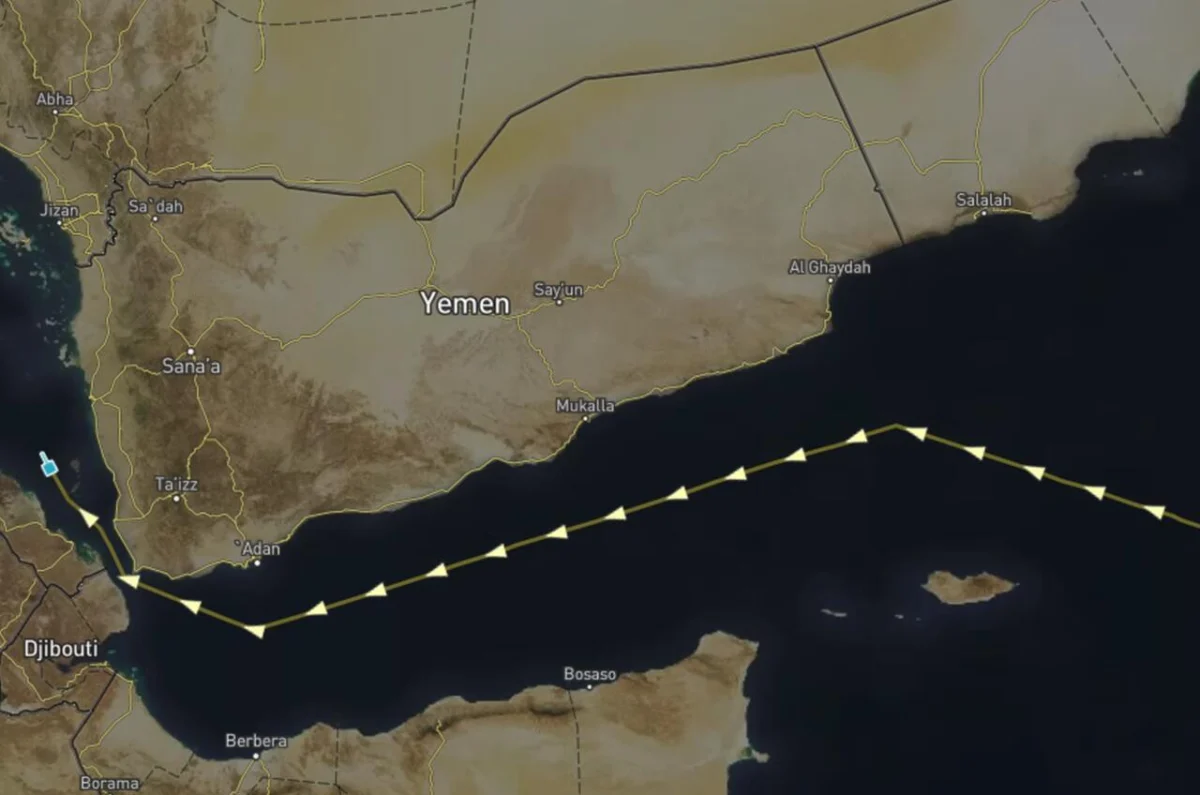
The Houthi movement in Yemen has announced intentions to implement a "toll system" for maritime traffic passing through the strategically vital Bab el-Mandeb Strait in the Red Sea. This unprecedented move, disclosed on Wednesday, July 29, 2026, marks a significant escalation in regional maritime tensions, directly mirroring Iran’s long-contested claims to levy fees in the Strait of Hormuz. The proposal has been met with immediate condemnation from Yemen’s internationally recognized government and is poised to ignite further geopolitical friction in an already volatile Middle East, threatening global energy supplies and supply chains.
A Bold Challenge to International Maritime Law
According to reports from European media, Yemen’s Information Minister, Moammar al-Eryani, stated that intelligence confirmed direct involvement of Islamic Revolutionary Guard Corps (IRGC) advisers from Iran in designing the Houthi-enforced toll system. This alleged collaboration underscores the deep strategic alignment between the Houthis and Tehran, aiming to replicate Iran’s playbook in asserting control over critical maritime chokepoints. The Houthi armed group is reportedly working with Iran to charge ships for transit through the Bab el-Mandeb, a move described by the internationally recognized Yemeni government as a "dangerous escalation aimed at transforming one of the world’s most strategic maritime corridors into a permanent source of funding for the militia’s military and terrorist activities."
The proposed scheme is designed to collect fees for "navigation," "environmental," and "safety assurance" services, categories strikingly similar to those Iran has previously attempted to impose in the Strait of Hormuz. This initiative follows a recent declaration by the Iran-aligned Houthis on July 20, 2026, of a maritime embargo against Saudi Arabia, further intensifying the ongoing conflict and expanding attacks on tankers carrying global energy and other supplies to waters beyond the Persian Gulf. Regional sources with knowledge of the matter, speaking to Reuters, confirmed that the Houthi group is indeed considering imposing these fees on commercial ships.
The Strategic Significance of Bab el-Mandeb
The Bab el-Mandeb Strait, meaning "Gate of Tears" in Arabic, is one of the world’s most critical maritime chokepoints, connecting the Red Sea to the Gulf of Aden and the Arabian Sea. It serves as the primary gateway for maritime traffic heading to and from the Suez Canal, linking European and Asian markets. An estimated 12% of global trade and 30% of global container traffic transits the Suez Canal, making the Bab el-Mandeb an indispensable artery for international commerce, particularly for oil and natural gas shipments.
On average, approximately 6.2 million barrels of oil per day (b/d) flowed through the Bab el-Mandeb Strait in 2023, according to the U.S. Energy Information Administration (EIA). This volume represents a significant portion of global petroleum and liquefied natural gas (LNG) trade. Any disruption or imposition of arbitrary tolls in this strait has immediate and profound implications for global energy prices, shipping costs, and supply chain reliability. The strait is only about 18 miles (29 kilometers) wide at its narrowest point between Yemen on the Arabian Peninsula and Djibouti and Eritrea on the African coast, making it highly susceptible to control by naval forces or shore-based missile systems.
Background to Houthi Ascendancy and Iranian Influence
The Houthi movement, officially known as Ansar Allah, emerged in the 1990s as a Zaydi Shia revivalist movement in northern Yemen. Their conflict with the Yemeni government escalated into a full-blown civil war in 2014 when they seized the capital, Sana’a, forcing the internationally recognized government into exile. A Saudi-led coalition intervened in March 2015 to restore the government, but the conflict has since devolved into a protracted stalemate, creating one of the world’s worst humanitarian crises.
Over the years, the Houthis have consolidated control over significant portions of Yemen’s Red Sea coastline, including key ports like Hodeidah, which gives them a strategic advantage over the Bab el-Mandeb. Their military capabilities, including ballistic missiles, drones, and naval mines, have reportedly been enhanced with technical and material support from Iran, aligning them with Tehran’s broader regional strategy of projecting power through proxy groups. The allegations of IRGC advisers directly assisting in the toll system’s design are consistent with existing intelligence assessments of Iran’s deep engagement with the Houthi leadership, aiming to challenge Western and Saudi influence in the region.
A Chronology of Recent Escalations
The proposed toll system is not an isolated event but part of a series of escalations:
- July 20, 2026: The Houthi group declared a "maritime embargo" against Saudi Arabia, signifying a new front in their ongoing conflict and explicitly threatening shipping linked to the Kingdom. This declaration was widely seen as a direct response to perceived Saudi and U.S. aggression and a broader escalation within the context of the Iran-backed "Axis of Resistance."
- Weeks Prior to July 29, 2026: Multiple Saudi vessels reportedly became targets in the Red Sea region, forcing a number of tankers to alter course or U-turn. While specific details of these incidents remain limited, they underscore the Houthis’ demonstrated capability and willingness to disrupt maritime traffic.
- Recent Weeks: Iran-backed ground proxies in Iraq and Yemen appeared to begin launching attacks on Saudi Aramco facilities. These coordinated actions suggest a broader, multi-front strategy by Tehran and its allies to exert pressure on Saudi Arabia and its Western partners.
- Overnight (Pre-July 29, 2026): A rare joint U.S.-Saudi response saw targeted attacks on Iraqi militias believed to be involved in the assaults on Saudi facilities. This indicates a growing willingness by the U.S. and its allies to respond militarily to escalating threats from Iran-aligned groups.
- Earlier Context (Gaza War): During previous regional conflicts, particularly those related to the Gaza war, the Houthis had demonstrated a selective approach, reportedly allowing Russian and Chinese vessels to pass through the Bab el-Mandeb without incident, while threatening ships associated with Western interests or Israel. This precedent suggests a calculated strategy aimed at leveraging geopolitical alliances.
International Law and the Hormuz Precedent
The Houthis’ ambition to impose tolls directly challenges fundamental principles of international maritime law, specifically the UN Convention on the Law of the Sea (UNCLOS). UNCLOS guarantees the right of "transit passage" through international straits used for international navigation, ensuring unimpeded passage for all ships and aircraft. Coastal states bordering such straits are prohibited from levying charges or imposing restrictions that effectively deny or impair transit passage.
Iran’s long-standing claims to charge fees in the Strait of Hormuz, through which about one-fifth of the world’s oil supply passes, have consistently been rejected by the international community as a violation of UNCLOS. Tehran has sporadically threatened to close the strait or impose tolls, often in response to international sanctions or military pressures. These threats have always been met with strong condemnation and a clear stance from global powers, particularly the United States, that freedom of navigation in international waters is non-negotiable. The Houthi proposal, therefore, is not merely a regional issue but a direct assault on the established norms of global maritime governance, potentially setting a dangerous precedent if unchallenged.
Reactions from Key Players
The proposed Houthi toll system has triggered a wave of strong reactions from international actors:
- Yemen’s Internationally Recognized Government (IRG): Information Minister Moammar al-Eryani unequivocally condemned the move, describing it as "a dangerous escalation" and a blatant attempt to secure "permanent source of funding for the militia’s military and terrorist activities." The IRG has vowed to rally international support to counter this threat to global trade.
- Saudi Arabia: While no direct official statement was immediately available, Saudi Arabia, a primary target of Houthi aggression and the leader of the coalition fighting them, is expected to issue a forceful condemnation. The Kingdom will likely emphasize the importance of freedom of navigation and may consider increased naval presence or other defensive measures in the Red Sea. The Saudi-backed government’s intelligence regarding IRGC involvement aligns with Riyadh’s long-held assertions about Iranian interference in Yemen.
- United States: The U.S., a staunch advocate for freedom of navigation, is anticipated to condemn the Houthi proposal in the strongest terms. U.S. officials will likely reiterate their commitment to ensuring the unimpeded flow of commerce through international waterways. This could involve increased naval patrols by the U.S. Fifth Fleet, diplomatic pressure, or even military action if shipping is directly threatened. The U.S. has consistently challenged similar Iranian claims in Hormuz and is unlikely to tolerate such actions in Bab el-Mandeb.
- United Nations: The UN, already deeply involved in efforts to mediate a peace settlement in Yemen and address the humanitarian crisis, is expected to call for de-escalation and urge all parties to adhere to international maritime law. The UN Secretary-General’s office or its Special Envoy for Yemen will likely express deep concern over the potential for further destabilization.
- International Maritime Organization (IMO): The IMO, the global standard-setting authority for the safety, security, and environmental performance of international shipping, will likely issue warnings to mariners and express grave concerns about the security implications for global shipping.
- Shipping Industry: International shipping associations and insurance providers are expected to issue advisories to vessels traversing the Red Sea. Increased insurance premiums, re-evaluation of shipping routes, and heightened security measures are likely immediate consequences, adding significant costs to global trade.
- China and Russia: Given their previous exemptions from Houthi attacks, China and Russia present a nuanced diplomatic challenge. While China is reportedly in direct talks with the Houthis to allow for the passage of Chinese vessels, both nations, as major maritime powers, generally uphold the principle of freedom of navigation. Their responses will be closely watched for any indications of a shift in their stance or willingness to exert pressure on the Houthis.
Economic Repercussions: A Threat to Global Supply Chains
The imposition of a Houthi toll system would have far-reaching economic consequences:
- Increased Shipping Costs: Any new fee, regardless of its amount, would directly increase operational costs for shipping companies. These costs would inevitably be passed on to consumers, contributing to inflation.
- Higher Insurance Premiums: Perceived increased risk in the Bab el-Mandeb would lead to a surge in war risk insurance premiums, a significant component of shipping expenses.
- Rerouting and Delays: Some shipping companies might opt to reroute vessels around the Cape of Good Hope, a much longer journey that adds thousands of miles and weeks to transit times, significantly increasing fuel consumption and delivery schedules. This would disrupt finely tuned global supply chains, especially for time-sensitive goods.
- Energy Market Volatility: Given the substantial volume of oil and gas transiting the strait, any disruption or increased cost would likely lead to volatility in global energy markets, potentially driving up crude oil and natural gas prices.
- Impact on Regional Economies: Nations bordering the Red Sea, particularly those reliant on maritime trade, would face severe economic pressure. Egypt, which earns billions annually from Suez Canal tolls, could see a decline in traffic if rerouting becomes widespread.
Geopolitical Ramifications: Widening Regional Conflict
Beyond the economic fallout, the Houthi proposal carries significant geopolitical weight:
- Iran’s Expanding Influence: This move would be perceived as a clear success for Iran in expanding its strategic leverage through proxies, challenging the established order in another critical maritime chokepoint. It would embolden Tehran in its confrontation with the U.S. and its regional adversaries.
- Challenge to U.S. and Allied Influence: The U.S. and its allies have long sought to counter Iranian influence and maintain stability in the Middle East. The Houthi action directly challenges these efforts, forcing a reassessment of strategies to ensure maritime security.
- Potential for Military Confrontation: The international community, particularly the U.S. and Saudi Arabia, is unlikely to accept the Houthi toll system. Any attempt to enforce it could lead to direct military confrontation with naval assets operating in the Red Sea, escalating the regional conflict to unprecedented levels.
- Humanitarian Impact on Yemen: Further militarization and economic disruption in the Red Sea would exacerbate Yemen’s already dire humanitarian crisis, making it even harder for aid to reach millions in need.
- Precedent for Other Non-State Actors: If the Houthis successfully establish such a system, it could embolden other non-state actors or rogue regimes to attempt similar actions in other strategic waterways, further destabilizing global trade and security.
The Path Forward: Diplomacy Amidst Escalation
The situation in the Bab el-Mandeb Strait presents a complex challenge that demands a multifaceted international response. While military options to ensure freedom of navigation remain on the table for powers like the United States, diplomatic efforts are crucial to de-escalate tensions and prevent a wider conflict. The fact that China is in direct talks with the Houthis offers a potential, albeit limited, avenue for engagement. However, the Houthi movement’s deep entrenchment in Yemen, even after years of massive bombing campaigns, including strikes conducted by the Israeli Air Force at times, suggests that military solutions alone have proven insufficient to alter their strategic calculus.
The proposed Houthi toll system is more than just a financial demand; it is a clear assertion of sovereignty and control over a global commons, backed by a powerful regional patron. The international community faces a critical juncture in deciding how to respond to this challenge, balancing the imperative of freedom of navigation with the complexities of the Yemen civil war and broader regional power dynamics. The coming weeks will likely determine whether this escalation leads to a full-blown maritime crisis or if diplomatic efforts can somehow avert a potentially catastrophic disruption to global trade and security.

