
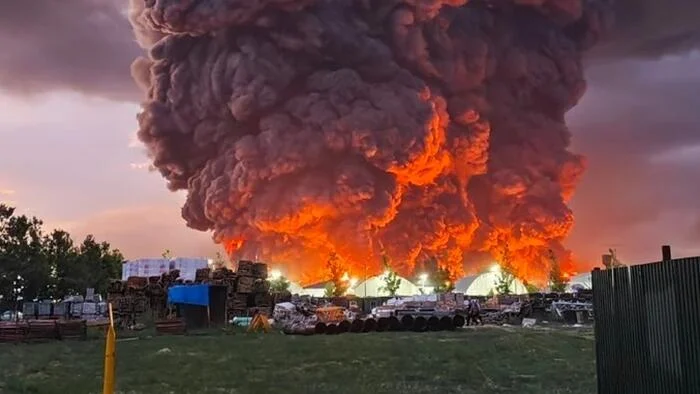
Recent developments in the ongoing conflict have seen a significant shift in Ukraine’s drone strategy, with long-range attacks now explicitly targeting Russia’s civilian economic infrastructure, most notably the prominent online retailer Wildberries. This escalation, reportedly assisted by the United States, signals a calculated move beyond traditional military or energy targets, aiming instead to inflict widespread economic hardship on small business owners and consumers. The ultimate objective, according to analyses, appears to be the cultivation of domestic discontent within Russia, potentially influencing upcoming elections and fostering a climate ripe for future protest movements.
The Strategic Shift: From Energy to E-commerce
For months, Ukraine’s long-range drone campaign primarily focused on Russia’s vital energy infrastructure, striking oil refineries, fuel depots, and other facilities critical to the nation’s energy sector. These attacks aimed to disrupt fuel supplies, increase domestic prices, and thus indirectly impact the Russian populace by eroding disposable income through higher transportation and commodity costs. While these strikes achieved some degree of disruption, the recent pivot towards civilian e-commerce platforms like Wildberries represents a distinct evolution in strategy.
Wildberries, often described as the "Russian Amazon," holds a dominant position in Russia’s burgeoning e-commerce market. It serves as a crucial platform for hundreds of thousands of small and medium-sized enterprises (SMEs) to reach consumers across the vast country. By targeting Wildberries’ logistics centers, Ukraine’s forces aim to directly undermine the livelihoods of these independent traders, disrupt supply chains, and significantly inconvenience millions of Russian shoppers.
Chronology of Escalation and Impact
The shift to targeting civilian economic infrastructure has gained prominence in recent months. While specific dates for all Wildberries attacks are not always immediately available in public reports, several significant incidents have been highlighted:
- Early 2024: Initial reports indicated a surge in drone attacks against Russian oil refineries and energy infrastructure, causing temporary shutdowns and disruptions. This phase aimed at economic pressure on a macro scale.
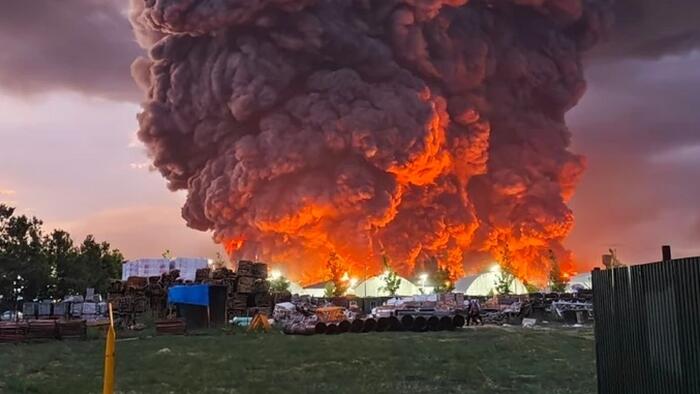
- Mid-2024 (Specific Reports): Reports from sources like RT and Russia’s Forbes, cited by the Financial Times, detail recent strikes that have either completely destroyed or severely damaged multiple Wildberries logistics centers. These incidents have reportedly resulted in massive inventory losses.
- Estimated Damages: Financial assessments from Russia’s Forbes, as relayed by the Financial Times, suggest that these attacks may have already destroyed inventory valued between 150 billion and 275 billion rubles (approximately $2 billion to $3.5 billion USD). This staggering figure surpasses Wildberries’ net profit for the entirety of the previous year, highlighting the immense financial blow to the company and its network of sellers.
This chronology suggests a deliberate progression. After an initial phase of targeting critical state infrastructure, the campaign appears to have moved to a phase designed to create direct, widespread economic pain for a broader segment of the population, particularly small business owners who form the backbone of the domestic economy.
Wildberries: A Linchpin of the Russian Economy
To understand the full implications of these attacks, it is essential to grasp Wildberries’ role in the Russian economy. Founded in 2004, Wildberries has grown to become the largest online retailer in Russia, Central Asia, and Eastern Europe. It boasts a vast network of warehouses, delivery points, and an extensive catalog of products ranging from clothing and electronics to household goods and groceries.
- Market Dominance: Wildberries commands a significant share of the Russian e-commerce market, which has seen exponential growth in recent years, particularly accelerated by the COVID-19 pandemic. Its reach extends across all regions of Russia, making it an indispensable platform for both urban and rural populations.
- SME Ecosystem: The platform hosts hundreds of thousands of independent sellers, many of whom are small business owners, individual entrepreneurs, and artisans. For many, Wildberries is their primary or sole sales channel, connecting them to a national customer base that would otherwise be inaccessible. These sellers rely on Wildberries’ logistics infrastructure for storage, packaging, and delivery.
- Economic Contribution: The success of these small businesses contributes significantly to local economies through employment, tax revenues, and consumer spending. Disruptions to their operations on Wildberries have a direct ripple effect across the economic landscape.
The destruction of logistics centers means not just the loss of inventory but also the disruption of operations, delays in order fulfillment, and a severe blow to the trust between sellers and the platform. For individual sellers, the loss of their entire inventory can be catastrophic, leading to immediate financial distress.
The Political Motive: Cultivating Discontent
The strategic intent behind targeting Wildberries, according to analysts like Andrew Korybko, goes beyond mere economic disruption; it is deeply political. Korybko suggests that the goal is to cultivate a "growing class of malcontents" by inflicting severe harm on small business owners. This strategy is seen as part of a broader "influence operation" announced by Ukrainian President Volodymyr Zelensky, designed to pressure Russia into a ceasefire without Ukrainian or Western concessions.
- Electoral Impact: The timing of these intensified attacks is critical, preceding Russia’s next Duma elections in late September. By generating widespread economic hardship and resentment among a crucial segment of the population (small business owners and their affected customers), the aim is to shift electoral sentiment against the ruling party. Even a symbolic setback in these elections could be leveraged as a narrative victory.
- Fueling Protest Potential: Beyond the immediate electoral cycle, the creation of a disenfranchised class of small business owners facing financial ruin could, in the long term, rekindle "long-dormant protest potential." Such a movement, born out of economic grievance, could then be exploited by external actors to further destabilize Russia.
- Zelensky’s "Influence Operation": President Zelensky’s stated "40-day influence operation" against Russia, which was set to formally conclude in early August (roughly six weeks before the Duma elections), provides a crucial political context. This operation, even if informally extended, seeks to maximize inconvenience for average Russians, hoping to turn them against the current leadership. The Wildberries campaign is viewed as a direct extension of this strategy, following the earlier attempts to raise fuel costs.
This analysis posits that Ukraine, with alleged U.S. assistance in targeting, is systematically employing asymmetric warfare tactics to erode internal stability in Russia. By directly impacting the economic well-being of everyday citizens and small entrepreneurs, the strategy seeks to create a domestic political challenge for the Russian leadership, distinct from the military conflict on the front lines.
Statements and Reactions (Inferred)
While direct official statements specifically linking Wildberries attacks to a political influence campaign are rare from Ukrainian officials, their general rhetoric often emphasizes making the war costly for Russia and disrupting its war machine. The actions themselves, particularly the targeting of civilian economic infrastructure, speak volumes about the evolving strategy.
- Ukrainian Perspective: From Kyiv’s viewpoint, such attacks might be framed as legitimate responses to Russia’s ongoing aggression, designed to exert pressure and demonstrate the costs of the conflict to the Russian population. They would likely argue that all economic infrastructure, particularly that supporting a large population, indirectly supports the war effort or allows for the continuation of hostilities.
- Russian Government Response: The Russian government would likely condemn these attacks as acts of terrorism targeting civilian infrastructure and livelihoods. They would probably emphasize efforts to bolster air defenses to protect key economic sites. In response to the economic fallout, the state would likely promise support measures for affected businesses and individuals, aiming to mitigate discontent and prevent the very outcome the attacks are designed to achieve. This could include emergency funding, tax breaks, or other forms of compensation for lost inventory, though such measures would add further strain to the state budget already under pressure from sanctions and military spending.
- Wildberries and Affected Businesses: Wildberries itself would be expected to issue statements detailing the damage, outlining recovery plans, and reassuring sellers and customers. Individual sellers, facing ruin, would likely express anger and frustration, directing it both at the attackers and potentially at their own government if support is perceived as inadequate or slow.
Broader Impact and Implications
The implications of this strategic shift are multifaceted, potentially affecting Russia’s economy, social fabric, and political landscape for the long term.
- Economic Strain: The destruction of billions of rubles worth of inventory not only impacts individual sellers but also creates a cascade of economic problems. Alexander Kolyandr, a director at Eurasia Group, highlighted that "The loss of the goods will put thousands of traders out of business, resulting in unpaid taxes, defaulted loans and the like." This contributes to a broader economic strain on the state, which is already grappling with the effects of international sanctions and military expenditures. The need to potentially bail out thousands of struggling small businesses would place additional pressure on Russia’s financial reserves.
- Social Unrest: The creation of a "class of malcontents" among small business owners and their employees, coupled with rising prices and consumer inconvenience, could indeed lead to social discontent. While the Russian state has historically maintained tight control over public expression, widespread economic grievance has the potential to coalesce into localized protests or broader dissatisfaction, particularly in the lead-up to elections.
- Electoral Dynamics: Inadequate or delayed support for affected businesses could be exploited by opposition narratives, potentially shifting public opinion and impacting the September Duma elections. Even if the ruling party maintains control, any perceived decline in support could be framed as a symbolic setback for the leadership.
- War of Attrition: This new phase of targeting civilian economic infrastructure aligns with a broader "war of attrition" strategy. By imposing direct economic costs on the populace, Ukraine aims to make the conflict unsustainable for Russia domestically, hoping to erode public support for the war. This strategy, assisted by what analysts describe as "targeting intelligence and overall guidance" from the U.S., suggests a deepening engagement in asymmetrical warfare.
- Vulnerability of Infrastructure: The fact that 18 out of 20 of Russia’s largest logistics centers are reportedly within range of Ukrainian drones highlights a significant vulnerability. This suggests that the current attacks on Wildberries may not be isolated incidents but rather part of a sustained campaign, with the potential for further widespread damage to the e-commerce sector and other civilian economic targets.
While the worst-case scenario of widespread protest and significant political upheaval might still be averted, especially if the Russian state responds effectively with compensatory measures and enhanced security, the ongoing drone campaign against civilian economic targets represents a dangerous and strategically significant escalation. It underscores Ukraine’s evolving tactics to project the costs of the conflict deeper into Russian society, aiming to achieve political objectives by leveraging economic hardship and domestic dissatisfaction. The long-term efficacy of this strategy remains to be seen, but its immediate impact on Russia’s e-commerce sector and small businesses is already substantial.

