
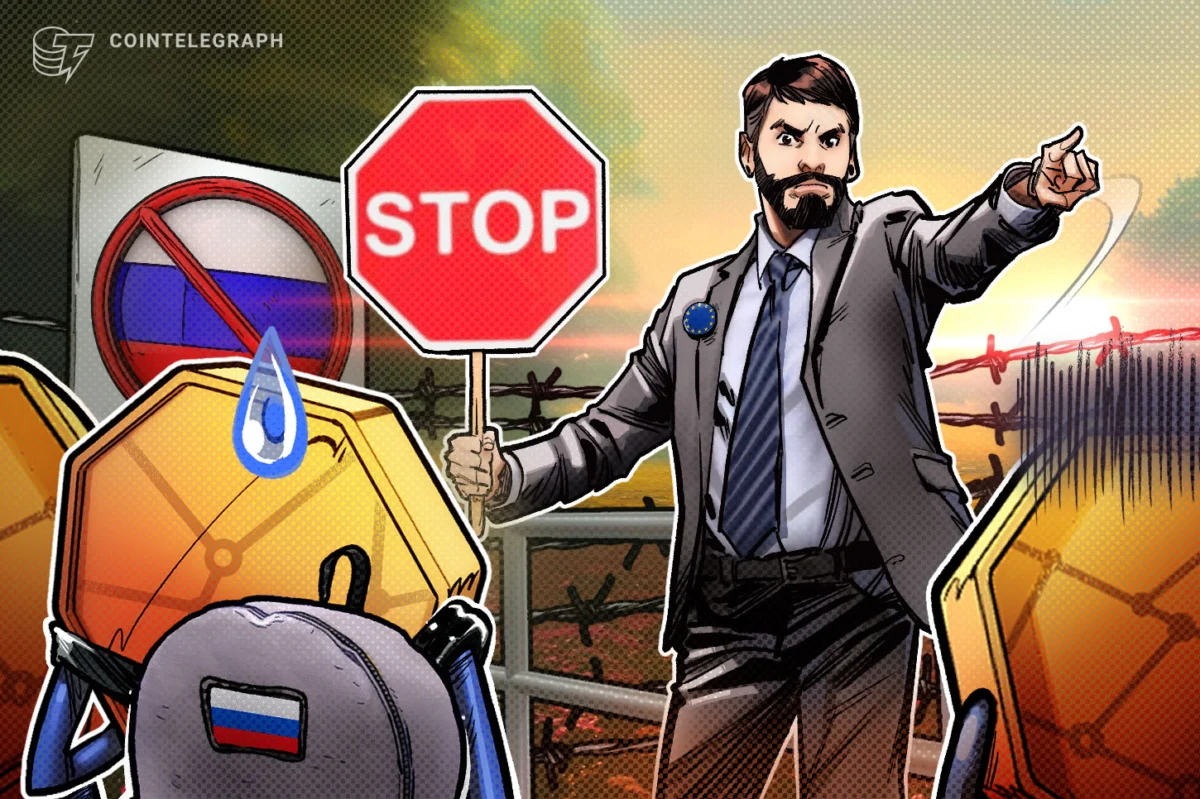
The European Union has officially designated the cryptocurrency exchange HTX, formerly known as Huobi Global, as part of an expanded sanctions package aimed at curtailing Russia’s financial capabilities amid its ongoing war in Ukraine. This significant move places HTX on a list of 18 entities identified by the EU as "providing crypto-assets services or payment services" in a manner that actively undermines the bloc’s restrictive measures against Moscow. The inclusion of HTX marks a notable escalation in the EU’s efforts to close potential loopholes that could enable Russia to circumvent international financial penalties.
EU Intensifies Pressure on Russia Through Crypto Sanctions
In a decisive action taken on Thursday, the European Council formally amended its existing sanctions regime against Russia. The amendment explicitly cites Russia’s "actions destabilizing the situation in Ukraine" as the impetus for broadening the scope of restrictive measures. HTX is now enumerated among 18 external entities identified as significantly frustrating the objectives of the EU’s prohibitions against Russia. These entities are characterized as operating "outside of the Union that are significantly frustrating the purpose of the prohibitions." The broader context for these sanctions is Russia’s continued military engagement in Ukraine, which commenced with a full-scale invasion in February 2022, drawing widespread global condemnation and a cascade of international sanctions.
EU officials articulated the Union’s persistent strategy in targeting entities that facilitate financial lifelines for Russia’s war efforts. A statement from EU authorities highlighted the bloc’s repeated efforts to identify financial institutions, credit institutions, or entities providing crypto-asset or payment services that enable Russia to sustain its "war of aggression against Ukraine." This facilitation can occur through various means, including connecting to the Russian Central Bank’s financial messaging system or enabling the circumvention of Union restrictive measures. Consequently, the EU prohibits any transactions between these identified institutions or entities and operators within the Union.
HTX’s Position Amidst Regulatory Scrutiny
This development arrives at a time when HTX, like many global cryptocurrency exchanges, has been navigating an increasingly complex regulatory landscape. In prior statements, HTX has emphasized its commitment to regulatory compliance. The exchange has previously communicated to media outlets, including Cointelegraph, that "regulatory compliance remains [its] absolute top priority" and that it is dedicated to "proactively monitor[ing] and strictly adher[ing] to regulatory frameworks in all jurisdictions." This stance suggests an intention to operate within legal boundaries, though the EU’s current action indicates a perceived failure to do so in relation to its Russian sanctions.
The sanctions against HTX were announced on the same day that EU officials also revealed a prohibition on Belarusian nationals and residents from owning, controlling, or managing crypto exchanges and digital asset service providers. This parallel measure aligns with the EU’s broader regulatory agenda, particularly the implementation of its Markets in Crypto Assets (MiCA) framework. MiCA aims to create a harmonized regulatory environment for crypto assets across the EU, and its provisions are increasingly being integrated into the bloc’s geopolitical strategies.
A Pattern of International Sanctions Against HTX
The EU’s decision follows a similar move by the United Kingdom government, which imposed sanctions on HTX in May. The UK’s action was predicated on "reasonable grounds to suspect" that the exchange had supported the Russian government by facilitating financial services and funds through entities already under sanction. This suggests a coordinated effort among Western nations to isolate Russia financially, with cryptocurrency exchanges being identified as potential conduits for circumventing these measures.
Background and Chronology of Events
The conflict in Ukraine, initiated by Russia’s full-scale invasion in February 2022, triggered an unprecedented wave of international sanctions. Initially, these sanctions targeted key Russian financial institutions, oligarchs, and strategic industries. As the conflict persisted, the international community began to scrutinize alternative financial channels, including the cryptocurrency market, which had previously been less regulated than traditional finance.
February 2022: Russia launches a full-scale invasion of Ukraine. The EU, UK, US, and other nations begin imposing sweeping sanctions on Russia.
Early 2023: Global financial regulators and governments intensify their focus on the role of cryptocurrency in enabling illicit finance and sanctions evasion. Discussions within the EU about potential crypto-related sanctions against Russia gain momentum.
May 2023: The United Kingdom formally sanctions HTX (then Huobi Global), citing concerns about its facilitation of financial services potentially aiding the Russian government.
June 2024: The European Union officially adds HTX to its list of sanctioned entities, alongside 17 other organizations, for providing crypto-asset or payment services that frustrate EU sanctions against Russia. On the same day, the EU announces a ban on Belarusian nationals and residents operating crypto exchanges, in line with the MiCA framework.
Supporting Data and Analysis
The global cryptocurrency market has experienced significant growth in recent years, with transaction volumes reaching trillions of dollars annually. While offering benefits such as faster cross-border payments and greater financial inclusion, the decentralized and pseudonymous nature of some crypto transactions presents challenges for regulators attempting to track illicit financial flows.
According to various industry reports, Russian entities and individuals have continued to engage in cryptocurrency transactions despite sanctions. Some analyses suggest that exchanges operating outside of stringent regulatory jurisdictions might be more susceptible to facilitating such activities. The inclusion of HTX on the EU’s sanctions list is likely based on intelligence and evidence gathered by EU member states and their financial intelligence units, suggesting that the exchange’s operations have, in some instances, provided a pathway for funds to circumvent established prohibitions.
The EU’s strategy of targeting specific entities that "significantly frustrate the purpose of the prohibitions" is a calibrated approach. Instead of a blanket ban on all crypto services, the EU aims to disrupt specific channels that are actively being used to undermine its foreign policy objectives. This approach requires continuous monitoring and intelligence gathering to identify and penalize those entities that are demonstrably facilitating sanctions evasion.
Broader Implications and Future Outlook
The EU’s sanctions against HTX have several significant implications for the cryptocurrency industry and the broader geopolitical landscape.
Increased Regulatory Scrutiny: This action underscores the growing assertiveness of global regulators in bringing the cryptocurrency sector under stricter oversight. Exchanges that wish to operate in major markets will need to demonstrate robust compliance programs, including thorough Know Your Customer (KYC) and Anti-Money Laundering (AML) procedures, as well as vigilant monitoring for sanctions evasion.
Potential for Further Sanctions: If evidence suggests that other cryptocurrency platforms are also facilitating Russian sanctions evasion, it is plausible that the EU, UK, and other allied nations may consider similar measures against them. This creates a risk for exchanges that do not prioritize compliance with international sanctions regimes.
Impact on HTX: For HTX, being placed on the EU’s sanctions list means that EU-based individuals and entities are prohibited from engaging in any transactions with the exchange. This could lead to a significant reduction in its user base and transaction volume within the EU, potentially impacting its global standing and revenue. Furthermore, other jurisdictions may follow the EU and UK’s lead, further isolating the exchange.
Evolving Role of Crypto in Geopolitics: The inclusion of a cryptocurrency exchange in a sanctions package highlights the increasing role of digital assets in international relations and geopolitical conflicts. As the technology evolves, so too will the strategies employed by both those seeking to circumvent sanctions and those seeking to enforce them.
HTX’s stated commitment to regulatory compliance will be tested by this development. The exchange will likely face pressure to implement more stringent controls and potentially to sever ties with any operations or individuals found to be in violation of EU sanctions. The long-term impact on HTX will depend on its ability to adapt to these heightened regulatory demands and to regain the trust of international regulatory bodies. The EU’s move serves as a clear signal that the era of loosely regulated cryptocurrency operations facilitating evasion of international law is drawing to a close.

